
I remember sitting in my office last Tuesday, staring at my phone until my eyes felt grainy. A regular client of mine—a family-owned hardware store that’s been a local staple for twenty years—had just dropped out of the Google ‘Local Three Pack’ entirely. In their place? A sleek, minimalist competitor that hadn’t even been open for ninety days. It was visceral. I felt that pit in my stomach because it wasn’t just a fluke; it was a hostile takeover of digital real estate. If you’ve felt that same sting of watching a ‘nobody’ leapfrog over your years of hard work, you aren’t alone, and you certainly aren’t crazy.
Stop Letting the New Kids Steal Your Foot Traffic
For the longest time, I operated under the assumption that seniority was king. I genuinely believed that if you had the most reviews and the oldest listing, your spot was safe. I was wrong. Dead wrong. Early in my career, I ignored the ‘freshness’ of signals, thinking my clients’ legacy would carry them. That was the biggest mistake I ever made, and it cost a lot of good people their primary source of leads. The truth is, these aggressive newcomers are using a different playbook. They know the brutal truth about why your competitors outrank you on the map isn’t about how long you’ve been there, but how much noise you’re making right now. Today, we are going to fix that. I’m going to show you how to reclaim your territory by thinking like an underdog again, even if you’re the neighborhood veteran.
Is the algorithm actually rigged against established businesses?
It certainly feels that way when you see a shop with five reviews sitting above your fifty. However, it isn’t necessarily rigged; it’s just shifted. According to data from BrightLocal, while 98% of consumers read reviews, Google’s latest updates heavily weight ‘recency’ and ‘interaction velocity’ over total volume. If that new shop across the street is getting ten reviews a week and you’re getting one a month, Google thinks they are the more ‘relevant’ answer for a searcher today. We need to bridge that gap. You need to understand how to stop losing local customers to competitors across the street by updating your strategy to match the current ‘war’ climate. Have you noticed a specific competitor who seemingly appeared out of thin air and stole your top spot? I’d love to hear about it, or you can talk to our maps optimization team to get a second pair of eyes on your profile. We’re going to look at the specific ‘signal gaps’ that are making you invisible and how to turn the tide before another newcomer moves in.To get back on top, you have to realize that Google views your profile less like a static yellow pages entry and more like a living, breathing social media feed. This is where most veterans fail. They think their ‘Set it and forget it’ strategy from several years ago still holds weight. It doesn’t. In the industry, google map experts call this ‘Interaction Velocity.’ Think of it like a heart rate monitor. If the line is flat, the patient is dead. If you aren’t generating new signals every week, Google’s algorithm assumes your business is no longer the most relevant choice for a searcher.
Stop treating your profile like a digital tombstone
I once worked with a local plumber who was furious that his thirty-year legacy was being overshadowed by a kid with a truck and a smartphone. The veteran had 400 five-star reviews, but they were mostly from three years ago. The newcomer had twelve reviews, but eight of them were from last week. We sat down and implemented the simple signal moves that fix flatlined google map impressions. We didn’t just ask for reviews; we changed how he interacted with the platform. Within fourteen days, his phone started ringing again because his interaction velocity spiked. 
The three-minute fix for review responses
Most business owners treat reviews as a chore to be completed once a month. They are actually your strongest visibility improvement tool. When you respond to a review, you shouldn’t just be polite; you should be strategic. Use the review response tactic that turns searchers into customers by mentioning the specific neighborhood and the exact problem you solved. This creates a geo-relevance signal that traditional SEO can’t touch. It tells Google, ‘I am active in this specific street right now,’ which is exactly what the algorithm is looking for.
Show Google where you actually work
Photos are the most underrated ranking signal in the modern map war. A stock photo of a happy family is useless. Google uses AI to scan your images for objects, text, and metadata. You need to understand the exact photo types that actually trigger your profile ranking signals. I’m talking about unedited, raw shots of your team in front of local landmarks or recognizable street signs. This proves your ‘proximity’ to the searcher. If you find your pin is stuck, you likely need the proximity fix for local businesses struggling to rank outside their own parking lot. By flooding your profile with geo-tagged images of actual job sites, you expand that invisible radius that’s currently keeping you trapped. Our maps optimization team often sees a massive jump in impressions just by cleaning up the ‘image graveyard’ most profiles have become and replacing them with ‘proof of work’ visuals that show real-time business activity.
Ditch the set it and forget it mentality
One of the biggest lies circulating in the world of local SEO is that seniority guarantees safety. I see it every day: business owners who have been in the same spot for thirty years assuming their legacy will keep them in the Local Three Pack. It won’t. In fact, many google map experts are now seeing that older, static profiles are often the easiest to topple. This is because why static business data no longer earns a three-pack spot is tied directly to Google’s shift toward real-time relevance. If your profile hasn’t changed its photos, responded to a review, or updated its services in six months, Google treats you like a closed library. You might have the books, but nobody is checking them out. Our how our team finds hidden signal gaps in local search involves identifying these exact moments where a veteran business has gone ‘cold’ in the eyes of the algorithm.
The danger of messy data and generic citations
Everyone tells you that you need hundreds of citations to rank. This is the most common ‘oops’ factor I encounter. Business owners go out and buy a cheap citation blast, thinking that quantity will force their way to the top. In reality, why most local citation packages actually hurt your rankings instead of helping is because they create a nightmare of inconsistent data. If your business is listed as ‘Main St’ on one site and ‘Main Street’ on fifty others, you are confusing the crawler. According to the Whitespark 2023 Local Search Ranking Factors survey, citation consistency is a foundational baseline, but citation *volume* has significantly diminished as a ranking factor. More isn’t better; cleaner is better. 
Can you actually rank in a zip code where you don’t have an office?
This is a question our visibility experts hear constantly from service-based businesses like plumbers or lawyers. The short answer is yes, but the advanced nuance is that you cannot do it by just creating ‘ghost’ landing pages. Most people try to spam their way into neighboring cities, but why blindly building local backlinks could be tanking your map position is a real risk if those links aren’t geo-relevant. To bridge that gap, you need the move our optimization team uses to reclaim lost map spots: hyper-local content that proves your team is physically active in those target zip codes. Furthermore, I often find that the schema technicality most agencies skip is the final hurdle. If your website code doesn’t explicitly link your service area to your Business Profile via proper JSON-LD markup, you’re essentially shouting into a void. Have you ever fallen into the trap of buying a citation blast only to see your rankings stay exactly where they were? I’d love to hear your story in the comments. If you’re tired of the guesswork and want to see real visibility improvement, it’s time to stop looking at the volume of your data and start looking at the velocity of your signals.Once you’ve cleaned up the mess of inconsistent citations, the real challenge begins: staying on top. I’ve seen countless businesses hit that coveted number-one spot only to vanish thirty days later because they stopped doing the very things that got them there. To prevent this, I rely on a specific stack of tech. If you aren’t using a grid-based rank tracker like Local Falcon or BrightLocal’s Heatmaps, you are essentially flying a plane without a dashboard. These tools show you exactly where your ‘visibility radius’ ends, block by block. Our maps optimization team uses these heat maps to identify ‘dead zones’ where a competitor might be creeping in. You can see the specific SEO tools we use to jumpstart map rankings and how they provide the data needed to make surgical strikes instead of guessing.
The tools that actually move the needle
In my daily workflow, I don’t care about generic ‘SEO scores.’ I care about signals. I personally use GMB Spy to peek at the primary and secondary categories my competitors are using. Sometimes, a competitor jumps over you simply because they added a category like ‘Handyman’ alongside ‘Plumber’ that you missed. This is part of the google map experts reveal top secrets to boost your business presence strategy: it’s about the technical nuances of the backend. I also recommend checking out 5 mapping tools we actually use to audit local profile health to ensure your technical foundation hasn’t developed cracks over time. 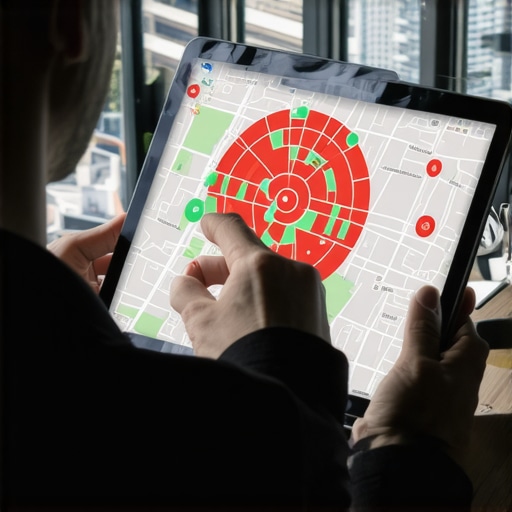
How do I maintain my ranking over time?
Maintenance is about fighting what I call ‘Search Decay.’ Google’s algorithm has a short memory. To stay relevant, you need a rhythm. Joy Hawkins, a renowned local search expert and founder of Sterling Sky, has often noted that Google is increasingly sensitive to ‘real-world’ signals that prove a business is active. This means you need a system for constant updates. You need to know how to stop search decay on your business profile by scheduling ‘Profile Sprints’ every two weeks. During these sprints, we update services, upload three fresh photos, and ensure every single question in the Q&A section is answered. If you leave your profile alone for a month, you are essentially inviting a newcomer to take your seat.
Prepare for the 2026 visual search shift
Looking ahead, the way we think about visibility improvement is going to change drastically. We are moving toward a world where Google Lens and AI-driven visual search dictate the map. I predict that by 2026, the text in your reviews will be secondary to the objects Google identifies in your uploaded photos. If your photos don’t clearly show the tools of your trade, your office layout, and your storefront, you will lose out to those who do. Start implementing these 7 Google Business Profile tips for 2026 to keep your phone ringing now so you aren’t playing catch-up later. My best advice? Take one ‘Proof of Work’ photo today—a shot of your team actually helping a customer—and upload it with a caption that uses the review response tactic that turns searchers into customers. This simple action creates a fresh signal that tells Google you are the most relevant choice in the neighborhood right now.
Hard Truths I Learned While Reclaiming the Local Three Pack
After years in the trenches, I’ve realized that the most dangerous phase for a business is when they finally hit the top spot. Seniority is a trap; I’ve seen twenty-year legacies vanish because they stopped generating new signals. If you aren’t evolving, you’re decaying. One massive lightbulb moment occurred when I realized that google map experts reveal top secrets that aren’t about volume, but about the quality of the interaction. You don’t need a thousand generic links; you need five local customers mentioning your street name in their reviews. Finally, remember that your profile is a conversation, not a billboard. If you stop talking, Google stops listening.
My Personal Arsenal for Map Dominance
I don’t make a single move without checking my data first. I personally rely on Local Falcon for those essential grid-based heatmaps—it’s the only way to see if your pin is actually moving through the neighborhood. For cleaning up the mess of old data, I trust the citation audit moves that ensure every digital mention is cohesive. When things go sideways, I turn to the specific SEO tools we use to jumpstart map rankings to find the exact signal gap that the competition is exploiting. These aren’t just gadgets; they are the dashboard for your digital survival.
Take Back Your Territory Today
The map war is won by those who show up every single day, not those who had a good run three years ago. You have the legacy, the skills, and now you have the playbook. Don’t let a newcomer with a louder megaphone drown out your decades of service. Start by uploading one fresh photo or responding to a single review with a local keyword today. If you feel overwhelmed, remember that our maps optimization team is always here to help you navigate these shifts. Achieving long-term visibility improvement isn’t about one giant leap; it’s about these consistent, strategic steps that keep your phone ringing and your business thriving in 2025 and beyond. Have you noticed your map ranking suddenly drop despite having more reviews than your neighbors? Let me know in the comments below!