
I remember sitting at my desk three years ago, staring at a phone that refused to make a sound. It was a Tuesday, typically my busiest morning, but the silence was deafening. I actually called the office from my personal cell just to make sure the line wasn’t dead. It wasn’t. The line was fine; my visibility was the problem. I opened Google Maps, typed in my primary service, and my heart sank. I wasn’t in the top three. I wasn’t even on the first page. I had become a ghost in my own neighborhood, and I had no idea why. That morning was my wake-up call. I realized that being a great technician or service provider doesn’t mean a thing if the local algorithm decides to put a blindfold on your customers. I spent the next six months obsessing over why the ‘valve’ had closed and, more importantly, how to crank it back open. If you are feeling that same pit in your stomach right now, watching your competitors get the calls that used to be yours, I want you to know it is rarely a permanent death sentence. We just need to fix the signal.
The Day My Business Became a Ghost Town
I made the classic mistake of thinking that once you’re on the map, you stay on the map. I was wrong. I had ignored the tiny warnings—the slight dip in weekly inquiries, the few days where the calendar wasn’t quite full—until the floor fell out. I found out the hard way that most citation packages actually hurt you if they aren’t managed with a surgical touch. I had blasted my business info everywhere, thinking more was better, only to create a mess of inconsistent data that made Google stop trusting my location. It’s a common trap. We think we’re building authority, but we’re actually just creating noise. According to a study by the Local Search Association, nearly 80% of local mobile searches lead to an offline purchase within 24 hours, which means every hour you spend invisible is a direct hit to your bank account. Have you ever checked your own ranking from a coffee shop two blocks away and realized you don’t even show up? If so, you’ve felt that same frustration. Today, I’m going to show you how our maps optimization team identifies these gaps and why your static business data is likely the reason your phone has gone cold.
Is it actually possible for Google to hide you on purpose?
It feels personal, doesn’t it? When a newcomer with three reviews jumps over your decade-old business, it feels like a targeted strike. But it’s not malice; it’s math. I discovered that I was suffering from the invisible radius problem, where my profile was technically ‘healthy’ but lacked the specific interaction signals needed to push past my own front parking lot. I had to stop treating my profile like a digital yellow pages ad and start treating it like a living, breathing entity. Our google map experts often see businesses fall into the ‘set it and forget it’ mindset, which is exactly when the lead valve starts to tighten. We’re going to look at the three specific mechanical fixes—from signal proximity to engagement loops—that actually tell the algorithm you’re the most relevant answer for a searcher. You don’t need a massive budget; you just need to stop the search decay that is currently eating your rankings from the inside out.
Break the Invisible Barrier Surrounding Your Shop
To fix the ghost-town effect, we have to address the ‘Invisible Radius.’ Think of your business profile like a lighthouse. If the bulb is dim, you only light up the rocks right in front of you. Most owners are running on a 40-watt bulb when they need a searchlight. The first thing I do when I sit down with a client who is ‘invisible’ is use specific mapping tools to see where their signal actually dies. It’s usually much closer than they realize.
Stop guessing and start mapping your actual reach
I worked with a local plumber last year—let’s call him Dave—who was convinced he was ranking for the whole county. When we ran the audit, he was only appearing in the top three for his own cul-de-sac. Literally. If you stepped onto the main road, he vanished. This is the proximity fix for local businesses struggling to rank outside their own parking lot that changes the game: you must stop optimizing for ‘keywords’ and start optimizing for ‘territory.’ We have to identify exactly where the signal drops and then flood that specific boundary with new, fresh activity that screams relevance.
The digital handshake that Google actually understands
Your website and your map pin need to be in a constant, loud conversation. This is where the schema technicality most agencies skip comes into play. It’s not enough to just list your address in a footer. You need to tell the algorithm exactly which neighborhoods you serve in a language it can’t misunderstand. If your site says ‘We serve the Tri-State area’ but your map pin has no connection to those specific city entities, Google gets confused and defaults to the safest, smallest radius possible. This is one reason why your local schema is ignoring your actual service area. By fixing these technical handshakes, our visibility experts basically tell the ‘map gods’ that you are a relevant authority three, five, or ten miles away, not just in your backyard.
Stop chasing reviews and start chasing interaction
Everyone tells you to get more five-star reviews. They aren’t wrong, but they are only giving you 10% of the puzzle. I’ve seen profiles with 500 reviews get buried by a newcomer with 20. Why? Because the newcomer is generating ‘interaction signals.’ Think of it like a crowded restaurant versus a museum. Both might have great ratings, but Google wants to send people where the action is. This involves 3 interaction moves that matter most for dominating nearby results: getting customers to ask questions directly on the profile, uploading fresh content, and—this is the big one—driving ‘directions requests’ from different parts of town. Our google map experts focus on these ‘human’ movements because they are much harder for competitors to fake than a simple five-star rating.
Visual proof is the new keyword stuffing
Finally, you have to look at what you’re showing the world. If your last photo was a blurry shot of your office lobby from 2019, you are committing search suicide. The algorithm now uses AI to ‘read’ your images. It looks for tools of the trade, happy customers, and identifiable local landmarks. This is how the exact photo types that actually trigger your profile ranking signals work. When Dave the plumber finally started posting clear shots of his truck in front of recognizable local parks and street signs, his ‘invisible’ radius started to expand almost immediately. It’s about providing undeniable proof that you are physically active in the areas you claim to serve. This is how to jump over competitors who have held the top map spot for years: stop being a static name and start being a visible, active neighbor who provides consistent visibility improvement through real-world evidence and reliable local visibility help provided by an experienced maps optimization team.
Most business owners I talk to are still playing a game from 2018. They think that if they just get more reviews and make sure their phone number is correct, they’ll magically float to the top of the local three-pack. But here’s the cold truth: Google has evolved, and the old playbooks are now actively hurting you. In my experience, I’ve seen businesses with 400 five-star reviews lose their top spot to a competitor with only 50. Why? Because the ‘ranking algorithm’ has shifted from static authority to behavioral signals. If you aren’t adapting, you’re essentially trying to win a Formula 1 race with a horse and buggy.
The trap of chasing volume over engagement velocity
Everyone tells you to build more citations, but I’m here to tell you that’s a recipe for disaster if you don’t audit them first. The biggest myth in the industry is that ‘NAP consistency’ (Name, Address, Phone) is still the king of ranking factors. While it’s important, it’s now just table stakes. If you are still obsessing over whether your suite number says ‘Ste’ or ‘Suite,’ you’re missing the forest for the trees. Many visibility experts focus purely on volume—more reviews, more citations, more photos. But Google’s latest updates, specifically around ‘Neural Matching,’ are designed to filter out bulk. If you buy a generic ‘citation blast,’ you are creating a data footprint that looks identical to a spam bot. This is why most local citation packages actually hurt your rankings. You need a surgical audit, not a megaphone.
Why does your ranking plummet when a searcher crosses the bridge?
It’s not just a technical glitch; it’s about ‘Pedestrian Flow’ and ‘Local Interest.’ A study by local search expert Joy Hawkins at Sterling Sky has shown that Google is increasingly using real-world behavioral data—like where people actually drive and walk—to determine relevance. If the algorithm sees that people from the north side of town never actually visit your shop, it will stop showing you to them, regardless of your 5-star rating. This is why foot traffic signals are outpacing traditional SEO reviews in high-density areas. Have you ever fallen into this trap where you rank perfectly at your desk but vanish three blocks away? Let me know in the comments.

Stop the citation bleed before it kills your trust
When our google map experts perform a deep-dive audit, we don’t just look at what’s on the screen; we look at the ‘Signal Gap.’ Have you ever noticed competitors appearing in the Three-Pack even though they have fewer reviews and a worse website? They are likely winning on ‘Interaction Density.’ This involves 3 interaction moves that matter most: the ratio of people who view your profile and then actually click ‘Call’ or ‘Directions.’ High impressions without clicks tell Google you are irrelevant. This is why high map impressions often mask a failing local strategy. To truly gain visibility improvement, you have to master the technicalities that others skip, like the schema technicality most agencies skip. Without this ‘digital handshake’ between your site and your map pin, your local visibility help is just expensive guesswork. Our maps optimization team focuses on building these genuine trust signals to ensure your business doesn’t just appear on the map, but stays there long after the ‘honeymoon phase’ of a new profile expires.
Scaling a business is exhilarating, but scaling your visibility is where the real war is won. Once you’ve broken through the initial barrier, the game changes from ‘discovery’ to ‘defense.’ I’ve seen dozens of shops hit the number one spot and then immediately stop doing what got them there. They treat their Google Business Profile like a trophy rather than a garden. If you don’t keep weeding and watering, the search decay will inevitably set in. This is where a dedicated maps optimization team becomes your secret weapon, turning a one-time win into a multi-year lead machine.
How do I maintain my map dominance over time?
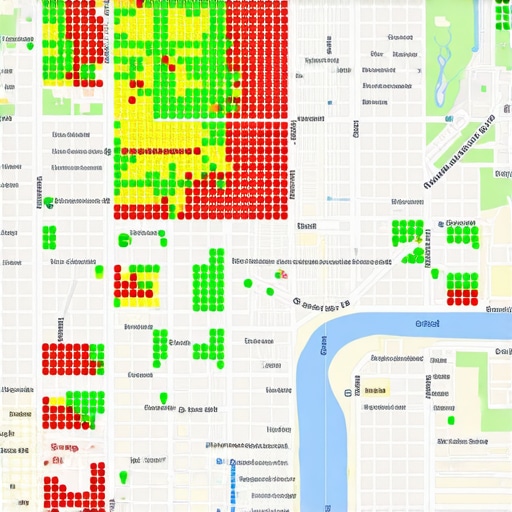
The key is consistency over intensity. I personally rely on a strict weekly checklist that our google map experts developed to ensure no signal goes stale. This includes responding to every single review within 24 hours—even the ones without text—and refreshing our visual content. I’m a huge fan of using grid-tracking software to see my rank in a 5×5 mile radius. If I see a single red dot appear in a neighborhood that was green last week, I know a competitor is making a move. This proactive approach is the only way to provide real local visibility help that actually lasts. You should regularly check the 5 mapping tools we actually use to audit local profile health to ensure your data hasn’t been quietly ‘suggested’ away by a competitor’s edit.
Keep your pin from fading into the background
Maintenance also means looking at the data that actually matters. I stopped looking at ‘Views’ years ago. Views are a vanity metric that can be easily inflated by bot traffic or broad searches. Instead, I obsess over ‘Interaction Velocity.’ According to Darren Shaw’s 2023 Local Search Ranking Factors study from Whitespark, behavioral signals like ‘click-to-call’ and ‘request directions’ are becoming the heaviest hitters in the algorithm. If your interaction rate drops, your ranking will follow. This is how to stop search decay on your business profile before it costs you your top spot. Our visibility experts track the only 3 metrics in your report that actually predict profit, so we aren’t wasting time on fluff that doesn’t ring the phone.
The future looks more like a conversation than a list
Looking ahead, the ‘Map War’ is going to get even more personal. With the rise of Search Generative Experience (SGE), Google isn’t just going to show a list of names; it’s going to explain why a business is the right choice. It will pull snippets from your reviews, your posts, and even your website’s FAQ. If you want to stay relevant, you need to be surviving the 2026 google maps shift by optimizing for ‘Intent’ rather than just ‘Keywords.’ This is a massive part of the visibility improvement strategies we are implementing today. You need to start thinking about innovative approaches to visibility improvement that include AI-ready data structures and conversational review responses. If you’re tired of the ‘yo-yo’ effect where you’re up one month and down the next, reach out to our maps optimization team. My best advice? Go run a heatmap audit of your shop right now. Seeing that visual representation of your ‘invisible boundaries’ is usually the kick in the pants most owners need to start taking their local presence seriously.
The Hard Truth About My Maps Recovery Journey
Reflecting on my own ‘ghost town’ period, I realized that technical fixes are only half the battle. The most important lesson I learned is that Google rewards those who stay present in the digital conversation. Here are the core truths I live by now:
- Proximity is not destiny. Just because you are located in a neighborhood doesn’t mean you own it. You have to earn that space every single week by showing the algorithm you are active.
- Data hygiene is non-negotiable. I stopped ignoring the tiny discrepancies in my citations and started a thorough citation audit to clean up the mess of inconsistent names and addresses I had created.
- Velocity beats volume. Ten reviews spread over a year are far less powerful than three reviews and four photo updates in a single month. Search engines love a fresh pulse.
My Daily Arsenal for Maintaining Visibility
I don’t believe in guessing when it comes to my livelihood. I rely on a handful of high-integrity resources and specific SEO tools to keep my pulse on the local landscape. First, I always keep an eye on the latest expert map optimization strategies to ensure I am not using outdated tactics from 2018. I also highly recommend using a grid-based ranking tool to visualize your reach—seeing a map of red and green dots is far more actionable than a spreadsheet of numbers. Finally, I regularly consult the business profile checklist provided by true visibility experts to ensure no technical balls are being dropped.
The Map is Waiting for Your Next Move
Reclaiming your visibility isn’t about one giant leap; it’s about a hundred small, correct steps. If you are feeling overwhelmed, start by fixing just one thing today—perhaps your service areas or a single high-quality photo. The goal is visibility improvement that sticks and scales with your business growth. You have the tools, the strategy, and the proof that it works. Don’t let another day pass where a potential customer finds your competitor instead of you because of a ‘ghost’ profile. Our maps optimization team is always here to help you navigate these shifts. Have you ever noticed your profile ranking drop right after a competitor updated their photos? Let me know in the comments below!