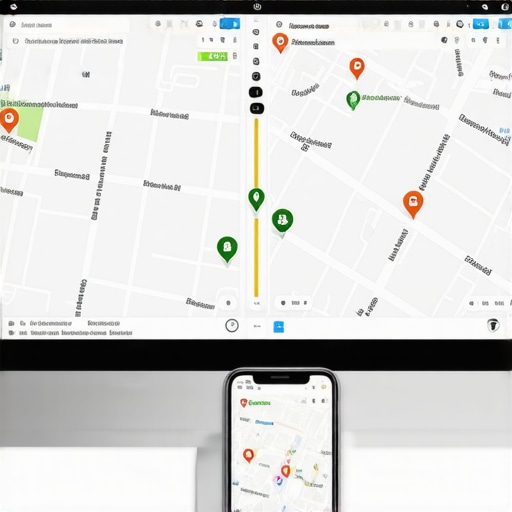
I remember sitting in a sun-drenched diner a few years back, nursing a lukewarm coffee and feeling like I had finally cracked the code. I had just spent three months working with a google map expert to climb the ranks, and when I pulled up my laptop, my business was sitting pretty at the top of the local pack. I was the king of the desktop. Then, the owner of the diner—a guy who barely knew how to use a smartphone—searched for my services on his cracked iPhone screen. He looked at me, frowned, and said, ‘I don’t see you here.’ I laughed it off, thinking it was a glitch. But when I checked my own phone, my heart sank. I wasn’t just lower down; I was invisible. It was a gut-punch of a realization: I was winning on the big screen but completely failing the customers standing right in front of me. This ‘signal gap’ is the silent killer of local businesses, and today, I’m going to show you how to bridge it so you never have to feel that embarrassment.
My Biggest Map Ranking Mistake
Looking back, my error was so obvious it hurts. I had treated local SEO like a one-size-fits-all trophy. I spent all my energy on high-level ‘city’ rankings from the comfort of my office chair, never realizing that mobile-friendliness changes the entire ranking algorithm on the fly. I was optimizing for a stationary user, while my actual customers were moving targets. I ignored the ‘proximity pulse’ that Google uses to decide who shows up on a phone. It’s a common trap: we trust our desktops because that’s where we do our work, but our customers are living their lives on their phones. If you’ve ever noticed your traffic flatlining despite ‘good’ rankings, you might be falling into this same hole. Have you ever checked your own ranking while out at a park or a different neighborhood and realized you’ve vanished?
Is Mobile Map Ranking Really a Different Game?
You might be skeptical. After all, isn’t Google just Google? It’s a fair question. But think about how you use your phone versus your laptop. On a laptop, you’re researching; on a phone, you’re doing. Google knows this. According to data from Statista, mobile devices now account for over 63% of all organic search traffic. Because the screen is smaller and the user is often in motion, Google places a massive weight on ‘real-time’ signals that desktop searches often ignore. It’s not just a different game; it’s an entirely different league.
The Proximity Trap That Keeps You Invisible
When you’re on a desktop, Google’s search radius is relatively generous. It assumes you might be willing to drive across town. But on a mobile device, that radius shrinks faster than a cheap wool sweater in a hot dryer. This is why your business profile is losing the proximity battle even if you have better reviews than the guy down the street. Mobile rankings favor the ‘immediate answer.’ I learned the hard way that you can’t just buy your way to the top with standard SEO; you have to feed the mobile algorithm the specific interaction signals it craves. Whether it’s how fast your store photos load or how many people click for directions, these micro-moments are the bread and butter of mobile visibility.
Turn Your Listing into an Engagement Magnet
To win on mobile, you have to stop thinking like a librarian and start thinking like a concierge. Google isn’t just looking for your business name; it’s looking for evidence that you’re the most helpful person in the immediate vicinity. The first thing any maps optimization team will tell you is that clicks are the new citations. On a desktop, a click might just be someone browsing your website, but on mobile, a click is usually a ‘buy’ signal. You need to force the algorithm’s hand by mastering the interaction moves that actually matter. This means your ‘Directions’ and ‘Call’ buttons aren’t just features—they are your primary ranking signals. I once helped a local locksmith who was technically perfect on paper but invisible on the street. We realized his profile was static. By encouraging clients to upload photos of the finished job right from their driveway, we triggered a geographic timestamp that proved to Google he was actually physically present in those neighborhoods. It was a visibility improvement that no amount of keyword stuffing could match. 
Force the Algorithm to See Your Real Service Area
If you feel like your map pin is stuck in the wrong neighborhood, it’s likely because your digital signals are too broad. When I was working with a boutique gym, they were trying to rank for the entire metro area, which resulted in them ranking for nothing on mobile. We had to implement a specific proximity hack to stop ghosting local leads. We stopped the generic ‘city-wide’ posts and started creating hyper-local content that mentioned specific street corners and nearby landmarks. This tells the mobile algorithm that your relevance isn’t just theoretical; it’s tethered to the ground. You also need to audit your categories. Most people set them once and forget them, but the one setting your maps optimization team needs to change fast is your secondary category list. If those aren’t aligned with how mobile users search for quick solutions, you’re essentially invisible to the ‘near me’ crowd.
Feed the Beast with Real Time Signals
Mobile ranking lives in the ‘now.’ If your last profile update was three months ago, Google assumes your business is as stale as a week-old donut. You need to use real-time engagement to boost your map position. This isn’t about being on social media; it’s about being active on your profile. I tell my clients to treat their Google Business Profile like a live broadcast. Are you uploading new photos weekly? Are you responding to reviews within hours? These are the micro-signals that visibility experts use to leapfrog over established competitors. When you provide fresh data, you’re giving the mobile algorithm a reason to prioritize you over the guy who hasn’t touched his profile since 2019. It’s about creating a ‘digital heartbeat’ that Google can’t ignore. If you want local visibility help that actually moves the needle, stop worrying about your desktop ranking and start focusing on the person holding a phone two blocks away. They don’t care about your long-form blog posts; they care that you’re open, you’re close, and people are talking about you right now. Mastering how to optimize your map listing for mobile users is the only way to ensure you aren’t just a ghost in the machine.Most ‘google map experts’ will tell you to get listed on every directory under the sun. They’ll hand you a spreadsheet of 200 citations and call it a day. But here is the hard truth: why local citations no longer move the needle like they used to boils down to one thing—Google has outgrown them. I’ve seen businesses spend thousands on ‘citation cleanup’ only to see their map pin stay frozen. The real visibility improvement comes from entity-level data, not a listing on a junk directory that hasn’t seen a human visitor since 2012. If you’re still prioritizing quantity over local relevance, you’re essentially shouting into a void. Have you ever fallen into this trap? Let me know in the comments.
Stop Letting Your Service Area Hide You From Customers
One of the biggest ‘oops’ moments I see involves service-area businesses (SABs). You hide your address because you work at your customers’ locations, right? It seems logical. But then you wonder why your service area business is stuck in the suburbs while your competitors are cleaning up in the city center. When you hide your physical location, Google struggles to anchor your ‘authority’ to a specific point. This creates the signal gap stopping your profile from ranking in nearby zip codes. You think you’re protecting your privacy, but you’re actually cutting your own legs off. You need to learn how to use local schema to fix your service boundary errors so the algorithm understands where you actually work, even if you don’t have a storefront. 
Why do businesses with fewer reviews keep beating you?
It’s incredibly frustrating. You have 200 five-star reviews, and some guy with 40 reviews and a 4.2 rating is sitting at the top of the three-pack. You might think the system is rigged. But the hidden reason your competitor ranks higher with fewer reviews usually comes down to keyword-rich sentiment and proximity ‘density.’ A study by the experts at BrightLocal confirms that while review volume matters, the speed and frequency of new reviews (velocity) and the specific keywords customers use in those reviews carry far more weight for local visibility help. If your reviews are all generic ‘Great service!’ posts, they don’t help Google understand what you do. Your competitor’s fewer reviews might be packed with high-value keywords like ’emergency plumber’ or ‘best deep-dish pizza,’ which signals much higher relevance for those specific searches.
Stop Chasing Citations That Don’t Move the Needle
Don’t be fooled by flashy reports that show you ranking #1 for a specific keyword in a 1-mile radius. That’s easy. The real challenge—and where most google map experts fail—is maintaining that position as the user moves. If your agency isn’t talking to you about behavioral triggers and local intent, it’s one of the 5 signs your local visibility help is actually hurting your rankings. Stop looking at static screenshots and start looking at your real-time foot traffic and direction requests. Real visibility improvement happens when you stop obsessing over the ‘Three-Pack’ as a static trophy and start treating it as a dynamic marketplace. Most businesses fall into the trap of ‘optimization set-and-forget.’ They hire a maps optimization team, get their profile green-lit, and then stop. But the algorithm is constantly sniffing for recent activity. If your competitor is uploading photos of their weekly specials and you’re still using the same blurry storefront shot from 2021, you’re going to lose. It’s about creating a constant stream of local proof. Every time a customer mentions your neighborhood in a review, or you post a ‘Google Update’ about a local event, you are deepening your roots in that specific geographic area. That’s how you win the long game.I used to think that once you hit that top spot, the work was done. I treated it like a trophy on a shelf. But Google Maps is more like a garden; if you stop watering it, the weeds—your competitors—will take over in a heartbeat. To stop the rot, I shifted my strategy from ‘launching’ to ‘monitoring.’ I stopped relying on those generic PDF reports my old agency sent me. They were vanity metrics. Now, I use hyper-local grid tracking tools because they show me the truth: I might be #1 at my front door, but #10 two blocks away. This is where a professional map optimization team really earns their keep. They don’t just look at one data point; they look at the whole neighborhood.
Keep Your Pin From Drifting Into Obscurity
The secret to staying power isn’t a one-time hack; it’s consistency. I personally use a ‘Grid Search’ audit once a month to see if my visibility radius is shrinking. If I see red dots appearing where there used to be green, I know the proximity filter is tightening. According to research by Joy Hawkins at Sterling Sky, Google’s ‘Possum’ filter can fluctuate based on how many similar businesses are nearby, meaning you have to constantly prove your unique relevance. This is why you need to master the secret to staying on the map when the algorithm shifts. I make it a point to update my business hours for every single holiday—even the minor ones—because that tiny ‘Updated by business 2 weeks ago’ tag is a massive trust signal for the mobile algorithm. #IMAGE_PLACE_HOLDER_D#
How do I maintain my map ranking over time?
You maintain it by feeding the machine a steady diet of fresh, localized data. I’ve started using a technique where I geo-tag every photo I upload with the specific neighborhood name in the metadata. It sounds like overkill, but when you want visibility improvement for a stagnant business, these tiny technicalities matter. I also recommend setting up an automated ‘Review Response’ workflow. Don’t just say ‘Thanks!’—incorporate the neighborhood or the specific service mentioned. It’s a review response trick that boosts your search authority without looking like a robot wrote it. Looking ahead, I predict that ‘Visual Search’—where people take a photo of a storefront to find info—will eventually merge with local map rankings. If your photo strategy isn’t ready for AI recognition, you’re going to fall behind.
The Exact Tech Stack I Use to Spy on Competitors
You can’t win if you don’t know what the guy across the street is doing. I use tools that allow me to snoop on competitor map data to see exactly which keywords are driving their ‘Directions’ requests. If I see a rival gaining ground, I don’t panic; I look at their interaction signals. Are they getting more ‘Questions and Answers’? If so, I’ll start a campaign to use customer questions to outrank them by answering every common query before a lead even has to ask. This proactive approach is what separates the **visibility experts** from the amateurs. If you really want to see where you stand, go to a coffee shop three blocks away from your office right now, turn off your Wi-Fi, and search for your primary service. If you aren’t in the top three, your current **local visibility help** isn’t working as hard as it should be. Try refreshing your secondary categories today and see how fast your radius expands.
Hard Truths From My Years in the Local Pack
One thing I’ve learned is that your map position is never truly ‘safe.’ You can do everything right today and be buried tomorrow if you do not stay vigilant. Many business owners think they need to be everywhere, but the real secret is being the most relevant choice in a tight radius first. I’ve seen so many people get burned because they didn’t know how to spot a fake map ranking report from your agency, which usually focuses on vanity metrics rather than real phone calls and foot traffic.
Another lightbulb moment for me was realizing that service area businesses face a steeper climb than those with storefronts. If you’re in that boat, you have to understand the truth about ranking a service area business fast—it’s about creating signal density, not just filling out a basic profile. Don’t let the technicalities scare you; the most successful visibility experts started exactly where you are now, wondering why their map pin wasn’t moving. Focus on the data, ignore the noise, and stay consistent.
The Gear That Keeps My Visibility Sharp
If you want to move beyond guessing, you need the right tools in your arsenal. I always recommend using a dedicated grid tracker like BrightLocal or Places Scout to see your performance across the entire city, not just from your office desk. For those struggling with technical hurdles or getting stuck in administrative purgatory, knowing how to verify your business profile without the support loop is a lifesaver that saves weeks of frustration. I also lean heavily on advanced JSON-LD markup; in fact, the schema technicality most agencies skip for local dominance is often the exact reason a smaller shop can leapfrog over a big national chain. Finally, if you are truly stuck, reaching out to a google map expert can provide the local visibility help needed to diagnose deep-seated algorithmic issues.
Stop Being a Ghost in Your Own City
It is time to take all this theory and put it into practice. You have the knowledge to bridge the signal gap and reclaim your local authority from the competitors who have been coasting on old rankings. Don’t wait for a ‘perfect’ moment to start your visibility improvement journey; start by updating a single high-quality photo or responding to an old review today. Every small action feeds the algorithm and tells Google you are active, open, and ready for business. You have got the tools to win, and your local neighborhood is waiting to find you. Which neighborhood or zip code are you struggling to rank in right now? Let me know in the comments below and let’s troubleshoot it!