
I’ll never forget the rainy Tuesday I decided to play “customer” for my own business. I was parked right outside a local hardware store, maybe ten minutes from my desk, and typed my core service into Google Maps. Nothing. I scrolled. I zoomed. I even hit the “More Places” button, but I was nowhere to be found. It felt like a punch to the gut because I’d spent months telling myself I had the whole county covered. That was my wake-up call: setting a massive radius in your dashboard doesn’t mean a thing if the algorithm thinks you’re a ghost.
The Day I Realized My Huge Service Radius Was a Lie
Early on, I fell for the classic trap. I figured if I told Google I serviced a fifty-mile radius, I’d get leads from fifty miles away. I was wrong. In fact, the truth about ranking a service area business fast is that Google prioritizes where you actually are over where you say you go. By spreading myself too thin, I wasn’t just failing to show up far away—I was weakening my authority right in my own backyard. If you’ve ever wondered why your service area business is stuck in the suburbs while competitors thrive, you’re likely failing the proximity test.
Does a bigger coverage area actually help you get more leads?
Most of us think bigger is better. We want the whole map to turn green. But here is the reality: a broad, undefined service area often acts as a signal to Google that you aren’t a specialist in any specific neighborhood. According to a study by Search Engine Journal, proximity remains one of the top three local ranking factors, often outweighing even the strongest backlink profiles. You might be losing the proximity battle because your signals are too diluted. Today, I’m going to show you how to tighten that leash and finally force the map to recognize your presence.
Stop Ghosting the Customers Who Are Right Next to You
The frustration of being “invisible” is real. I’ve talked to dozens of business owners who feel like they are shouting into a void. If you’re tired of seeing your map pin drift into irrelevance, it’s time for a proximity fix for businesses on the edge of town or those trying to bridge the gap between zip codes. Have you ever checked your rankings from a different neighborhood and felt that sinking feeling when you didn’t show up? Let’s talk about how to stop that. We need to look at fixing the invisible radius problem once and for all using specific local signals.
Stop Trying to Own the Whole State
Start by slashing your service area in the dashboard. I remember a plumber friend who insisted on covering three counties. He was invisible everywhere. I finally convinced him to delete every zip code except the four surrounding his house. It felt like he was deleting his future, but guess what? Two weeks later, he was the top result for those four zips. By shrinking his footprint, he finally won the proximity battle. Once you own your backyard, you can expand, but you can’t build a skyscraper on a swamp. You have to force Google to update your service area radius to reflect a density you can actually dominate. If you’re spread too thin, you’re just noise in the machine. 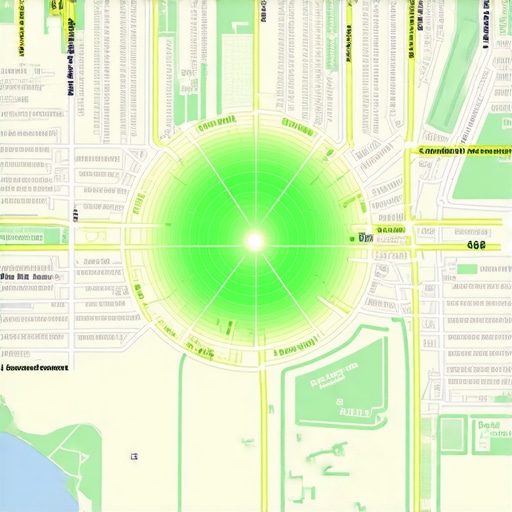
The Signal Chain That Actually Moves Your Pin
Think of your online presence as a physical rope. One end is your website, and the other is your Google Business Profile. If that rope is frayed, the connection drops. You need to understand the signal chain that connects your site to your map pin. This means your website needs to explicitly mention the neighborhoods you serve in your headers and footers. I once saw a business jump five spots just by adding a specific neighborhood map to their contact page. You can also use local schema to fix your service boundary errors, which acts like a digital GPS for Google’s crawlers. If the bots don’t have to guess where you are, they are much more likely to show you to people in those exact spots.
Clicks Matter More Than You Think
Google doesn’t just care about what you say; they care about what customers do. If ten people search for a service and eight of them click your listing to see directions, Google notices. This is why visibility experts focus on interaction rather than reviews as the primary growth lever. A review is a static compliment, but a click is a live vote of confidence. I’ve found that using the exact photo strategy that triggers local search signals—like uploading geotagged images of your team on-site—can bridge the trust gap. When users see real photos of your work in their neighborhood, they are far more likely to click ‘Call’ or ‘Directions,’ which tells the algorithm you are the most relevant result in that specific radius. You have to learn the truth about proximity filters and how to bypass them by generating this real-world engagement every single week.
Why 500 Reviews Might Still Leave You on Page Two
We’ve all been told that reviews are the holy grail of local search. If you just get enough five-star ratings, the leads will pour in, right? Wrong. I’ve seen businesses with 1,000+ reviews get absolutely demolished by a competitor with only fifty. This happens because most people think of Google map experts as simple review-generation machines, but the algorithm has evolved. It’s no longer about the total count; it’s about the velocity and relevance of those reviews. If you get twenty reviews in a week and then go silent for three months, Google sees that as a red flag, not a sign of authority. In my experience, a steady drip of one review per week is worth more than a sudden flood that triggers the dreaded spam filter. You have to understand that the local visibility help tactics that no longer work are often the ones focusing solely on volume over quality.
How do smaller shops beat massive national chains with unlimited budgets?
It comes down to what the industry calls ‘behavioral signals.’ According to the Whitespark Local Search Ranking Factors survey, behavioral signals—like how many people click your ‘Call’ button or ask for directions—have skyrocketed in importance. This is the ‘secret sauce’ that a real maps optimization team uses to move the needle. A national chain might have more money, but they often have ‘dead’ profiles that nobody interacts with locally. By focusing on the interaction moves that actually matter for dominating map results, you can force the algorithm to prioritize your active, local business over a stagnant corporate listing. 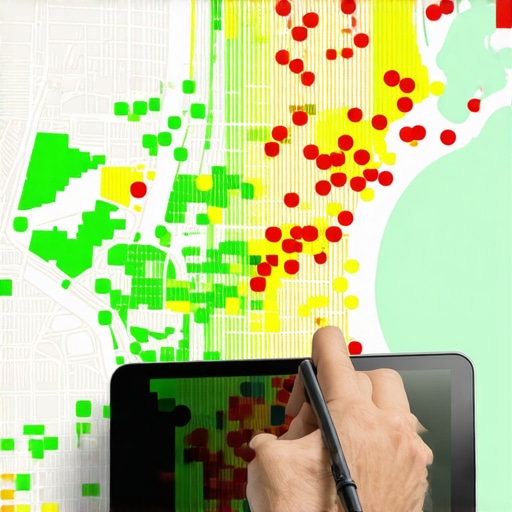
The ‘Set It and Forget It’ Trap
The biggest ‘oops’ factor I see with business owners is treating map optimization like a one-time task. You fix your NAP data, upload ten photos, and wait for the phone to ring. But map rankings are fluid; they expire. I’ve watched clients drop from the top spot simply because they stopped posting updates to their profile for thirty days. When you stop feeding the beast, Google assumes your business is less relevant than the guy down the street who just posted a photo of his new service truck. If you are noticing 5 signs your local visibility help is actually hurting your rankings, it’s usually because they aren’t maintaining your ‘freshness’ signal. You also need to realize that why local citations no longer move the needle like they used to is because Google now trusts live data—like your current location and customer photos—over static directory listings from five years ago.
Stop Chasing Empty Citations
Years ago, you could buy a package of 200 citations and see your pin move overnight. Today, that’s a recipe for a plateau. Modern visibility experts know that quality beats quantity every time. Instead of being listed on a random blog in another country, you need to be mentioned on your local chamber of commerce site or a neighborhood news blog. This creates a hyper-local relevance that the algorithm can’t ignore. If you’re struggling with your reputation, make sure to check out the review filter survival guide for local contractors to ensure your hard-earned feedback actually sticks. Have you ever fallen into the trap of thinking more reviews equals an automatic #1 spot? Let me know in the comments.I used to think checking my ranking from my office couch was ‘research.’ It wasn’t; it was vanity. The real work began when I realized that local visibility is a living, breathing thing that requires a pulse check every single week. If you aren’t actively monitoring your profile, you are essentially leaving your front door unlocked in a bad neighborhood. I’ve seen businesses climb to the top only to fall off a cliff because they ignored a small algorithm shift or a new competitor move. This is why a maps optimization team doesn’t just set things up; they stay in the trenches.
The Weekly Ritual That Keeps My Phone Ringing
Every Friday morning, I spend thirty minutes doing what I call a ‘relevance refresh.’ I don’t just post a random photo; I look for how to use real-time engagement to boost map position by responding to every single Q&A and review with neighborhood-specific keywords. This isn’t just for the customer—it’s for the bots. I also run a quick audit to see if my competitors have changed their categories. Joy Hawkins from Sterling Sky, a renowned local search expert, often notes that even minor category changes by a competitor can trigger a ‘Possum’ filter effect that might hide your listing. If you aren’t looking, you’re losing.
How do I keep my rankings from dropping next month?
Consistency is the only hedge against volatility. You need a dedicated map optimization checklist for service area businesses to ensure you aren’t missing the basics. I personally use a grid-tracking tool like BrightLocal or Local Falcon. Why? Because a single ranking number is a lie. You might be #1 at your office but #10 three blocks away. Seeing that ‘heat map’ tells me exactly where I need to focus my next geotagged photo or local blog post. If you want to master your map rankings, you have to stop guessing and start measuring the data that actually moves the pin. 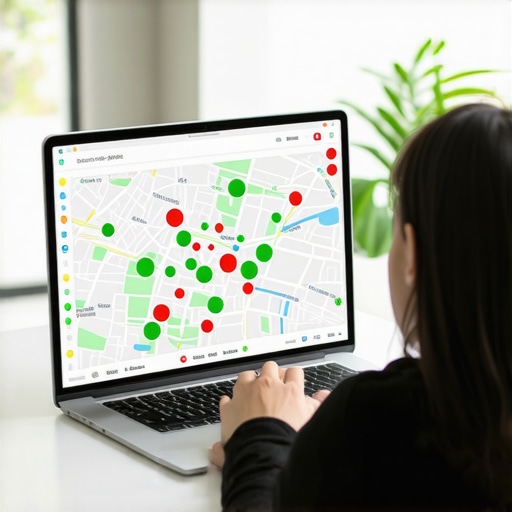
The Specific Tools I Trust for the Long Haul
You don’t need a thousand-dollar software suite, but you do need precision. I’ve learned how to audit your local map presence without expensive tools by using ‘incognito’ searches and manual coordinate checks, but for scaling, automation is your friend. I recommend setting up alerts for ‘brand mentions.’ If a local blogger mentions your shop but doesn’t link to your map pin, you’re leaving authority on the table. This is one of those specific signal moves that help small shops claim territory from the big guys.
What the Map Looks Like in 2026
Looking ahead, I predict that ‘Search Generative Experience’ (SGE) will make the Map Pack even more interactive. Google is moving toward a model where the AI answers the customer’s question directly using your profile data. If your profile is thin, you won’t even be in the conversation. You need to unlock local visibility expert map optimization strategies for 2025 now to be ready for 2026. This isn’t just about ‘SEO’ anymore; it’s about becoming the most helpful resource in your zip code. My challenge to you today is simple: Go into your Google Business Profile and answer one ‘Unanswered Question’ from a customer with a 50-word, helpful response. It takes two minutes, but the signal it sends to Google is worth its weight in gold.
The Hard Truth About My Failed Five-Mile Monopoly
It took me three years to realize that Google cares more about my real-time activity than my physical address. I used to think visibility experts were just people who knew how to fill out a profile, but the real secret is staying active in the digital neighborhood. First, stop treating your profile like a static business card; treat it like a physical storefront with an open door. Second, if you aren’t posting weekly photos, you are essentially telling the algorithm your business is closed. Third, reviews without responses are wasted signals. I’ve seen the visibility improvement move for stagnant local businesses change everything when these simple habits are finally applied.
The Toolkit That Keeps My Business From Ghosting Customers
I don’t leave my rankings to chance anymore. I rely on Local Falcon because its ‘heat map’ shows the brutal truth about exactly where I’m invisible. I also consistently refer back to the map optimization checklist for service area businesses to ensure I haven’t missed a basic signal. Finally, I recommend a weekly manual audit using incognito windows; you can learn how to audit your local map presence without expensive tools to see exactly what your customers see without the filter of your own search history.
Your Move Toward Local Dominance
The future of local search belongs to the businesses that show up and engage every single day. Don’t let a national chain with a massive budget push you out of your own town. You have the local advantage and the hyper-specific knowledge they can’t replicate. If you’re ready to get serious and stop the map drift, feel free to contact us and let’s get your pin where it belongs. Have you ever noticed your business disappearing just a few blocks away from your office? Share your experience in the comments below.