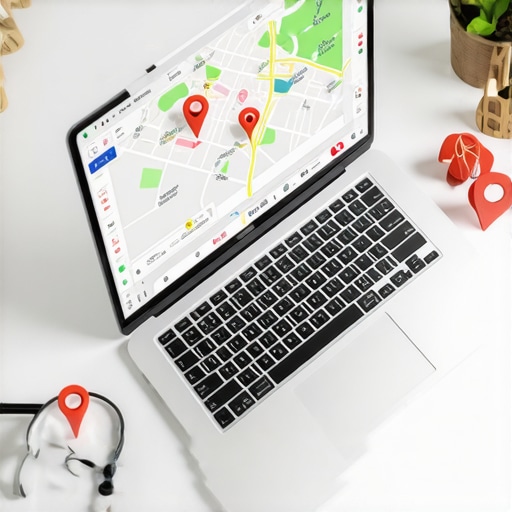
I still remember the cold sweat that broke out on my forehead three years ago when I clicked refresh on my browser. My business profile was gone. Dissolved. Suspended by Google. I had worked so hard to get into that coveted local three-pack, but in a single afternoon, my phone stopped ringing. My mistake? I fell for the old trick of stuffing high-value keywords right into my business name. I thought I was being a genius, but instead, I triggered an automated filter. Since that painful week, I have dedicated myself to figuring out exactly how to keep local listings safe. Working alongside our maps optimization team, I discovered that you do not need to cheat the system to win the local ranking war. Today, I am going to show you exactly how to craft a highly optimized profile name that keeps the search engines happy while still attracting massive local attention.
The High-Stakes Game of Naming Your Business on Google Maps
When your business relies on local customers, your map pin is your most valuable asset. But Google has aggressively cracked down on spammy tactics. If you try to game the system by adding extra city names or services to your official business title, you are essentially painting a massive target on your back. Our google map experts constantly see business owners lose years of hard-won reviews over a single naming mistake. Real visibility improvement does not come from cheap naming hacks. It comes from establishing genuine, verifiable authority that Google trust algorithms can verify. According to local search ranking factor studies, listing accuracy is highly correlated with user trust, and even minor discrepancies between your map listing and your legal entity can trigger manual reviews. You want to make sure your name matches your real-world signage, or at least aligns with your official business registration documents.
Is playing it safe actually going to cost you rankings?
I know what you are thinking. If your competitor, ‘Bob’s Plumbing & Drain Cleaning Austin,’ is ranking number one with a keyword-stuffed name, why should you play by the rules? It is incredibly frustrating to see bad actors win the short game. However, that competitor is living on borrowed time. Google actively updates its suspension filters daily. If you are looking for long-term local visibility help, you must build on solid ground. Have you ever had your business profile suspended, or are you currently terrified of changing your name to match your real brand? Share your experiences in the comments below because I want to help you navigate this safely.
The Three-Step Clean Name Framework That Keeps Google Happy
Think of your business name on Google Maps like a legal deed. If you try to slip in extra words on a deed, the bank rejects it. Google operates with the same cold, calculated logic. To get the visibility you need without risking your business livelihood, you must follow a strict, systematic naming framework. I learned this the hard way when working with a local locksmith who had his listing wiped out overnight. We had to quickly pivot, strip away all the fluff, and rebuild his brand’s digital foundation from scratch. Here is exactly how we did it, and how our maps optimization team now protects hundreds of other local businesses.
Match Your Real-World Paper Trail First
Before you even touch your keyboard to edit your Google Business Profile name, gather your official documentation. Google’s trust algorithms are highly automated, but when a suspension triggers, a human reviewer will look for consistency. Your profile name should perfectly match your utility bills, tax registrations, or your state business filing. If your official name is ‘Apex Plumbing,’ do not write ‘Apex Plumbing & Drain Cleaning’ on your profile. If you desperately want those industry keywords in your name, you must officially file a Doing Business As (DBA) registration. During a messy transition last winter with an HVAC client in Seattle, we filed a quick DBA registration for ‘Apex Heating & Cooling’ to align with his real-world signage. That simple legal paper trail was the only thing that saved him from a permanent suspension during a routine algorithmic sweep.
Update Your Signage and Online Footprint
Google does not just look at your legal paperwork; their street-view cars and user-submitted photos verify your physical storefront. If your office door or vehicle wrap says ‘Apex Plumbing,’ but your online listing claims something else, you invite manual red flags. If you want a legitimate visibility improvement, you must make sure your digital branding matches your physical reality. Update your website’s header, footer, and contact page to reflect the exact name on your Google Profile. Our google map experts always recommend checking your local business directories. Having mismatched names across the web confuses the algorithm and dilutes your brand’s authority.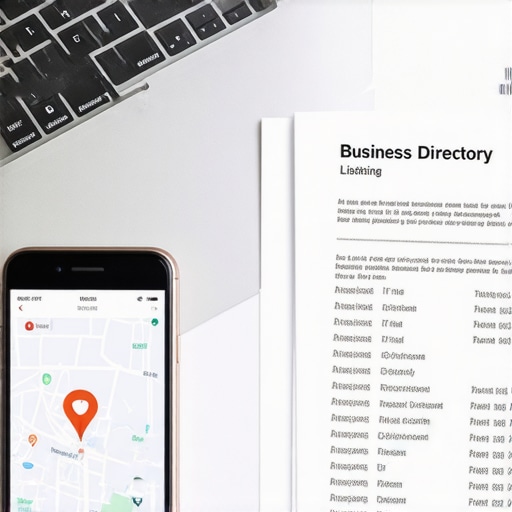
Clean Up Your Local NAP Consistency
Consistency in your Name, Address, and Phone number (NAP) across the internet acts like a vote of confidence for search engines. When third-party directories, local blogs, and social profiles all list your business name identically, Google gains the confidence to rank your map pin higher. If you are struggling with a sudden drop in map views, you might have conflicting data floating around. You can check out the simple move to fix your flatlined map impressions to resolve these data conflicts quickly. When you require professional local visibility help, prioritizing data cleanup over keyword stuffing is always the safest path to sustained search engine dominance. Our experienced visibility experts always look at data alignment as the primary foundation of long-term ranking success.
The Engagement Lie That is Costing You the Local Pack
Ask ten local marketing agencies how to improve your ranking, and nine of them will tell you to focus solely on getting more reviews and building thousands of standard directory citations. While that sounds logical, in my experience, traditional citations have a diminishing return. Everyone tells you to buy more directory links, but focusing on volume is an outdated trap. Our maps optimization team realized that the algorithms have shifted. Modern local search relies on user interaction signals rather than the sheer volume of static directory mentions.
A notable industry study by local search authority Whitespark confirms that behavioral factors like directions requests, click-through rates, and direct messaging engagement have grown significantly as ranking signals. This means you can have perfect citation consistency, but if searchers do not interact with your map pin, you will remain hidden behind your competitors. If you want a genuine visibility improvement, you have to prioritize driving real, localized user signals. Real visibility experts look past the superficial metrics to manipulate how searchers engage with your brand online.
Why are your competitor posts getting more engagement than yours?
Many business owners fall into the trap of posting generic stock graphics on their profiles. This is a massive mistake. When you post unoriginal content, you fail to build trust with searchers. Our google map experts have discovered that real-time local updates and authentic photos of your daily business operations outperform highly polished marketing graphics every single time. If you want specialized local visibility help, you must abandon broad, automated social media cross-posting and create hyper-local updates. To do this, you can learn how visibility experts turn map impressions into actual phone calls to systematically capture real customer interest.
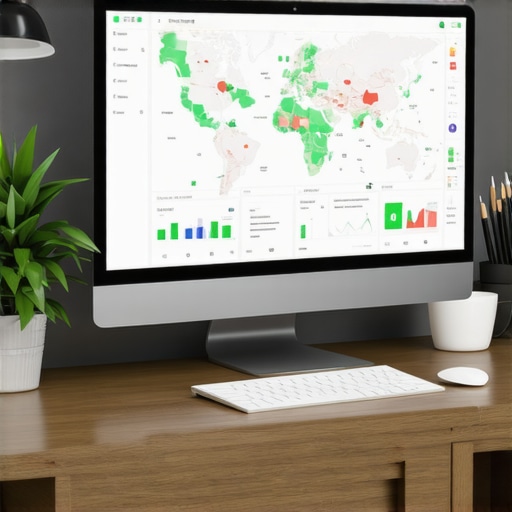
Another silent killer is category dilution. Many business owners select too many secondary categories, thinking it will make them show up for more searches. In reality, choosing conflicting categories confuses Google’s algorithm regarding your core business focus, ultimately leading to a flatlined map presence. Working with our maps optimization team, we consistently see that a clean, focused category structure is far safer and more effective. Have you ever fallen into this category-stuffing trap? Let me know in the comments if you have noticed your ranking slip after editing your profile.
Now that we have stripped away the automated traps and focused on authentic user behavior, the real challenge begins. How do you keep this machine running smoothly? It is one thing to hit the local three-pack for a week; it is another to stay there for months when aggressive competitors are trying to claw your business down. Over the years, I have stopped relying on basic automated trackers. Instead, our maps optimization team uses a highly specific tech stack that focuses on real-time data and behavior rather than flat keyword metrics.
The Concrete Tech Stack Behind Our Local Success
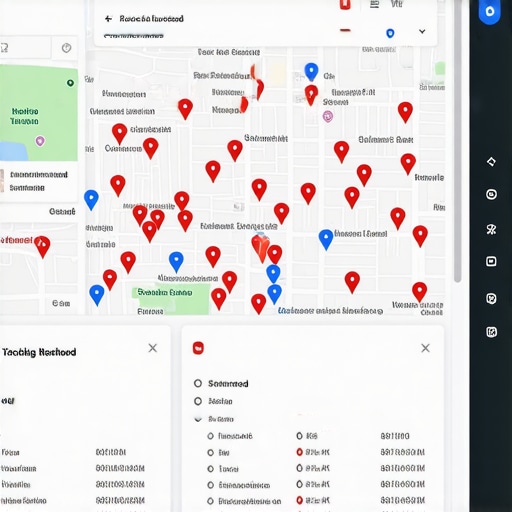
I do not believe in spending thousands of dollars on enterprise-level platforms that mostly provide vanity metrics. For my daily operations, I rely on raw, actionable data. First, I use the Local Falcon grid tracking tool to run geo-grid scans weekly. This tool shows exactly where our map presence drops off, down to a few hundred feet. If we see a drop-off on the northern edge of a neighborhood, we do not guess; we know exactly where we need to strengthen our local signals. To diagnose why these dips happen, our google map experts use the Google Business Profile API paired with custom Google Sheets scripts to monitor daily changes in user activities, such as phone calls and directions requests.
For structured data verification, I personally use the Schema.org Markup Validator. This is not just a passive check. I use it to verify that our local business schema precisely matches the Name, Address, and Phone number (NAP) details on our active map listing. As noted in the official W3C Web Schemas Group documentation, clean semantic markup is critical for search crawlers to establish entity relationships. When you establish this clean relationship, you prevent Google from losing trust in your location coordinates.
How do I maintain my map optimization over time?
The secret to long-term preservation is consistency in real-time updates. You must treat your profile like an active social media channel, but with a highly localized focus. I recommend setting a recurring calendar reminder every Tuesday morning to upload a single, geotagged smartphone photo of your team on-site. Do not overcomplicate this process; you can use the simple photo strategy for instant visibility improvement to handle this in less than ten minutes. Additionally, you should review your user-generated content weekly. If customers ask questions on your profile, answer them immediately. Utilizing these active engagement strategies is what separates elite listings from those that slowly fade away.
Where Local Search is Heading Next
If you want to stay ahead of the curve, you have to look at where Google is investing its engineering resources. I predict that search results will become increasingly reliant on mobile interaction patterns and real-time transit data. The algorithms will prioritize businesses that show active, real-world engagement over those with static, historically perfect profiles. If your storefront visibility depends on physical visitors, you should read about why your storefront visibility depends on foot traffic data to prepare your business for these algorithmic shifts. Our visibility experts are already restructuring our clients’ strategies to align with these real-time, behavioral ranking signals.
My challenge to you today is simple: do not just read this and move on. Go to your Google Business Profile right now and perform a quick check of your primary category and official business name. If you find any discrepancies between your listing and your real-world legal paperwork, fix them immediately. If you are struggling with complex optimization roadblocks, you can learn more about how to execute the exact steps we use for rapid visibility improvement or seek direct local visibility help from experienced professionals who understand how to navigate these updates safely.
I still remember the cold sweat that broke out on my forehead three years ago when I clicked refresh on my browser. My business profile was gone. Dissolved. Suspended by Google. I had worked so hard to get into that coveted local three-pack, but in a single afternoon, my phone stopped ringing. My mistake? I fell for the old trick of stuffing high-value keywords right into my business name. I thought I was being a genius, but instead, I triggered an automated filter. Since that painful week, I have dedicated myself to figuring out exactly how to keep local listings safe. Working alongside our maps optimization team, I discovered that you do not need to cheat the system to win the local ranking war. Today, I am going to show you exactly how to craft a highly optimized profile name that keeps the search engines happy while still attracting massive local attention.
The High-Stakes Game of Naming Your Business on Google Maps
When your business relies on local customers, your map pin is your most valuable asset. But Google has aggressively cracked down on spammy tactics. If you try to game the system by adding extra city names or services to your official business title, you are essentially painting a massive target on your back. Our google map experts constantly see business owners lose years of hard-won reviews over a single naming mistake. Real visibility improvement does not come from cheap naming hacks. It comes from establishing genuine, verifiable authority that Google trust algorithms can verify. According to local search ranking factor studies, listing accuracy is highly correlated with user trust, and even minor discrepancies between your map listing and your legal entity can trigger manual reviews. You want to make sure your name matches your real-world signage, or at least aligns with your official business registration documents.
Is playing it safe actually going to cost you rankings?
I know what you are thinking. If your competitor, ‘Bob’s Plumbing & Drain Cleaning Austin,’ is ranking number one with a keyword-stuffed name, why should you play by the rules? It is incredibly frustrating to see bad actors win the short game. However, that competitor is living on borrowed time. Google actively updates its suspension filters daily. If you are looking for long-term local visibility help, you must build on solid ground. Have you ever had your business profile suspended, or are you currently terrified of changing your name to match your real brand? Share your experiences in the comments below because I want to help you navigate this safely.
The Three-Step Clean Name Framework That Keeps Google Happy
Think of your business name on Google Maps like a legal deed. If you try to slip in extra words on a deed, the bank rejects it. Google operates with the same cold, calculated logic. To get the visibility you need without risking your business livelihood, you must follow a strict, systematic naming framework. I learned this the hard way when working with a local locksmith who had his listing wiped out overnight. We had to quickly pivot, strip away all the fluff, and rebuild his brand’s digital foundation from scratch. Here is exactly how we did it, and how our maps optimization team now protects hundreds of other local businesses.
Match Your Real-World Paper Trail First
Before you even touch your keyboard to edit your Google Business Profile name, gather your official documentation. Google’s trust algorithms are highly automated, but when a suspension triggers, a human reviewer will look for consistency. Your profile name should perfectly match your utility bills, tax registrations, or your state business filing. If your official name is ‘Apex Plumbing,’ do not write ‘Apex Plumbing & Drain Cleaning’ on your profile. If you desperately want those industry keywords in your name, you must officially file a Doing Business As (DBA) registration. During a messy transition last winter with an HVAC client in Seattle, we filed a quick DBA registration for ‘Apex Heating & Cooling’ to align with his real-world signage. That simple legal paper trail was the only thing that saved him from a permanent suspension during a routine algorithmic sweep.
Update Your Signage and Online Footprint
Google does not just look at your legal paperwork; their street-view cars and user-submitted photos verify your physical storefront. If your office door or vehicle wrap says ‘Apex Plumbing,’ but your online listing claims something else, you invite manual red flags. If you want a legitimate visibility improvement, you must make sure your digital branding matches your physical reality. Update your website’s header, footer, and contact page to reflect the exact name on your Google Profile. Our google map experts always recommend checking your local business directories. Having mismatched names across the web confuses the algorithm and dilutes your brand’s authority.
Clean Up Your Local NAP Consistency
Consistency in your Name, Address, and Phone number (NAP) across the internet acts like a vote of confidence for search engines. When third-party directories, local blogs, and social profiles all list your business name identically, Google gains the confidence to rank your map pin higher. If you are struggling with a sudden drop in map views, you might have conflicting data floating around. You can check out the simple move to fix your flatlined map impressions to resolve these data conflicts quickly. When you require professional local visibility help, prioritizing data cleanup over keyword stuffing is always the safest path to sustained search engine dominance. Our experienced visibility experts always look at data alignment as the primary foundation of long-term ranking success.
The Engagement Lie That is Costing You the Local Pack
Ask ten local marketing agencies how to improve your ranking, and nine of them will tell you to focus solely on getting more reviews and building thousands of standard directory citations. While that sounds logical, in my experience, traditional citations have a diminishing return. Everyone tells you to buy more directory links, but focusing on volume is an outdated trap. Our maps optimization team realized that the algorithms have shifted. Modern local search relies on user interaction signals rather than the sheer volume of static directory mentions.
A notable industry study by local search authority Whitespark confirms that behavioral factors like directions requests, click-through rates, and direct messaging engagement have grown significantly as ranking signals. This means you can have perfect citation consistency, but if searchers do not interact with your map pin, you will remain hidden behind your competitors. If you want a genuine visibility improvement, you have to prioritize driving real, localized user signals. Real visibility experts look past the superficial metrics to manipulate how searchers engage with your brand online.
Why are your competitor posts getting more engagement than yours?
Many business owners fall into the trap of posting generic stock graphics on their profiles. This is a massive mistake. When you post unoriginal content, you fail to build trust with searchers. Our google map experts have discovered that real-time local updates and authentic photos of your daily business operations outperform highly polished marketing graphics every single time. If you want specialized local visibility help, you must abandon broad, automated social media cross-posting and create hyper-local updates. To do this, you can learn how visibility experts turn map impressions into actual phone calls to systematically capture real customer interest.
Another silent killer is category dilution. Many business owners select too many secondary categories, thinking it will make them show up for more searches. In reality, choosing conflicting categories confuses Google’s algorithm regarding your core business focus, ultimately leading to a flatlined map presence. Working with our maps optimization team, we consistently see that a clean, focused category structure is far safer and more effective. Have you ever fallen into this category-stuffing trap? Let me know in the comments if you have noticed your ranking slip after editing your profile.
Now that we have stripped away the automated traps and focused on authentic user behavior, the real challenge begins. How do you keep this machine running smoothly? It is one thing to hit the local three-pack for a week; it is another to stay there for months when aggressive competitors are trying to claw your business down. Over the years, I have stopped relying on basic automated trackers. Instead, our maps optimization team uses a highly specific tech stack that focuses on real-time data and behavior rather than flat keyword metrics.
The Concrete Tech Stack Behind Our Local Success
I do not believe in spending thousands of dollars on enterprise-level platforms that mostly provide vanity metrics. For my daily operations, I rely on raw, actionable data. First, I use the Local Falcon grid tracking tool to run geo-grid scans weekly. This tool shows exactly where our map presence drops off, down to a few hundred feet. If we see a drop-off on the northern edge of a neighborhood, we do not guess; we know exactly where we need to strengthen our local signals. To diagnose why these dips happen, our google map experts use the Google Business Profile API paired with custom Google Sheets scripts to monitor daily changes in user activities, such as phone calls and directions requests.
For structured data verification, I personally use the Schema.org Markup Validator. This is not just a passive check. I use it to verify that our local business schema precisely matches the Name, Address, and Phone number (NAP) details on our active map listing. As noted in the official W3C Web Schemas Group documentation, clean semantic markup is critical for search crawlers to establish entity relationships. When you establish this clean relationship, you prevent Google from losing trust in your location coordinates.
How do I maintain my map optimization over time?
The secret to long-term preservation is consistency in real-time updates. You must treat your profile like an active social media channel, but with a highly localized focus. I recommend setting a recurring calendar reminder every Tuesday morning to upload a single, geotagged smartphone photo of your team on-site. Do not overcomplicate this process; you can use the simple photo strategy for instant visibility improvement to handle this in less than ten minutes. Additionally, you should review your user-generated content weekly. If customers ask questions on your profile, answer them immediately. Utilizing these active engagement strategies is what separates elite listings from those that slowly fade away.
Where Local Search is Heading Next
If you want to stay ahead of the curve, you have to look at where Google is investing its engineering resources. I predict that search results will become increasingly reliant on mobile interaction patterns and real-time transit data. The algorithms will prioritize businesses that show active, real-world engagement over those with static, historically perfect profiles. If your storefront visibility depends on physical visitors, you should read about why your storefront visibility depends on foot traffic data to prepare your business for these algorithmic shifts. Our visibility experts are already restructuring our clients’ strategies to align with these real-time, behavioral ranking signals.
My challenge to you today is simple: do not just read this and move on. Go to your Google Business Profile right now and perform a quick check of your primary category and official business name. If you find any discrepancies between your listing and your real-world legal paperwork, fix them immediately. If you are struggling with complex optimization roadblocks, you can learn more about how to execute the exact steps we use for rapid visibility improvement or seek direct local visibility help from experienced professionals who understand how to navigate these updates safely.
The Hardest Lessons Our Maps Optimization Team Learned the Hard Way
Over the last decade of troubleshooting suspended profiles and recovery attempts, we have gathered critical insights that you will not find in standard online tutorials. Here is the raw, unfiltered truth about keeping your business safe:
- Quick fixes trigger algorithmic alarms: Changing your business name, phone number, and primary category all in one afternoon is the fastest way to get your account locked down. Google’s AI flags rapid, multi-field edits as a potential profile hijack. Take a deep, controlled breath and space your updates out over several weeks.
- Reviews alone will not save a bad profile: Having hundreds of five-star reviews is incredible for converting leads, but it provides zero protection if your core NAP data is mismatched. The trusted robot crawlers care infinitely more about database consistency than client praise.
- Competitors will report your listing: If you are ranking in a highly competitive metro area, assume your rivals are reviewing your storefront. If your listing name has even a shred of unverified spam, they will submit a “suggest an edit” or file a formal redressal complaint to knock you down.
My Essential Toolkit for Maintaining Map Authority
You do not need an enterprise-level budget to dominate your local landscape, but you do need the correct specialized tools. Here are the exact resources I trust to keep our clients in the local three-pack:
- Local Falcon: This is my absolute favorite tool for visualizing search reach. It runs dynamic geo-grid scans that show you exactly where your rankings drop off street by street, saving you hours of manual searching.
- Schema.org Markup Validator: An essential, free developer resource to verify that your website’s structured data is speaking the exact same language as your Google Map pin. This is how we eliminate communication gaps.
- GBP Dashboard API Scripts: By using direct API access, our google map experts pull daily user behavior data to track shifts in calls and directions requests long before they register in the standard user interface.
Build Your Unshakeable Local Presence Today
The landscape of local search is constantly shifting, but the fundamental rules of trust and user behavior remain completely unchanged. Trying to bypass these guidelines with clever naming tricks is a losing game that ultimately leads to frustrating suspensions and lost revenue. By committing to an authentic, data-aligned brand presentation and prioritizing real customer interactions, you secure a highly profitable digital storefront that stands the test of time.
Now is the perfect moment to take action and secure your long-term visibility improvement. Have you ever faced a sudden drop in map impressions after updating your listing details? Let me know your experiences in the comments below, and let us get it fixed together!