
I remember sitting in my office late on a Tuesday night, staring at a screen that just wouldn’t budge. I had just purchased a massive package of three hundred directory listings, convinced it was the golden ticket to dominate local search. Instead, my rankings plummeted into oblivion over the next three weeks. My map pin seemed to vanish entirely, and I had to beg a friend for local visibility help just to figure out what went wrong. It was a brutal, embarrassing wake-up call. I learned the hard way that when you flood the internet with cheap, automated data, you are essentially telling search engines that your business is spam. Today, I want to show you exactly why these bulk listings do more harm than good and how to clean up the mess before your local presence is permanently damaged. Let us pull back the curtain on what actually happens to your data when you click buy on those cheap marketplace packages.
Cheap Links and Bot-Created Directories are Poisoning Your Map Pin
The truth about most bulk packages is that they rely on automated software to register your business on hundreds of dead, low-quality websites. These are not sites that actual humans visit to find a plumber, lawyer, or coffee shop. Early in my career, I made the mistake of thinking quantity trumped quality, only to find my business name associated with sketchy link farms. When search engines crawl these low-tier directories, they do not see authority; they see a coordinated attempt to manipulate their system. Instead of getting a boost, you end up triggering automated spam filters that suppress your listing. This is why our maps optimization team actively avoids these lazy tactics. Real success comes from highly targeted, hand-curated references that search engines actually trust. If you are struggling with a sudden drop, you can read about the truth about local citations and why most dont help rankings to see how deep this rabbit hole really goes. According to search authority Moz, inconsistent or spammy local business data accounts for a massive percentage of sudden ranking drops, proving that low-quality directories actively damage your authority.
Are you actually paying someone to build digital clutter?
Think about the last time you bought a pre-packaged list of listings. Did anyone actually verify if those directory sites were indexed, active, or even relevant to your local community? Most of the time, those packages are filled with inactive domains that have zero local relevance. Have you ever noticed your phone suddenly stop ringing right after a major optimization push? Let me know in the comments if you have experienced this frustrating plateau, because you are definitely not alone. When you hire google map experts, they do not hand you a spreadsheet of dead links. Instead, true visibility experts focus on building a clean, powerful local footprint that steadily drives your business upward.
How to Clean the Sludge and Reclaim Your Map Position
To fix a toxic footprint, you have to treat your digital presence like a physical storefront. Imagine throwing hundreds of cheap, generic flyers into a single neighborhood storm drain and expecting people to visit your shop. That is exactly what automated directory submissions do. Instead of distributing valuable resources, they create a digital blockage that alerts search engine filters to spam. To reverse this damage, you must systematically audit, claim, and clean up your records. This is not about submitting more links; it is about surgical removal and precise alignment. I remember spending three grueling days assisting a local clinic whose physical address was listed on ninety different spam domains with five variations of their office suite number. Their map views had dropped by seventy percent. We did not buy more listings; we manually logged into the top-tier platforms, consolidated the data, and deleted the automated garbage. Within a week of completing this cleanup, their map impressions bounced back to life.
Locate and Document Your Toxic Footprint First
You cannot fix what you cannot see. Your first step is to use a clean search browser to run specific queries for your business name, old phone numbers, and past addresses. Create a dedicated spreadsheet to log every single directory listing you find. Group them by domain authority and status. If you find your business listed on a site that looks like a chaotic wall of banner ads with no actual local users, flag it as a high-priority cleanup target. Stop paying for automated platforms that claim to distribute your data to hundreds of real-time partners, because they are often just sending your information to dead-end scrapers that create massive ranking gaps. Instead, focus your energy on verifying the top search aggregators manually.
Enforce Strict NAP Consistency Across the Core Networks
Once you have your list, you need to establish a single source of truth. Your Name, Address, and Phone number (NAP) must match your official business documentation exactly. If your official suite is ‘Suite 100’, do not let directories list it as ‘Ste. 100’ or ‘#100’ interchangeably. This minor variance is a massive red flag for automated search algorithms. You want to execute rapid visibility improvement by logging directly into the primary platforms—like Google, Apple Maps, Bing, and Yelp—and editing the details yourself.  If an automated tool created a listing you cannot access, use the site’s ‘claim profile’ or public edit link to request correction or removal. It is tedious work, but this manual intervention signals genuine ownership and authenticity to search crawlers.
Fuel Real Interactions Rather Than Static Links
After cleaning up the clutter, you must replace the fake signals with authentic human activity. Search engines prioritize profiles that show active, real-world engagement over those with thousands of dormant backlink directories. If you want a sustainable visibility improvement, encourage your actual customers to interact with your business profile. Ask them to upload real-time photos of their visit, ask questions on your public profile, and leave detailed feedback about specific services. A single local review that mentions your exact service and neighborhood carries more ranking weight than fifty automated listings on domain directories that nobody has ever heard of.
The Great Proximity Myth and Why Traditional Advice Fails
Most business owners believe that if they just optimize their profiles and build enough authority, they can rank a physical store thirty miles away. This is a massive misconception. In my years of working with local algorithms, I have watched countless owners dump thousands of dollars into brute-force link building, only to watch their maps ranking remain completely stagnant. The reality is that search engines prioritize proximity over almost every other metric. Everyone says you need more backlink power, but in my experience, hyper-localized user relevance and behavioral data work much better to bend the strict boundaries of physical proximity. When you are looking for local visibility help, the goal should not be to trick the map pin into thinking you are everywhere; it is to establish undeniable authority in your immediate backyard first.
Are You Unknowingly Tricking the Spam Filter Against Your Own Profile?
The most common trap that catches advanced marketers is categories conflict. When you hire an inexperienced agency, they often try to maximize your reach by selecting ten different secondary categories that have nothing to do with your core business. This triggers internal algorithm conflicts. Google’s machine learning models look at your profile and see a confused identity. If you are a plumbing company that also lists itself under ‘remodeling’ and ‘heating repair’ without having distinct website pages to support those claims, the algorithm will simply demote you for all of them. Our maps optimization team repeatedly sees how cleaning up category bloat and matching your primary category strictly with your real-world services can cause rankings to jump overnight. If you have been struggling with stagnant rankings despite doing everything right, look at how your secondary categories are set up. Have you ever fallen into this trap? Let me know in the comments.
The Signal That Matters More Than Reviews
Another hidden nuance that many self-proclaimed google map experts miss is the difference between static optimization and dynamic interaction. You can have a perfectly filled-out profile, but if nobody interacts with it, your visibility will decay. A study by Local SEO Guide revealed that user interaction signals—such as requesting directions, clicking to call, and sending direct messages—have a far greater correlation with high rankings than just accumulating static reviews. 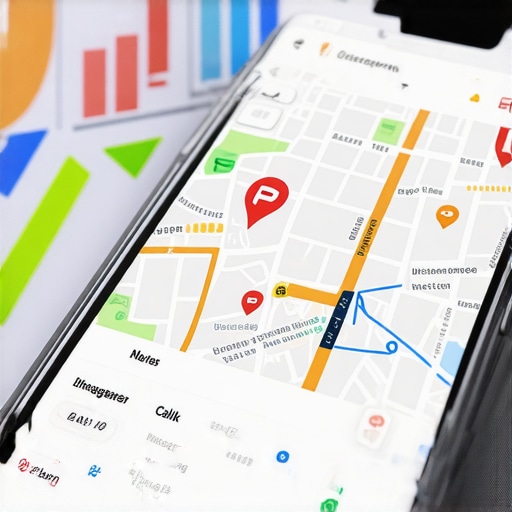 This is why seasoned visibility experts focus on creating reasons for users to engage with the profile, rather than just asking for five-star ratings. Getting a user to click your profile and ask a direct question signals to the search engine that your business is highly relevant to the local community, which triggers a long-term visibility improvement that competitors cannot easily duplicate.
How Do I Maintain This Map Dominance Over Time?
Once you have scrubbed the spammy directories from your digital footprint, the real work begins. You cannot treat your local map presence as a set-it-and-forget-it project. The physical world changes, search engine algorithms shift, and competitors are constantly trying to chip away at your territory. In my daily routine, maintaining a dominant map position is not about launching massive new campaigns; it is about establishing highly specific, daily and weekly check-in habits using the right diagnostic tools.
My Personal Toolkit for Diagnostic Tracking
I do not rely on generic, bloated SEO suites to track local map coordinates. Instead, I use highly specialized grid-tracking software like Local Falcon or Local Viking to see exactly how our map pin ranks across different city blocks. These tools let me visualize our visibility on a hyper-local level so we can instantly spot if our coverage is beginning to shrink. To keep things clean, I also manually inspect our profiles weekly for any pending user-suggested edits—such as random changes to our hours or phone number. Unattended user edits are a common cause for sudden ranking drops, which is why why map listing optimization requires constant updates.
For tracking actual human engagement, I focus heavily on native platform dashboards, specifically monitoring direct clicks, photo views, and direction requests. If you want to make sure you are not losing potential customers to competitors, you should read about why your map impressions arent turning into directions requests to diagnose leaks in your funnel.
The Future of Maps and AI-Driven Discovery
Looking ahead, the landscape of local search is shifting away from simple keyword matching toward semantic, conversational AI discovery. Search engines are getting incredibly good at understanding context. In the near future, customers will not just type ‘plumber near me.’ Instead, they will ask their mobile AI assistant to ‘find a highly-rated plumber nearby who has fixed emergency copper pipe leaks this week.’ This means your profile must contain dynamic, real-time proof of your daily operations. This is why our maps optimization team emphasizes uploading recent customer photos and geo-tagged project updates. If your profile remains static, AI search models will assume you are inactive.
According to Joy Hawkins, a leading authority on local search algorithms and founder of Sterling Sky, Google’s machine learning models are increasingly utilizing user engagement data and physical store visits to validate real-world business popularity. To secure long-term visibility improvement, you must pivot toward building these authentic human signals rather than chasing obsolete backlinks.
Try This One Advanced Tip Today
If you want to experience rapid progress right now, I challenge you to open your mobile business profile app today, take a high-quality, real-time photo of your team working at a local job site, and upload it with a brief, helpful description of the service. Do not use stock images or logos. This simple action signals immediate real-world activity to the local search crawlers. If you need a complete audit of your local profile, feel free to visit our contact us page to connect with our team.
I remember sitting in my office late on a Tuesday night, staring at a screen that just wouldn’t budge. I had just purchased a massive package of three hundred directory listings, convinced it was the golden ticket to dominate local search. Instead, my rankings plummeted into oblivion over the next three weeks. My map pin seemed to vanish entirely, and I had to beg a friend for local visibility help just to figure out what went wrong. It was a brutal, embarrassing wake-up call. I learned the hard way that when you flood the internet with cheap, automated data, you are essentially telling search engines that your business is spam. Today, I want to show you exactly why these bulk listings do more harm than good and how to clean up the mess before your local presence is permanently damaged. Let us pull back the curtain on what actually happens to your data when you click buy on those cheap marketplace packages.
Cheap Links and Bot-Created Directories are Poisoning Your Map Pin
The truth about most bulk packages is that they rely on automated software to register your business on hundreds of dead, low-quality websites. These are not sites that actual humans visit to find a plumber, lawyer, or coffee shop. Early in my career, I made the mistake of thinking quantity trumped quality, only to find my business name associated with sketchy link farms. When search engines crawl these low-tier directories, they do not see authority; they see a coordinated attempt to manipulate their system. Instead of getting a boost, you end up triggering automated spam filters that suppress your listing. This is why our maps optimization team actively avoids these lazy tactics. Real success comes from highly targeted, hand-curated references that search engines actually trust. If you are struggling with a sudden drop, you can read about the truth about local citations and why most dont help rankings to see how deep this rabbit hole really goes. According to search authority Moz, inconsistent or spammy local business data accounts for a massive percentage of sudden ranking drops, proving that low-quality directories actively damage your authority.
Are you actually paying someone to build digital clutter?
Think about the last time you bought a pre-packaged list of listings. Did anyone actually verify if those directory sites were indexed, active, or even relevant to your local community? Most of the time, those packages are filled with inactive domains that have zero local relevance. Have you ever noticed your phone suddenly stop ringing right after a major optimization push? Let me know in the comments if you have experienced this frustrating plateau, because you are definitely not alone. When you hire google map experts, they do not hand you a spreadsheet of dead links. Instead, true visibility experts focus on building a clean, powerful local footprint that steadily drives your business upward.
How to Clean the Sludge and Reclaim Your Map Position
To fix a toxic footprint, you have to treat your digital presence like a physical storefront. Imagine throwing hundreds of cheap, generic flyers into a single neighborhood storm drain and expecting people to visit your shop. That is exactly what automated directory submissions do. Instead of distributing valuable resources, they create a digital blockage that alerts search engine filters to spam. To reverse this damage, you must systematically audit, claim, and clean up your records. This is not about submitting more links; it is about surgical removal and precise alignment. I remember spending three grueling days assisting a local clinic whose physical address was listed on ninety different spam domains with five variations of their office suite number. Their map views had dropped by seventy percent. We did not buy more listings; we manually logged into the top-tier platforms, consolidated the data, and deleted the automated garbage. Within a week of completing this cleanup, their map impressions bounced back to life.
Locate and Document Your Toxic Footprint First
You cannot fix what you cannot see. Your first step is to use a clean search browser to run specific queries for your business name, old phone numbers, and past addresses. Create a dedicated spreadsheet to log every single directory listing you find. Group them by domain authority and status. If you find your business listed on a site that looks like a chaotic wall of banner ads with no actual local users, flag it as a high-priority cleanup target. Stop paying for automated platforms that claim to distribute your data to hundreds of real-time partners, because they are often just sending your information to dead-end scrapers that create massive ranking gaps. Instead, focus your energy on verifying the top search aggregators manually.
Enforce Strict NAP Consistency Across the Core Networks
Once you have your list, you need to establish a single source of truth. Your Name, Address, and Phone number (NAP) must match your official business documentation exactly. If your official suite is ‘Suite 100’, do not let directories list it as ‘Ste. 100’ or ‘#100’ interchangeably. This minor variance is a massive red flag for automated search algorithms. You want to execute rapid visibility improvement by logging directly into the primary platforms—like Google, Apple Maps, Bing, and Yelp—and editing the details yourself. If an automated tool created a listing you cannot access, use the site’s ‘claim profile’ or public edit link to request correction or removal. It is tedious work, but this manual intervention signals genuine ownership and authenticity to search crawlers.
Fuel Real Interactions Rather Than Static Links
After cleaning up the clutter, you must replace the fake signals with authentic human activity. Search engines prioritize profiles that show active, real-world engagement over those with thousands of dormant backlink directories. If you want a sustainable visibility improvement, encourage your actual customers to interact with your business profile. Ask them to upload real-time photos of their visit, ask questions on your public profile, and leave detailed feedback about specific services. A single local review that mentions your exact service and neighborhood carries more ranking weight than fifty automated listings on domain directories that nobody has ever heard of.
The Great Proximity Myth and Why Traditional Advice Fails
Most business owners believe that if they just optimize their profiles and build enough authority, they can rank a physical store thirty miles away. This is a massive misconception. In my years of working with local algorithms, I have watched countless owners dump thousands of dollars into brute-force link building, only to watch their maps ranking remain completely stagnant. The reality is that search engines prioritize proximity over almost every other metric. Everyone says you need more backlink power, but in my experience, hyper-localized user relevance and behavioral data work much better to bend the strict boundaries of physical proximity. When you are looking for local visibility help, the goal should not be to trick the map pin into thinking you are everywhere; it is to establish undeniable authority in your immediate backyard first.
Are You Unknowingly Tricking the Spam Filter Against Your Own Profile?
The most common trap that catches advanced marketers is categories conflict. When you hire an inexperienced agency, they often try to maximize your reach by selecting ten different secondary categories that have nothing to do with your core business. This triggers internal algorithm conflicts. Google’s machine learning models look at your profile and see a confused identity. If you are a plumbing company that also lists itself under ‘remodeling’ and ‘heating repair’ without having distinct website pages to support those claims, the algorithm will simply demote you for all of them. Our maps optimization team repeatedly sees how cleaning up category bloat and matching your primary category strictly with your real-world services can cause rankings to jump overnight. If you have been struggling with stagnant rankings despite doing everything right, look at how your secondary categories are set up. Have you ever fallen into this trap? Let me know in the comments.
The Signal That Matters More Than Reviews
Another hidden nuance that many self-proclaimed google map experts miss is the difference between static optimization and dynamic interaction. You can have a perfectly filled-out profile, but if nobody interacts with it, your visibility will decay. A study by Local SEO Guide revealed that user interaction signals—such as requesting directions, clicking to call, and sending direct messages—have a far greater correlation with high rankings than just accumulating static reviews. This is why seasoned visibility experts focus on creating reasons for users to engage with the profile, rather than just asking for five-star ratings. Getting a user to click your profile and ask a direct question signals to the search engine that your business is highly relevant to the local community, which triggers a long-term visibility improvement that competitors cannot easily duplicate.
How Do I Maintain This Map Dominance Over Time?
Once you have scrubbed the spammy directories from your digital footprint, the real work begins. You cannot treat your local map presence as a set-it-and-forget-it project. The physical world changes, search engine algorithms shift, and competitors are constantly trying to chip away at your territory. In my daily routine, maintaining a dominant map position is not about launching massive new campaigns; it is about establishing highly specific, daily and weekly check-in habits using the right diagnostic tools.
My Personal Toolkit for Diagnostic Tracking
I do not rely on generic, bloated SEO suites to track local map coordinates. Instead, I use highly specialized grid-tracking software like Local Falcon or Local Viking to see exactly how our map pin ranks across different city blocks. These tools let me visualize our visibility on a hyper-local level so we can instantly spot if our coverage is beginning to shrink. To keep things clean, I also manually inspect our profiles weekly for any pending user-suggested edits—such as random changes to our hours or phone number. Unattended user edits are a common cause for sudden ranking drops, which is why why map listing optimization requires constant updates.
For tracking actual human engagement, I focus heavily on native platform dashboards, specifically monitoring direct clicks, photo views, and direction requests. If you want to make sure you are not losing potential customers to competitors, you should read about why your map impressions arent turning into directions requests to diagnose leaks in your funnel.
The Future of Maps and AI-Driven Discovery
Looking ahead, the landscape of local search is shifting away from simple keyword matching toward semantic, conversational AI discovery. Search engines are getting incredibly good at understanding context. In the near future, customers will not just type ‘plumber near me.’ Instead, they will ask their mobile AI assistant to ‘find a highly-rated plumber nearby who has fixed emergency copper pipe leaks this week.’ This means your profile must contain dynamic, real-time proof of your daily operations. This is why our maps optimization team emphasizes uploading recent customer photos and geo-tagged project updates. If your profile remains static, AI search models will assume you are inactive.
According to Joy Hawkins, a leading authority on local search algorithms and founder of Sterling Sky, Google’s machine learning models are increasingly utilizing user engagement data and physical store visits to validate real-world business popularity. To secure long-term visibility improvement, you must pivot toward building these authentic human signals rather than chasing obsolete backlinks.
Try This One Advanced Tip Today
If you want to experience rapid progress right now, I challenge you to open your mobile business profile app today, take a high-quality, real-time photo of your team working at a local job site, and upload it with a brief, helpful description of the service. Do not use stock images or logos. This simple action signals immediate real-world activity to the local search crawlers. If you need a complete audit of your local profile, feel free to visit our contact us page to connect with our team.
The Hardest Lessons I Learned Rescuing Hijacked Map Pins
If there is one thing years of fighting in the local search trenches has taught me, it is that cutting corners always costs double. I spent years watching businesses pour thousands of dollars into software that promised one-click ranking solutions, only to end up completely de-indexed. Here are the core insights that redefined how I approach local optimization:
- Automation is your enemy, curation is your friend: Algorithms have become incredibly sophisticated at recognizing bot patterns. A single hand-crafted mention on a local neighborhood blog or chamber of commerce page carries more trust than a thousand automated directory listings.
- Clean data is better than more data: Having your business name exactly identical on ten major platforms beats having it splattered on five hundred obscure sites with spelling, phone, and address variations.
- Proximity has a soft border: You cannot cheat physical distance with spam. However, you can expand your local search radius by accumulating intense user engagement signals from nearby neighborhoods.
My Essential Toolbox for Local Domination
You do not need an enterprise budget to clean up your digital footprint and build undeniable local authority. Over the years, I have narrowed down my daily toolkit to just a few highly effective resources that I trust implicitly:
- Local Falcon: This is my go-to tool for tracking local map rankings across a highly visual grid. It allows me to see exactly where our visibility drops off so we can run targeted local updates.
- The Sterling Sky Blog: Founded by Joy Hawkins, this resource provides some of the most reliable, testing-based insights on Google algorithm updates without the usual marketing fluff.
- Manual Spreadsheet Auditing: No tool is better than using your own eyes. A basic spreadsheet listing your NAP profiles remains the ultimate way to maintain total control of your data.
Step Out of the Spam Loop and Claim Your Map
It is easy to get lured in by cheap, automated packages promising quick results on Google Maps, but true local dominance is built on clean data and real user interactions. It takes time to audit, clean, and verify your footprint manually, but the stability and influx of real customers make every minute of manual cleanup worth it. If you are ready to stop chasing shortcuts and build a presence that stands the test of time, look at our expert map optimization strategies for 2025 to get started. Have you ever noticed your rankings drop right after trying an automated directory or link package? Let me know your experiences in the comments below!