
I remember sitting in my home office at 2 AM a few years back, literally shouting at my monitor because my business was nowhere to be found on the map. I had the better office, better staff, and honestly, better coffee than the guy two blocks over, yet his pin was hogging the top spot while mine was buried on page four. It felt like I was screaming into a void. I’d fallen into the classic trap of thinking that just having a ‘verified’ listing was enough to make the phone ring. I was wrong. I spent months obsessing over the wrong metrics, and today, I want to save you from that same frustration by showing you what actually shifts that stubborn red pin. We aren’t just talking about basic tweaks; we are diving into the trust signals that convince Google you are the only logical choice for a local searcher.
Early in my journey, I made a massive mistake that I still cringe about: I thought keyword stuffing my business description would be my golden ticket. Instead, I saw my map impressions flatline almost overnight. It was a brutal lesson in how the algorithm detects desperation over genuine authority. What I learned since then—through a lot of trial and error and some late-night calls with a maps optimization team that actually knew their stuff—is that Google cares less about what you say about yourself and more about the trail of ‘trust crumbs’ you leave across the web. Today, we are going to fix your invisible radius problem and stop the bleeding.
Stop Obsessing Over Keywords and Start Building Actual Authority
The biggest shift I’ve seen recently is that visibility experts now ignore keywords in favor of behavioral flow and entity health. Google’s AI has become incredibly suspicious of ‘perfect’ profiles. If your data is too clean or your reviews come in too fast, it triggers a red flag. Real trust is messy; it’s built through varied customer interactions, local citations that actually match, and consistent ‘human’ signals. According to a study by Whitespark, while proximity remains a massive factor, the ‘relevance’ and ‘prominence’ scores are heavily weighted by how often users interact with your listing compared to your neighbors. If people find your pin but never click ‘Directions,’ Google assumes you aren’t actually where they want to go.
Does Google even care about my small business anymore?
I hear this all the time from folks who feel like the deck is stacked against them. You see the big national chains or the guy who has been there for twenty years, and you wonder if you can ever jump over competitors who have held the top spot for a decade. The answer is a resounding yes, but you can’t out-muscle them; you have to out-trust them. I’ve helped businesses with ten reviews beat businesses with five hundred just by focusing on ‘signal velocity’ and local relevance. Have you ever felt like no matter what you change in your dashboard, your ranking stays exactly the same? It’s a common plateau, but it’s usually because you’re looking at the dashboard instead of the wider web. We’re going to look at the ‘unseen’ signals that most business owners ignore, like how your website’s local schema is talking—or not talking—to your map profile.
Move Beyond Static Data and Create Signal Velocity
Think of your Google Business Profile like a storefront window. If the same display sits there for six months gathering dust, people stop looking. Google’s algorithm works exactly the same way; it craves ‘freshness’ and movement. This is what visibility experts call signal velocity. It isn’t just about getting a review once a month; it’s about the frequency and pace of user interactions like clicks for directions, website visits, and phone calls. When these actions happen in a tight cluster, it tells Google your business is ‘trending’ in that specific neighborhood. If you want to jumpstart a cold profile, you need to focus on the interaction moves that actually matter rather than just updating your business hours for the tenth time.
Why Google Needs to See You Moving Across the Map
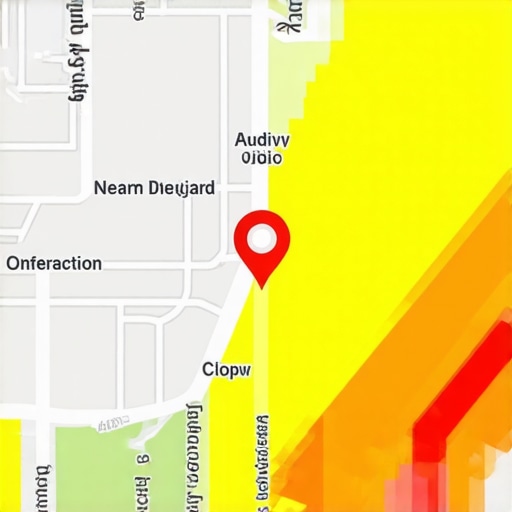
I once worked with a pest control company that was completely invisible the moment you crossed the highway into the next town. We realized their digital footprint was a mess of conflicting signals. I spent three days manually hunting down old citations from a defunct office they had five years ago. It was a tedious, messy process of scrubbing the web, but once we aligned their data, the ‘invisible wall’ vanished. This taught me that you have to fix the invisible radius problem by ensuring your ‘NAP’ (Name, Address, Phone) is identical everywhere. If Google sees even a slight variation, it gets confused, and a confused algorithm defaults to the competitor with clearer data. You are likely suffering from a signal gap stopping your profile from ranking in those lucrative nearby zip codes.
Connect Your Website to Your Map Pin Using Schema
Your website and your Google Maps profile should be talking to each other 24/7. Most business owners treat them as two separate islands, but the bridge between them is Local Schema Markup. This is a specific snippet of code that tells Google’s robots exactly which map pin belongs to which physical location and service area. It is the schema technicality most agencies skip, yet it is the most potent way to verify your physical presence. When your website explicitly mentions your service areas in its code, it reinforces the map listing’s authority. If you haven’t checked this, your local schema markup is likely ignoring your actual service area, leaving you to fight for scraps in your immediate parking lot.
The Power of Real World Foot Traffic Signals
Google is increasingly looking at the physical world to verify digital claims. They track anonymized location data to see if people who search for you actually end up at your front door. This is why foot traffic signals are outpacing traditional seo reviews in terms of ranking weight. If your maps optimization team isn’t looking at how users move through your space, they are missing the boat. You need to encourage ‘check-ins’ or use localized content that proves you are a hub of activity. Even pedestrian flow data is becoming a factor for retail shops because it proves relevance better than any keyword-stuffed description ever could. Stop trying to trick the map and start proving your business is the most active destination in the neighborhood.
I often see business owners get lured into the ‘more is better’ trap. They hire an agency that promises 500 citations for a hundred bucks, thinking that sheer volume will force Google to take notice. In reality, why most local citation packages actually hurt your rankings is a hard pill to swallow. If those citations are landing on low-quality directories or sites that have nothing to do with your industry, you aren’t building authority—you’re building noise. I’ve seen a professional maps optimization team spend weeks undoing the damage caused by these ‘bulk’ services. When Google’s AI sees your business listed on a foreign blog and a generic coupon site in the same hour, it doesn’t think you’re popular; it thinks you’re a spammer.
Quantity Is a Dangerous Metric for Local Trust
The contrarian truth that most ‘SEO gurus’ won’t tell you is that ten high-quality, local, and relevant mentions are worth more than a thousand generic ones. If you are a plumber in Austin, a mention on a local Austin neighborhood blog is pure gold compared to a listing on a global business directory. This is where why your local visibility help plan fails the proximity test; it’s likely ignoring the ‘hyper-local’ relevance that the modern algorithm demands. You need to be looking for 5 red flags that your local citation team is actually hurting your rankings, such as them using automated software that creates duplicate listings or uses ‘tracking numbers’ that mess up your NAP consistency. Real google map experts prioritize clean data over messy volume every single time.
Can a single bad link really destroy my local authority?
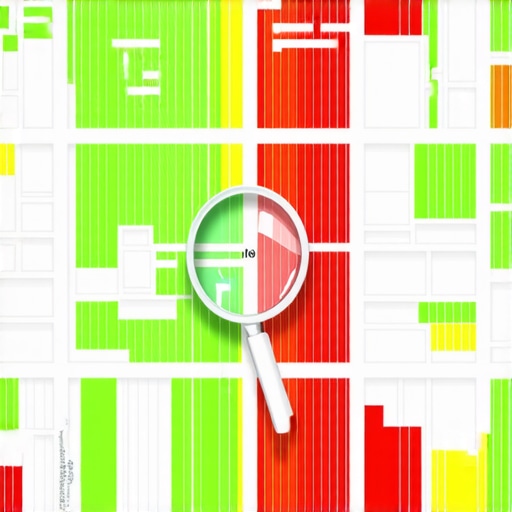
It absolutely can. While one link might not ‘destroy’ you, a pattern of poor choices creates a ‘signal smog’ that keeps your pin stuck. I once saw a law firm lose its top-three spot because they participated in a ‘local business award’ that was actually just a pay-to-play link farm. Their visibility improvement efforts were completely neutralized because Google flagged the source as manipulative. A study by BrightLocal on local search ranking factors confirms that while ‘links’ are a top-three driver, the quality and local relevance of those links has become significantly more weighted than the count. If you are blindly building local backlinks, you are essentially gambling with your storefront’s digital life. High-value local visibility help should always focus on the quality of the connection over the quantity of the data points.
Stop Paying for Citation Packages That Hurt Your Map Position
Another massive ‘oops’ factor is failing to realize that Google now uses AI to cross-reference your business data against real-world entities. If your visibility experts aren’t auditing your data for ‘signal drift,’ you’re in trouble. Signal drift happens when your digital presence slowly detaches from your physical location because of outdated info or conflicting third-party data. You need to learn how to build genuine trust signals by verifying every single touchpoint. Have you ever fallen into the trap of buying a ‘local SEO package’ only to see your rankings drop three months later? Let me know in the comments. It’s usually because those packages are built on static data, and as we’ve discussed, Google requires movement and freshness. To break out of that stagnancy, you need to diagnose the neighborhood lock stopping your growth and ensure your strategy is as dynamic as the city you serve. Focus on your immediate service radius and prove your authority there before trying to conquer the whole county.
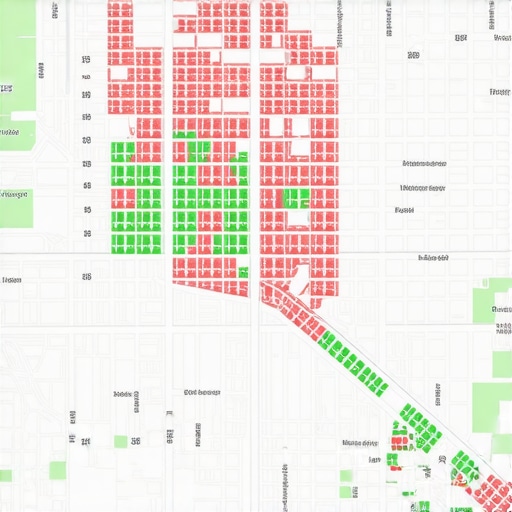
Once the initial cleanup is done, the real work begins—keeping that pin from sliding back into the shadows. I’ve seen businesses hit the top three and then stop everything, only to find themselves back on page three within a month because of what I call ‘signal rot.’ Maintaining local authority isn’t about doing more; it’s about doing the right things consistently. My maps optimization team uses a very specific stack of tools to keep things moving, and the first one is a heat map tracker. If you aren’t using something like LocalFalcon or BrightLocal’s grid tracker, you’re flying blind. I use these because they show me exactly where my ‘invisible wall’ is. If I’m ranking at #1 in the parking lot but #10 two blocks away, I know I have a proximity gap that needs fresh signals rather than just more reviews. Using mapping tools we actually use to audit profile health allows you to see the battleground in real-time.
The Only Map Tracker That Doesn’t Lie to Me
I personally swear by grid tracking because standard SEO reports that show a single ‘average position’ are essentially useless for local search. You need to see how your visibility fluctuates as a searcher moves through the neighborhood. This is one of the only 3 metrics in your local seo report that actually predicts if people are walking through your door. When you see a red spot on your grid, it’s an invitation to target that specific area with localized content or a Google Post that mentions that neighborhood by name. It’s about being surgical rather than spraying and praying.
How can I keep my map ranking high without working on it every day?
The secret is automation that doesn’t feel like a bot. I personally use a simple CRM trigger that sends a text—not an email—to customers ten minutes after they leave. This is how to automate customer feedback without triggering Google’s aggressive spam filters. You need to keep that ‘signal velocity’ alive. As Joy Hawkins from Sterling Sky recently pointed out, Google’s algorithm is increasingly sensitive to ‘business activity’ beyond just the stars on your profile. They are looking at how often you update your ‘from the owner’ posts and whether the photos being uploaded are recent. If your latest photo is from 2022, you’re telling Google you might be closed. I make it a point to upload one ‘behind the scenes’ photo every Friday—it takes thirty seconds but keeps the profile ‘warm’ in the eyes of the AI.
Stop Your Profile From Rotting While You Sleep
The Future of Maps is moving toward a world where Google’s SGE (Search Generative Experience) will summarize your business for the user before they even click your pin. This means google map experts are shifting focus toward ‘entity clarity.’ It won’t just be about where you are, but who you are to the specific person searching. In 2026, I predict your ‘behavioral footprint’—the actual paths people take to find you—will outweigh every other factor. We are already seeing how experts fix signal drift by doubling down on these real-world interactions. If you want to see immediate movement, try this: find a high-authority local blog and offer them an expert quote in exchange for a mention of your business name and address. It’s one of those innovative approaches to visibility improvement that actually works because it’s a high-trust signal Google can’t ignore. If you’re feeling overwhelmed by the technical side, reach out to us and let’s look at your grid data together.
Hard Lessons from the Local Search Front Lines
Looking back at my early days, the biggest lightbulb moment wasn’t about a setting inside the dashboard—it was realizing that Google’s AI mimics human logic. If a store is busy in the real world, it should be busy on the map. I used to think more was better with citations, but I learned that one mention in a local community newsletter carries more weight than 100 generic business directories. Another hard truth is that your profile is never done. The moment you stop feeding it fresh data, you are inviting a competitor to slide into your spot. It is about building a living entity, not a static listing. I have seen businesses fail simply because they treated their profile like a set it and forget it chore instead of a digital storefront.
The Only Tools I Use to Keep My Pin Locked in the Top Three
To keep your growth consistent, you need the right arsenal. I rely heavily on grid trackers because they reveal the invisible walls that traditional reports hide. I also recommend setting up a system to automate customer feedback because consistent reviews are the lifeblood of trust. Beyond software, I suggest studying innovative approaches to visibility improvement to stay ahead of the next algorithm shift. These aren’t just nice to haves; they are the infrastructure of a dominant local brand. I also personally look for top secrets to boost your business presence that focus on user behavior rather than just technical back-end tweaks.
Take Back Your Local Neighborhood
You have the better service, the better staff, and the better coffee—don’t let a technicality keep your phone from ringing. The map isn’t a wall; it is a doorway to your next loyal customer. By focusing on genuine signals and local authority, you can unlock local visibility that competitors simply cannot buy with traditional ads. The future of your business is waiting for you to claim your space, and the simple changes that actually rank your profile are often the ones your competitors are too lazy to implement. Stay consistent, stay local, and keep your signals fresh. Our google map experts are always ready to help if you want a professional eye on your data. Have you noticed your map ranking drop when you step just a few blocks away from your office? Let me know your experience in the comments below!