I remember standing in my driveway, about six miles away from my first retail shop, and pulling out my phone to do a quick search. I was proud of my business. We had the best reviews on the block. But when I typed in our main service, we were nowhere to be found. It was like I had vanished into a digital black hole the moment I crossed the creek. That was my first wake-up call about the proximity gap. You can have a perfect storefront, but if you don’t bridge that distance, you’re basically invisible to half your potential customers. Today, we are going to fix that. I’ll show you how our visibility experts take a profile that is stuck in a one-mile radius and stretch its influence across the whole county. Have you ever checked your own rankings from a local coffee shop a few miles away and felt that same sinking feeling when a competitor popped up instead?
Why Your Business Profile Hits a Wall at the City Limits
It is incredibly frustrating. You do everything right, yet Google seems to think your business only exists for the people living in your immediate parking lot. This happens because of a ‘signal gap.’ Early in my career, I made the massive mistake of thinking that just having a physical address was enough to claim the whole city. I spent months waiting for the phone to ring from the neighboring zip code, but it never happened because I wasn’t sending the right location signals. According to a study cited by Social Media Today, 46% of all Google searches are looking for local information, yet most businesses fail to rank outside a tiny radius because they lack the technical depth our google map experts recommend. We often see the proximity fix for local businesses ignored in favor of generic SEO, which just doesn’t work for maps.
Is this proximity obsession actually worth the hype?
I get the skepticism. You might think that if someone wants what you offer, they will find you. But the reality is that convenience wins. If a competitor shows up three miles closer in the search results, you’ve lost that lead before they even see your website. Breaking this barrier requires more than just a few keywords; it takes a dedicated visibility improvement strategy that tells Google your relevance doesn’t stop at your front door. Our maps optimization team specializes in finding exactly where those signals are dropping off. We’re going to dive into the exact steps to reclaim those lost zip codes right now.I remember working with a residential electrician who had over 200 five-star reviews but couldn’t get a single lead from the high-value neighborhood just four miles north of his shop. He was frustrated because he knew his service was better than the competitors already ranking there. We realized his profile was essentially a lighthouse with its light blocked on three sides; he was visible to his immediate neighbors, but invisible to the people who actually needed him. To stop this kind of digital bleeding, you first need to how to perform a business profile audit that actually uncovers revenue gaps. Generic tools just show you if you are ‘up’ or ‘down.’ You need to see a heatmap of your city. If your ranking is a ‘1’ at your front door but drops to a ’15’ just two blocks away, you don’t have a distance problem—you have a signal authority problem.
The Technical Gremlins in Your Code
Once you know where the signal is dropping, you have to look at the invisible infrastructure. Our visibility experts often find that the schema technicality most agencies skip is the primary reason for a limited reach. Schema is the structured language Google uses to categorize your business data. If your website code doesn’t explicitly link your service area to neighboring zip codes and local landmarks, you’re leaving your ranking to pure luck. It is the difference between a clear FM radio signal and static. 
Stop Building Ghost Town Landing Pages
Most businesses build ‘city pages’ that look like they were written by a robot. Why your city pages feel like ghost towns to local searchers is usually because they lack hyper-local context. Don’t just swap the city name and call it a day. Mention specific local landmarks, include the exact photo types that actually trigger your profile ranking signals, and talk about the unique needs of that specific neighborhood. I once had a landscaping client photograph their service truck at a well-known local high school stadium; that single update on their service page pushed them into the top three for that zip code within a few weeks because it proved local relevance.
Engagement Is the New Proximity
Google measures how people interact with your profile based on where they are standing. This is the simple interaction signal that beats proximity limits. If people five miles away aren’t clicking ‘Call’ or ‘Get Directions’ when they see you, Google assumes you aren’t relevant to that area. Our google map experts use 3-interaction-moves-that-matter-most to bridge this gap. By focusing on driving real, local interactions from specific target areas, you prove to the algorithm that your business is the preferred choice for that community, regardless of the physical distance from your storefront.
The biggest lie I see circulating in the local SEO world is that ‘volume wins.’ Most business owners are told they need hundreds of citations to rank. They hire someone on a freelance site to blast their NAP (Name, Address, Phone) across five hundred directories that no human has visited since 2012. In my experience, this is actually a recipe for disaster. Our google map experts have seen profiles tank because they were associated with low-quality link neighborhoods. This is a classic ‘quantity over quality’ trap. If your data is inconsistent across these hundreds of sites, you’re not building authority; you’re creating confusion for Google’s algorithm.
The “More is Better” Citation Trap
Here is the hard truth: why most local citation packages hurt your rank instead of helping comes down to data decay. Google doesn’t care how many times you are listed; it cares if it can trust the information. In fact, why static business data no longer earns a three-pack spot is because search engines now prioritize real-time relevance. According to the annual Whitespark Local Search Ranking Factors survey, traditional citations have continued to decline in importance compared to behavioral signals and localized content. If you are still paying for directory blasts, you are effectively using a 2015 playbook in a 2025 world. Our maps optimization team focuses on ‘data freshness’—ensuring that your active profiles (like Apple Maps, Bing, and Yelp) are constantly updated with new photos and posts, rather than just sitting idle.

Why does your map pin stay frozen even after you update your address?
This is a question I get from sophisticated business owners all the time. They move their shop, update the dashboard, and… nothing happens. The pin stays stuck at the old location or, worse, the profile goes into a ‘pending’ loop. This happens because Google’s trust in your profile is fragile. If you don’t understand why your business profile updates keep pending and how to force a refresh, you risk a permanent suspension. When you change a major piece of data, the algorithm looks for third-party validation. If those old, junk citations you bought years ago still have your old address, Google sees a conflict and halts the update. You aren’t just fighting a slow system; you are fighting your own outdated digital footprint. This is why a proper 5-hidden-errors-in-your-profile-audit-that-keep-you-off-the-local-three-pack includes a deep scrub of legacy data, not just adding new layers.
Keep your authority local or lose the neighborhood
Another common mistake is ‘ego-driven backlinking.’ I see businesses trying to get featured in national blogs that have nothing to do with their city. While that looks great on a media kit, it does almost nothing for your map ranking. In fact, why blindly building local backlinks could be tanking your map position is a real threat if those links aren’t geographically relevant. To get local visibility help that actually moves the needle, you need links from local news sites, neighborhood associations, and even local sports teams. These are the ‘high-trust’ signals that prove you are part of the community fabric. Have you ever fallen into this trap of chasing big-name links instead of local ones? Let me know in the comments. We need to stop treating maps like traditional SEO and start treating it like digital community building.
Building that initial momentum is exhilarating, but the real challenge is preventing the ‘slow fade’ that happens when you stop paying attention. I’ve seen businesses hit the top three and then completely stop their outreach, only to find themselves on page two a month later. The local map is a living, breathing leaderboard. To keep your spot, you need to treat maintenance as a non-negotiable part of your weekly workflow. Our google map experts constantly monitor these shifts because the moment you stop sending fresh signals, a hungrier competitor will take your place. This is exactly how to stop search decay on your business profile before it erodes your leads.
The tools that actually matter for your daily check-in
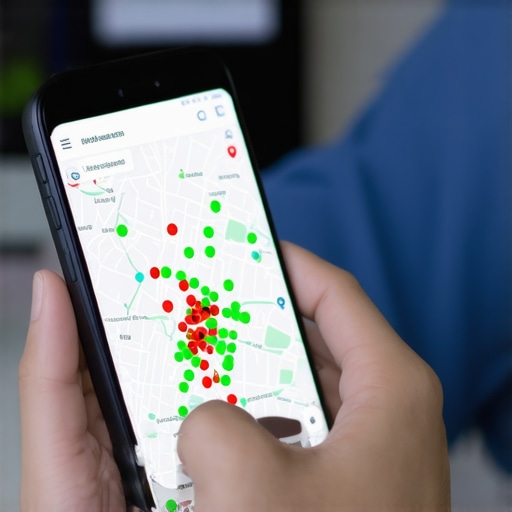
I don’t believe in using fifty different softwares. Most of them are just noise. I personally rely on Local Falcon for one specific reason: the grid-tracking heatmap. If you aren’t looking at your rankings on a coordinate-by-coordinate basis, you are flying blind. I use this tool to identify ‘cold spots’—areas where we are ranking a 4 or 5 just a few miles away. When I see that, our visibility improvement strategy shifts to targeting those specific neighborhoods with localized content. If you aren’t sure where to start, you should look into 5-mapping-tools-we-actually-use-to-audit-local-profile-health to see which one fits your technical comfort level. Another trick I use is manual coordinate spoofing on a mobile browser; it’s the only way to see what a customer truly sees when they are standing in a different zip code.
How do I maintain my map ranking when things change?
Maintenance is about consistency, not intensity. You don’t need to post ten times a day, but you do need a rhythm. This involves responding to every single review—even the ones without text—and updating your ‘Business Posts’ at least twice a week. Our maps optimization team has found that profiles with weekly activity are significantly less likely to be ‘filtered’ out of the results during an algorithm update. If you suddenly see your numbers dip, don’t panic. Usually, it’s a sign that you need to the simple fix we use when local results suddenly go cold, which often involves refreshing your primary photos or checking for new competitor ‘spam’ in your category. Expert Joy Hawkins from Sterling Sky has frequently noted that even small changes to a competitor’s categories can shift the entire local landscape, so keep an eye on who is moving into your territory.
What the local search landscape looks like in 2026
If I had to predict where this is going, it’s ‘Visual Verification.’ Google is already using AI to scan the photos you upload to ensure they match the physical world. In the near future, generic stock photos won’t just be boring; they will be a ranking penalty. You will need local visibility help that understands how to leverage video and ‘Live’ signals to prove your business is active and real. We are moving away from keywords and toward ‘Proof of Life.’ If you want to stay ahead, stop thinking like an SEO and start thinking like a local news reporter. Document your work, show your face, and prove you are part of the community. I highly recommend you how to perform a business profile audit that actually uncovers revenue gaps this afternoon to see exactly where you stand before the next update hits.
What the Map Algorithm Taught Me About Real-World Trust
It took me years to realize that Google doesn’t just care about where your office is; it cares about how ‘alive’ your brand feels to the people in the next town over. When we first started helping clients as google map experts, I used to think the algorithm was a math problem. Now, I see it as a trust exercise. If you haven’t seen growth, it’s likely because your digital signals have gone quiet. You need to keep those signals loud and consistent to ensure your visibility improvement efforts actually stick.
- Authority isn’t just about links; it’s about being the most relevant answer to a local problem.
- Stop worrying about the entire state and start winning your street, then your neighborhood, then your city.
- The best maps optimization team focus on human interactions, not just technical checklists.
The Toolkit That Actually Keeps My Business on the Map
I’ve spent thousands on tools that didn’t work, so you don’t have to. First, use a heatmap tool like Local Falcon; it’s the only way to see if you’re actually winning across various zip codes. I also highly recommend looking at 5-mapping-tools-we-actually-use-to-audit-local-profile-health to find a workflow that doesn’t overwhelm your staff. Finally, perform a deep dive using how to perform a business profile audit that actually uncovers revenue gaps to see the hidden leaks in your current strategy. Trust these sources because they prioritize data over hype.
Claim Your Territory and Keep It
The digital landscape changes, but the need for local presence never does. Don’t let a competitor steal the neighbors you’ve worked so hard to serve. Take the first step today and learn how to stop search decay on your business profile before it’s too late. Your community is looking for you—make sure they can find you. Your journey toward total visibility improvement starts with a single, consistent action. Have you ever noticed your ranking drop the moment you cross a certain intersection or bridge in your city? Let me know in the comments below!