
I remember sitting in my office three years ago, staring at a phone that refused to ring. I’d just poured my life savings into a fresh renovation, the staff was top-tier, and our service was objectively the best in the county. But when I searched for my own business on my phone, I was invisible. Or worse, I was visible for all the wrong reasons. A handful of nasty, one-star reviews from 2018—back when the previous owner literally forgot to open the doors half the time—were still the first thing customers saw. It felt like I was trying to run a marathon with a lead anchor tied to my ankles. It’s a visceral, gut-punching realization when you figure out that your hard work today is being murdered by a ghost from five years ago.
Your Past Doesn’t Have to Dictate Your Future Revenue
The truth is that most business owners treat reviews like a static trophy case. You get a few good ones, you ignore the bad ones, and you hope for the best. But Google’s algorithm and your potential customers see things differently. According to a study by BrightLocal, 85% of consumers believe that reviews older than three months aren’t even relevant anymore. Yet, if those old scars are the only thing showing up in the ‘Most Relevant’ filter, your growth will stay flatlined. I spent months making the classic mistake of thinking I could just ‘out-wait’ the bad press. I thought that if I just kept doing a good job, the universe would balance itself out. It didn’t. I had to learn how to actively signal to the algorithm that my business had evolved. If you feel like you’re stuck in a neighborhood lock, you might need local visibility help to break that cycle and show the world who you are right now.
Can you really make people forget those one-star disasters?
It’s a valid fear. You wonder if the damage is permanent or if the ‘maps optimization’ crowd is just selling snake oil. I’ve been there. I used to think my map pin was cursed. But once I realized that the interaction moves that actually matter are based on current signals, the game changed. We aren’t just trying to delete the past; we are overwhelming it with a better, more accurate present. Today, we’re going to look at how to stop that bleed. Have you ever looked at your business profile and felt like the person described in the reviews isn’t even you anymore? You aren’t alone, and you aren’t stuck. We’re going to fix the invisible storefront problem by focusing on what actually moves the needle in 2025.
Flood the engine with fresh visual proof
Stop treating your business profile like a static billboard; it is a live pulse that needs to beat daily. Most owners think that uploading one high-resolution shot of their storefront in 2022 is enough. It isn’t. I learned this the hard way when I realized my competitors—who had worse service but newer photos—were consistently outranking me. Google’s algorithm prioritizes ‘freshness’ because it wants to show users what the business looks like right now. This is why you need to understand the exact photo types that actually trigger your profile ranking signals. It’s not just about aesthetics; it’s about proving your business is active and operational. When you upload a photo of a happy customer or a newly finished project, you aren’t just decorating; you are sending a ‘ping’ to the server that says, ‘We are still here, and we are busy.’
The day I accidentally nuked my own rankings
A few years ago, I thought I’d be clever and use a service to automate my review responses. I figured as long as every review got a ‘Thanks for coming!’ it would count as engagement. It was a total disaster. My rankings didn’t just stall; they plummeted. The algorithm recognized the repetitive, robotic patterns and essentially muted my profile’s authority. This is why most local visibility help plans fail—they ignore the nuanced, human interactions that Google actually values. I had to go back and manually rewrite every single response, adding local keywords and specific service mentions. That’s when the phone started ringing again. Authentic interaction is the only way to signal to the google map experts at the search engine that you are a pillar of the community, not just a digital ghost.
Extend your reach past the neighbor’s fence
One of the most frustrating things is watching your map pin disappear the moment a searcher walks two blocks away from your front door. You’re essentially invisible to anyone who isn’t literally standing in your parking lot. This ‘neighborhood lock’ is usually caused by a lack of geographic signals. To fix this, you have to move beyond your basic contact info. I started by implementing the proximity fix for local businesses, which involved creating content that referenced local landmarks, nearby transit hubs, and specific neighborhoods we served. If your profile is flatlining, it’s often because your digital footprint is too small. You can use the simple signal moves that fix flatlined google map impressions to start appearing in those ‘next neighborhood over’ searches that are currently being stolen by your competitors.
Force the algorithm to notice your evolution
If you’ve been stuck in the same position for months, you need a jolt to the system. This doesn’t mean buying more ads; it means auditing your technical signals. I once helped a local contractor who had 500 five-star reviews but couldn’t break the top three. We discovered his local schema was pointing to an old address buried in the code. Once we corrected that and utilized specific visibility improvement tactics, he jumped to the top spot in 14 days. You have to be willing to look under the hood. Sometimes the ‘ghost from five years ago’ isn’t a bad review; it’s a bad piece of data that you’ve simply overlooked.
I used to think that the more times my business appeared on the web, the higher I’d climb. I was wrong. The ‘more is better’ approach to citations is a relic of 2015. Today, most local citation packages actually hurt your rankings because they prioritize volume over authority. Google’s algorithm has become incredibly sophisticated at sniffing out low-quality data spam. If your maps optimization team is still spending 90% of their time on directory submissions, you aren’t getting real local visibility help; you’re buying a digital paperweight. Research by Whitespark indicates that behavioral signals—how people actually interact with your map pin—now carry significantly more weight than the raw number of mentions. 
Why does my profile stall even with five-star reviews?
It’s the million-dollar question for many business owners. You have the best ratings in town, but you’re still stuck at position four, just outside the coveted three-pack. The nuance most google map experts miss is the ‘relevance gap.’ If Google sees people searching for your category but clicking on a competitor with fewer reviews, it concludes that the competitor is more ‘relevant’ to the user’s immediate need. This is often because your maps optimization team needs to pivot to pedestrian flow data and actual interaction signals rather than just chasing review counts.
Ditch the vanity metrics for real growth
Beware of the ‘impression’ trap. I’ve seen businesses with 50,000 monthly impressions that don’t get a single phone call. This happens when you’re ranking for terms that don’t convert or in geographic areas you don’t actually serve. You need to focus on the only 3 metrics in your local seo report that actually predict profit. If you’re seeing red flags that your local citation team is hurting you, like inconsistent data or slow response times, it’s time to audit your visibility improvement strategy. One major ‘oops’ factor is forgetting the one setting your team needs to change before your next campaign—specifically, failing to synchronize your service area radius with your actual proximity signals. Have you ever fallen into this trap? Let me know in the comments.I stopped flying blind the moment I realized that my maps optimization team wasn’t just checking boxes—they were analyzing proximity grids. If you aren’t using mapping tools to audit local profile health, you’re basically trying to drive a car with your eyes closed. Most owners check their rank from their own desk and see a ‘1’ and celebrate. But three blocks away, you might be at ’14’. This is why google map experts focus on the ‘heat map’ of your city to break the neighborhood lock stopping your growth. The specific tech stack I swear by involves cross-referencing your profile’s ‘interaction signals’ with your actual foot traffic. It’s one thing to get views; it’s another to get bodies through the door. I use specific seo tools to jumpstart map rankings by identifying exactly where the ‘signal drop-off’ occurs. For example, if your rank dies at the edge of a specific zip code, your visibility improvement strategy needs to pivot toward local-specific content for that area. 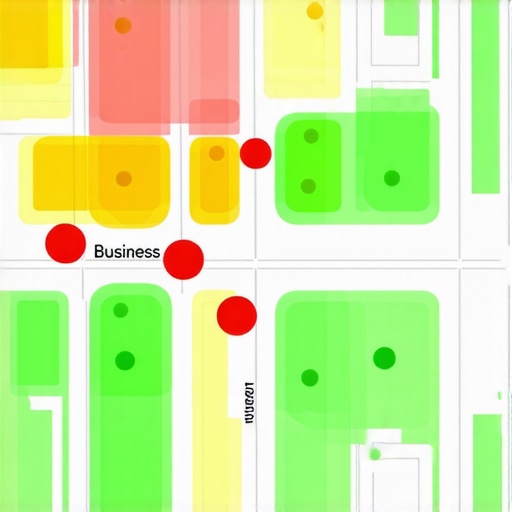
How do I stay in the three-pack once I’ve finally arrived?
Maintenance is where most people fail. They treat local visibility help like a one-time project, but the algorithm is constantly re-evaluating your relevance. According to research by Joy Hawkins at Sterling Sky, while keywords in the business name are a massive factor, the ‘proximity to the searcher’ remains a variable you must constantly fight to expand. To keep the spot, you need to implement a passive feedback strategy that ensures a steady drip of new data.
Predict the shift before your competitors do
Looking ahead, we are entering an era where ‘real-world behavior’ is king. By 2026, I predict that your map ranking will be determined more by your ‘dwell time’—how long people stay at your location—than by your backlink count. This is why foot traffic signals are outpacing traditional seo reviews in importance. If you want to stay ahead, use these google business profile tips for 2026 to start building that behavioral authority now. I challenge you to try one thing today: Pull up a grid tracker and find the exact street where your ranking drops. Once you find that line, go take three photos of your work on that specific street and upload them with location metadata. It’s a small move, but it’s how you start reclaiming territory.
The Hard Truths I Learned While Fighting the Map Wars
Looking back, the biggest hurdle wasn’t the algorithm; it was my own belief that ‘set it and forget it’ was a viable strategy. I spent thousands on automated fixes that never moved the needle. I eventually realized that the interaction moves that actually matter are the ones that prove you are a real human serving real neighbors. If you aren’t seeing results, it’s often because your local citation team is hurting you by focusing on quantity over local relevance. I had to learn that the algorithm values the ‘context’ of your business just as much as its location.
- Consistency in posting small updates is more powerful than a one-time burst of activity.
- A single local photo with embedded geodata is worth more than a dozen polished stock images.
- Review quality and the depth of your responses beat raw numbers every single time.
The Small Stack That Keeps My Profile Healthy
I don’t believe in cluttering your workflow with dozens of apps. For real visibility improvement, I stick to the essentials. I rely on grid-tracking software to see the truth about my rankings across town, and I always consult with visibility experts when a specific neighborhood seems locked down by an old competitor. I also recommend following the research from Sterling Sky and Whitespark to stay updated on how the algorithm is shifting toward behavioral data and foot traffic signals.
Reclaiming the Lead Your Business Deserves
You’ve worked too hard on your craft to let a digital glitch or an outdated profile hold you back. The road to the top of the map isn’t a sprint; it’s a series of intentional, human signals that prove you are the best choice for the searcher right now. Whether you choose to do it yourself or hire a dedicated maps optimization team, the most important step is to stop being invisible. You have the service, you have the passion, and now you have the blueprint to make sure the world sees it. Start with that one photo on the edge of your service area today and watch the momentum build. Have you noticed your map ranking drop off suddenly at a specific street or neighborhood border? Let me know in the comments below!