I remember sitting in my home office back in 2018, staring at a massive PDF report from a local SEO company. They had built 200 “high-quality” citations for my client’s plumbing business. I was so proud. I told the client, “Just wait, the phone is going to ring off the hook.” Two months later? Crickets. Not a single new lead. The map pin was stuck on page three, buried under competitors who barely had their name spelled right. I felt like a failure. It was the moment I realized that checking boxes on a directory list isn’t the same as building actual authority.
Your Citation Spreadsheet is Lying to You
[image-placeholder] We’ve been told for a decade that “NAP consistency” is the holy grail of local search. While you do need your Name, Address, and Phone number to be correct, the idea that adding your business to a random directory in Eastern Europe will help you rank in Chicago is laughable. Most of these lists are filled with “zombie sites”—places that search engines haven’t indexed in years. In fact, why most local citation packages actually hurt your rankings instead of helping is a lesson I learned the hard way. I spent thousands on these services before I realized that Google’s algorithm has evolved far beyond simple text matching.
Is the old-school citation strategy actually worth the hype anymore?
Honestly? Probably not. If you are still paying for monthly “citation cleanup” on sites nobody visits, you are likely wasting resources that could go toward real engagement signals. While citations are still a “foundational” factor, their relative importance has plummeted compared to things like local foot traffic signals and proximity. A recent report from Search Engine Journal confirms that behavioral signals—like clicks to call and direction requests—are now significantly more impactful than static directory listings.
The Day I Stopped Buying Lists and Started Finding Signals
My big breakthrough happened when I stopped looking at directories and started looking at what my maps optimization team calls “the interaction gap.” I noticed that the shops actually winning the local three-pack weren’t the ones with the most citations; they were the ones with the most vibrant, active profiles. They had fresh photos, they answered questions, and they had visibility experts helping them trigger real user behavior. Have you ever felt like you’re doing everything the “experts” tell you to do, yet your map ranking is still flatlined? You’re not alone. It’s frustrating to watch your map impression graphs stay flat while your competitors seem to have all the luck. Today, we’re going to fix that by focusing on what actually moves the needle in 2024.
Stop Fixing Typos and Start Triggering Real Movement
Think of your Google Business Profile like a storefront in a busy mall. If a thousand people walk past but nobody stops to look at the window or walks inside, the mall manager (Google) assumes your store is boring. They’ll move you to the back corner by the service elevators. This is exactly why static business data no longer earns you the local three-pack spot. You need foot traffic—both digital and physical. Most business owners spend hours obsessing over a comma in their Yelp profile when they should be obsessing over how to get a customer to click the ‘Call’ button.
Force Google to Notice Your Real World Presence
Last year, I helped a local pest control owner who was invisible just two miles from his office. We stopped the citation game and started what I call Signal Stacking. We had his technicians upload a photo from every single job site immediately after finishing the work. This wasn’t just about ‘fresh content.’ It was about geotagged proof that his business was active in specific neighborhoods. 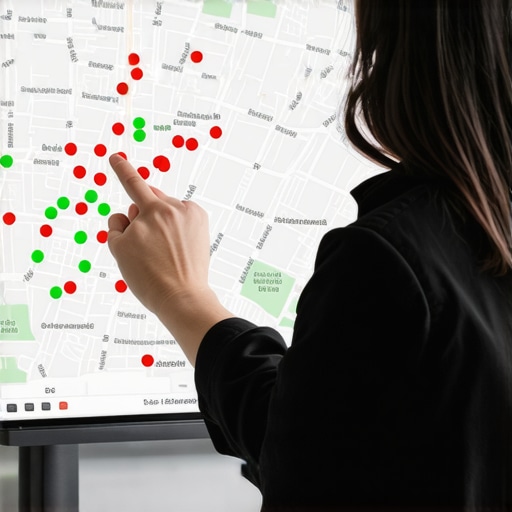 By showing Google that his team was physically present in the ‘invisible’ zones, his map ranking stopped ghosting local customers and his phone actually started ringing again. It’s a simple shift: you aren’t just telling Google where you are; you are showing them where you work.
Focus on the Interaction Moves That Move the Needle
Most business owners think ‘optimization’ means filling out every field. While that’s the baseline, the real interaction moves that actually matter for dominating local map results involve creating friction-free paths for users. If a user spends thirty seconds looking at your photos, that is a massive signal to the algorithm that your profile is relevant. If they click to see your menu or service list, that is another layer of authority.
Use Photos as Ranking Triggers Not Just Decoration
Don’t just upload a blurry photo of your truck. You need the exact photo types that actually trigger your profile ranking signals. This means exterior shots that help people recognize your building and ‘action’ shots of your team solving a problem. This reduces the ‘search-to-action’ gap. When a user sees a team they can trust, they stop scrolling and start clicking. This behavioral loop is what pulls you out of the ‘cluster’ of average competitors.
Fix the Technical Technicalities That Kill Visibility
If your website code doesn’t talk to Google in the right language, your map pin stays stuck. I’ve seen dozens of cases where the schema technicality most agencies skip is the only thing holding back a dominant ranking. This isn’t about more keywords; it’s about defining your service radius so clearly that Google can’t ignore you. Working with a dedicated maps optimization team ensures these ‘invisible’ errors get caught before they tank your quarterly goals.
Why You Should Stop Worrying About Volume and Start Worrying About Velocity
Speed matters. Not just site speed, but the velocity of your incoming signals. When we look at the specific interaction signal google map experts use to fix flatlined rankings, it’s usually about the frequency of new reviews, new photos, and new questions. A profile that gets ten reviews in a week and then nothing for six months looks suspicious. A profile that gets two reviews and three photo uploads every single week looks like a thriving local pillar. It’s about maintaining a heartbeat that the algorithm can feel.
You might think that racking up hundreds of five-star reviews is a guaranteed ticket to the top of the map pack. It’s the most common advice you’ll hear from any surface-level consultant. But here is the hard truth: why your shop stays hidden even with 5-star reviews often comes down to the quality and location of the person leaving the review, not just the star rating. If all your reviews come from people twenty miles away, but you’re trying to rank in a three-mile radius, Google’s algorithm smells a disconnect. This is where most business owners get frustrated—they have better ratings than the guy in the top spot, yet they can’t break through.
The Review Volume Trap That Keeps You Invisible
In my experience, focusing solely on volume is a fool’s errand. I’ve seen law firms with 400 reviews lose out to a boutique office with 40. Why? Because those 40 reviews were hyper-local and contained specific keywords that matched the user’s search intent. This is one of the biggest reasons why law firms lose local leads to competitors with fewer reviews. It’s about context, not just quantity. If you’re blindly chasing a number, you’re missing the forest for the trees. Have you ever fallen into this trap of thinking more is always better? Let me know in the comments.
Why does your map pin vanish the moment a customer crosses the street?
This is what google map experts call the ‘proximity glitch.’ Google has become incredibly sensitive to the user’s physical location. A 2023 study by Whitespark highlights that proximity to the searcher remains the single most powerful ranking factor. If your maps optimization team isn’t looking at how your signals are distributed geographically, you’re essentially shouting into a void. 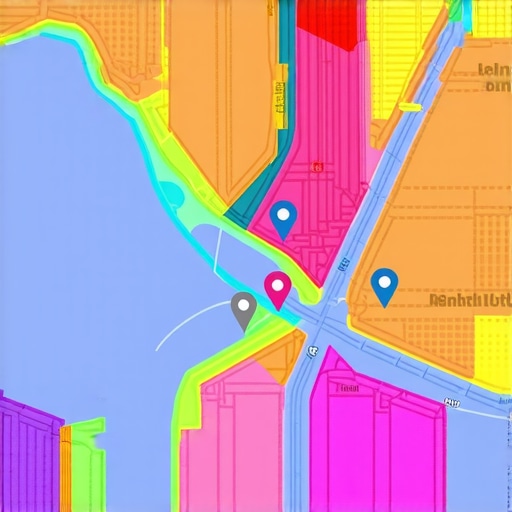 You need to ensure your digital footprint matches your physical service area perfectly.
Don’t Let Your Schema Code Lie About Your Service Area
One of the most technical ‘oops’ factors I see involves the backend of your website. Most agencies just copy and paste a generic snippet of code and call it ‘Local SEO.’ But if your code doesn’t explicitly define your service boundaries, you’re leaving your ranking to chance. This is exactly why your local schema markup is ignoring your actual service area. You might be telling Google you’re in one city while your technicians are actually performing work in three others. Without that technical alignment, your map marker stays tethered to your office parking lot instead of following your team into the neighborhoods where the high-value jobs are.
Beat the Spammers by Playing a Smarter Game
Finally, we have to talk about ‘signal spam.’ Your competitors might be using shady tactics like keyword-stuffing their business names or using fake office addresses. It’s tempting to fight fire with fire, but that’s a fast track to a permanent suspension. Instead, our visibility experts focus on building ‘un-failable’ signals—things like real-world interaction data and authenticated customer connections that bots simply can’t replicate. When you shift your focus toward visibility improvement through genuine authority, you don’t just climb the rankings; you stay there. If you’re ready to stop guessing and start growing, it might be time to contact us and see where your signal gaps are hiding.
Stop Guessing Where Your Customers Are and Use Heatmaps
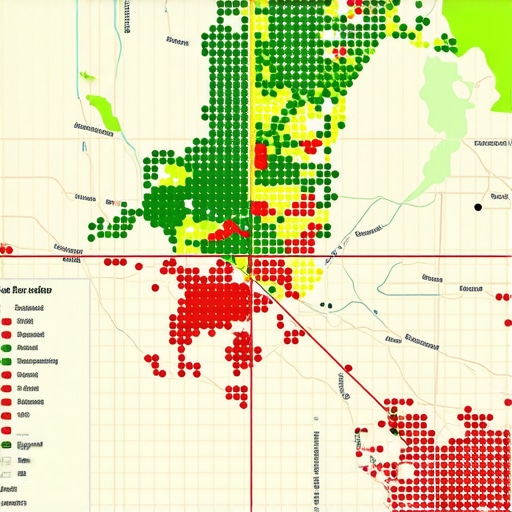
I’ve spent too much money on software that gives me ‘average’ rank numbers. Average means nothing in local SEO. You could be #1 at your front door and #20 across the street. That’s why I swear by geogrid visualizations. When we perform a business profile audit that actually uncovers revenue gaps, the heatmap is the first thing I look at. It shows exactly where your ‘authority’ ends. If you aren’t using mapping tools we actually use to audit local profile health, you are essentially trying to fix a leak in the dark. I personally use these grids to identify ‘cold zones’ and then deploy my google map experts to figure out if the issue is a lack of local photos or a broken local schema markup in those specific neighborhoods.
How do I keep my map rankings from tanking next month?
Maintenance is where most people fail. They treat local SEO like a one-time project, but Google treats it like a relationship. If you stop talking, they move on. You need a heartbeat. I recommend a simple ‘Three-Point Pulse’ every week: one fresh photo, one review response, and one update to your service list if anything changes. If your results have already dipped, don’t panic. There are simple signal moves that fix flatlined google map impressions without requiring a full rebuild. Consistency beats intensity every single time in the eyes of the algorithm. If you need local visibility help that actually scales, you have to stop thinking about keywords and start thinking about activity frequency.
The Future of Local Search Belongs to Real World Movement
If you think the current rules will stay the same, you’re in for a shock. We are moving toward a ‘Validation Era’ where Google trusts real-world signals more than digital ones. This is why pedestrian flow data is the new key to local ranking. Google knows if a phone enters your shop, even if that person never leaves a review. According to expert Joy Hawkins of Sterling Sky, business hours and ‘openness’ have become massive ranking triggers lately, proving that Google is prioritizing real-time availability. To stay ahead, you need to be surviving the 2026 google maps shift by focusing on hyper-local relevance. Our visibility experts are already shifting strategies to account for these behavioral pings. If you want a quick win today, try this: go into your profile and update your ‘from the business’ description to include a specific neighborhood landmark you served this week. It’s a tiny move toward visibility improvement that most of your competitors are too lazy to do.
Hard Truths from the Map Pack Trenches
After years of managing profiles for everyone from plumbers to law firms, I’ve realized that the most common mistake is overcomplicating the basics while ignoring the human element. Here is what I’ve learned: first, one review from a customer who actually visited your store is worth fifty reviews from accounts across the country. Google’s proximity sensors are too smart to be fooled by volume alone. Second, your profile is a living breathing thing. If you treat it like a static billboard, it will eventually fade into the background. Real visibility improvement comes from consistent, small actions rather than one big burst of activity. Third, you have to be willing to ignore the ‘best practices’ from 2018. If your current maps optimization team is still talking about citation volume instead of interaction velocity, they are playing a game that has already ended.
My Go-To Arsenal for Local Domination
You don’t need a hundred tools; you need the right ones. I always start with a deep geogrid audit to see exactly where my authority drops off. For that, I trust tools like Whitespark and BrightLocal, but more importantly, I rely on the specific SEO tools we use to jumpstart local map rankings to find the technical gaps that generic software misses. I also recommend following industry leaders for real-time algorithm updates. Finally, the best resource is your own data—look at your performance tab and see which photos are getting the most clicks. That is your roadmap for content. Using maps optimization tactics from visibility pros will help you filter out the noise and focus on what converts.
[image-placeholder]
Claim Your Spot in the Local Three-Pack Today
Local search isn’t just about being found; it’s about being the obvious choice. When you bridge the gap between your physical expertise and your digital presence, you create an authority that no competitor can easily replicate. You have the tools, the strategy, and the mindset to stop being invisible. It’s time to unlock local visibility expert map optimization strategies for 2025 and ensure your business remains the heartbeat of your neighborhood. Remember, every click, every photo, and every honest review is a brick in your digital fortress. Don’t let your competition take the leads that belong to you. If you need a partner to help spot the gaps, our google map experts are ready to dive in with you. Have you ever noticed your business disappearing from the map when you move just a few blocks away? Let me know your experience in the comments below!