
I remember sitting at my desk at 2 AM, staring at my Google Business Profile like it was a broken puzzle. I had the primary category set perfectly—I was ‘The Local Expert’—and I thought that was the end of the road. But for some reason, the guy three blocks over was getting calls for specific niche services that should have been mine. I felt invisible. It turns out, I was making the classic mistake of focusing entirely on the big label while leaving my secondary fields completely blank. It was like opening a grocery store and only telling the neighborhood that I sell ‘food.’ If you’ve ever felt like you’re doing everything right but still seeing your map pin buried under three layers of competitors, this one is for you.
Stop Treating Your Business Profile Like a One-Trick Pony
Most small business owners think that picking one main category is the finish line. I used to be one of them. I spent months wondering why my business category was actually killing my visibility instead of helping it. The truth is, your secondary categories are the secret sauce that tells the algorithm you are the perfect match for those specific, high-intent searches. Today, I’m going to show you how to stop being just another generic name on the map and start being the specific answer to your customer’s problems. Whether you are looking for local visibility help or trying to manage things yourself, this shift changes everything.
Does tweaking a few extra labels really move the needle?
You might think it’s just busy work. I was skeptical too. But according to a study by BrightLocal, businesses with a complete set of relevant categories see significantly higher discovery search volume than those that stick to the bare minimum. Early in my journey, I made the mistake of adding every category under the sun, thinking more was better. I even added services I didn’t actually perform! That was a huge mistake that led to a messy profile and confused customers. You need precision, not just volume. You need the kind of insight a maps optimization team brings to the table: knowing that relevance beats quantity every single time.
Why Your Competitor is Winning Without Even Trying
It’s frustrating to watch someone with fewer reviews and a worse website outrank you. Often, it’s because they’ve mastered how to use secondary categories to boost map visibility. They aren’t just a ‘Restaurant’; they are also a ‘Pizza Delivery,’ ‘Italian Restaurant,’ and ‘Caterer.’ This isn’t about gaming the system; it’s about providing clarity to the google map experts—the algorithms themselves. If you don’t define your boundaries, the algorithm will do it for you, and it usually gets it wrong. Have you ever looked at your dashboard and felt like you were shouting into a void? I’ve been there, and I promise, this one simple move is the quickest way to pull your business out of the ‘More Places’ shadows and into the light. Have you checked your secondary categories in the last six months?
Audit Your Categories Before the Algorithm Audits You
The first thing I do when I take over a stagnant profile is look at the category stack. Think of your primary category as your job title and your secondary categories as your specialized skills. If you are an ‘Attorney’ but you don’t list ‘Personal Injury Attorney’ or ‘Trial Attorney,’ Google assumes you’re a generalist who might not be the best fit for a specific crisis. I once worked with an HVAC contractor who was frustrated because he wasn’t ranking for furnace repairs. His primary category was ‘HVAC Contractor,’ but he had completely ignored the specific sub-labels. We followed the exact steps we use for rapid visibility improvement, added ‘Heating Repair Service,’ and within days, his impressions for furnace-related searches doubled. It wasn’t magic; it was just speaking the language the map understands.
Connect the Dots Between Your Site and Your Pin
Google doesn’t just take your word for it anymore. It looks for ‘corroborating evidence’ across the web. If you tell your business profile you are a ‘Water Damage Restoration Service’ but your website only talks about general plumbing, the algorithm smells a disconnect. This is where most people fail at visibility improvement. You need to ensure your website’s service pages mirror your secondary categories exactly. I call this ‘Digital Mirroring.’ When your site content, your schema markup, and your map categories all sing the same tune, you create a trust signal that is incredibly hard for competitors to beat. If you are struggling to make this link, it might be the one setting your maps optimization team needs to change fast to align your technical data with your public profile.
The Evidence That Proves You Are Who You Say You Are
Once your categories are set, you have to feed the beast with real-world proof. This means using photos and customer Q&As that specifically mention those secondary services. If you’ve added ‘Luxury Car Rental’ as a category, but all your photos are of economy sedans, you’re sending mixed signals. I remember a small boutique gym that wanted to claim territory in the ‘Yoga Studio’ space. They had the category, but zero yoga photos. We started uploading pictures of their actual yoga classes and had customers mention ‘yoga’ in their reviews. That local relevance is what truly moves the needle. This isn’t just about keywords; it’s about building a consistent narrative that proves your expertise in every niche you’ve claimed. When you do this, you stop fighting for scraps and start dominating the specific searches that actually convert into revenue.
Why Precision Beats Volume Every Single Time
One mistake I see constantly is ‘category stuffing.’ Just because you can add ten categories doesn’t mean you should. In fact, why your business category might be killing your visibility often comes down to dilution. If you’re a high-end steakhouse but you add ‘Hamburger Restaurant,’ ‘Takeout Restaurant,’ and ‘Caterer,’ you’re confusing the AI. It doesn’t know whether to show you to the guy looking for a $100 ribeye or the person looking for a quick drive-thru. Stick to the 3-4 most profitable, relevant categories that truly represent what you do. This focused approach is the cornerstone of any visibility improvement move for stagnant local businesses because it forces the map to see you as the authority in a specific area rather than a jack-of-all-trades who is master of none.
Everyone tells you to chase five-star reviews like they’re gold coins. But I’ve seen businesses with 500 reviews get buried by a shop with 50. Why? Because raw numbers are a vanity metric. If you want real visibility improvement, you need to focus on what I call ‘Semantic Authority.’ This is where your customers actually use service-related keywords naturally in their feedback. If you are just getting ‘Great service!’ over and over, you’re missing the signal that tells the map you are an expert in a specific niche.
The raw review count is a vanity metric
In my experience, the ‘more is better’ approach to reviews actually triggers spam filters more often than it helps rankings. According to the Whitespark Local Search Ranking Factors study, the keywords contained within the reviews themselves are far more influential than the total star count. If you aren’t encouraging customers to mention the specific job you did—like ‘fixed my broken pipe’ or ‘installed new shingles’—you are leaving ranking power on the table. This is one of the top secrets to boost your business presence that most ‘experts’ forget to mention. It’s not just about the star; it’s about the story the star tells.
How virtual offices turn your profile into a ticking time bomb
Here is a trap I see at least once a week: a business owner tries to ‘expand’ their territory by renting a virtual office or a shared coworking space. They think they are being clever by appearing in a new neighborhood. But here’s the reality: Google’s verification AI is now trained to spot these ‘ghost locations’ instantly. If you don’t have a permanent, physical sign and staff present during hours, you are begging for a permanent suspension. I’ve seen map listing optimization moves that save you from suspensions, and the first rule is always: stay away from virtual addresses. They are the fastest way to turn your digital assets into a total loss.

Is your address actually scaring away customers without you knowing it?
Many owners don’t realize that why your business address is scaring away local searchers often comes down to the ‘residential’ tag. Even if you are a service-area business, if your listed headquarters looks like a suburban house on Street View, high-value commercial clients might pass you over for someone with a ‘proper’ shop. This is a subtle signal gap that most generic agencies miss. You have to decide whether to show your address or hide it based on your target demographic’s expectations, not just what’s easiest for your mail. Have you ever fallen into this trap where your physical location didn’t match your brand’s prestige? Let me know in the comments.
Ultimately, a real professional map optimization team isn’t just checking boxes. They are looking at how your data interacts with the real world. For example, the interaction signal that finally moved our client to number one wasn’t a keyword change at all; it was fixing a map drift issue that made directions requests fail for 20% of their mobile users. These technical nuances are the difference between being a local curiosity and a local leader. If you feel like your growth has hit a ceiling, it’s usually because one of these hidden friction points is dragging you down. Stop looking for the ‘magic button’ and start auditing the data points that your competitors are too lazy to check.
After years in the trenches, I’ve realized that local visibility isn’t a trophy you win once; it’s more like a high-performance engine that needs constant oil changes. I don’t waste my time with those massive, bloated SEO suites that cost hundreds a month and try to do everything poorly. Instead, I stick to lean, surgical tools that provide the kind of local visibility help that actually moves the needle. My favorite ‘secret’ tool is the PlePer Chrome extension. It allows me to peek under the hood of any listing to see the exact secondary categories a competitor is using. If a rival suddenly jumps three spots, I don’t guess why; I use it to snoop on competitor map data to steal their best traffic and see if they’ve pivoted their strategy for the season.
The Software I Actually Fire Up Every Monday Morning
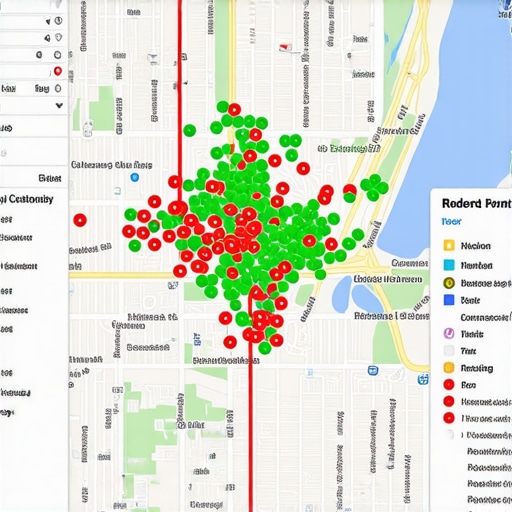
Beyond category spying, I rely heavily on local rank trackers that use a grid-style overlay. Standard SEO trackers tell you that you are ‘Number 1,’ but they don’t tell you that you’re only Number 1 when standing in your own parking lot. Tools like BrightLocal’s Local Search Grid show me exactly where my ‘visibility bubble’ bursts. I use this data to identify which nearby zip codes are failing, then I adjust my content strategy to bridge that gap. As Joy Hawkins from Sterling Sky—a leading voice among google map experts—often points out, user-suggested edits can silently revert your hard work. I personally check my ‘Suggested Updates’ tab every single Monday to ensure no one has ‘helpfully’ changed my hours or phone number while I was sleeping.
How do I keep my map pin from drifting into obscurity?
Consistency is the only thing the algorithm truly respects over the long haul. This is where most people burn out. They do a massive burst of optimization and then leave the profile to rot for six months. I’ve found the secret to staying on the map when the algorithm shifts is a small, weekly checklist: reply to two reviews, upload one authentic photo from a job site, and post one update. To scale this without losing my mind, I recommend systems that help you automate customer feedback without triggering the review filter. The goal isn’t to be a robot; it’s to use tools that prompt your real customers to tell their stories consistently, so you never have a ‘dry spell’ that makes Google think you’ve gone out of business.
Stop Fearing the Algorithm and Start Feeding the AI
The future of local search is moving toward ‘visual-first’ and ‘AI-verified’ results. By next year, the expert map optimization strategies we use today will be even more focused on real-time data. I predict that Google’s AI won’t just look at your keywords; it will use computer vision to verify that the equipment in your trucks or the products on your shelves match the services you claim to offer. We are already seeing this with how specific photo types trigger ranking signals. If you want to stay ahead, stop thinking about ‘SEO’ and start thinking about ‘Data Accuracy.’ If you can prove to the AI that you are exactly who you say you are, you’ll be the one they show to the high-value customers. My challenge to you: install a category-checker extension right now and find one secondary category your top competitor is using that you’ve missed. It is the easiest win you will find all week.
Hard Truths from My Years in the Visibility Trenches
I’ve learned that local visibility help isn’t about tricking the AI; it’s about being the most helpful answer in the room. One major lightbulb moment was realizing that fixing the map drift problem for growing businesses often does more for rankings than a hundred generic backlinks. Another lesson? The ‘near me’ factor is a double-edged sword—you cannot rank everywhere at once, so focus on dominating your immediate backyard before trying to colonize the next zip code. Finally, stop obsessing over your star count and start caring about the specific words your customers use in those reviews. It’s those semantic signals that truly convince the google map experts—the algorithms themselves—that you are the true local authority.
The Resource Stack That Keeps My Map Pin Healthy
I don’t just follow any generic advice; I look for data-driven results. I highly recommend keeping the expert map optimization strategies for 2025 bookmarked because the landscape shifts faster than most realize. For checking your technical setup, nothing beats the PlePer browser extension for a quick ‘under-the-hood’ look at your competitor’s category choices. Also, follow the Whitespark Local Search Ranking Factors study for real-world evidence that cuts through the marketing fluff. If you find the technical side too overwhelming, seeing the benefit of using a professional map optimization team might be the perspective shift you need to scale your lead flow properly.
#IMAGE_PLACEHOLDER_E#
Take Your Seat at the Top of the Map
You’ve got the tools and the roadmap now. All that’s left is to apply it. Whether you decide to hire a maps optimization team or choose to do the heavy lifting yourself, remember that every small change builds momentum. Don’t wait for a slow month to update your profile. Start today, even if it’s just one new photo or a quick category adjustment. Your future customers are already searching for you—make sure they can actually find you and trust the data they see. Success in visibility improvement is a marathon, not a sprint, but the view from the top of the local pack is worth the effort.
Have you checked your secondary categories lately and found a hidden niche your competitors missed? Let me know in the comments below!