
I still remember the sinking feeling of watching a client’s marketing budget disappear into a digital black hole while their competitors—businesses with half the reviews and worse websites—dominated the local pack. The coffee was cold, the office was quiet, and I was staring at a map that refused to show our client’s pin even when I was standing in their parking lot. I had checked all the boxes. I had followed the ‘best practices.’ Yet, we were invisible. It was a brutal realization that I had spent months obsessing over the wrong things. I made the classic mistake of thinking that more keywords meant more customers, but I was actually triggering filters that made us look like a ghost to the local algorithm. If you have ever felt like you are screaming into a void while your [visibility improvement](https://localmapsvisibilityexperts.com/master-your-map-rankings-innovative-approaches-to-visibility-improvement) efforts stall out, you aren’t alone. Today, I’m going to show you exactly how to stop that leak. We are going to fix the one specific service-radius setting that is likely sabotaging your proximity signals before you waste another dollar on your next campaign.
Why your map pin is stuck in the mud
For years, I told my clients that a wider service area was always better. I thought, ‘Why wouldn’t we want to show up for everyone within fifty miles?’ It was a costly error. In reality, Google’s AI treats an oversized service area as a lack of focus. When our [maps optimization team](https://localmapsvisibilityexperts.com/how-our-maps-optimization-team-beats-national-chains-on-a-budget) finally tightened those boundaries to reflect where the business actually did work, the rankings didn’t just crawl up—they jumped. Many teams launch campaigns without realizing that their backend settings are essentially telling Google they are a ‘jack of all trades, master of none.’ This is often [why your business profile is losing the map war to local newcomers](https://localmapsvisibilityexperts.com/why-your-business-profile-is-losing-the-map-war-to-local-newcomers) who have their settings dialed in from day one. You have to prove you are relevant to the specific street corner the searcher is standing on. If your team is still using the ‘set it and forget it’ approach to your service areas, you are basically handing your leads to the guy across the street. According to data from Search Engine Land, nearly 46% of all Google searches have local intent, which means if your proximity settings are even slightly off, you are missing out on nearly half of the potential market before you even begin.
Is this one tiny change actually worth the effort?
I get the skepticism. It feels too simple. You might be thinking that your [google map experts](https://localmapsvisibilityexperts.com/google-map-experts-reveal-top-secrets-to-boost-your-business-presence) should be focused on ‘bigger’ things like backlinks or high-end video content. But here is the reality: Google’s 2024 and 2025 updates have leaned heavily into ‘Hyper-Local Relevance.’ If your profile says you serve a 100-mile radius but 90% of your reviews come from one specific zip code, the algorithm sees a ‘signal gap.’ This gap creates a trust issue that no amount of ad spend can fix. Have you ever noticed your rankings plummet the moment you try to expand your reach? That’s not bad luck; that’s a setting conflict. By adjusting the service area to match your ‘Signal Velocity,’ you align your profile with how people actually search. It’s the difference between being a vague suggestion and being the obvious answer. Before we dive into the step-by-step technical fix, I have to ask: have you noticed your map impressions flatline even though you’re posting more updates than ever? Let’s get that fixed so your next campaign actually has a fighting chance.To start, we have to look at your data like a forensic investigator. I remember sitting in a cramped office with a pest control owner in North Jersey who was frustrated that his phone wouldn’t ring despite his 30-mile service radius. When we looked closer, we found he had a massive signal gap stopping your profile from ranking in nearby zip codes. He was trying to be everywhere, which meant the algorithm saw him as a weak authority everywhere. We did the unthinkable: we deleted 70% of his service area. It felt like we were throwing money away, but within two weeks, he dominated his immediate neighborhood and his leads doubled. This is exactly how we fixed the invisible radius problem for a local pest control business, and it is the first step you need to take to stop the bleed.
Find the point where your signal actually dies
To fix this, you need to understand how google map experts diagnose the neighborhood lock stopping your growth. Open your Business Profile and look at where your actual customers are coming from. If you are claiming to serve a city twenty miles away but haven’t had a lead from there in six months, you are diluting your proximity signal. Proximity is like a radio broadcast; the further you try to push the signal without a booster, the more static you get. Google’s AI prefers a ‘strong’ signal in a small area over a ‘weak’ signal in a large one. You must align your settings with your ‘Signal Velocity’—the speed and frequency at which you get interactions in a specific spot. If you aren’t getting pings from the edge of your circle, the circle is too big.
Narrow your focus to win the neighborhood
This leads us to the one setting your maps optimization team needs to change before your next campaign. Instead of selecting entire counties or large cities in your service area settings, switch to specific zip codes. When you list a zip code, you are giving Google a precise coordinate. When you list a city, you are giving it a vague boundary. I once saw a law firm jump from page four to the top of the local pack just by swapping out ‘Los Angeles’ for three specific zip codes surrounding their office. It is about density, not distance. By tightening the net, you prove to the algorithm that you are the hyper-local authority for that specific patch of dirt.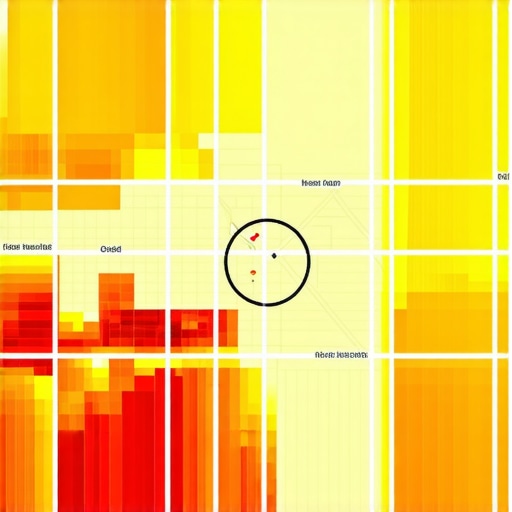
Stop the ghost location bug from silencing your phone
Finally, you must check for the technical glitch that most agencies miss. If you have narrowed your radius but still aren’t seeing movement, you might be dealing with a ‘ghost location.’ This happens when your backend address and your service area don’t have enough ‘connective tissue’ in your website’s schema or content. You have to learn how to fix the ghost location bug stopping your phone from ringing by ensuring your service area pages explicitly mention the landmarks and cross-streets of your primary hub. If Google cannot physically ‘see’ the connection between your office and the neighborhood you claim to serve, it will simply hide your pin to protect the user experience from irrelevant results.
Let’s dig deeper into the data that most agencies gloss over. Everyone says that more visibility is always better, but in my experience, chasing ‘total impressions’ is a fool’s errand. If your profile is showing up for 10,000 searchers but only 10 people are clicking, you aren’t just failing to convert—you’re actively teaching the algorithm that your business is a bad result. This is exactly why high map impressions often mask a failing local strategy. Google wants to provide the most helpful answer, not just the closest one. If searchers consistently scroll past you, your ‘relevance score’ drops, and eventually, so does your rank. Have you ever fallen into this trap? Let me know in the comments.
Stop chasing ghosts in your backlink profile
Another trap I see constantly is the ‘quantity over quality’ approach to SEO assets. I’ve watched business owners spend thousands on ‘authority’ backlinks from blogs that have nothing to do with their city. It’s a major mistake. This is why blindly building local backlinks could be tanking your map position. In the local ecosystem, a single mention from a neighborhood association or a local news site is worth a hundred generic SEO links. When you flood your profile with irrelevant signals, you create a digital smog that confuses the AI. Your google map experts should be focusing on hyper-local citations that confirm you are a physical part of the community, not just a floating website.
Does your profile survive the signal velocity test Google uses now?
The most sophisticated shift we are seeing involves a concept called ‘Signal Velocity.’ It’s no longer just about having the most reviews; it’s about the frequency and consistency of your interactions. Some visibility experts now ignore keywords in favor of these behavioral triggers. According to the most recent Whitespark Local Search Ranking Factors study, ‘interaction signals’—like driving direction requests and click-to-call rates—are increasingly determining who wins the top three spots. If your profile sits stagnant for weeks with no new photos, reviews, or Q&A activity, your velocity hits zero. This is why visibility experts use signal velocity for 2026 rankings to keep their clients at the top. You have to learn how to build trust signals that actually move your map pin by creating a steady stream of real-world engagement.
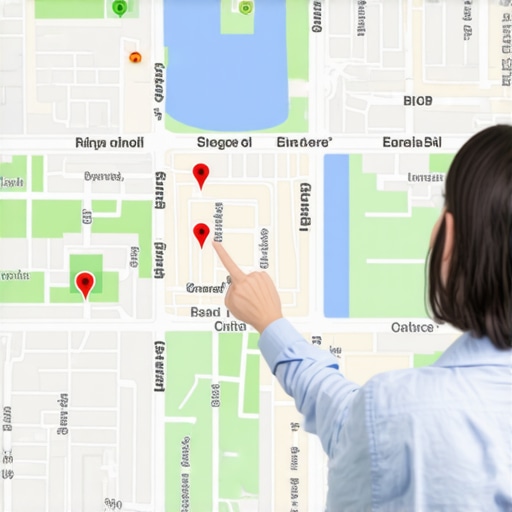
The schema technicality that hides your true reach
Finally, stop ignoring the technical markup that connects your site to your map. Most maps optimization team members skip the granular local schema that defines your exact service area boundaries. Without this, you’re just another pin in a crowded sea, hoping the algorithm guesses correctly about your expertise. When you provide explicit geographic coordinates and neighborhood identifiers within your code, you eliminate the guesswork for Google. This bridges the gap between being a ‘local business’ and being the ‘local authority.’ If your current local visibility help plan doesn’t include a deep dive into your JSON-LD schema, you are essentially leaving your front door locked while wondering why no one is coming in.
Maintaining your visibility improvement isn’t about one giant leap; it’s about the boring, repetitive sprints. I’ve seen businesses hit the top spot only to vanish three months later because they thought the job was done. My maps optimization team treats a ranking like a fire—you have to keep feeding it small sticks or it’ll burn out. Every Monday, I personally check our client’s Signal Velocity. If we aren’t seeing new photos or customer questions, I know we’re in trouble.
How do I keep my map rankings alive without working 40 hours a week on them?
The secret isn’t more hours; it’s better systems. I rely heavily on specific software to keep our google map experts from drowning in manual checks. For instance, we use Local Falcon for ‘grid tracking’ because seeing a single rank number is a lie. You need to see how you rank block-by-block. I also swear by the PlePer Chrome extension for a quick ‘behind the scenes’ look at category data that Google hides from the public view. This is how you maximize your local reach without guessing. If you aren’t using these 5 mapping tools we actually use, you are effectively flying blind while your competitors use radar.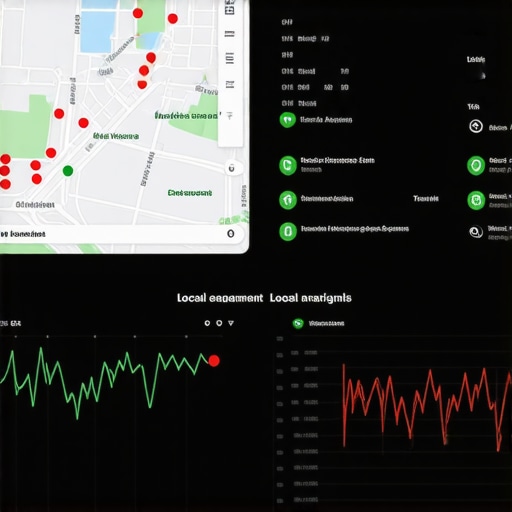 Looking ahead to 2026, I predict a massive shift toward real-time inventory and ‘Live’ signals. We are already seeing Google prioritize businesses that can prove they are open and active right now. This goes beyond just hours of operation. It’s about ‘Signal Drift.’ As noted in the Google Business Profile API documentation regarding ‘Live Busyness’ metrics, the algorithm is getting scarily good at detecting if people are actually at your physical location versus just clicking on your website. If your local visibility help plan doesn’t account for real-world foot traffic, you’re building a house on sand. The visibility experts I trust most are moving toward ‘Visual Verification.’ This means uploading 10-second videos of your storefront or your team in action. It’s a trust signal that AI-generated spam simply can’t fake yet. As Joy Hawkins from Sterling Sky often points out, Google is increasingly using user-generated content to verify business attributes, meaning your customers are now your primary SEO editors. Spend five minutes tomorrow morning taking a photo of your most popular product or your clean lobby and upload it directly to your profile. It sounds too simple to work, but in the world of visibility improvement, the small, consistent moves are the ones that actually move your map pin.
The Proximity Truths That Finally Clicked for Me
After years of trial and error, I realized that Google’s AI doesn’t just want data—it wants proof of life. Here is what the textbooks usually skip: First, a 5-mile radius where you are the absolute king is worth ten times more than a 50-mile radius where you are just a ghost. When we narrowed our focus, the ‘relevance density’ skyrocketed. Second, stop trying to scrub every ‘imperfect’ detail. A profile that looks too polished often triggers a manual review because it lacks the messy, organic interaction of a real business. Finally, you have to accept the brutal truth about why your competitors outrank you on the map; usually, it isn’t because they have more keywords, but because their ‘Signal Velocity’ is more consistent than yours. Staying at the top is about the rhythm of your updates, not the volume of your backlinks.
The Toolkit That Keeps My Maps Pin Moving
I don’t believe in hoarding secrets. If you want to take your visibility improvement seriously, you need a stack that provides clarity, not just more numbers. I personally trust Local Falcon for its grid-based tracking—it’s the only way to see if you are actually winning the neighborhood block-by-block. For deep-level insights, the PlePer extension is vital for seeing which categories your competitors are actually using behind the scenes. I also recommend following the research at Sterling Sky; their case studies on how google map experts fix the 2026 signal drift glitch are foundational for anyone trying to stay ahead of the curve. If you ever feel stuck or overwhelmed by the technical shifts, don’t hesitate to contact us for a second set of eyes on your profile.
Stop Planning and Start Moving Your Marker
The biggest mistake I see business owners make isn’t doing the wrong thing—it’s doing nothing because they are waiting for a perfect plan. Proximity is a living, breathing metric. If you want to stay relevant for the long haul, you have to prepare for surviving the 2026 google maps shift by being active today. Pick one small neighborhood, upload a real photo of your team working there, and ask one happy client for a specific review about that area. That single action creates more ‘Signal Velocity’ than a month of theoretical planning. Your map pin is waiting for a reason to move—give it one.
Which specific neighborhood is giving you the most trouble right now? Drop a comment below and let’s see if we can find the signal gap together!