
I used to think my Google Business Profile was a set it and forget it project. I was wrong. I was dead wrong. I spent six months watching my competitors—guys with half my experience and way fewer reviews—hover at the top of the local pack while I languished on page two. It felt like I was shouting into a void. I’ll never forget the Tuesday afternoon I spent nearly two hours arguing with a confused customer who ended up at an empty lot three blocks away from my actual shop. I was embarrassed and honestly a little panicked. My business was online but it was essentially a digital ghost. I had spent months following bad advice thinking that if I just blasted my name across every obscure directory on the planet I would magically appear at the top. Instead I created a chaotic trail of breadcrumbs that led nowhere. I had different phone numbers on old Yelp profiles and three variations of my business name floating around. Google’s algorithm is essentially a giant fact-checker that hates contradictions. Today I am going to show you exactly how to untangle that knot and stop the bleeding. We are going to look at the truth about why your citations are actually hurting your local rank and how to move your pin back where it belongs. Have you ever searched for your own business and found an address you haven’t lived at for five years? Let me know in the comments because it is a more common nightmare than you think.
Stop Feeding Google Junk Data If You Want to Rank
The logic is simple but the execution is where most of us fail. Google wants to be sure that when it sends a user to your front door you are actually there. If one site says you close at 5 PM and another says you are open until 6 PM Google gets nervous. When Google gets nervous it hides you. I made the massive mistake early on of buying a cheap bulk citation package thinking I was being efficient. In reality I was just paying someone to spread bad data faster. It took me months to realize that wasting money on citations that never move the pin was killing my ROI. You need a clean consistent footprint across the web to build enough authority to break into that coveted three-pack. This is where a maps optimization team usually starts their audit because without clean data your other SEO efforts are just noise. According to a study by BrightLocal 93% of consumers say they are frustrated by incorrect information in online business directories. If your customers are frustrated Google is definitely frustrated too.
Does fixing a few typos actually move the needle?
The short answer is yes and the long answer is absolutely. Think of every citation as a vote of confidence. When every vote is identical Google feels confident enough to put its reputation on the line and recommend you. When those votes have different names or old phone numbers the confidence score drops. I have seen businesses use the simple fix we use when local results suddenly go cold which usually involves a deep cleaning of these messy signals. It is not about quantity anymore; it is about being the most verified and reliable answer to a local searcher’s question. We are moving past the era of just existing online and entering an era where precision is the only thing that earns you visibility.
Scour the Web for Every Ghost of Your Old Address
The first thing you have to do is accept that your business exists in more places than just Google. Every random directory, every old Facebook page, and every local ‘Best Of’ list is a data point. When I finally sat down to fix the mess that led my customers to that empty lot, I realized I had three different ‘official’ names across the web. One had an ‘Inc.’, one didn’t, and one was just a nickname I used in 2018. Google saw this and treated me like three different, unreliable businesses. Fixing these inconsistencies is usually the first step for any maps optimization team worth their salt. You need to perform a manual audit. Search for your phone number, search for your old addresses, and search for variations of your name. When you find a discrepancy, you don’t just ignore it; you hunt down the login or contact the admin. This is how you stop the truth about duplicate listings and your local ranking drop from being your reality. It is tedious, manual labor, but it is the foundation of real visibility improvement. 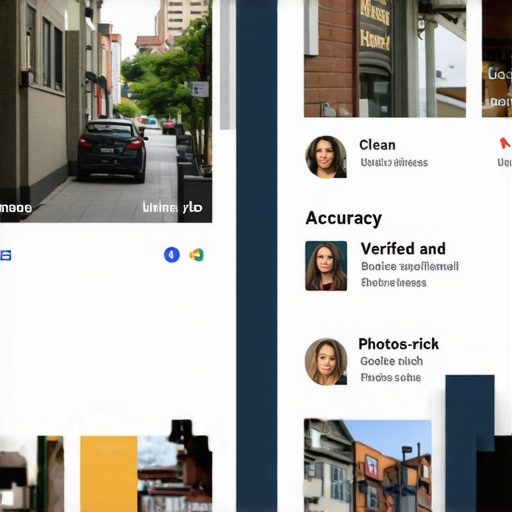
The Pictures That Actually Convince Google You Exist
Most people upload a blurry photo of their storefront and think they are done. I made this mistake for years. I once worked with a local plumber who had over 100 reviews but was still stuck in the middle of the pack. Why? He had zero photos of his actual work—just stock images of sinks. We swapped those for real, geotagged photos of his truck at job sites and his team in their uniforms. His ranking jumped within three weeks. You need to understand the exact photo types that trigger profile ranking signals. Google’s AI can now ‘see’ what is in your photos. If you are a dentist, it wants to see a dental chair, not a generic sunrise. It wants to see the faces of the people working there because that builds the trust signals that actually move your map pin. If your photos look like they belong on a real estate site, you are failing the authenticity test.
Stop Waiting for Reviews and Start Engineering Them
Waiting for customers to remember to leave a review is a losing game. You have to be proactive without being annoying. I used to feel ‘salesy’ asking for feedback until I realized that my best customers actually wanted to help—they just needed a path of least resistance. You should be using the exact text message that gets customers to leave a review before they leave the store. If you wait until they get home, you’ve already lost them to their kids, their dinner, or their Netflix queue. The goal is to create a steady stream of fresh signals. A hundred reviews from three years ago are basically worthless compared to five reviews from last week. This is one of the google map experts reveal top secrets to boost your business presence that separates the leaders from the laggards. You are not just looking for stars; you are looking for keywords and interaction. When a customer mentions a specific service in their review, it tells Google you are the local authority for that exact thing. This is the kind of local visibility help that actually results in a ringing phone.
Most business owners I talk to are obsessed with their physical address. They think if they aren’t on the busiest corner in town, they are doomed to settle for the scraps. I am here to tell you that this is a outdated myth that is actually holding your growth hostage. While your physical location matters, it is not the finish line. In fact, why most local visibility plans fail the real-world proximity test is usually because they ignore behavioral signals. A 2023 study by Whitespark highlighted that while proximity remains a primary factor, ‘behavioral signals’ like click-through rates and direction requests are increasingly responsible for ‘breaking’ the proximity barrier. If Google sees that people consistently bypass your competitors to find you, it will expand your ranking radius. This is the simple interaction signal that beats proximity limits and it is exactly what I used to help a boutique gym outrank a national chain three miles away. Have you ever fallen into the trap of thinking your address was your destiny? Let me know in the comments.
Why does your shop disappear when searchers move two blocks away?
It is incredibly frustrating to see your pin vanish the moment you cross a major intersection or a bridge. This often happens because of what a maps optimization team calls a ‘signal cliff.’ Your data might be clean, but your profile lacks the location-specific authority to convince Google you are relevant to that adjacent neighborhood. I once saw a contractor lose 40% of his leads because he hadn’t updated his service area details to reflect where his trucks actually went. He was suffering from why your shop disappears from maps when searchers cross the bridge, a common technical glitch where Google’s ‘confidence’ in your location data abruptly ends at a geographic boundary. 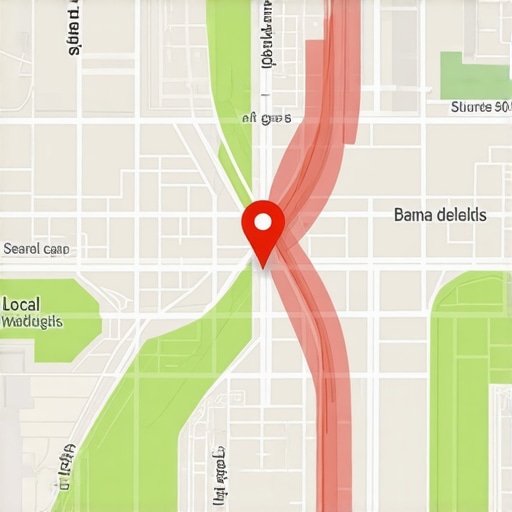
Avoid the temptation of keyword stuffing your business name
Here is a massive warning: the ‘oops’ factor that kills more profiles than anything else is trying to game the system with a fake name. You might see a competitor called ‘Best Plumbing Repair Denver 24/7’ and think you should do the same. Don’t. This is a high-risk gamble that leads to permanent suspensions. When the hammer eventually drops, you will be scrambling to figure out how to bypass the standard support loop during a suspension, which can take weeks of lost revenue to resolve. Instead of keyword stuffing, focus on why static business data is the quickest way to lose your local three-pack spot. Google rewards movement and updates. If your profile looks the same today as it did in 2022, you are telling the algorithm you are no longer an active player in the market. Real local visibility help comes from dynamic signals, not static tricks. You need to be looking at the only 3 metrics in your local seo report that actually predict profit—specifically, how many people are actually clicking to call. High impressions are a vanity metric; actual interaction is what keeps you in the three-pack when the competition gets fierce.
I don’t just check my rankings once a month and hope for the best; I monitor them like a flight controller monitors a landing strip. If you are serious about scaling, the specific seo tools we use to jumpstart map rankings are non-negotiable assets. I personally rely on grid-based tracking software like BrightLocal or Whitespark to see how I perform every few hundred yards across the city. Most owners look at a single average ranking number and assume they are doing fine, but that narrow view is usually why your business profile checklist is missing critical steps that would actually capture high-intent customers in the next neighborhood over. When I see a ‘red zone’ on my ranking grid, I know exactly where I need to focus my next round of geo-tagged photos or local posts to reclaim that territory.
The Specific Gear That Keeps My Storefront Visible
I’ve spent thousands of dollars over the years testing flashy software, but the real winners are the ones that provide granular data on customer intent. You need to be looking at conversion actions—calls, direction requests, and website clicks—rather than just vanity impressions. If you want to move the needle, you have to understand the one setting your team needs to change before your next campaign which often involves cleaning up your service attributes to match what people are actually searching for today. Google’s internal metrics are shifting toward ‘engagement’ and away from ‘static citations,’ meaning the time a user spends looking at your profile is now a massive ranking factor.
How do I maintain my ranking without working on it every single day?
Maintenance isn’t about repeating the same tasks forever; it is about preventing how to stop search decay on your business profile by layering fresh signals into the mix. Joy Hawkins from Sterling Sky has frequently highlighted that Google now prioritizes ‘justification’ signals—those snippets in the search results that say ‘Their website mentions…’ or ‘A reviewer said…’. If you stop adding new photos and replying to reviews, your relevance score will naturally drift downward as your profile goes cold. I make it a habit to upload three new, high-quality photos every single week because it forces Google’s crawler to re-index my profile and acknowledge that I am still an active, thriving business. 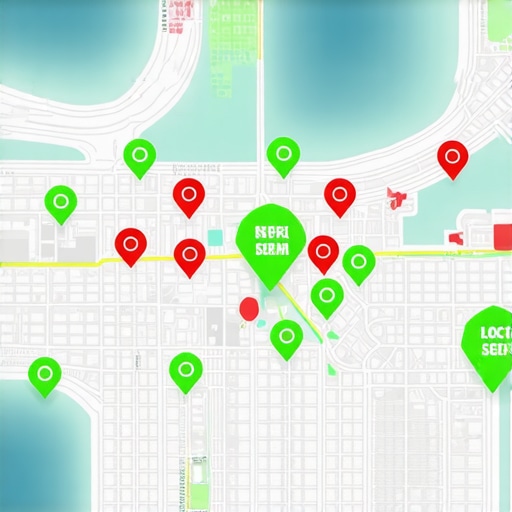
Preparing for a World Where AI Dominates Your Map Pin
The landscape is shifting faster than most local gurus are willing to admit. We are rapidly moving toward a reality where your physical address matters significantly less than your real-world behavior and mobile connectivity. I am talking about why local foot traffic is your best seo signal and how Google uses anonymized mobile pings to verify if people are actually entering your store. Looking ahead, surviving the 2026 google maps shift the new rules for local rankings will require you to think like a digital experience provider. If your profile doesn’t provide instant answers to AI-generated queries, you will find yourself invisible to the next generation of voice-search users. To stay ahead, go into your dashboard right now and check your ‘Attributes’ section. Google adds new ones based on seasonal trends and AI feedback regularly, and missing even one niche tag can disqualify you from appearing in specific ‘near me’ filters. Start doing this monthly and you will see your local reach expand while your competitors are still stuck on 2022 tactics.
The Hard Truths I Discovered While Reclaiming My Map Spot
I realized that Google doesn’t care about how long I’ve been in business; it cares about how much data I’m feeding it today. One of my biggest lightbulb moments was realizing that “good enough” data is actually toxic. If you are working with a maps optimization team, make sure they aren’t just ticking boxes but actually auditing the human side of your profile. I also learned that patience is a weapon. You won’t jump to the top overnight, but consistent, small moves like replying to every single review—even the neutral ones—create a momentum that is impossible for competitors to ignore. True visibility improvement happens when you stop looking for shortcuts and start focusing on being the most helpful resource in your neighborhood.
Where I Go for Actual Local Search Truths
You don’t need a hundred tools; you need the right ones. I personally swear by BrightLocal for tracking my progress across different neighborhoods and Whitespark for hunting down those pesky inconsistent citations. For anyone just starting, I highly recommend checking out the Sterling Sky blog; their case studies on visibility experts and real-world testing are what finally helped me see through the noise. If you want to see exactly what I use, take a look at the specific seo tools we use to jumpstart map rankings to get a head start on your own audit. These resources helped me stop the bleeding when I felt invisible to my own community. #IMAGE_PLACEHOLDER_E#
Your Map Pin is Waiting for a Better Story
Getting your business to show up where it belongs isn’t some dark art reserved for google map experts. It is about being the most reliable, most active, and most authentic version of your business online. You’ve seen the mistakes I made—the ghost addresses, the stock photos, and the silence. Now you have the roadmap to do it better. Whether you do this yourself or seek out professional local visibility help, the key is to start moving today. Your future customers are searching for you right now; don’t make it hard for them to find you. Mastering map rankings is a marathon, but the view from the top of the local three-pack is worth every step.
Have you ever found a “ghost version” of your business online that was stealing your leads? Let me know in the comments below!