I sat there staring at my dashboard, wondering why my phone was silent as a tomb while the guy three blocks over was drowning in leads. I had the reviews. I had the SEO-optimized title. But I was making a fatal mistake: I was telling the world I did everything, when I really only did one thing exceptionally well. My map listing was a confusing mess of generic categories that didn’t reflect the high-end service I actually provided. I was a visibility expert’s worst nightmare.
Stop Telling Google You Do Everything
If you are anything like I was, you probably think that checking every service box on your profile is the way to win. You want the plumbing leads, the HVAC leads, and the handyman leads all at once. But here is the cold, hard truth I had to swallow: when you try to be everything to everyone, you end up being nothing to the algorithm. Google loves relevance more than it loves variety. I learned this early on when I accidentally tanked my rankings by missing major revenue opportunities in my audit simply because I was too broad. Today, we are going to fix that disconnect. We’re going to align your digital storefront with what you actually do on the job site every day. Fixing your service area listings isn’t just about data entry; it’s about signaling to the search engine that you are the absolute authority for a specific problem. According to research from BrightLocal, about 68% of consumers will bail on a local business if they find inconsistent or incorrect service information online. That is a massive chunk of change to leave on the table. Have you ever looked at your own listing and realized it describes a business you barely recognize?
Does being too specific actually scare away customers?
Many of my neighbors in the small business world worry that if they cut out the fluff services, their phone will stop ringing entirely. It’s a valid fear! But in reality, the real value of a fully fleshed-out profile comes from its accuracy, not its length. When your listing matches your actual offerings, you stop getting those tire-kicker calls that waste your time. You start getting the calls that actually convert into revenue. My early mistake was thinking more is better, but the google map experts will tell you that accurate is better every single time. It’s time to stop the guessing game and start showing up for the work you actually want to do.
Nuke the Services You Don’t Actually Offer
I started by deleting about 40% of the services I had listed on my profile. It felt like I was throwing away potential leads, but in reality, I was cleaning the lens through which Google viewed my business. If you list ’emergency repair’ but you only work 9-to-5, you are creating a friction point that the algorithm eventually punishes. I once worked with a local contractor who insisted on listing ‘interior design’ alongside his heavy-duty flooring work. The result? He was invisible for both. We went in and identified the hidden error in his profile audit that was keeping him off the three-pack, which turned out to be these ‘bloat’ categories. Once we stripped those away, his core keywords shot up in rank. It is like clearing the static on a radio—once the noise is gone, the signal is crystal clear.
Feed the Algorithm with Proof It Can See
Most people think uploading a logo and a picture of their truck is enough. It isn’t. Google’s AI analyzes your images to verify if you are actually doing what you say you are doing. If you are a plumber but all your photos are stock images of generic sinks, you are missing a massive ranking opportunity. I started taking ‘work-in-progress’ shots—gritty, real photos of the actual jobsites. This is one of the exact photo types that trigger profile ranking signals because it proves real-world activity. 
Push Your Map Pin Beyond the Parking Lot
Have you ever noticed how your ranking drops the moment you drive a mile away from your shop? That is the ‘proximity gap.’ I used to think I was stuck with whatever radius Google gave me, but our proximity fix for businesses struggling to rank outside their lot involves shifting focus from static data to interaction signals. If you aren’t getting engagement from searchers in the next town over, Google assumes you aren’t relevant there. I fixed this by encouraging customers in my target zip codes to check in or post their own photos during service calls. It sounds small, but it is a powerful way to fix flatlined impressions fast.
Check Why Your Pin Is Playing Hide and Seek
If you have done the work and you still aren’t appearing, it is usually a technical mismatch between your stated service area and your physical location. I spent three weeks wondering why my shop was a ghost until I realized my map pin was slightly misplaced on a back alley instead of the main road. Digging into why your business pin isn’t showing up for local searches is the first thing I do now whenever a client tells me their phone has gone cold. You have to be the map experts for your own street before you can conquer the city. Accuracy isn’t just a courtesy; it’s the foundation of every maps optimization team strategy that actually works in 2025.
I spent years believing the common myth that local visibility was a numbers game. I bought into the idea that if I just appeared on more directories, my phone would never stop ringing. But here is the nuance most ‘experts’ won’t tell you: generic volume is often the fastest way to confuse the algorithm. If you are still buying bulk directory packages, you are likely stop wasting money on citations that never move the pin. The modern local search landscape has shifted from quantity to behavioral quality. I’ve seen businesses with 500 citations get decimated by a competitor with only 20, simply because those 20 were high-relevance and high-traffic sources. This is the ‘Oops’ factor that catches even seasoned marketers off guard—they optimize for robots while forgetting that Google is now watching how humans interact with your brand in the real world.
Ditch the outdated directory obsession
Most local visibility help you find on the internet is stuck in 2018. They will tell you that NAP (Name, Address, Phone) consistency is the only thing that matters. While it’s the baseline, relying solely on it is why static business data is the quickest way to lose your local three-pack spot. Google is increasingly looking at ‘entity signals.’ This means they want to see if your business exists in the context of your specific city and industry, not just on a list of a thousand other random shops. I’ve learned that why most local visibility plans fail the real-world proximity test is often because they treat the internet like a phone book rather than a living map. Research from WhiteSpark’s Local Search Ranking Factors study consistently shows that while citations are a foundation, their relative importance has plummeted compared to things like reviews and user engagement. Have you ever fallen into this trap of prioritizing list-building over actual customer interaction? Let me know in the comments.
Can a smaller business really beat a giant with half the reviews?
This is the question I get asked most by nervous shop owners. The answer is a resounding yes, and it’s all about interaction velocity. If a national chain has 1,000 reviews from three years ago, but you have 50 reviews from the last three months, Google sees you as the more ‘active’ and relevant solution for a current searcher. This is exactly why your competitors with fewer reviews still outrank you on the map. They are winning the freshness game. Our how our team finds hidden signal gaps in local search methodology focuses on these ‘pulse’ signals rather than just total counts. We look for things like how many people are clicking ‘Call’ or ‘Directions’ from your profile compared to the shop across the street. 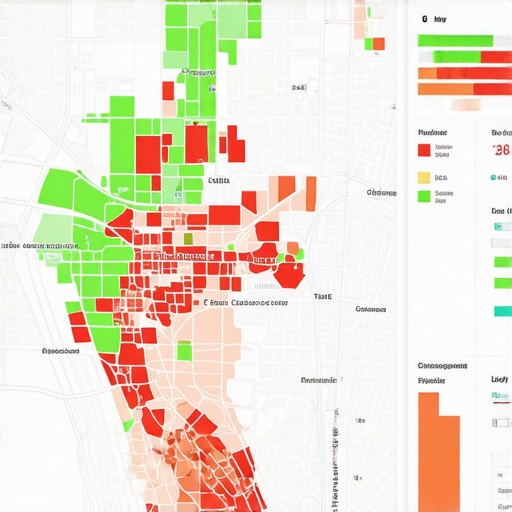
Look for the signals Google actually cares about
The biggest shift I’ve navigated recently is the move toward real-world movement data. We are entering an era where why foot traffic signals are outpacing traditional SEO reviews is becoming the new gold standard. Google knows when a phone that just searched for ‘best pizza’ actually enters a pizza shop. That physical confirmation is the ultimate trust signal. If you aren’t optimizing your profile to encourage that final ‘visit’ signal, you are playing a game with one hand tied behind your back. It’s no longer about just being found; it’s about being the destination that the algorithm can physically verify. Once you bridge the gap between digital data and physical presence, the map becomes your greatest revenue driver.
Maintenance is where the real money is made. You can’t just set a profile and walk away; that’s a recipe for search decay. I’ve found that using specialized software like Whitespark or BrightLocal for grid tracking is essential because it reveals exactly where your visibility improvement stops. When I’m setting up a new client, I always turn to the specific SEO tools we use to jumpstart map rankings to get an immediate baseline. It’s about more than just numbers; it’s about seeing the physical boundaries of your influence. If you are noticing a dip, check the one setting your team needs to change to improve map ranking velocity. I’ve seen this one small adjustment save profiles from total obscurity within days.
Stop the slow bleed of search decay
The biggest threat to your ranking isn’t your competitor; it’s your own inactivity. Google views a stagnant profile as a dying business. Every week, I spend at least twenty minutes responding to reviews and posting a ‘Business Update.’ This signals to the google map experts at Mountain View that we are still open and still active. If you aren’t seeing the results you want, it is usually because how our team finds hidden signal gaps in local search involves looking at interaction frequency. If your ‘Call’ button hasn’t been clicked in three days, Google might nudge you down a spot to see if the guy below you performs better. This is why local visibility help should always include a strategy for consistent, high-quality engagement moves.
How do I keep my map ranking from falling off a cliff?
The key to longevity is diversification of signals. You cannot rely on one single review source or one single set of photos. I personally use a ‘signal rotation’ method where we update different sections of the profile on a staggered schedule. One week it’s new service descriptions, the next it’s fresh project photos. This keeps the algorithm constantly crawling your data. I’ve learned that the simple fix we use when local results suddenly go cold often involves refreshing the ‘Products’ or ‘Services’ section to force a re-index of the listing. It’s a proactive way to maintain your territory before a competitor tries to move in.
Ditch the set it and forget it mindset
Looking ahead, the game is changing toward behavioral verification. We’re moving toward an era where why pedestrian flow data is the new key to local ranking will dictate who wins. Google’s patent on ‘Quality score for local results’ (US Patent 10,242,111) clearly suggests that they are looking deeper at user behavior than ever before. If your maps optimization team isn’t talking about real-world signals, they are living in the past. In the next few years, I predict that ‘Map SEO’ will be 20% data and 80% real-world movement. You need to start thinking about how to get people to physically engage with your location, not just click your link. My advanced tip for this week? Go check your ‘Insights’ tab right now. If your ‘Discovery’ searches are dropping while ‘Direct’ is stable, you’ve got a relevance problem that needs immediate attention.
What I Wish Someone Had Told Me Before I Chased the Three-Pack
After years of trial and error, I’ve realized that the biggest breakthroughs don’t come from massive overhauls but from consistent, small signals. One major lesson is that chasing every keyword is a trap; true visibility improvement happens when you dominate a specific, high-intent niche first. Also, don’t ignore your interaction pulse—if your profile looks like a ghost town, even the best SEO won’t save you. I’ve seen businesses struggle because they didn’t know how we fixed the invisible radius problem that was keeping them hidden from customers just two blocks away. Another hard truth? Your historical data matters. You need to know how to stop search decay on your business profile before your ranking falls off a cliff.
#IMAGE_PLACEHOLDER_E#
The Tools I Use to Keep My Map Pin Steady
I don’t believe in guessing when it comes to local data. My toolkit always starts with a deep dive into the specific SEO tools we use to jumpstart map rankings for new locations. I personally rely on grid trackers to see exactly where my influence ends. I also recommend spending time to learn how to use googles local search features to your advantage because the platform changes monthly. If you are looking for local visibility help, focus on tools that measure behavioral signals like ‘request directions’ or ‘click to call’ rather than just raw impressions.
Stop Watching from the Sidelines and Own Your Zip Code
Success on the map isn’t reserved for the biggest spenders; it’s reserved for the most relevant. You have the power to outmaneuver national chains by being the local authority that people actually trust and visit. Whether you are working with an internal maps optimization team or doing it yourself, the goal is the same: be the obvious choice for your neighbors. If you’ve recently seen a dip, don’t panic. Learn how to win back lost leads after a ranking drop and get back in the game. Your business deserves to be seen, and with these google map experts strategies, it will be. What’s the one service you’re most afraid to delete from your profile, even though you know it’s confusing Google? Let’s talk about it below.