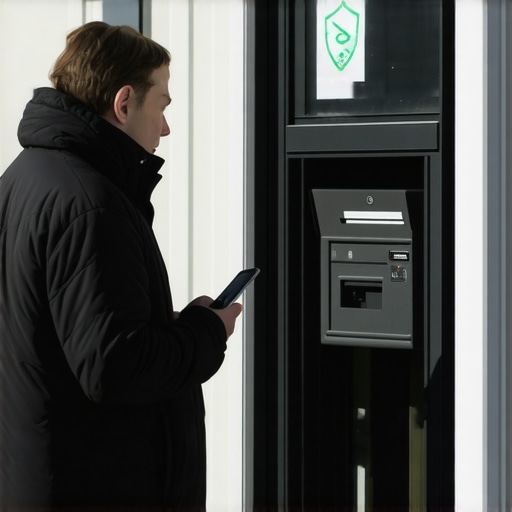
I still remember the feeling of checking my mailbox every afternoon at 2 PM, hoping to find that little white slip from Google. My bakery was open, the ovens were hot, but to the world of smartphones, I was invisible. I waited fourteen days, then twenty, then thirty. Nothing. I felt like I was shouting into a void while the big franchise three blocks away soaked up all the morning traffic. It’s a special kind of frustration when you’ve done everything right—filled out the profile, uploaded photos—and a missing piece of mail is the only thing standing between you and your first ten customers. I spent weeks refreshing my dashboard, convinced I had just missed it. In reality, I was stuck in a loop that many business owners face. Today, I am going to show you that you aren’t trapped in ‘pending’ purgatory forever. We are going to look at the exact steps our maps optimization team uses to bypass the mail system when it fails you so you can finally stop being a ghost in your own neighborhood. Have you found yourself requesting code after code only to be met with total silence? Let me know in the comments because I have been exactly where you are.
The Mail Man Isn’t Coming and That Is Okay
When I first started out, I made a massive mistake that I see people making every single week: I kept hitting the ‘Request Another Code’ button. I thought I was being proactive. In reality, every time I clicked that button, I was voiding the previous code and resetting the two-week waiting period. It is the fastest way to ensure you stay unverified for months. If your business pin isn’t showing up after two attempts, it is time to stop trusting the postal service and start looking for alternative routes. According to industry data from Search Engine Land, local searches lead to a purchase within 24 hours in 18% of cases, meaning every day you wait for that postcard, you are bleeding revenue to the guy across the street who already has his green checkmark. If you want to fix the invisible storefront problem, you have to realize that Google has other ways to prove you exist; they just don’t always make them obvious.
Is there actually a way around the postcard requirement?
The short answer is yes, but it requires you to be a bit more proactive than just sitting on your porch. Whether it is video verification or a live support chat, there are ways to bypass the standard support loop that keeps so many small shops hidden. You don’t need to be a tech genius, but you do need to have your ducks in a row before you reach out to the google map experts. I’m going to walk you through exactly how to prepare your physical space so that when you finally do get a human on the line—or a camera in your hand—you pass the test the first time. We’re going to move past the ‘Postcard Requested’ screen and get you into the actual map pack where the customers are actually looking.When the mail fails, your smartphone becomes your most powerful tool for visibility improvement. I once worked with a locksmith in a dense urban area who had requested five postcards over three months. Each one disappeared into the void of a larger complex’s shared mailroom. We stopped waiting and forced the issue by preparing for a live video verification. Think of this like a digital ‘proof of life’ for your business—Google needs to see that you are who you say you are and that your ovens are actually baking bread. When we finally got a support person to review his history, the trail of failed postcard attempts actually worked in our favor.
Turn Your Smartphone into a Verification Tool
The most common way our maps optimization team solves the postcard problem is through the ‘Video Verification’ method. This isn’t a casual FaceTime call; it is a structured walk-through of your business that proves your physical existence. If you aren’t prepared, you will fail, and Google will flag your account as suspicious, which is a much harder hole to climb out of. You need to show three specific things in one continuous shot: your location (street signs or building numbers), your business evidence (signage or branded vehicles), and your ‘proof of management’ (opening the door with a key or accessing the POS system).
Set the Scene Like a Professional
Before you even open the verification link, you need to stage your storefront. I have seen businesses get rejected because their sign was a temporary banner or because they couldn’t find their keys fast enough on camera. Ensure you have specific photo types that trigger immediate ranking signals ready to go as well, because once you are verified, you’ll want to upload these to cement your authority. Start the video outside, pan to the street, and walk through the front door. If you are a service-area business without a shop, show your branded van and the tools of your trade. This physical proof is the ultimate ‘bypass’ for a lost postcard.
Clear the Digital Fog Before You Call for Help
Google’s bots are constantly cross-referencing your data across the entire web. If your address is slightly different on Yelp or your local Chamber of Commerce site, the verification might stall regardless of your video. Our google map experts always recommend a quick cleanup of your existing mentions. If the data is messy, Google’s trust in your location drops. You might need to learn how to force a refresh on a pending business update if you have recently changed your details. Consistency is the silent signal that makes the human support team more likely to hit the ‘Approve’ button manually.
Break the Cycle of Infinite Waiting
If the video option isn’t appearing for you, it is time to use the support ticket system strategically. Don’t just say ‘I didn’t get my card.’ You need to present a ‘Verification Dossier.’ This includes a high-resolution PDF of your business license, a utility bill with the exact business name and address, and photos of your permanent signage. When you present this level of detail, you move from a ‘random user’ to a ‘verified entity’ in the eyes of the support agent. This is exactly how to fix the invisible storefront problem without buying more ads. You are proving your worth through transparency rather than waiting on a piece of cardboard that might never arrive. This proactive approach turns a months-long headache into a 48-hour resolution.
I see it every day: business owners who think they’ve finished the race once they finally get that verification code. But here is the contrarian truth that most agencies won’t tell you: verification is just the entry fee, not the winning ticket. Many people believe that simply having a ‘complete’ profile is enough to dominate the neighborhood. In reality, our maps optimization team often finds that ‘perfect’ profiles are actually the most vulnerable to sudden drops because they rely on static data. If you aren’t feeding the algorithm fresh interaction signals, you’re just a well-documented ghost.
Stop Wasting Your Budget on Yesterday’s SEO
One of the biggest traps I see is the obsession with massive citation packages. Ten years ago, having your name in 300 random directories moved the needle. Today, your citations might actually be hurting your local rank if they are creating a trail of inconsistent data. I’ve watched google map experts spend weeks cleaning up the mess left behind by ‘cheap’ visibility services that blasted incorrect phone numbers across the web. This creates a ‘signal gap’ that makes Google’s AI hesitate to show your pin. Have you ever fallen into this trap of buying a bulk link package only to see your rankings stall? Let me know in the comments because this is the #1 reason for ‘invisible’ storefronts in 2025.
Can you actually rank in a city where you don’t have a physical office?
This is the question that separates the amateurs from the true visibility experts. The short answer is yes, but not by using the old tricks. If you are trying to reach customers five miles away, simply listing those zip codes in your dashboard isn’t enough. In fact, your service area business stays invisible to those high-value areas because you lack ‘geo-relevance’ in your photo metadata and customer reviews. According to the Whitespark Local Search Ranking Factors study, ‘proximity to searcher’ remains the top signal, but ‘behavioral signals’—like how many people click your ‘directions’ button from a specific neighborhood—are rapidly closing the gap.
The Keyword Stuffing Kiss of Death
The most dangerous ‘oops’ factor I encounter is the temptation to add extra keywords to your business name. Adding ‘Best Plumber in Dallas’ to your actual name might give you a temporary 48-hour boost, but it is the fastest way to get your profile suspended without warning. Our team specializes in visibility improvement that doesn’t risk your entire digital existence. Instead of tricking the name field, we focus on interaction moves that actually matter, like responding to reviews with specific service mentions. This builds authority naturally without triggering the spam filters. If you want to master your map rankings, you have to stop looking for shortcuts and start building a profile that Google’s AI actually trusts. Let’s dig deeper into how we turn those interaction signals into real-world foot traffic.
I often tell my clients that getting verified is like getting a gym membership; it’s a great first step, but it doesn’t actually give you the results until you start the daily work. Once the postcard hurdle is cleared, many business owners make the fatal mistake of letting their profiles sit idle. This is why static business data no longer earns a three-pack spot in competitive markets. Our maps optimization team stays at the top because we treat the profile as a living, breathing social channel rather than a digital yellow-page listing.
Don’t let your profile turn into a digital museum
One of the most effective ways to signal to Google that you are the most relevant option is through constant visual freshness. I see so many shops that haven’t updated their gallery since 2021. You need to stop using stock photos if you want to dominate the three-pack. Google’s Vision AI is incredibly sophisticated; it can identify the tools on your counter or the signage on your walls. Every time you upload a real, geotagged photo of a completed project or a new product, you are providing a ‘proof of life’ signal that local searchers crave. If you want local visibility help that actually lasts, you have to commit to at least two new photos per week. This isn’t just for the bots; high-quality, authentic imagery is what actually converts a searcher into a caller.
The software stack I use to stay ahead of the pack
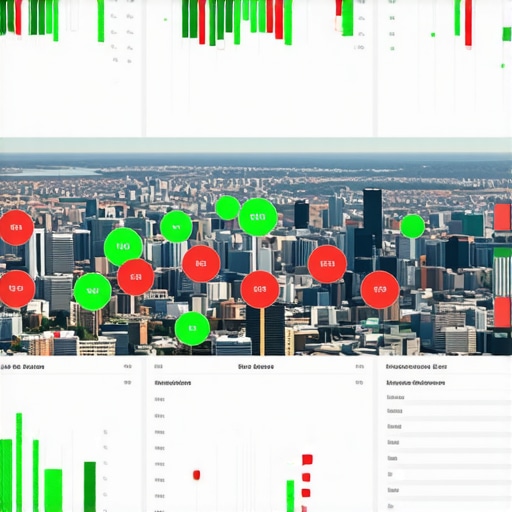
While you can do a lot manually, scaling your presence requires professional-grade equipment. When our google map experts audit a new location, we rely heavily on the specific SEO tools we use to jumpstart map rankings, specifically grid-tracking software like BrightLocal or Local Falcon. These tools allow us to see exactly where your visibility drops off—sometimes literally street by street. If you find that your shop stays hidden from nearby customers even with 5-star reviews, it’s usually because your grid-rankings are suffering from a lack of geo-relevance. By tracking your progress on a 10×10 mile grid, you can see if your efforts are actually expanding your ‘radius of influence’ or just cementing your spot in the parking lot.
How do I maintain my map position once the initial hype fades?
Maintenance is all about the ‘velocity’ of interaction. According to Joy Hawkins of Sterling Sky, a leading authority in the local SEO space, the proximity filter has become much more aggressive in recent years, making engagement signals even more critical. This means you need a steady stream of reviews and, more importantly, a steady stream of responses. Our team focuses on the interaction moves that actually matter, such as asking customers to mention the specific service they received in their review. When a customer writes ‘Great service’ it’s okay, but when they write ‘The best emergency pipe repair in Phoenix,’ Google’s confidence in your category relevance sky-rockets. I predict that by 2026, the traditional ‘Three-Pack’ will evolve into an ‘AI-Snapshot’ where Google’s SGE (Search Generative Experience) recommends businesses based on the specific sentiment and keywords found in your most recent 30 days of activity. To get ahead of this, I strongly suggest you unlock local visibility expert map optimization strategies for 2025 by focusing on ‘Review Attributes’ today. My best tip? Set a calendar reminder to audit your own profile every Sunday night for any ‘suggested edits’ from the public—don’t let a competitor change your hours while you’re sleeping.
Verification Secrets the Google Map Experts Won’t Post on Public Forums
I learned the hard way that clicking the ‘resend’ button more than twice is basically telling Google to ignore you for another month. It is a loop that effectively breaks your momentum. Our google map experts have seen it a thousand times: business owners think they are being proactive when they are actually just resetting the clock. Another insight I’ve gained is that your tax ID and a current utility bill are often more valuable than a hundred generic backlinks. Google wants to see physical evidence of your operation, not just digital footprints. If you want to unlock local visibility expert map optimization strategies for 2025, you have to treat your profile like a living document rather than a set-it-and-forget-it chore.
The Arsenal I Carry into Every Local SEO Battle
Scaling your presence requires more than just hope; it requires professional-grade oversight. I never start a verification rescue mission without the specific SEO tools we use to jumpstart map rankings, specifically grid-tracking software like Local Falcon to see where your ‘visibility wall’ is located. I also rely on a simple smartphone for capturing those high-stakes video walk-throughs. Finally, I always maintain a ‘Verification Dossier’—a digital folder with high-res signage photos and current licenses—ready for when you need to maximize your local reach through human support channels.
#IMAGE_PLACEHOLDER_E#
Your Business Deserves to be Found Today
The journey from being a digital ghost to becoming a neighborhood landmark is rarely a straight line. There will be software glitches, lost postcards, and frustrating support tickets that seem to lead nowhere. However, once that green checkmark finally appears and the phone actually starts ringing with new leads, you will realize that intentional visibility improvement is the highest-ROI investment you can make for your storefront. Don’t let a missing piece of cardboard stand in the way of your future revenue. Have you ever felt like your business was being ‘ghosted’ by the map pack despite doing everything right? Let me know in the comments below!