
I sat there on a rainy Tuesday, staring at my shop’s Google Business Profile. 4.9 stars. A dozen fresh, glowing reviews from the previous week. Yet, the front door hadn’t creaked open in three hours. I decided to go for a walk, pulled out my phone just two blocks away, and searched for exactly what I sell. My heart sank. I wasn’t in the top three. I wasn’t even on the first page. It was like I didn’t exist to the very people walking past my window. If you’ve ever felt that cold realization that your hard-earned reputation is being ignored by the algorithm, you’re not alone. We’re going to fix that today.
The Brutal Reality of the Invisible Five-Star Shop
For a long time, I made the amateur mistake of thinking reviews were the end-all-be-all. I focused all my energy on getting customers to leave feedback, believing that getting more high-value reviews would automatically catapult me to the top. I was wrong. The brutal truth about why your competitors outrank you often has nothing to do with how much people love you and everything to do with how Google perceives your relevance and distance. According to a study by Moz on Local Search Ranking Factors, proximity to the searcher remains one of the heaviest-weighted components, but it’s easily disrupted by messy data or weak interaction signals. I spent months wondering why high map impressions weren’t turning into calls, only to realize I was falling victim to a proximity gap. My shop was physically there, but my digital footprint was lagging three blocks behind. It’s a frustrating ghosting effect that keeps local customers in the dark. Have you ever checked your own ranking from the coffee shop across the street and realized you’re losing to a competitor three miles away?
Does Google actually have a grudge against my business?
It’s easy to feel like the system is rigged, especially when competitors with fewer reviews still outrank you on the map. But it isn’t a grudge; it’s a lack of clear signals. Early on, I ignored my local schema and didn’t bother with photo updates, thinking they were extra work. That was a huge mistake. Our maps optimization team often finds that these small, technical potholes are exactly what trip up otherwise perfect businesses. Today, we’re looking at how to bridge that gap and ensure that when someone nearby searches, your pin is the first thing they see. I’m going to show you exactly how we reclaim that lost territory.
Stop Being a Ghost and Start Moving the Pin
To stop being a digital ghost, you have to treat your profile like a living organism rather than a static museum exhibit. I once worked with a local pest control business owner who was losing his mind because his perfect 5-star rating was being buried by a newcomer. When we looked under the hood, we realized his profile hadn’t been updated in three years. He was functionally ‘dead’ to the algorithm. We shifted focus to the interaction moves that actually matter for dominating the local map pack, and the results were almost instant. It wasn’t about getting more reviews; it was about proving he was still active. Google rewards current relevance over historical perfection. If you aren’t feeding the machine fresh data, you’re essentially telling the google map experts in the algorithm that you’ve retired.
Scrub Your Data Until it Shines
Most business owners think a name and a phone number are enough. However, the reason why static business data no longer earns a three pack spot is that Google values consistency as a trust signal. If your Yelp page says ‘Ste 101’ and your Business Profile says ‘Suite 101,’ you’re creating micro-frictions. I’ve seen our maps optimization team spend days scrubbing old, messy citations just to ensure every comma and hyphen matched across the web. This ‘data hygiene’ is the foundation of the citation audit moves that actually fix messy map data, allowing your business to speak clearly to the crawlers. 
Why Fresh Photos Beat Perfect Stock Images
I’ve seen dozens of shops use the same generic stock photos of ‘happy people in a boardroom.’ It’s a visibility killer. Google’s AI can easily detect stock photography, and it doesn’t help your rank. I started telling my clients to take ‘real’ photos—even if they’re just quick snaps from a smartphone—of their team at work or their truck parked in a specific neighborhood. These are the exact photo types that actually trigger your profile ranking signals because they provide geo-context. It’s a practical way to learn how to fix the proximity gap stopping your business from ranking five miles away. By showing you’re active in different parts of town, you’re manually stretching your ranking radius.
Make Your Profile a Hub of Activity
Stop obsessing over the number of reviews and start looking at how people engage with your pin. If a user clicks ‘Directions’ or ‘Call’ after finding you, that’s a massive ‘trust’ signal. You can encourage this by using the simple interaction signal that beats proximity limits. I always advise people to treat their profile like a social media feed. Reply to every review—good or bad—within 24 hours. This level of responsiveness tells the system you are open and reliable, which is exactly what visibility experts do to shove stagnant businesses back into the top results. Every click, every photo view, and every question answered is a vote in your favor.You’ve cleaned up your data and you’re posting photos, but here is where we dig into the weeds. Most people believe that local search is a volume game—the more citations, the more reviews, the more keywords, the better. But in my years of experience, that’s exactly where the biggest mistakes happen. Everyone says you need hundreds of citations, but in reality, quality and semantic relevance outweigh sheer numbers every time. In fact, the truth about why your citations are actually hurting your local rank is often that you’ve created a messy digital trail that confuses Google’s crawlers rather than guiding them. One high-authority link from a local neighborhood blog is worth more than fifty generic directory listings from a ‘bulk package’ you bought for ninety-nine dollars.
How does Google choose between two perfect 5-star shops?
When the proximity is equal and the reviews are similar, the algorithm looks for what I call ‘Signal Depth.’ This is a mix of technical precision and real-world behavior. According to the Whitespark 2023 Local Search Ranking Factors survey, ‘behavioral signals’ like click-through rates and mobile direction requests have seen a significant increase in importance. This means if people find your pin but don’t interact with it, Google assumes you aren’t the best answer for that query. This is why expert map optimization strategies for 2025 focus heavily on the user experience of the profile itself, not just the technical backend. 
The Expensive Mistake Hidden in Your SEO Reports
The ‘Oops’ factor for most established businesses is falling for the ‘set it and forget it’ trap with technical data. Many business owners hire an agency that checks the boxes but ignores the schema technicality most agencies skip. This is a specific type of structured data that tells Google exactly which neighborhoods you serve, not just where your office is. Without it, you are effectively telling the algorithm to ignore the suburbs three miles away. I’ve seen shops lose thousands in revenue because their service area wasn’t technically defined in the code, even though it was written on their website. It’s a silent killer of growth. Furthermore, why most local citation packages hurt your rank instead of helping comes down to the fact that they often create duplicate listings that compete with your main profile. When how our team finds hidden signal gaps comes into play, we often find that the first step isn’t adding more data—it’s deleting the bad data that’s holding the pin back. Have you ever fallen into this trap where you did everything ‘by the book’ but still didn’t see results? Let me know in the comments.
I used to think the ‘win’ was hitting the top spot once. I threw a party when my shop finally landed in the three-pack, thinking the hard part was over. Six weeks later, we were back on page two. The reality is that stopping search decay on your business profile is a full-time job if you aren’t using the right systems. You can’t just set it and forget it because your competitors are actively trying to push you off the map every single day. Staying at the top requires a transition from ‘building’ to ‘maintaining,’ and that requires a specific set of tools that go beyond basic keyword tracking.
Stop Your Rankings from Dying a Slow Death
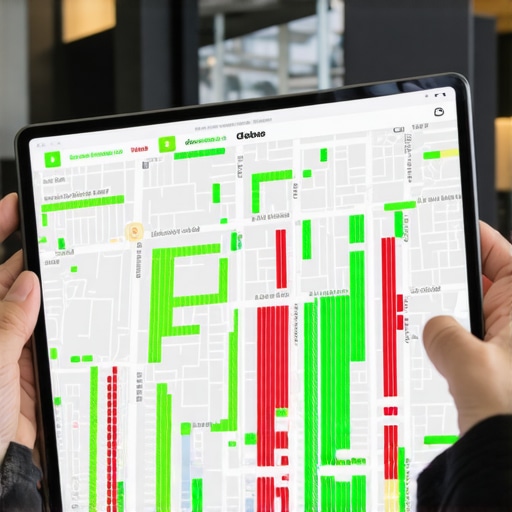
When I work with our maps optimization team, the first thing we do is look at grid-based tracking. Traditional SEO tools that tell you ‘you are rank #1 in Chicago’ are lying to you. In the local world, you might be #1 at your front door and #15 three blocks away. I personally use tools like PlePer or BrightLocal because they provide a visual heat map. If I see a ‘red zone’ creeping in from the north, I know exactly which neighborhood needs more geo-tagged photos or localized posts. This level of visibility improvement is the only way to catch a drop before it turns into a total blackout. According to the 2024 Local Consumer Review Survey by BrightLocal, consumers are increasingly looking for ‘recent’ activity, meaning if your last update was more than 14 days ago, your conversion rate is likely plummeting even if your rank holds steady.
How do I maintain my visibility as the neighborhood changes?
The secret to long-term health is what I call ‘Signal Maintenance.’ You need to audit your profile once a month, not for the big stuff, but for the tiny errors that creep in. Our google map experts often find that Google ‘suggests’ edits to your hours or services based on third-party data, and if you don’t reject those bad edits, your ranking can tank overnight. It is also vital to stop your map ranking from plummeting when competitors move in by staying ahead of the review curve. I don’t mean just getting more reviews; I mean getting better ones. I always tell my clients to use the exact text message that gets customers to leave a review before they even leave the shop. This creates a steady ‘heartbeat’ of data that tells Google you are the most relevant option right now.
AI and the Death of the Traditional Search Bar
Looking forward, the trend is shifting toward ‘Search Generative Experience’ (SGE). Google is starting to answer local queries with AI-generated summaries. If your profile doesn’t have deep, semantic data about your specific services, the AI won’t ‘read’ you as a solution. This is why expert map optimization strategies for 2025 are moving away from keywords and toward ‘entities.’ You need to be an authority, not just a list of services. For those seeking local visibility help, my best advice is to start treating your business description and Q&A section like a conversation with an AI. Use natural language, answer specific questions, and don’t be afraid to get technical. If you want to see where your gaps are right now, I highly recommend you perform a business profile audit this weekend. Pick one ‘red zone’ on your map and post three photos from that specific area; watch what happens to your pin by Monday.
The One Thing My Toughest Ranking Battle Taught Me
I’ve learned the hard way that Google cares more about your neighborhood personality than your technical perfection. Here are a few things our maps optimization team often reminds clients: First, a review without text is just a number; a review that mentions your specific neighborhood and service is a ranking signal. Second, chasing every possible directory listing is a waste of time. Focus on the ones that actually show up in your competitor’s backlink profile. Finally, don’t let your profile go stale for more than a week. Even a simple photo of your team coffee run can signal to google map experts in the algorithm that you are open for business and active in the community.
Tools That Saved My Sanity During Global Ranking Drops
You can’t manage what you don’t measure. I personally rely on PlePer for its localized grid tracking—it’s the only way to see if you’re actually winning the block-by-block war. For cleaning up the mess of old addresses and phone numbers, I trust BrightLocal because their audit reports identify the only 3 metrics in your report that actually predict profit. If you are struggling with visibility improvement, I highly recommend using GMB Spy to peek at the categories your competitors are using; it often reveals why they are appearing for searches you thought you owned.
#IMAGE_PLACEHOLDER_E#
Stop Watching the Map and Start Owning It
The transition from being an invisible shop to a local leader doesn’t happen overnight, but it does happen systematically. If you’re feeling overwhelmed, don’t try to fix everything at once. Start by answering one unanswered question in your Q&A section today. Reach out for local visibility help if the technical side feels like a mountain you can’t climb alone; even the best visibility experts started with a single pin. You’ve built a business worth finding—now it’s time to make sure the world can actually see it. Have you ever seen your business suddenly vanish from the map after a weekend update? Let me know your experience in the comments below!