
I woke up on a random Tuesday, coffee in hand, ready to check my stats, and I felt my stomach drop into my shoes. The impression chart, which usually had a healthy, jagged heartbeat, looked like a straight line off a cliff. My business hadn’t just dipped; it had vanished from the local pack entirely. It’s a terrifying, visceral feeling that makes you want to smash your keyboard. You’ve put in the work, gathered the reviews, and suddenly, the phone stops ringing. I’ve been in those trenches, and let me tell you, the worst thing you can do is start clicking buttons at random. [image]
Stop the Panic Before You Break Your Listing Further
When I first dealt with this, I made a massive rookie mistake. In a fit of anxiety, I decided to change my primary category and rewrite my entire business description in one go. I thought I was ‘optimizing,’ but as any seasoned google map experts will tell you, I was actually just triggering every red flag in the system. I effectively ghosted myself. If you are seeing a downward trend, we need to talk about the reason your business disappeared from maps overnight before you touch a single setting. Today, I’m going to walk you through how to diagnose the silence and exactly how to handle a sudden drop in map impressions without losing your mind. We’re going to look at the signal gaps that actually matter. According to data from Think with Google, 76% of people who search for something nearby on their smartphone visit a related business within a day. That is exactly why this hurts so much—every hour you’re invisible, you are literally losing cash. When the numbers tank, you need visibility improvement strategies that actually move the needle, not just more busywork.
Is My Business Permanently Shadowbanned or Is This Just a Glitch?
It is the question that keeps every shop owner up at 2 AM. You feel like you’ve been blacklisted by a faceless algorithm. Most of the time, though, it’s not a permanent ban; it’s a ‘signal gap.’ I’ve seen businesses get back on top by using the simple fix we use when local results suddenly go cold. My goal is to get you back into that three-pack by identifying if you’ve been pushed out by aggressive newcomers or if you’ve fallen victim to search decay on your business profile. It’s about looking at the exact steps to fix a sudden drop and moving with intention. Have you ever refreshed your dashboard only to see your numbers have fallen off a cliff? Drop a comment below—I want to hear what happened when you first noticed the dip so we can troubleshoot it. Before we dive into the technicalities, let’s look at how to fix flatlined impressions fast by focusing on the ‘why’ behind the drop.
Find the Invisible Gaps in Your Current Strategy
When you see that flat line on your dashboard, your first instinct is to change everything. Stop. The first real step is a diagnostic audit that doesn’t involve guesswork. You need to determine if you are suffering from a technical glitch or if your competitors have simply outplayed you. I remember a local plumber I helped last year; his calls dropped to zero because he changed his primary category on a whim, thinking it would capture more ‘general’ searches. Instead, he triggered a filter that made him irrelevant to his core high-value keywords. This is exactly why your phone stops ringing when you change your primary category without a data-backed reason. You have to look for the hidden signal gaps that stop storefront growth, such as inconsistent NAP (Name, Address, Phone) data across the web. If Google sees one address on your site and another on an old Yelp page, it loses trust. You must clean up messy citation data that confuses google before any other ‘hack’ will work. Think of it like a GPS: if the coordinates are fuzzy, the car never arrives at the destination.
Refresh Your Photos to Trigger New Ranking Signals
Most business owners upload five photos when they create their profile and then never touch it again. This is a massive mistake. Google rewards active profiles because activity suggests the business is still operational and thriving. I once spent three hours at a client’s med-spa taking authentic, behind-the-scenes shots of their equipment and staff. Within 48 hours, their impressions started ticking upward. It wasn’t magic; it was signal frequency. You need to understand the exact photo types that trigger profile ranking signals to show the algorithm you are relevant. Real, high-resolution imagery of your storefront and your team in action tells a much better story than a generic stock photo. In fact, if you want to stay ahead, you should stop using stock photos if you want to dominate the three-pack entirely. 
Defeat the Radius Trap That Shrinks Your Reach
One of the most frustrating parts of local search is ‘the bridge’ or ‘the highway’ problem—where your ranking drops the second someone crosses a physical barrier. This happens because Google’s proximity filter is extremely tight. If you find your shop is losing the war to aggressive newcomers who are physically closer to the searcher, you need a specific counter-strategy. You are likely dealing with why your shop is losing the war to aggressive newcomers who are capitalizing on recent activity signals. To fix this, you have to implement the proximity fix for businesses struggling to rank outside their lot. This involves using local geo-relevance, like mentioning specific neighborhoods in your updates or getting reviews from customers in those outer-rim zip codes. I’ve seen this ‘radius expansion’ work wonders for service businesses that were stuck only appearing to people in their own parking lot. By using how to fix the proximity gap stopping your business from ranking five miles away, you effectively tell Google that your relevance extends beyond your physical front door. It is about proving authority through interaction, not just location.
Let’s dig deeper into what really happens behind the scenes of a high-ranking listing. Most business owners assume that hiring google map experts is a one-time project, like installing a new sign on the front of your building. But here is the contrarian truth that most agencies won’t admit: static data is the silent killer of rankings. Everyone tells you to get your NAP (Name, Address, Phone) right and then leave it alone to build ‘authority.’ In my experience, if your data doesn’t ‘breathe’ with fresh updates, Google eventually assumes you’ve lost relevance. This is precisely why static business data no longer earns a three-pack spot in competitive markets.
I see a massive ‘Oops’ factor with generic local visibility help packages that promise hundreds of citations for a flat fee. It sounds like a bargain, but it’s usually a trap. These automated services blast your business information to low-quality, spammy directories that haven’t been relevant for a decade. Instead of building trust, you are actually creating a web of conflicting signals that require a professional visibility improvement strategy to untangle. You need to understand the truth about why your citations are actually hurting your local rank when they are handled by bots rather than humans. According to the Whitespark Local Search Ranking Factors study, while citations are a foundational requirement, their sheer volume has plummeted in importance compared to real-world behavioral signals like ‘click-to-call’ and ‘direction requests.’
Why Does Google Rank Your Competitor With Fewer Reviews?
It feels like a punch in the gut, doesn’t it? You have 200 five-star reviews, and some newcomer with only 40 reviews is sitting at the top of the pack. This happens because of a nuance called ‘Review Velocity’ and the presence of specific keywords within the text of those reviews. If all your glowing feedback came in a massive burst three years ago and has since trickled to a stop, your profile is effectively a digital fossil. Google prioritizes recency and engagement. If you aren’t seeing the growth you expect, it is time to look at why your competitors with fewer reviews still outrank you on the map and adjust your outreach accordingly.
Another common mistake I see involves the business phone number. Many owners swap their local number for a toll-free 800-number, thinking it makes the brand look national and more professional. However, why your local phone number is better for seo than a toll-free one comes down to the core of local search: geo-relevance. A local area code acts as a digital anchor to your physical community. When you remove it, you weaken the link between your business and the local searcher.
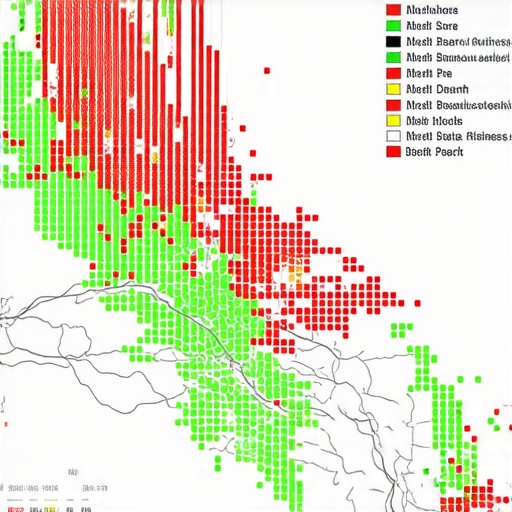
Have you ever fallen into the trap of buying a massive citation package or focusing only on your total review count while ignoring recent activity? Let me know in the comments—I’m curious if you’ve seen a ‘younger’ listing leapfrog over your established business recently. To fix these gaps, you need to focus on the interaction moves that actually matter for dominating the local map pack rather than just filling out a checklist. If you’re ready to stop the guessing game, our google map experts can help you identify exactly which signals are missing from your current profile.
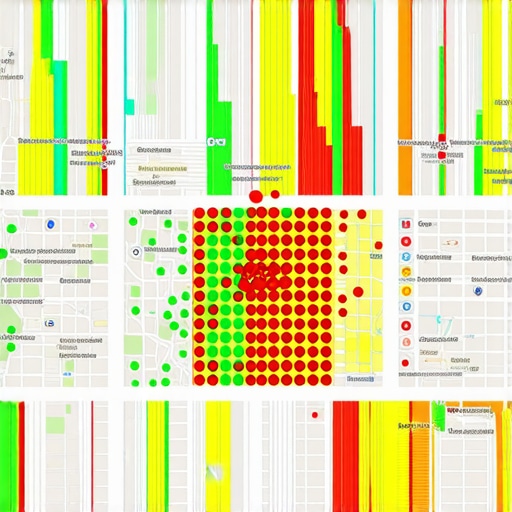
I don’t play guessing games with my clients’ livelihoods, and neither should you. If I am recommending a visibility improvement plan, I need raw data, not just a gut feeling. My absolute go-to for this is the grid-tracking heatmap. Most business owners make the mistake of searching for their own shop while sitting in their breakroom, seeing themselves at #1, and assuming the job is done. Of course you’re number one—you are standing on top of your own router. You need to know how you rank three miles away at a busy intersection where your actual customers are. This is exactly how our team finds hidden signal gaps that stop storefront growth before they turn into a total rankings collapse.
The Gear That Keeps My Sanity and Your Rank
To stay ahead of the curve, I use specialized software that goes beyond the basic dashboard. I’m talking about the specific seo tools we use to jumpstart map rankings for new locations. Tools like Local Falcon or BrightLocal provide a visual representation of your reach that makes it impossible to ignore where you are failing. According to technical documentation from Joy Hawkins at Sterling Sky, proximity is an unyielding force, but it can be ‘stretched’ by high-quality, localized content and consistent interaction. If you aren’t looking at your business through a 13×13 grid every month, you are flying blind while your competitors are using radar.
Stop Guessing Where You Actually Stand
Maintenance isn’t about one big push; it’s about the small, boring rituals. Every Monday, I check for ‘suggested edits’ on my clients’ profiles. Competitors and even random users can suggest changes to your hours or your phone number that go live if you don’t catch them. This is one of maximize your local reach maps optimization tactics from visibility pros that often gets overlooked because it feels like housecleaning. But if Google thinks you are closed when a customer is looking for you, your ranking velocity will plummet. You have to be proactive about unlock local visibility expert map optimization strategies for 2025, which will increasingly focus on the accuracy of real-time data.
How do I maintain my map dominance over the long haul?
The secret is ‘Semantic Density.’ This is where I see the future of local search heading. It’s no longer enough to just list ‘Plumber’ as your category. You need to weave your specific services—like ’emergency water heater repair’ or ‘tankless installation’—into your updates, your photo captions, and your review responses. I predict that within the next 18 months, Google’s AI (Gemini) will be primarily ranking businesses based on how well their profile answers specific, conversational long-tail queries rather than just broad keywords. If your profile is a static brochure, you will be replaced by a local competitor who treats theirs like a living social feed. Try this right now: go to your latest five-star review and reply with a question about the specific service the customer received. It forces the algorithm to re-index that interaction with fresh context. If you need a more hands-on approach, our google map experts are ready to help you scale those signals.
Hard Truths About Your Map Ranking That No One Mentions
After years in the trenches, I’ve realized that the biggest mistake most owners make is treating their profile like a set-it-and-forget-it billboard. Here are the lightbulb moments that changed everything for me: Algorithms care more about recent interaction than total review counts. A business with 50 reviews from this month will often beat one with 500 reviews from 2019 because it signals current relevance. Also, proximity is flexible. While you can’t move your building, you can use the move our optimization team uses to reclaim lost map spots by creating localized content that ‘stretches’ your digital footprint. Remember that why most local visibility plans fail the real-world proximity test is usually because they ignore the human element of search—if real people aren’t clicking your directions, the algorithm loses interest.
#IMAGE_PLACE_HOLDER_E#
The Toolkit That Keeps My Clients at the Top
I don’t believe in manual guesswork when precision tools are available. My daily workflow relies on Local Falcon for those essential grid-tracking heatmaps—it is the only way to see the truth about your reach beyond your own parking lot. For cleaning up the mess that automated bots often leave behind, I trust BrightLocal for thorough citation management. I also recommend following the research at Sterling Sky; they are the gold standard for testing what actually moves the needle in local SEO. Lastly, use a simple tool like Canva to ensure you are consistently producing the specific photo types that trigger immediate ranking signals for your profile.
Take Back Control of Your Digital Storefront
Seeing your impressions drop is a call to action, not a reason to quit. You have the tools and the strategy now to stop the bleed and start climbing again. Consistency beats intensity every single time in the world of visibility improvement. Don’t let a temporary glitch in the algorithm steal your peace of mind or your revenue. Your business deserves to be seen, and with a little intentional work from a dedicated maps optimization team, you can dominate your local market again. What happened the last time you noticed a sudden dip in your map stats—was it a slow fade or an overnight disappearance? Let me know in the comments below.