I sat there, coffee gone cold, staring at a viral Facebook post that had absolutely zero impact on my shop’s foot traffic. It was maddening. My “Likes” were through the roof, but when I looked at my map data, I was still stuck in a signal gap that kept me invisible to anyone more than two blocks away. I spent years thinking social media was a separate world from Google Maps. I was wrong. I made the classic mistake of treating my social profiles like a digital billboard rather than a local engine. I once spent an entire month posting nothing but inspirational quotes thinking it would help my SEO; spoiler alert, it did absolutely nothing. Today, I am going to show you how to stop shouting into the void and start using your social presence to actually drive your map ranking higher.
Stop Wasting Time on Social Media Without a Local Map Strategy
The brutal truth is that Google does not count your Instagram “Likes” as direct votes for your location. However, it does watch for something much more valuable: user intent and traffic patterns. According to a study by Search Engine Journal, while social signals are not a direct ranking factor, they create a ripple effect that significantly influences your search visibility through brand mentions and localized traffic. My google map experts and I found that the real magic happens when you use social media to trigger specific engagement signals that Google cannot ignore. By aligning your social strategy with your physical location, you transform passive followers into active signals for your business profile.
Does Facebook really help you show up in Google Maps?
You have probably felt that nagging doubt. Is spending an hour on a reel actually better than just asking for another review? The skepticism is healthy because, honestly, most businesses do it wrong. They post generic content that does not anchor them to their city. To move the needle, you need interaction moves that matter, specifically those that prove to Google you are a relevant, active part of your local community. Have you ever felt like you are doing everything “right” on social media but your phone still will not ring? This happens when your social buzz is disconnected from your actual map pin.
How Localized Content Forces Google to Notice Your Storefront
The secret is not just “being active.” It is about creating a trail of digital breadcrumbs. When people talk about your business on social media and then search for your brand name on Google, that is a massive signal. It is what visibility pros call brand authority. We are going to dive into how to sync your localized content with your map profile so Google finally understands that you are not just a profile—you are a destination. By using location tags, local hashtags, and encouraging check-ins, you provide the real-world evidence Google needs to trust your proximity and relevance.
Turn Social Media Traffic Into a GPS Beacon
Turning social buzz into map authority is like trying to light a fire with a magnifying glass; you have to focus the beam exactly on one point—your physical address. Most people just wave the glass around and wonder why nothing is burning. To fix this, our maps optimization team focuses on high-intent user actions. When a user clicks a link in your bio and it opens a Google Maps direction prompt, you are telling the algorithm that your business is a desirable destination. This is one of the interaction moves that actually matter for dominating the local map pack because it provides a direct link between social interest and physical movement.
Force Customers to Open Their Maps App
I once worked with a local boutique that was struggling to show up for “clothes near me.” They had 10,000 followers, but they were essentially a ghost on the map. We stopped the generic fashion tips and started a “Check-in for 10% Off” campaign. We explicitly asked followers to click the location tag in our Instagram Stories, which opened their native map app. Within two weeks, they jumped from the second page of search results to the top of the three-pack. It was messy at first—some people couldn’t find the tag, and the staff had to explain it a dozen times—but that concentrated surge of “directions requested” signals told Google that this boutique was the most relevant spot in the neighborhood. This is exactly how you start to fix the proximity gap stopping your business from ranking five miles away.

The Photo Strategy That Actually Moves the Needle
Don’t just post photos; post proof. Google’s AI is incredibly good at recognizing landmarks, street signs, and store interiors. When your customers post photos taken at your location and tag you, it acts as a secondary verification of your existence. This is why local visibility help often centers on encouraging user-generated content. If you are only using stock imagery, you are hurting your chances. You should stop using stock photos if you want to dominate the three pack. Real, raw photos with geotags are the currency of local SEO. Also, consider how to use video on your business profile to boost engagement, as video provides even more spatial data for Google to crawl.
Sync Your Digital Trail to Your Physical Storefront
The technical side of this involves ensuring your website and your social profiles are speaking the same language. If your social media is driving traffic to a slow, clunky website, those users will bounce before they ever think about visiting you in person. This is a common reason why your business profile views dont lead to sales. Furthermore, why your website speed affects your map ranking is a critical piece of the puzzle. Google sees a slow site as a bad user experience, which lowers the trust it has in your business as a whole. You want a seamless flow: Social discovery -> Direction request -> Fast-loading confirmation page. When these three align, you become an unstoppable force in local search.
But even with that alignment, I see people stumble because they treat their google map experts like a one-time repair crew rather than an ongoing maintenance team. The biggest lie in the industry is that local SEO is a ‘set-it-and-forget-it’ task. In reality, static business data is the quickest way to lose your local three-pack spot. Google’s algorithm deeply prioritizes ‘freshness.’ If you aren’t constantly updating your profile with new photos, posts, and responses, the algorithm eventually assumes your business is less relevant than the newcomer down the street who is active every single day. I’ve seen businesses with decade-old reputations vanish from the top three simply because they stopped feeding the beast.
The review quantity myth that stalls your growth
Everyone tells you to get as many five-star reviews as possible. But here is a contrarian truth: a mountain of generic ‘Great service!’ reviews is often worth less than five detailed, long-form reviews that mention your specific services by name. When our maps optimization team audits a profile, we don’t just look at the total count; we look for ‘Review Velocity’ and semantic depth. If you suddenly get 50 reviews in a weekend and then zero for the next six months, it triggers a red flag in the spam filters. You need to learn how to automate feedback without triggering the review filter so your growth remains steady and natural. According to a study by BrightLocal, the recency of reviews is a top-three factor in consumer trust, and Google’s AI is now smart enough to prioritize reviews that actually describe the customer’s experience in detail.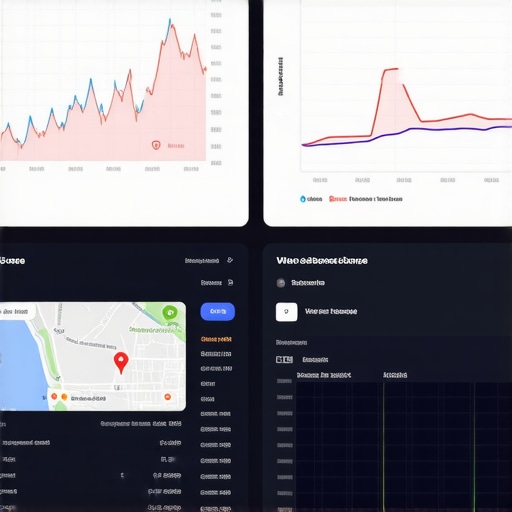
Stop buying citation packages that mess up your data
Another ‘oops’ factor I see constantly is the citation trap. You might be tempted to buy a cheap package of 200 local citations for fifty bucks. Don’t do it. Most of these services use automated bots that create inconsistent address formats across the web. The truth about why your citations are actually hurting your local rank is that even a small mismatch—like using ‘St.’ on one site and ‘Street’ on another—can weaken Google’s confidence in your exact location. This data fragmentation creates a ‘trust gap’ that prevents you from ranking in competitive areas. Real local visibility help involves manually cleaning these records, not just adding more noise to the system.
Why do competitors with fewer reviews still outrank you on the map?
This is the question that keeps most shop owners up at night. It usually comes down to engagement velocity and the ‘Interaction Gap.’ If a competitor has fewer reviews but a much higher rate of people clicking their ‘Directions’ button or ‘Call’ button relative to their impressions, Google sees them as a higher-quality result. To combat this, we often recommend the one setting your team needs to change to improve map ranking velocity, which focuses on converting passive viewers into active clickers. It’s not just about being seen; it’s about being used. To truly win, you must implement expert map optimization strategies for 2025 that prioritize these behavioral signals over vanity metrics. Have you ever fallen into this trap? Let me know in the comments.I’ve spent thousands of dollars testing ‘magic’ software that promised to automate my entire local presence. Most of it was garbage. However, the one thing I cannot live without is a high-quality local grid tracker. This is one of the specific SEO tools we use to jumpstart map rankings for new locations because it shows you exactly where your ‘signal’ drops off. If you are only checking your rank from your shop’s office, you are lying to yourself. You need to see how you look from five miles away to truly understand how our team finds hidden signal gaps that stop storefront growth. Without these granular tools, you are flying blind.
How can I maintain my map position over the long haul?
Maintenance is not just about avoiding a drop; it’s about actively defending your territory from aggressive newcomers. When I work with visibility experts, we treat the Google Business Profile like a living organism. You need a weekly rhythm: respond to every single review (even the ones without text), post one high-resolution photo of a real customer interaction, and check your dashboard for weird spikes in ‘Direction Requests.’ If you let your profile sit for even a month without activity, you will fall victim to search decay on your business profile. Mike Blumenthal, a leading authority in local search at Near Media, often emphasizes that Google’s proximity filters are increasingly sensitive to ‘freshness’—which means a profile that hasn’t been touched in three weeks is a profile that is losing trust. You should also ensure why your local schema markup is ignoring your actual service area radius because technical debt in your code will eventually drag down your map pin even if your reviews are great.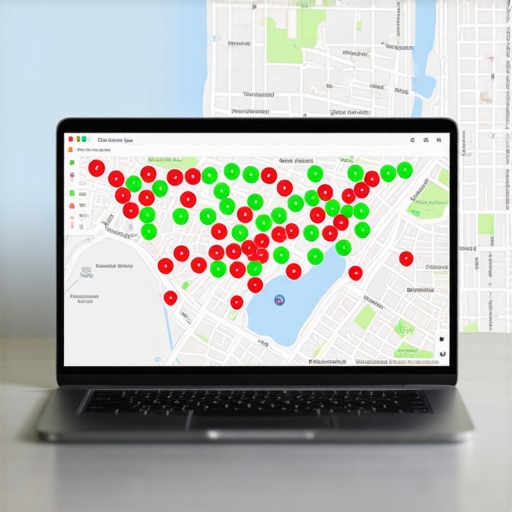
Prepare for the AI-driven future of local search
The trend is shifting toward ‘conversational search’ and behavioral signals. In the next few years, Google will rely less on what you say about yourself and more on the aggregate movement of people. My maps optimization team is already seeing evidence that ‘dwell time’—how long a customer stays at your location—is becoming a quiet ranking factor. This means you need to unlock local visibility expert map optimization strategies for 2025 that focus on the user experience after they find you. If you want to stay ahead, stop obsessing over keyword density and start obsessing over your ‘Direction Request’ conversion rate. A high volume of people actually using Google Maps to find you is the ultimate insurance policy against algorithm updates. If you are feeling overwhelmed, it might be time to seek local visibility help to audit your current standing. Don’t wait until your phone stops ringing to check your data. My advanced tip for today: go into your profile settings and add a specific ‘Products’ or ‘Services’ section with custom images for each; it’s a massive signal booster that most of your competitors are too lazy to do.
The Hardest Lesson I Learned While Chasing Vanity Metrics
For years, I believed that a high volume of reviews was the only shield I needed. I was wrong. I realized that visibility experts look for ‘behavioral signals’ that a simple star rating cannot fake. I once saw a client with 500 reviews get outranked by a competitor with 50 because that competitor had a higher ‘Direction Request’ rate. This taught me that engagement is the heartbeat of local SEO. If you want a real visibility improvement, you have to look beyond the surface. Another lightbulb moment was realizing that the benefit of adding a products section to your profile is one of the easiest ways to tell Google exactly what you do without sounding like a robot. Our maps optimization team constantly emphasizes that it is these small, descriptive details that bridge the gap between a profile and a customer.
My Personal Arsenal for Beating the Local Competition
I do not believe in magic bullets, but I do believe in the right gear. To keep your edge, I recommend a few staples that have never let me down. First, always utilize the specific SEO tools we use to jumpstart map rankings for new locations to see where your signal actually ends; checking your own rank from your office is a trap. I also frequently consult the latest research from BrightLocal to stay grounded in real-world consumer data. When things get complicated, I rely on the framework of innovative approaches to visibility improvement because the old ‘set-it-and-forget-it’ mindset is officially dead. These tools are not just for google map experts; they are for any business owner who is tired of being second best in their own neighborhood.
#IMAGE_PLACEHOLDER_E#
Your Map Pin Deserves More Than Just Luck
Success on Google Maps is not an accident—it is the result of consistent, localized intent. When you start treating your digital presence as a direct extension of your physical store, everything changes. By implementing these expert map optimization strategies for 2025, you are not just chasing an algorithm; you are building a bridge for your customers to find you easily. Real local visibility help is not about gaming a system; it is about making sure your hard work is actually visible to the people walking right past your front door. Your community is searching for you—make sure they can actually see the path to your door. Have you ever noticed your rankings change after updating your photos or adding a new service? Let me know in the comments below!