
I remember the cold sweat that hit me when I typed my own business name into Google and saw a direct competitor’s pin pop up right where mine should have been. It wasn’t just a glitch; they had actually added my brand name into their own listing title. I felt violated. I had spent five years building my reputation, and this newcomer was literally wearing my name like a mask to steal my calls and confuse my regulars. It was a wake-up call that the local map isn’t always a fair playground, and if you aren’t paying attention, someone else will happily cash in on your identity.
Stop Letting Competitors Piggyback on Your Hard Work
I used to think that being the ‘better’ business was enough to win. I was wrong. In the beginning, I made the massive mistake of assuming Google’s algorithm would automatically catch these copycats. I waited for weeks, thinking the system would fix it, while my call volume plummeted. That’s why you absolutely need to monitor your competitors map listings like a hawk. Today, we’re going to walk through the exact process of reclaiming your identity and ensuring that your local reputation remains yours alone. We’ll look at how to use a maps optimization team mindset to protect what you’ve built.
Is fighting back actually worth the effort?
You might be worried that reporting a competitor will lead to a map war or get your own listing flagged by some automated bot. Trust me, staying silent is much worse. According to the official Google Business Profile policies, names must reflect your real-world business title, and any deviation—especially using a competitor’s trademarked name—is a major violation. If you don’t act, you’re essentially letting someone else rob your bank account in broad daylight. Have you ever caught a competitor using your name or a very similar variation to trick your customers?
The Real Cost of Identity Theft on the Map
When someone uses your name, they aren’t just getting a few accidental clicks. They are diluting your brand equity. If a customer has a bad experience with the imposter, they might leave a review on your profile by mistake or simply never come back to either of you. I’ve seen this happen to dozens of shops. You need to understand why your business name shouldnt be stuffed with keywords because it’s the same logic Google uses to penalize these bad actors when they get caught. By learning how to snoop on competitor map data, you can find exactly where they are overstepping and where they are getting their traffic from. We aren’t just talking about a minor annoyance; we are talking about your livelihood. It’s time to stop playing defense and start cleaning up your local search environment with insights from google map experts who have seen every trick in the book. Reclaiming your spot is about more than just vanity; it’s about visibility improvement that actually converts into sales.
Spot the Copycats Before They Steal Your Next Lead
Identifying a name-jacker isn’t always about a 1:1 match. Often, they’ll add a suffix or a location tag to your brand name to confuse the algorithm. Think of your map listing as a physical storefront; if someone put a fake sign in your window, you wouldn’t just ignore it. I once helped a local boutique owner whose name, ‘Petals & Pine,’ was being used by a competitor three towns over as ‘Petals & Pine Delivery Service.’ It wasn’t an accident. They were siphoning her brand searches into their own pocket. To catch them, you need to search your brand name from different zip codes. If you see a listing that looks like your twin but isn’t you, it’s time to act. Don’t just rely on the ‘Suggest an edit’ button. While it’s the fastest way to flag a minor error, it often fails against aggressive spam because it’s easily countered by the owner. Instead, you need to prepare for a more formal approach that visibility experts use to clean up map clutter.
Force Google to See Your Real Identity
If the basic edit suggestion gets rejected, you move to the Business Redressal Complaint Form. This is the ‘heavy lifting’ phase. Unlike a simple edit, this form is reviewed more strictly and allows you to submit evidence. I’ve found that the absolute best evidence is a photo of the competitor’s actual building or signage. If their sign says ‘Joe’s Plumbing’ but their map listing says ‘Joe’s Plumbing & [Your Brand Name] Repair,’ that photo is your smoking gun. Google hates being lied to. When you provide proof that their real-world name doesn’t match their digital mask, the listing usually gets corrected or wiped out within days. If you find yourself stuck in a cycle of rejections, you might need to learn how to bypass the standard support loop when your map listing gets flagged to get a human eyes on the problem. 
Build a Wall of Authority Around Your Brand Name
Once the imposter is gone, you can’t just go back to sleep. You need to make your own listing so authoritative that Google’s AI won’t even consider allowing a duplicate to rank near you. This is where a maps optimization team focuses on reinforcing your brand signals. One of the best ways to do this is through the simple tweak to your business description that boosts visibility by clearly stating your history and service areas. You also need to look at the interaction moves that actually matter for dominating the local map pack to ensure your engagement rate is higher than any newcomer. When customers are constantly clicking your profile, calling your number, and leaving reviews with your specific brand name mentioned, Google creates a ‘knowledge graph’ link that is much harder for copycats to break. Every bit of visibility improvement you implement acts like another brick in your brand’s fortress.
Make Google Trust Your Data Above All Others
To truly secure your spot, you should be using every tool in the shed. This includes learning how to use googles local search features to your advantage, such as Q&A and Google Posts, to constantly refresh your presence. When I dealt with the ‘Petals & Pine’ situation, we didn’t just report the other guy; we flooded Sarah’s profile with real-time photos of her shop and staff. This created a visual proof of existence that the cloud-kitchen competitor couldn’t match. Local visibility help from google map experts often boils down to this: making the truth so loud that the lies can’t be heard. The more active you are, the less likely a bot is to believe a competitor’s claim that they are actually you. It’s a game of consistency and verified data points that ultimately keeps your phone ringing while the copycats get filtered out.I’ve spent years in the trenches of local search, and I see the same patterns repeat. Everyone talks about SEO as this magic wand, but the reality is that a maps optimization team isn’t just checking boxes. Many business owners think that if they just hire someone for local visibility help, they’ll magically appear at the top. But here’s the truth: most of the standard advice you hear is actually outdated or dangerously incomplete. Let’s dig deeper into the nuances that separate the amateurs from the google map experts.
Why more citations might be poisoning your ranking
There’s a massive misconception that the more times your business is mentioned online, the better. I call this the Quantity Trap. People spend hundreds of dollars on massive citation packages, thinking it’s a simple numbers game. In reality, the truth about why your citations are actually hurting your local rank is that inconsistent or low-quality data confuses Google’s algorithm. If one directory says you’re on Main St and another says Main Street, you’re creating a signal gap. According to a landmark study by BrightLocal, citation consistency remains a top foundational ranking factor, and even minor discrepancies can lead to a sudden loss of trust from the algorithm.
Don’t touch that primary category button yet
One of the biggest oops moments I witness happens when a business owner thinks they can hack the system by changing their primary category to something more popular. They think it’s a quick win for visibility improvement. However, why your phone stops ringing when you change your primary category is often due to the fact that you’ve just reset your relevance score for your original, high-converting terms. You can’t just swap identities like a pair of shoes without Google thinking you’re a new, unverified entity. 
Is the proximity limit actually a hard wall?
I get asked this by advanced marketers all the time: If Google favors proximity, am I stuck only ranking for the three blocks around my shop? The short answer is no, but the long answer requires you to master your map rankings innovative approaches to visibility improvement. Beginners think you can just optimize your way into a city ten miles away using keywords. You can’t. You have to prove interaction signals in those specific areas through local links and geo-tagged content. Another common trap is the virtual office. If you’re trying to expand and think a temporary desk address will get you into a new neighborhood, think again. Why you should never use a virtual office for map listings is a lesson many learn only after a hard suspension. Experts know that the algorithm now cross-references lease data and physical business indicators to sniff out ghost locations.
Bridging the gap between impressions and actual calls
Most visibility improvement plans focus exclusively on getting the little red pin to show up. But showing up is only half the battle. Why most local visibility plans fail the real world proximity test is that they ignore the human signal. If people see your listing but don’t click Call or Directions, Google eventually demotes you because you aren’t providing value for that specific search intent. Have you ever fallen into this trap—maybe tried to chase a high-volume keyword that wasn’t really a fit for your location? Let me know in the comments.
Winning the map pack once is a rush, but watching your pin slowly slide to page two is a nightmare. I’ve seen business owners get to the top, pop the champagne, and then completely stop doing the things that got them there. This is what I call ‘Ranking Decay.’ To keep your edge, you need to transition from a launch phase into a maintenance system that visibility experts use to stay dominant year-round. It’s not just about more reviews; it’s about signaling to Google that your business is still the most relevant, active, and trusted answer for the local searcher.
Stop the slow slide into obscurity
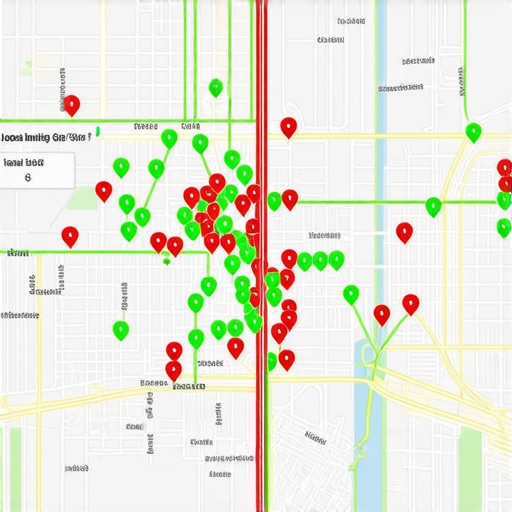
The biggest mistake you can make is letting your profile go stale. I’ve found that why static business data is the quickest way to lose your local three-pack spot usually comes down to the algorithm’s preference for fresh activity. Every time you update a photo, answer a question, or post an update, you are essentially ‘pinging’ the algorithm. I personally use grid-tracking software like Local Falcon or BrightLocal to see exactly where my visibility drops off. If I’m ranking well in the north but failing in the south, I don’t just hope it gets better; I use the specific seo tools we use to jumpstart map rankings for new locations to identify which local signals are missing in that specific zip code.
How do I maintain my local visibility over time?
Maintenance is about consistency over intensity. Instead of posting ten photos once a year, post one photo every week. A maps optimization team focuses on the ‘pulse’ of the listing. You also need to realize how to stop search decay on your business profile by auditing your citations at least once a quarter. As Joy Hawkins from Sterling Sky has noted in her research, Google’s proximity filters are constantly evolving, meaning a competitor opening up closer to your customers can instantly bump you. To fight this, you need local visibility help to build ‘brand authority’ that transcends mere physical distance.
The tools that actually move the needle
I don’t waste time with ‘automated’ SEO plugins that promise the moon. Instead, I focus on tools that verify my data across the ecosystem. If your hours are different on Apple Maps than they are on Google, you’re losing trust points. I always recommend learning how to clean up messy citation data that confuses google because that is the foundation of long-term success. Also, don’t ignore the power of visual proof. Learning how to use video on your business profile to boost engagement is currently one of the highest ROI moves you can make, as it keeps users on your profile longer, which is a massive ranking signal for google map experts.
Where local search is headed in 2025
We are moving toward a world where AI doesn’t just read your text; it ‘sees’ your business. Google’s Gemini-powered search is starting to prioritize listings that have high-quality, relevant images and videos that match the searcher’s intent. This means visibility improvement will soon depend on your ability to provide ‘visual context.’ If you want to stay ahead of the curve, I challenge you to try this right now: find one high-quality video of your team in action and upload it to your profile today. It’s a simple move that most of your competitors are too lazy to do. If you’re feeling stuck, don’t hesitate to contact us for a deep dive into your current map health.
Hard Truths I Learned from Years of Local Visibility Help
Building a dominant presence isn’t just about technical settings; it’s about a mindset shift. I’ve realized that the google map experts who stay on top aren’t just luckier; they are more persistent. One of the biggest lightbulb moments for me was realizing that Google views your profile like a living organism. If you stop feeding it data, it starts to wither. I also learned that how to handle a sudden drop in map impressions usually requires looking at the small things, like a single inconsistent phone number or a missing category, rather than panicking and changing everything. Finally, remember that your competitors are watching you just as much as you watch them; staying ahead means being the most helpful and active resource in your neighborhood, not just the one with the most keywords.
My Go-To Stack for Staying at the Top
I don’t believe in overcomplicating things, but there are a few resources I lean on daily to maintain a high level of visibility improvement. For tracking exactly where my pin stands, I rely on Local Falcon because its grid-style tracking shows me the reality of proximity. For staying updated on algorithm shifts, I follow the Sterling Sky blog; their case studies are gold for anyone wanting local visibility help. I also suggest keeping a close eye on your own data by learning how to track leads coming directly from your map listing so you know exactly which changes are putting money in your pocket. These aren’t just tools; they are the eyes and ears of a professional maps optimization team.
The Future of Your Local Business Starts with One Right Move
Reclaiming your identity from a copycat was just the beginning. The real victory comes from building a brand so strong that no amount of competitor spam can touch you. You have the tools, the strategy, and the knowledge of visibility experts at your fingertips. Now, it’s about execution. Don’t wait for another competitor to try and wear your name like a mask. Take charge of your profile today and implement these expert map optimization strategies for 2025 to ensure your business remains the first choice for every local searcher. If you ever feel overwhelmed by the technical shifts, you can always contact us to get your strategy back on track. Your local reputation is your most valuable asset—guard it fiercely.
Have you ever noticed a competitor using a name that’s suspiciously similar to yours just to steal your traffic? Let me know in the comments below!