I’ll never forget the cold sweat I felt when I realized my ’genius’ plan had backfired. I had just rented a prestigious-sounding suite in a downtown high-rise—except I wasn’t actually there. It was a virtual office, a mere mailbox meant to trick the system into thinking I was a big-city player. I thought I was being clever, but within forty-eight hours, my entire digital presence vanished. Google didn’t just move me to page two; they wiped me off the map entirely. It took months of groveling and paperwork to recover, and I don’t want you to make that same expensive mistake.
Stop Chasing the Downtown Dream at the Expense of Your Reputation
In my early days as a local business owner, I listened to the wrong people. I fell for the idea that proximity is everything, which led me straight into the virtual office trap. The truth is, Google map experts will tell you that the algorithm has become incredibly sophisticated at sniffing out shared workspaces and P.O. boxes. When you use a fake or shared address, you aren’t just risking a temporary dip; you are inviting a permanent suspension. I’ve seen businesses lose years of hard-earned reviews because they tried to borrow a better zip code. If you’ve noticed that your business disappeared from maps overnight, the address is often the first place to look. Google demands transparency, and a virtual office is the opposite of that.
Is a virtual office really worth the risk to your livelihood?
The short answer is a resounding no. You might think you’re saving money on rent, but you’re actually paying for it in lost leads. According to Google’s Business Profile guidelines, your location must be staffed during its stated hours or be a legitimate service-area home base. Using a virtual office is a direct violation that triggers red flags faster than a 1-star review. I learned the hard way that seeking local visibility help shouldn’t involve shortcuts. My mistake was prioritizing looking big over being authentic. Today, we’re going to look at how to build real authority without the smoke and mirrors, including how to fix a suspended business profile without the headache if you’ve already fallen into this trap. Have you ever been tempted to use a virtual address just to get closer to the city center?
The Real Cost of Being Technically Present
When you use a virtual office, you aren’t just lying to Google; you’re potentially frustrating your customers. Imagine someone driving twenty minutes to see you, only to find a locked door and a confused receptionist at a generic coworking desk. That is the brutal truth about why your high map impressions aren’t turning into calls—people want to do business with neighbors, not ghosts. Our maps optimization team now focuses on signals that prove you are a real, breathing part of the community. Authentic presence beats a fancy address every single time.
Purge Every Trace of Your Previous Virtual Identity
The first step in any recovery is an aggressive audit of your citations. Think of your business information like a trail of digital breadcrumbs; if Google follows them and finds three different addresses, it gets confused and stops trusting you. You must how to clean up messy citation data that confuses google before you can even think about moving up the rankings. I remember working with a local plumber in Phoenix who had tried three different virtual suites over two years. His digital profile looked like a crime scene of conflicting data. We had to manually hunt down every mention of his business on Yelp, Yellow Pages, and local directories to ensure they matched his actual home-based headquarters. While we were at it, we made sure to use a local area code, because why your local phone number is better for seo than a toll-free one is a lesson in regional trust that the algorithm weighs heavily.
Provide the Algorithm with Real Evidence
Once the data is clean, you need to prove your location is a living, breathing entity. If you are a service-area business working from a home office, don’t try to hide it. Instead, why your business profile should include your service area is the strategy that actually protects you from suspension. You tell Google where you go, not just where you sit. I’ve seen businesses try to ‘anchor’ themselves downtown using a mailbox, only to get flagged. When we moved that Phoenix plumber to a transparent service-area model, his calls actually increased because he finally showed up in the neighborhoods he actually served.
Why Your Photos Act Like a Digital Passport
Stop using generic images of skyscrapers or handshakes. If you want to build authority, stop using stock photos if you want to dominate the three pack. Google’s AI is smart enough to recognize a stock photo in milliseconds, and it treats them like a lack of effort. You need raw, high-resolution photos of your team, your branded truck, and your actual equipment. 
Identify the Images That Actually Move the Needle
Not all photos are created equal. Our maps optimization team has found that exterior shots with your signage and interior shots of your work process are the gold standard. Specifically, the specific photo types that trigger immediate ranking signals for your profile are the ones that include geotagged data from your actual service location. This acts as a physical verification of your presence that no virtual office can replicate.
How to Win When You Are Not in the Center of Town
The biggest fear for local owners is that moving away from a downtown virtual office will kill their reach. However, you can learn how to fix the proximity gap stopping your business from ranking five miles away by focusing on interaction signals instead of just physical distance. This involves getting your customers to engage with your profile while they are in those high-value areas. We often employ the signal move we use to break out of crowded map clusters in competitive cities, which focuses on localized content updates. When you combine this with the interaction moves that actually matter for dominating the local map pack, like responding to every review and posting weekly updates, Google starts to see you as the most relevant choice, regardless of which zip code you call home.Let’s dig deeper into the mechanics that actually drive growth, because most of what you hear in basic ‘how-to’ guides is either outdated or dangerously incomplete. For instance, common wisdom says the business with the most reviews wins. In my experience, that’s a total myth. I’ve seen companies with 500 reviews get buried by a competitor with only 50. Why? Because the google map experts know that the algorithm prioritizes review quality and semantic relevance over raw volume. If your reviews don’t mention your specific services or locations, they aren’t helping your rank as much as you think. According to the Whitespark Local Search Ranking Factors survey, ‘keywords in native Google reviews’ is one of the top-ranking signals for the local pack. This is exactly why the specific review word count that triggers ranking boosts matters so much—longer, detailed reviews provide the context and high-value keywords that Google’s AI craves to categorize your business accurately.
Why does your shop stay hidden from nearby customers even with 5-star reviews?
It often comes down to what we call ‘proximity decay’ and the lack of consistent hyper-local signals. You can have a perfect rating, but if your profile is static, you’ll find that why your shop stays hidden from nearby customers even with 5-star reviews is usually a result of failing to prove you are active in that specific neighborhood *today*. Our maps optimization team emphasizes that you need a constant stream of local signals, like Google Posts or updated photos, to maintain your ‘relevance’ score. Relying on an old, unoptimized profile is a death sentence; why static business data is the quickest way to lose your local three pack spot is a hard lesson many owners learn only after their traffic flatlines. 
The Keyword Stuffing Trap That Invites Manual Penalties
Here is the ‘oops’ factor I see constantly: business owners adding phrases like ‘Best Plumber Phoenix’ to their actual business name when their legal name is just ‘John’s Plumbing.’ You might see a temporary boost in the rankings, but why your business name shouldnt be stuffed with keywords is about long-term survival. Google is currently on a manual-review rampage, and keyword-stuffed names are the easiest targets for competitors to report via the ‘suggest an edit’ feature. Seeking professional local visibility help means building a brand that survives an audit, not just a weekend glitch. Another nuance people miss is the secondary category selection. If you choose a generic category, you’re competing with everyone; specializing your profile categories is a subtle move that can triple your lead quality overnight. Have you ever been tempted to tweak your business name just to get that extra edge? Have you ever fallen into this trap? Let me know in the comments.Once you’ve scrubbed the ‘virtual office’ stains off your profile, you can’t just walk away and expect the leads to flow forever. Maintenance is where most business owners fail because they treat their Google Profile like a static yellow page listing rather than a living, breathing digital storefront. I personally rely on a few ‘secret weapons’ to stay ahead of the curve. Specifically, the specific seo tools we use to jumpstart map rankings for new locations involve heavy use of local rank trackers that give me a ‘bird’s eye’ view of the neighborhood. I don’t just look at one pin; I look at a 10×10 grid of pins to see exactly where my visibility drops off. If I see a dead zone two miles east, I know I need more localized content for that specific area.
The tech stack I actually use every morning
I don’t believe in overcomplicating things with fifty different subscriptions. My routine is built around audit tools that scan for ‘NAP’ (Name, Address, Phone) consistency across the entire web. If a random directory in another state still has your old virtual office address, it acts like an anchor dragging down your ship. Our maps optimization team spends a significant amount of time in the ‘backend’ of these listings, ensuring that every citation is identical. I also use heat-mapping software to visualize proximity; it’s one thing to be told you’re ranking, and another to see exactly which street corner your competitors are winning on.
How do I maintain my map rankings over time?
Consistency is the only way out of the ‘visibility seesaw.’ I make it a rule to post at least two Google Updates per week. It doesn’t have to be a masterpiece; a photo of a finished job or a quick tip about your industry is enough to signal ‘activity’ to the algorithm. If you stop, you risk what I call ‘profile rot.’ Knowing how to stop search decay on your business profile is about making sure that the data Google sees today is fresher than what it saw last Tuesday. It is about momentum, not just status.
Why your website speed is the silent killer of local rankings
Many people forget that your website is the foundation of your map listing. If your site is sluggish or mobile-unfriendly, Google will eventually suppress your map pin to protect the user experience. I’ve seen dozens of cases where why your website speed affects your map ranking becomes the deciding factor between the 3-pack and page two. According to the technical documentation at Schema.org, properly implemented LocalBusiness markup helps search engines connect your physical location to your digital content with surgical precision. Without this structured data, you’re just hoping the algorithm guesses correctly. 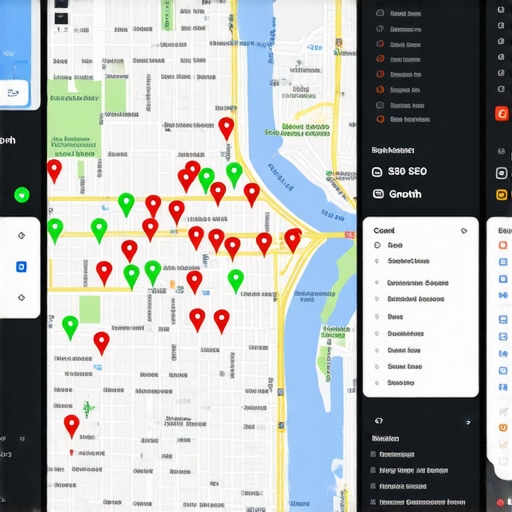
The future of local search is more personalized than you think
As we look toward the future, I predict that ‘Search Generative Experience’ (SGE) and AI-driven results will make map listings even more conversational. In the coming years, you won’t just rank for ‘Plumber’; you’ll rank for ‘Plumber who can fix a copper pipe leak in a 1920s bungalow.’ This is why I am already telling my clients to unlock local visibility expert map optimization strategies for 2025 by focusing on long-tail, hyper-specific service descriptions. If your market is diverse, you should also consider how to optimize your profile for different languages to capture every corner of your community. My best advice for right now? Go into your profile today and add a ‘Product’ or ‘Service’ that is unique to your local area. It’s an advanced, high-signal move that tells Google you are the definitive local authority, not just another generic business in the crowd.
The Brutal Reality of My Digital Disappearance
I spent years thinking I could outsmart an algorithm designed by the brightest minds in Silicon Valley. Looking back, the most painful lesson wasn’t the suspension itself, but the realization that transparency is actually a competitive advantage. When you stop trying to hide behind a virtual suite, you start building a brand that can actually survive a manual review. I realized that the truth about why your citations are actually hurting your local rank usually boils down to a lack of honesty in your business data. Google isn’t trying to punish you; it’s trying to protect its users from ghost businesses that don’t actually exist where they say they do. Once I embraced my actual service area, my conversions didn’t just stabilize—they skyrocketed because the trust factor was finally there. #IMAGE_PLACEHOLDER_E#
My Personal Arsenal for Fighting Map Decay
Maintaining a top spot requires more than just good intentions. I’ve refined my workflow down to a few critical resources that keep my presence sharp. First, I always ensure my technical foundation is rock solid by checking how the role of schema markup in local search visibility affects my data’s clarity. I also regularly use the specific seo tools we use to jumpstart map rankings for new locations to monitor my proximity grid daily. Finally, I keep a close eye on my competitors; if they start gaining ground, I look for how to fix flatlined impressions fast with specific signal moves to regain my momentum. These aren’t just nice-to-have tools; they are the baseline for anyone serious about local dominance.
Claim Your Spot on the Map Today
The era of set-it-and-forget-it local SEO is officially over. To win in this environment, you have to be the most active, most transparent, and most relevant answer to a customer’s problem. Taking the steps for consistent visibility improvement isn’t a one-time project; it’s a commitment to your community. As you look forward, make sure to unlock local visibility expert map optimization strategies for 2025 so you aren’t caught off guard by the next big update. You have the tools, the data, and the strategy. Now, you just need to execute. Have you ever tried moving your map pin just to see what happens, or have you been tempted by the virtual office lure? Let me know your experience in the comments below!