
I’ll never forget the sinking feeling in my gut when I realized six of my hardest-earned reviews from the busiest month of my career simply vanished. I had worked twelve-hour days, handled every customer complaint with a smile, and personally asked for those write-ups. My clients did their part. They hit submit. But when I checked my profile, my rating hadn’t budged, and the reviews were nowhere to be found. It felt like I was being ghosted by an algorithm I didn’t even understand, and for a local contractor, that ghosting is expensive. If you have ever felt like you are shouting into a void while your competitors somehow stay at the top with half the effort, you aren’t alone. Today, we are going to pull back the curtain on why this happens and how you can finally stop the bleed.
Stop Google from Hiding Your Hard-Earned Reputation
The reality for us blue-collar folks is that the digital landscape has become a bit of a minefield. You aren’t just competing against the guy down the street anymore; you are competing against a filter that is increasingly paranoid. I’ve seen it firsthand. Early in my journey, I made the classic mistake of sending out a blast of review requests all at once from my office computer. I thought I was being efficient. Instead, Google saw a sudden spike in activity from a single IP address and flagged every single one as spam. It was a painful lesson in how local map authority actually works. The system isn’t necessarily broken, but it is sensitive. According to research by BrightLocal, 87% of consumers used Google to evaluate local businesses in 2022, which means every time the filter eats a genuine review, you are losing a massive chunk of your potential leads. We need to focus on visibility improvement that feels natural to the algorithm, not forced.
Is the system actually rigged against the little guy?
It certainly feels that way when you see big franchises dominating the map while your family-owned shop is buried on page three. But the truth is, the filter is just a bot looking for patterns. If you don’t give it what it wants, it assumes the worst. I’ve spent a lot of time talking to a maps optimization team to figure out why some businesses stay live and others don’t. Have you ever noticed a review show up for a day and then disappear forever? It’s incredibly frustrating. I want to know—has this happened to you recently? Drop a comment or reach out because I am tired of seeing good contractors get sidelined by bad tech. We are going to dive into 7 review tactics that actually stay live and ensure your visibility experts are actually helping you rather than just taking your money. Before we get into the technical fixes, we have to understand the ‘why’ behind the filter’s aggression.To stop the bleeding of lost reputation, you have to change how you gather feedback. I once worked with a buddy who ran a landscaping crew; he was losing three reviews for every one that stuck. He was literally standing over his customers while they typed on his phone. Google hated it because the device ID matched his business account. Once we shifted his strategy to a hands-off approach, his visibility improvement was almost overnight.
Slow Down Your Review Collection to Speed Up Your Rankings
The biggest mistake I see is the review blast. You finish a big job, feel good, and text forty past clients at once. That surge of activity looks like a bot farm to the algorithm. Instead, you need to learn how to automate customer feedback without triggering the review filter. Space them out. A steady stream of two reviews a week is worth ten times more than a sudden burst of twenty that gets flagged as spam. It is about creating a natural pattern that the filter recognizes as genuine human interaction.
Why Your Shop Wi-Fi is a Review Killer
It’s tempting to have a review station or a tablet in your shop, but please, for the love of your rankings, do not do it. When multiple customers post from the same IP address, it triggers a massive red flag. I’ve seen google map experts struggle to recover profiles just because of this one simple mistake. Encourage your customers to leave reviews on their own cellular data or from their home network. This tiny adjustment is a major part of how to fix the map glitch that hides your best reviews before they even disappear. 
Sync Your Physical Reality with Googles Digital Map
Google does not just trust what you say; it trusts what it can verify through hidden metadata. When you are out on a job, take a photo of your truck in front of the customer’s house or a recognizable landmark nearby. This is a core part of the exact photo strategy that triggers local search signals. These images contain EXIF data which are hidden GPS coordinates that prove to the algorithm you were actually there performing a service. It creates a proximity signal that no competitor can fake from an office in another state.
The Response Game is Your Secret Weapon
Never leave a review hanging. Even a simple thanks helps, but you can do much better. By using the review response trick that boosts your search authority, you can reiterate your services. If a customer mentions you did a great job, reply by mentioning the specific service and the neighborhood. For example: We loved helping you with that emergency plumbing repair in the North End! This reinforces your relevance for those specific search terms without being salesy. This is one of the exact steps we use for rapid visibility improvement when a client is stuck on page two. This consistency is what separates the top three results from the shops that just get lucky occasionally.Most people will tell you that the secret to local dominance is a massive list of business directory listings. I used to believe that too. But if you’re still pouring hours into manual citations, you’re chasing a ghost. In my experience, the industry has shifted away from volume.
Stop Wasting Money on Thousands of Junk Citations
The common wisdom from many so-called google map experts is that more is always better. They promise to submit your business to 200 directories for a flat fee. Don’t take the bait. According to the Whitespark Local Search Ranking Factors study, the importance of citation consistency has been steadily declining for years. It’s no longer about how many times your name appears on a random web page; it’s about the quality and relevance of those connections. If your maps optimization team is still bragging about citation counts, they are likely stuck in 2015. Today, the truth about local citations is that ten high-authority, niche-specific links are worth more than a thousand generic ones. 
Why does the guy with ten reviews beat your five-star profile?
It’s a question that keeps business owners up at night. You have 150 reviews, and some newcomer with barely a dozen is sitting in the top spot. This happens because Google prioritizes engagement and proximity over raw numbers. If that competitor has more frequent interaction moves that actually matter, like people clicking to call or requesting directions more often than they do for your shop, the algorithm assumes they are more relevant right now. This is a classic case of why your competitor with fewer reviews is ranking higher. They aren’t just sitting there; they are actively generating signals that prove they are the most helpful option for a specific searcher at a specific moment.
The Dangerous Trap of Automated Visibility Experts
Here is the “oops” factor that kills many local businesses: hiring a cheap agency that uses automated bots to “simulate” traffic. It looks great on a report for a week, but once the algorithm detects the patterns, your map pin can be shadow-banned or suspended entirely. I’ve seen businesses lose years of reputation because they fell for a fake map optimization team promising overnight results. Real visibility improvement is a slow burn that relies on authentic human signals, not scripts. Have you ever fallen into the trap of hiring someone who promised the world and delivered a suspension instead? Let me know in the comments. We need to talk more about signs your local visibility help is actually hurting your rankings. It’s better to be on page two and growing than on page one for a week and then gone forever. If you want to stay at the top, you have to focus on the signals that actually move the needle in 2025.If you think you can just optimize your profile once and walk away, you are in for a rude awakening. I’ve seen businesses climb to the top of the Three-Pack only to vanish thirty days later because they stopped feeding the beast. The algorithm doesn’t care what you did last year; it cares about what you are doing right now. This is where most people get exhausted, but you don’t have to if you use the right tools. I personally rely on grid-tracking software like Local Falcon or PlePer. Why? Because a single ranking report is a lie. If you are ranking #1 while standing in your own lobby but drop to #10 two blocks away, you aren’t actually dominating the market. You need to see the hidden data points that actually control your map pin across the entire neighborhood, not just at your front door. This bird’s-eye view is how I decide which areas need more ‘boots on the ground’ content and where I can afford to coast.
The Tech Stack That Beats Multi-Million Dollar Franchises
You don’t need a massive budget to win this war, but you do need precision. I always tell my clients to stop guessing and start looking at what the winners are doing. I use specific browser extensions to peek behind the curtain of my rivals. By learning how to snoop on competitor map data, you can see their secondary categories and even the frequency of their post updates. If the guy beating you is posting three times a week and you haven’t posted in a month, that is your answer. It is about matching their energy and then out-classing them with better quality. 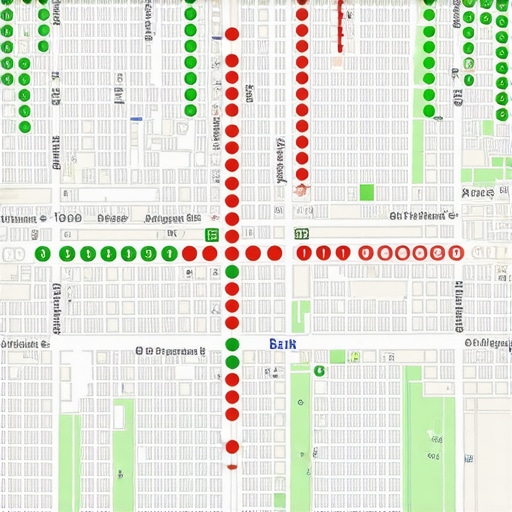
How do I maintain my map rankings as new competitors move in?
Maintenance is about consistency and defense. I’ve seen new shops open up and try to ‘keyword stuff’ their way to the top, which can temporarily push you down. To stay ahead, you need to know how to stop your map ranking from plummeting by doubling down on your local trust signals. This means getting fresh photos into the system every week. Joy Hawkins of Sterling Sky, a leading voice in local SEO, has repeatedly highlighted how even minor changes to your ‘open hours’ or profile attributes can trigger a re-index. If you let your profile sit, it becomes stale. We call this ‘static data death,’ and it’s a leading reason why static store data is costing you the local three-pack position you worked so hard to get.
The Future of Local Search is Conversational
Looking ahead to 2025 and beyond, we are seeing a massive shift toward AI-driven search. People aren’t just typing ‘plumber near me’ anymore; they are asking their phones, ‘Who is the best plumber for a leaky sink in the North End?’ If your profile isn’t ready for this, you’ll be left behind. You must learn how to optimize your business profile for voice searchers by using natural language in your Q&A section. The trend is moving away from keywords and toward ‘intent.’ To stay relevant, you need to be the business that answers the most specific questions in your niche. If you want to see an immediate boost, try this: go to your profile tonight and upload three real photos from a recent job site. Don’t use stock images—Google’s AI can tell the difference instantly. Using the exact photo types that trigger your profile ranking signals is the easiest ‘win’ you can get this week. Do this one thing and you’ll already be ahead of 90% of your competitors who are too lazy to update their galleries.
The Brutal Truth About Why My First Profile Failed
When I first started out, I was convinced that a perfect five-star rating was the only thing that mattered. I spent months chasing every customer for that elusive gold star, only to find myself stuck behind a competitor with a 4.1 rating. The hardest lesson I learned was that Google values recency and relevance far more than historical perfection. A static profile, no matter how highly rated, is a dying profile in the eyes of the algorithm. I realized that local visibility help isn’t about a one-time setup; it is about keeping your digital presence as active as your actual storefront. My lightbulb moment came when I stopped treating my profile like a static business card and started treating it like a living pulse of my business. If you aren’t moving, you are sinking, and sometimes the help you hire might actually be dragging you down. You have to be able to spot the signs your local visibility help is actually hurting your rankings before the damage becomes permanent.
My Daily Dashboard for Dominating Local Search
I don’t believe in guessing when it comes to my livelihood. I rely on a specific toolkit that helps me stay ahead of the curve. First, I use Local Falcon to track my ranking across a grid; it reveals exactly where my ‘visibility radius’ ends. Second, I look to Sterling Sky for their rigorous testing on algorithm updates; they are the google map experts who actually verify what works instead of just following old SEO myths. Finally, I use PlePer for competitive analysis to see how my categories stack up against the top three players in my city. These resources allow me to make data-driven decisions rather than hoping for the best.
Reclaim Your Visibility Before the Competition Does
The digital landscape for local businesses is more competitive than ever, but that also means the rewards for doing it right are higher than they have ever been. By focusing on real human signals and consistent updates, you build a foundation that no algorithm shift can easily topple. Success doesn’t require a million-dollar marketing budget; it requires the discipline to follow the exact steps we use for rapid visibility improvement to ensure your business remains the obvious choice for local customers. It is time to stop being a ghost on the map and start being the authority in your neighborhood. Have you ever wondered why your shop is hidden behind the more places button while a smaller shop takes the lead? Let me know your biggest mapping headache in the comments below!