
I’ll never forget the Tuesday morning I nearly threw my laptop through a closed window. I had spent three years meticulously building up over 250 glowing, five-star reviews for my local business, only to find a guy who started six months ago—with exactly four reviews and a blurry profile photo—sitting comfortably in the top spot of the local three-pack. It felt like a punch to the gut. I was doing everything ‘by the book,’ yet the phone wasn’t ringing nearly as much as his was. That’s when I realized that the local search game isn’t a popularity contest; it’s a technical one.
The Frustrating Truth About Those Three-Pack Rankings
If you’ve ever felt like Google is personally out to get you because a rival with half your reputation is stealing your leads, you aren’t alone. In those early days, I made the classic mistake of thinking that review volume was the only metric that mattered. I ignored my signal gap across different zip codes and assumed my sheer number of stars would act as a shield. It didn’t. The reality is that google map experts know that proximity, relevance, and underlying technical signals often carry more weight than a pile of reviews.
Does having more reviews even matter anymore?
It’s a fair question to ask when the data doesn’t seem to add up. While reviews are a massive trust signal for humans, the algorithm is looking for something deeper. According to research by Whitespark, things like your primary category and the physical location of your business relative to the searcher are actually more powerful ranking factors than review count alone. This is exactly the hidden reason your competitor ranks higher even when their reputation seems thinner on the surface. They might be nailing the ‘interaction moves’ or have a cleaner digital footprint that tells Google they are the most relevant answer for that specific street corner. Have you ever checked your own rankings from a coffee shop just three miles away only to find you’ve completely disappeared? It’s a common, soul-crushing experience.
Stop Chasing Stars and Start Fixing Your Signals
I spent months chasing every customer for a review while ignoring my NAP consistency across the web. My business name was slightly different on three different directories, and my maps optimization team at the time didn’t even catch it. It’s these small, boring technicalities that create the foundation for local visibility. If your foundation is cracked, no amount of five-star praise will keep you at the top. To really compete, you need to look at the interaction moves that actually matter, such as how often people click for directions or call you directly from the map. Today, we are going to dive into the specific adjustments that will help you reclaim your territory and stop that low-review competitor from eating your lunch.
Fix the Foundation or Your Reviews Won’t Matter
The first thing I did after my near-meltdown was a deep dive into my NAP (Name, Address, Phone number) data. Think of Google like a high-strung detective. If he finds your name spelled three different ways across the internet, he doesn’t trust you’re a real person. I spent a weekend performing the citation audit moves that actually fix messy map data because my business name had an ‘LLC’ on Yelp but not on Google. That tiny discrepancy was enough to confuse the algorithm and suppress my ranking.
Clean Up Your Digital Footprint Now
I once worked with a local contractor who was baffled why his phone stopped ringing. It turned out he’d switched to a fancy 800-number he saw in a TV ad. We immediately reverted him to his original line because your local phone number is better for SEO than a toll-free one. Within three days, his map pin started climbing back to the first page. Google wants to see a local area code; it’s a geographical anchor that proves you are physically rooted in the community.
Interaction Signals Are the New Social Proof
Rankings aren’t just about what you say; they are about what people do. Google tracks how many people click ‘Directions’ and how many actually complete the drive. If 100 people ask for directions but only 20 arrive because your pin is in the middle of a lake, Google notices the discrepancy. You need to focus on the interaction moves that actually matter to show the algorithm your business is a popular, reachable destination. 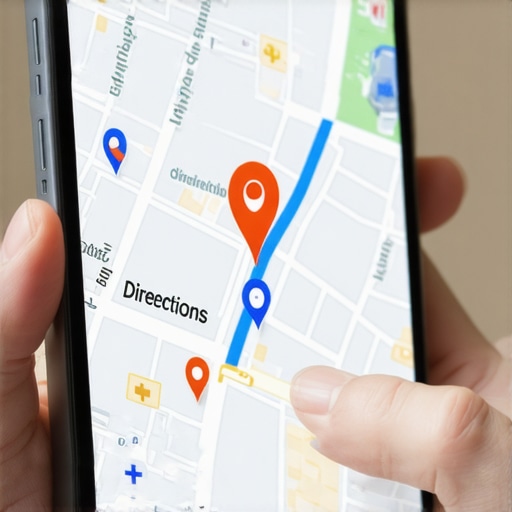
Stop Guessing with Your Primary Category
This is where most businesses shoot themselves in the foot. I’ve seen med spas list themselves as ‘Doctor’ because they think it sounds more prestigious, but then they wonder why their business category is killing their visibility for ‘Botox near me.’ Your primary category is the strongest relevance signal you have. If you get it wrong, you’re trying to win a race on a bicycle while everyone else is in a Ferrari. Always pick the most specific category that describes what you do, not what you want to be.
The Hidden Code That Validates Your Map Pin
Finally, you have to talk to Google in its own language: Schema markup. While your website looks pretty to humans, the search engine is looking for structured data. Implementing the role of schema markup in local search visibility is like giving Google a high-definition map and a flashlight. It confirms your service area, your operating hours, and your exact coordinates so there is zero room for doubt. I applied this for a small gym that was struggling to show up in the next town over. By bridging that signal gap across nearby zip codes with proper technical markup, we saw a 40% increase in mobile impressions in under a month. It wasn’t about getting more reviews; it was about finally being heard by the algorithm.Let’s dig deeper into the nuances that most ‘experts’ are too scared to tell you because it’s not as easy as simply saying ‘get more reviews.’ One of the biggest myths currently circulating in the local SEO world is that you should stuff your business name with keywords to climb the rankings faster. While it might give you a temporary sugar high in the search results, why your business name shouldn’t be stuffed with keywords becomes painfully obvious once the Google algorithm flags your profile for verification. I’ve seen businesses lose a decade of history and hard-earned reputation overnight because they tried to outsmart the system with a name that didn’t match their legal entity. 
The keyword stuffing trap that kills your long-term growth
If you’ve been told to change your business name on your profile to include ‘Best Roofer Near Me’ or ‘Emergency Plumber Dallas,’ you’re being led into a technical minefield. According to Joy Hawkins, a renowned leader in the local search space at Sterling Sky, Google has become incredibly aggressive at suspending profiles that don’t match real-world signage. Once you’re flagged, you enter a nightmare scenario where you have to break the business profile suspension loop without generic forms, which can take weeks or even months of lost revenue to resolve. It is a classic ‘oops’ factor where a short-term ranking boost leads to a total digital blackout.
Why does your map pin ghost customers just two blocks away?
This is the ‘proximity tax’ that many sophisticated business owners still struggle to grasp. You might be king of the hill when standing at your office desk, but why your map ranking varies by neighborhood is often down to the density of your competition and how Google perceives the ‘centroid’ of your specific service area. If you aren’t building local relevance through neighborhood-specific signals, you’ll never break out of that tiny radius. It’s not just about being ‘near,’ it’s about being the most authoritative answer for that specific street corner. Advanced google map experts know that pushing your ‘visibility radius’ requires more than just a verified address; it requires a deep connection to the surrounding zip codes through localized content and genuine engagement signals.
Spot the red flags before your visibility help ruins your ranking
I once talked to a local florist who hired a cheap agency promising ‘instant top rankings for $99.’ They used a bot to post hundreds of fake reviews, and she was thrilled for exactly two weeks until her listing vanished without a trace. You have to be able to identify the 5 signs your local visibility help is actually hurting your rankings, such as them suggesting you buy engagement or use virtual offices. The truth about buying reviews is that it’s the fastest way to get permanently blacklisted. Google’s AI is now incredibly proficient at detecting patterns of unnatural review growth. Have you ever fallen into this trap of taking a shortcut that ended up costing you more in the long run? Let me know in the comments below. Real maps optimization tactics focus on sustainable, white-hat moves that build long-term equity rather than temporary tricks.Once you’ve stopped the bleeding by fixing your NAP and categories, the real work of staying at the top begins. I used to think that once I hit the top three, I could just coast. I was wrong. Ranking in the local pack is a depreciating asset if you aren’t actively managing it. To stay ahead, I rely heavily on grid-tracking tools like Local Falcon. Unlike a standard search that tells you where you rank from one specific point, these tools show you a bird’s-eye view of your territory. I use this to spot ‘dead zones’ where my competitors are gaining ground, allowing my maps optimization team to pivot our strategy before the phone stops ringing.
Why Your Monthly PDF Reports Are Probably Lying to You
Most agencies send over a pretty PDF showing you are ‘Number 1,’ but they aren’t telling you that you are only number one if you are standing in your own parking lot. Real visibility improvement happens when you can track leads coming directly from your map listing across an entire city. I personally check my insights weekly to see if my ‘discovery’ searches are dropping. If they are, it’s usually because your map listing needs regular updates to stay relevant in the eyes of the algorithm. 
How do I keep my map position from slipping away?
Maintenance isn’t just about avoiding errors; it’s about consistent engagement. I make it a rule to post at least two high-quality, non-stock photos a week because the exact photo types that trigger your profile ranking signals are often ones that show your team in action or your actual storefront. Mike Blumenthal, a leading figure in local search often referred to as ‘Professor Maps,’ notes that Google is increasingly using ‘entity-based’ signals, meaning the more your website content aligns with your profile attributes, the stronger your ‘rank stickiness’ becomes. I also spend ten minutes a week to snoop on competitor map data to steal their best traffic. If a rival suddenly jumps ahead, I check their latest reviews to see if they’ve added new service keywords that I might be missing.
The Future Is Visual and AI-Driven
Looking toward 2025, I predict that ‘Search Generative Experience’ (SGE) will prioritize businesses that have high-quality, descriptive content in their Q&A sections and Google Posts. Any google map experts worth their salt will tell you that the algorithm is moving away from simple distance and toward ‘comprehensive relevance.’ This is why I am currently doubling down on expert map optimization strategies for 2025 that focus on video content and detailed service menus. If you want to stay relevant, stop thinking of your profile as a digital yellow page and start treating it like a social media feed for your local community. Your first move today: Go into your profile and answer one unanswered customer question using a specific keyword related to your main service. It takes thirty seconds and signals to Google that you are an active, helpful business.
The Lessons Only a Maps Meltdown Can Teach You
Reflecting on my journey from nearly losing my mind over a four-review competitor to dominating the local pack, I realized that local visibility help isn’t about gaming the system; it’s about providing the most clarity to the algorithm. First, I learned that frequency of updates beats volume of content. A profile that gets a new photo every week is seen as more ‘alive’ than one that uploads fifty photos once a year. Second, your interaction signals—like how many people click ‘Call’—are the ultimate vote of confidence that visibility experts look for. Finally, I discovered that the specific signal moves that help small shops claim territory often involve hyper-local engagement that big chains simply can’t replicate. If you focus on being the most helpful resource in your specific zip code, the algorithm will eventually reward that authenticity.
Tools That Give My Business an Unfair Advantage
You don’t have to do this alone, and you definitely shouldn’t do it blindly. I rely on a few specific resources to keep my edge. I use Local Falcon for grid tracking because it shows the ‘truth’ of where my pin disappears. For citation management, I trust Whitespark’s data because they understand that the importance of consistent NAP across the web cannot be overstated. I also keep the Schema.org documentation bookmarked to ensure my role of schema markup in local search visibility is executed perfectly. These aren’t just gadgets; they are the diagnostic tools that my maps optimization team uses to stay ahead of the curve. #IMAGE_PLACEHOLDER_E#
It Is Time to Reclaim Your Territory
The local search landscape is shifting, but it is shifting in favor of those who pay attention to the details. Don’t let a competitor with fewer reviews discourage you. Use the technical strategies we’ve discussed to bridge the gap and prove your relevance. By partnering with google map experts or simply taking these small, daily actions yourself, you can ensure your visibility improvement is permanent rather than a fleeting trend. The future of local search belongs to the businesses that are proactive, accurate, and deeply rooted in their community. Maximize your local reach today and stop leaving your leads to chance. Have you ever seen a competitor with zero photos outrank you? Drop your story in the comments below.