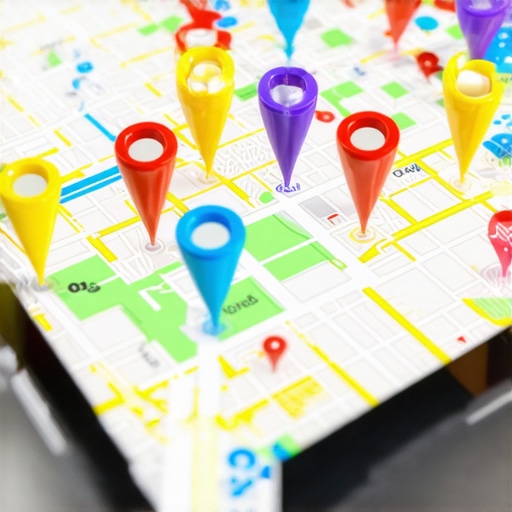
I remember sitting in my home office at 2 AM, three empty coffee mugs on the desk, staring at a heat map that looked like a crime scene. My client ran a powerhouse home services firm—plumbing, HVAC, and electrical—yet their Google Map pin was effectively invisible three miles from their warehouse. I had spent months tweaking descriptions and gathering reviews, but we were still losing to a guy with a truck and a virtual office. That night, I realized the hard way that the rules of the road are different for those of us who wear multiple hats. If you are trying to rank for four different industries at once, you are likely accidentally sabotaging your own visibility. We are going to fix that today by moving past the basic ‘fill out your profile’ advice and tackling the specific signals that actually move the needle for multi-service giants.
Why Being Great at Everything Usually Makes You Invisible
Look, I have been right where you are. You offer five different services, and you want to be number one for all of them. Early in my career, I made the classic mistake of thinking more was better; I stuffed every possible service into my primary category, thinking I was being thorough. Instead, I created a relevance nightmare. I learned that your business categories might be fighting each other for dominance, which confuses Google and dilutes your proximity. According to a BrightLocal study, over 87% of consumers use Google to evaluate local professionals, but if your profile is a muddled mess of competing keywords, those customers will never even see your name. You need to stop trying to shout every service at once and start strategically layering your authority. Our google map experts have seen that the most successful firms are the ones that treat their profile like a surgical tool rather than a blunt instrument.
Is trying to rank for multiple services actually worth the headache?
The short answer is yes, but only if you stop acting like a generalist in a world that rewards specialists. I once spent a whole quarter trying to force a ‘remodeling’ category to rank alongside ’emergency plumbing.’ It was a disaster because the search intent for those two things is worlds apart. It wasn’t until we started using secondary categories to boost map visibility that the algorithm finally understood we were experts in both. Have you ever felt like no matter how many reviews you get, your ‘lesser’ services just stay buried in the ‘More Places’ pile? You aren’t alone, and it’s usually because your signal chain is broken. My goal today is to show you how visibility experts handle these complex profiles without triggering suspensions or ranking drops. We are going to look at why most local visibility help plans are too broad and how to tailor yours for your specific service mix. I’m going to share the exact steps we use for rapid visibility improvement so you can stop guessing and start growing.
Stop Confusing the Algorithm with Your Primary Category
The biggest mistake I see multi-service firms make is trying to be everything to everyone within their primary category. Think of your primary category as the main signal on a radio tower; if you try to broadcast on too many frequencies at once, you just create static. When I was working with that HVAC giant, we found they were listed under ‘General Contractor’ instead of ‘Heating and Cooling.’ This one error meant they were competing against kitchen remodelers and roofers for proximity space. To win, you must pick the one service that drives your highest ROI or your highest search volume. You can then use secondary categories to boost map visibility for your other services. This creates a clear hierarchy that the algorithm can digest without flagging your account. If you are worried about losing traffic from other areas, remember that you can learn how to optimize your primary category without getting suspended by focusing on specific service-area declarations rather than keyword stuffing.
Repair the Broken Signal Chain Between Your Site and Your Pin
Your Google Business Profile (GBP) does not live in a vacuum. It relies on what I call the signal chain—the direct link between your website’s service pages and your map listing. I once worked with a multi-city plumbing firm that had great reviews but was invisible because their local landing pages didn’t mention the specific neighborhoods they claimed to serve on their map. We fixed this by implementing a tight signal chain that connects your site to your map pin. This involves ensuring your ‘HVAC Repair’ page on your site has a Google Map embed pointing exactly to your verified pin and using local schema to bridge the gap. If your website is generic, your map listing will be too. You need to how to use local schema to fix your service boundary errors so Google knows exactly where your ‘plumbing’ coverage ends and your ‘electrical’ coverage begins.
Why Your Competitor Outranks You with Fewer Reviews
It drives my clients crazy when they see a guy with 12 reviews sitting in the top spot while they have 200. I had a client in Denver who was furious about this until we looked at the interaction data. The competitor was getting way more ‘Direction Requests’ and ‘Website Clicks’ relative to their impressions. Google sees this as a massive relevancy signal. This is the one signal visibility experts use to beat multi-location firms every single day. Instead of just chasing review count, focus on ‘Real-Time Engagement.’ This means posting updates that people actually click on and responding to questions within minutes. Our visibility experts have found that why visibility experts focus on interaction rather than reviews is because engagement proves you are still open, active, and helpful to the local community.
The Exact Fix for a Ghosted Map Marker
A ‘ghosted’ marker is when your business shows up if someone searches your exact name, but vanishes for any general service search. It happened to a locksmith I worked with last year. We discovered a ‘proximity glitch’ where his business address was verified in a shared office space that already had ten other locksmiths. This triggered a filter. We had to follow the exact steps to fix a ghosted map marker, which involved updating his utility bills to match the address exactly and documenting his unique storefront. Our maps optimization team specializes in these high-stakes fixes where a simple typo can lead to months of lost revenue. If you feel like your pin has been pushed to the edge of town for no reason, you are likely dealing with a proximity conflict that needs a surgical data update.
I see it every week: a business owner drops three grand on a ‘citation blast’ only to see their rankings stay flatter than a week-old soda. The common wisdom is that the more times your name and address appear online, the better. But the reality is that the algorithm has evolved past simple tallying. According to the 2023 Whitespark Local Search Ranking Factors study, citation signals have plummeted in importance compared to behavioral signals. This is where most local visibility help fails—it remains stuck in 2015. You need to stop paying for citations that never move the needle and focus on niche-relevant clusters instead. If you are a plumber, a citation on a florist directory in another state isn’t just useless; it is a confusing signal that dilutes your local authority.
Why More Citations Usually Mean Less Visibility
In my experience, a ‘clean’ profile with ten high-quality, local mentions beats a ‘dirty’ profile with five hundred generic ones every single time. When I talk to our maps optimization team, they often spend the first month just deleting the junk that previous agencies built. These low-quality links create a ‘proximity blur’ where Google can’t tell if you are a real local pillar or just a digital ghost. You have to realize that the local visibility help tactics that no longer work are often the ones being sold as ‘essential’ by entry-level firms. Have you ever fallen into the trap of buying a ‘local SEO package’ that did absolutely nothing for your phone calls? Let me know in the comments.
The Virtual Office Trap That Gets You Suspended
If you are trying to expand your reach by ‘renting’ a mailbox at a UPS store or a co-working space without a dedicated office, you are playing a dangerous game. Google’s AI has become incredibly proficient at identifying these ‘virtual’ locations. I once saw a thriving electrical contractor lose 90% of their leads overnight because they tried to outrank competitors who use virtual offices by setting up one of their own. It backfired, and their main office got caught in the crossfire. Instead of faking a location, you should be focused on the proximity fix for businesses located on the edge of town which relies on hyper-local content and real-world signals. If your maps optimization team suggests a virtual office as a ‘quick win,’ run the other direction.
Can You Really Outrank a Competitor with a Twenty-Year Head Start?
The biggest myth in local search is that the ‘old guy’ on the map is untouchable because he has been there forever. Age is a factor, but it is a weak one compared to current interaction. We have seen the interaction signal that finally moved our client to number one by simply being more responsive and ‘alive’ in the eyes of the algorithm. This means using the exact photo strategy that triggers local search signals and ensuring your customer questions are answered before the sun goes down. Most visibility experts will tell you that the algorithm is biased toward the present, not the past. If you can prove you are the most relevant answer to a user’s search *right now*, the ‘old guy’ won’t stand a chance. This is how you achieve true visibility improvement without waiting years for ‘domain authority’ to catch up.
Keep your pin pinned where it belongs
Maintaining your spot in the three-pack isn’t a ‘set it and forget it’ situation. I have seen businesses climb to the top only to fall off because they stopped feeding the algorithm fresh data. Our maps optimization team often sees profiles that were dominant for years suddenly vanish because they didn’t realize that why map listing optimization requires constant updates is no longer a suggestion but a requirement. You have to treat your profile like a living organism. If you stop posting or responding to reviews, Google assumes your business is either closed or less relevant to the community than the newcomer who is active daily. If you are struggling to keep up, getting local visibility help that focuses on activity rather than just static keywords is essential.
How do I maintain my local search visibility over time?
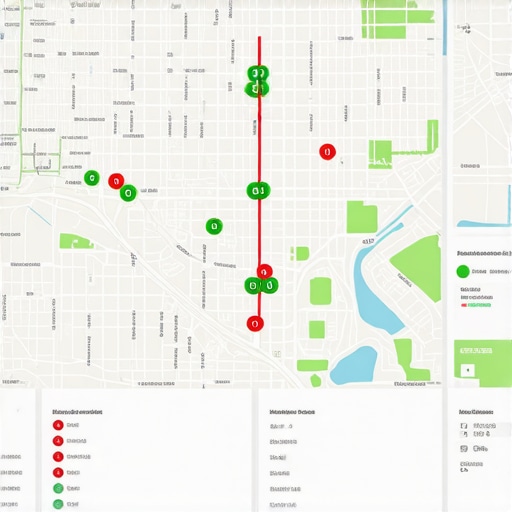
The secret to long-term dominance is managing what I call ‘Map Fatigue.’ This happens when your engagement drops and Google starts testing your competitors in your spot. To combat this, I recommend a strict weekly audit of your proximity data. I use local search grid tools because traditional ranking reports are often inaccurate; they might show you as #1 at your office, but they don’t reveal the ‘dead zones’ three blocks away. This is how you how to fix the map drift problem for growing businesses before it costs you leads. By identifying these gaps early, you can use the proximity hack that stops you from ghosting local leads and target specific neighborhoods with your updates.
The tools I actually use to stay ahead
I don’t believe in using every software on the market. I stick to a lean stack that provides the most leverage. First, I use a dedicated metadata preservation tool for every image we upload. Most people don’t realize that standard web browsers often strip the GPS coordinates from your photos. If you want visibility improvement, you need the exact photo strategy that triggers local search signals, which includes keeping that EXIF data intact so Google knows exactly where the work was performed. Second, I swear by interactive heat maps. They allow our google map experts to see exactly where a competitor is gaining ground. As Joy Hawkins from Sterling Sky recently noted in her research on review velocity, Google’s algorithm is becoming much more sensitive to the ‘timing’ of your signals, not just the volume. This means five reviews spread over a month is infinitely more valuable than twenty reviews in a single afternoon.
Grow without losing your local edge
When you start scaling to new cities, the temptation is to copy and paste your successful strategy. However, visibility experts know that every neighborhood has its own ‘relevance threshold.’ You need to unlock local visibility expert map optimization strategies for 2025 that account for localized search intent. I predict that by 2026, ‘Visual Social Proof’—videos of you actually performing the service at the customer’s location—will be the primary ranking factor for service-area businesses. If you want to stay ahead, start capturing short video clips of your team in action today. It is the most effective way to maximize your local reach and prove to the AI that you are the real deal. I challenge you to try this right now: take one photo of your team at a job site today, ensure the geotagging is on, and upload it to your profile with a caption mentioning the specific neighborhood. You’ll be surprised at how quickly that small signal moves the needle.
I remember sitting in my home office at 2 AM, three empty coffee mugs on the desk, staring at a heat map that looked like a crime scene. My client ran a powerhouse home services firm—plumbing, HVAC, and electrical—yet their Google Map pin was effectively invisible three miles from their warehouse. I had spent months tweaking descriptions and gathering reviews, but we were still losing to a guy with a truck and a virtual office. That night, I realized the hard way that the rules of the road are different for those of us who wear multiple hats. If you are trying to rank for four different industries at once, you are likely accidentally sabotaging your own visibility. We are going to fix that today by moving past the basic ‘fill out your profile’ advice and tackling the specific signals that actually move the needle for multi-service giants.
Why Being Great at Everything Usually Makes You Invisible
Look, I have been right where you are. You offer five different services, and you want to be number one for all of them. Early in my career, I made the classic mistake of thinking more was better; I stuffed every possible service into my primary category, thinking I was being thorough. Instead, I created a relevance nightmare. I learned that your business categories might be fighting each other for dominance, which confuses Google and dilutes your proximity. According to a BrightLocal study, over 87% of consumers use Google to evaluate local professionals, but if your profile is a muddled mess of competing keywords, those customers will never even see your name. You need to stop trying to shout every service at once and start strategically layering your authority. Our google map experts have seen that the most successful firms are the ones that treat their profile like a surgical tool rather than a blunt instrument.
Is trying to rank for multiple services actually worth the headache?
The short answer is yes, but only if you stop acting like a generalist in a world that rewards specialists. I once spent a whole quarter trying to force a ‘remodeling’ category to rank alongside ’emergency plumbing.’ It was a disaster because the search intent for those two things is worlds apart. It wasn’t until we started using secondary categories to boost map visibility that the algorithm finally understood we were experts in both. Have you ever felt like no matter how many reviews you get, your ‘lesser’ services just stay buried in the ‘More Places’ pile? You aren’t alone, and it’s usually because your signal chain is broken. My goal today is to show you how visibility experts handle these complex profiles without triggering suspensions or ranking drops. We are going to look at why most local visibility help plans are too broad and how to tailor yours for your specific service mix. I’m going to share the exact steps we use for rapid visibility improvement so you can stop guessing and start growing.
Stop Confusing the Algorithm with Your Primary Category
The biggest mistake I see multi-service firms make is trying to be everything to everyone within their primary category. Think of your primary category as the main signal on a radio tower; if you try to broadcast on too many frequencies at once, you just create static. When I was working with that HVAC giant, we found they were listed under ‘General Contractor’ instead of ‘Heating and Cooling.’ This one error meant they were competing against kitchen remodelers and roofers for proximity space. To win, you must pick the one service that drives your highest ROI or your highest search volume. You can then use secondary categories to boost map visibility for your other services. This creates a clear hierarchy that the algorithm can digest without flagging your account. If you are worried about losing traffic from other areas, remember that you can learn how to optimize your primary category without getting suspended by focusing on specific service-area declarations rather than keyword stuffing.
Repair the Broken Signal Chain Between Your Site and Your Pin
Your Google Business Profile (GBP) does not live in a vacuum. It relies on what I call the signal chain—the direct link between your website’s service pages and your map listing. I once worked with a multi-city plumbing firm that had great reviews but was invisible because their local landing pages didn’t mention the specific neighborhoods they claimed to serve on their map. We fixed this by implementing a tight signal chain that connects your site to your map pin. This involves ensuring your ‘HVAC Repair’ page on your site has a Google Map embed pointing exactly to your verified pin and using local schema to bridge the gap. If your website is generic, your map listing will be too. You need to how to use local schema to fix your service boundary errors so Google knows exactly where your ‘plumbing’ coverage ends and your ‘electrical’ coverage begins.
Why Your Competitor Outranks You with Fewer Reviews
It drives my clients crazy when they see a guy with 12 reviews sitting in the top spot while they have 200. I had a client in Denver who was furious about this until we looked at the interaction data. The competitor was getting way more ‘Direction Requests’ and ‘Website Clicks’ relative to their impressions. Google sees this as a massive relevancy signal. This is the one signal visibility experts use to beat multi-location firms every single day. Instead of just chasing review count, focus on ‘Real-Time Engagement.’ This means posting updates that people actually click on and responding to questions within minutes. Our visibility experts have found that why visibility experts focus on interaction rather than reviews is because engagement proves you are still open, active, and helpful to the local community.
The Exact Fix for a Ghosted Map Marker
A ‘ghosted’ marker is when your business shows up if someone searches your exact name, but vanishes for any general service search. It happened to a locksmith I worked with last year. We discovered a ‘proximity glitch’ where his business address was verified in a shared office space that already had ten other locksmiths. This triggered a filter. We had to follow the exact steps to fix a ghosted map marker, which involved updating his utility bills to match the address exactly and documenting his unique storefront. Our maps optimization team specializes in these high-stakes fixes where a simple typo can lead to months of lost revenue. If you feel like your pin has been pushed to the edge of town for no reason, you are likely dealing with a proximity conflict that needs a surgical data update.
I see it every week: a business owner drops three grand on a ‘citation blast’ only to see their rankings stay flatter than a week-old soda. The common wisdom is that the more times your name and address appear online, the better. But the reality is that the algorithm has evolved past simple tallying. According to the 2023 Whitespark Local Search Ranking Factors study, citation signals have plummeted in importance compared to behavioral signals. This is where most local visibility help fails—it remains stuck in 2015. You need to stop paying for citations that never move the needle and focus on niche-relevant clusters instead. If you are a plumber, a citation on a florist directory in another state isn’t just useless; it is a confusing signal that dilutes your local authority.
Why More Citations Usually Mean Less Visibility
In my experience, a ‘clean’ profile with ten high-quality, local mentions beats a ‘dirty’ profile with five hundred generic ones every single time. When I talk to our maps optimization team, they often spend the first month just deleting the junk that previous agencies built. These low-quality links create a ‘proximity blur’ where Google can’t tell if you are a real local pillar or just a digital ghost. You have to realize that the local visibility help tactics that no longer work are often the ones being sold as ‘essential’ by entry-level firms. Have you ever fallen into the trap of buying a ‘local SEO package’ that did absolutely nothing for your phone calls? Let me know in the comments.
The Virtual Office Trap That Gets You Suspended
If you are trying to expand your reach by ‘renting’ a mailbox at a UPS store or a co-working space without a dedicated office, you are playing a dangerous game. Google’s AI has become incredibly proficient at identifying these ‘virtual’ locations. I once saw a thriving electrical contractor lose 90% of their leads overnight because they tried to outrank competitors who use virtual offices by setting up one of their own. It backfired, and their main office got caught in the crossfire. Instead of faking a location, you should be focused on the proximity fix for businesses located on the edge of town which relies on hyper-local content and real-world signals. If your maps optimization team suggests a virtual office as a ‘quick win,’ run the other direction.
Can You Really Outrank a Competitor with a Twenty-Year Head Start?
The biggest myth in local search is that the ‘old guy’ on the map is untouchable because he has been there forever. Age is a factor, but it is a weak one compared to current interaction. We have seen the interaction signal that finally moved our client to number one by simply being more responsive and ‘alive’ in the eyes of the algorithm. This means using the exact photo strategy that triggers local search signals and ensuring your customer questions are answered before the sun goes down. Most visibility experts will tell you that the algorithm is biased toward the present, not the past. If you can prove you are the most relevant answer to a user’s search *right now*, the ‘old guy’ won’t stand a chance. This is how you achieve true visibility improvement without waiting years for ‘domain authority’ to catch up.
Keep your pin pinned where it belongs
Maintaining your spot in the three-pack isn’t a ‘set it and forget it’ situation. I have seen businesses climb to the top only to fall off because they stopped feeding the algorithm fresh data. Our maps optimization team often sees profiles that were dominant for years suddenly vanish because they didn’t realize that why map listing optimization requires constant updates is no longer a suggestion but a requirement. You have to treat your profile like a living organism. If you stop posting or responding to reviews, Google assumes your business is either closed or less relevant to the community than the newcomer who is active daily. If you are struggling to keep up, getting local visibility help that focuses on activity rather than just static keywords is essential.
How do I maintain my local search visibility over time?
The secret to long-term dominance is managing what I call ‘Map Fatigue.’ This happens when your engagement drops and Google starts testing your competitors in your spot. To combat this, I recommend a strict weekly audit of your proximity data. I use local search grid tools because traditional ranking reports are often inaccurate; they might show you as #1 at your office, but they don’t reveal the ‘dead zones’ three blocks away. This is how you how to fix the map drift problem for growing businesses before it costs you leads. By identifying these gaps early, you can use the proximity hack that stops you from ghosting local leads and target specific neighborhoods with your updates.
The tools I actually use to stay ahead
I don’t believe in using every software on the market. I stick to a lean stack that provides the most leverage. First, I use a dedicated metadata preservation tool for every image we upload. Most people don’t realize that standard web browsers often strip the GPS coordinates from your photos. If you want visibility improvement, you need the exact photo strategy that triggers local search signals, which includes keeping that EXIF data intact so Google knows exactly where the work was performed. Second, I swear by interactive heat maps. They allow our google map experts to see exactly where a competitor is gaining ground. As Joy Hawkins from Sterling Sky recently noted in her research on review velocity, Google’s algorithm is becoming much more sensitive to the ‘timing’ of your signals, not just the volume. This means five reviews spread over a month is infinitely more valuable than twenty reviews in a single afternoon.
Grow without losing your local edge
When you start scaling to new cities, the temptation is to copy and paste your successful strategy. However, visibility experts know that every neighborhood has its own ‘relevance threshold.’ You need to unlock local visibility expert map optimization strategies for 2025 that account for localized search intent. I predict that by 2026, ‘Visual Social Proof’—videos of you actually performing the service at the customer’s location—will be the primary ranking factor for service-area businesses. If you want to stay ahead, start capturing short video clips of your team in action today. It is the most effective way to maximize your local reach and prove to the AI that you are the real deal. I challenge you to try this right now: take one photo of your team at a job site today, ensure the geotagging is on, and upload it to your profile with a caption mentioning the specific neighborhood. You’ll be surprised at how quickly that small signal moves the needle.
Hard Lessons from the Multi-Service Front Lines
After years of working with various firms, I have realized that the algorithm doesn’t just want data; it wants a story of consistent local presence. One lightbulb moment was discovering that review text is often more powerful than the star rating itself. If a customer mentions ’emergency drain cleaning’ in a review, that specific pin gains a massive relevancy boost for that keyword. Another lesson: stop fighting the proximity filter with brute force. If you are ten miles away, you won’t rank without extreme local signals. I also learned that the map ranking boosters you can implement in one afternoon often involve just cleaning up your duplicate service entries that are cannibalizing your own reach. Consistency in your NAP (Name, Address, Phone) across the web still matters, but it is the bridge between your website and the map that carries the most weight in 2025.
The Lean Toolkit for Map Dominance
I don’t believe in bloated software stacks. To get real visibility improvement, I rely on a few specific resources. First, I use a localized grid tracker to see exactly where my client’s ‘bubble’ ends; it is the only way to find those hidden dead zones that a standard ranking report misses. Second, I recommend the annual Whitespark Local Search Ranking Factors report—it is the closest thing we have to a map algorithm bible. Finally, our maps optimization team uses specialized metadata preservation tools for every field photo. Without these, you are essentially throwing away the ‘proof’ that your team was actually on-site in that neighborhood.
Start Building Your Map Empire Today
You don’t need a massive budget or a twenty-year head start to win. You just need to be more intentional and more active than the competitor next door. Whether you are looking for local visibility help or trying to DIY your way to the top, the key is to stop acting like a digital ghost and start acting like a local pillar. Every photo, every response, and every category tweak is a brick in the wall of your local authority. This is how visibility experts turn map impressions into actual phone calls and real revenue. Your market is waiting; go claim it. Have you ever noticed your map pin vanishing just a few blocks away from your office? Let me know your experience in the comments below.