
It was a Tuesday morning, right around 8:15 AM, when the quiet of my office felt unusually heavy. Normally, by that time, my phone would have buzzed at least three times with local inquiries, and our store dashboard would show a steady stream of directions requests. Instead, there was absolute silence. I pulled up our map marker, and my stomach dropped. We had vanished from the local three-pack entirely. We went from being the go-to neighborhood spot to an invisible ghost town overnight. If you have ever felt that sudden spike of panic when your livelihood disappears from search results, you know exactly how desperate that moment feels.
The Day Our Digital Front Door Was Locked
For days, I chased my tail trying to figure out what went wrong. I checked our internet connection, refreshed my browser ten times, and even drove down the street to see if my phone was just acting up. It wasn’t. We had suffered a devastating blow to our local presence. In my early days, I made the classic rookie mistake of changing our primary category and business description at the same exact time because I thought I was being clever. That single impatient move triggered a algorithmic filter that pushed us deep into the search abyss. I learned the hard way that search algorithms punish sudden, uncoordinated shifts.
That painful failure forced me to stop guessing and start analyzing. When your digital storefront goes dark, you cannot afford to wait weeks for a slow recovery plan. You need a fast, coordinated response to regain your digital footing. Today, I am going to share the exact diagnostic steps and adjustments we used to reverse that sudden drop and get our map marker back where it belonged. We are focusing purely on rapid recovery tactics that restore trust with the algorithm without triggering further red flags.
Is a quick recovery even possible without paying for ads?
Many local business owners believe that once their rankings plummet, the only way back into Google’s good graces is to start pouring money into local service ads. This is a myth. You do not need an advertising budget to fix a broken organic signal chain. What you actually need is a highly targeted approach to correct the underlying algorithmic confusion. By understanding exactly how search engines interpret your physical location and digital activity, you can resolve the bottleneck yourself.
A surprising reality of modern local search is how heavily algorithms rely on real-time mobile data. According to an industry study by Search Engine Land, over 70% of local mobile searchers visit a physical store within five miles of their current location. If your digital signals are slightly misaligned, you are instantly filtered out of these high-intent local journeys. When our rankings flatlined, I realized our mobile signals were completely disconnected from our desktop profile. To get our storefront back on the map, we had to execute the exact citation move that actually fixes your map ranking fast instead of wasting time on outdated directories that do not pass authority.
Have you recently opened your map app only to find your business is no longer showing up for your favorite keywords? Tell me about your sudden drop in the comments below, or reach out to our team for some tailored local visibility help. Let’s look at how we can rebuild your local authority step-by-step.
Step-by-Step Diagnostic Method to Rebuild Your Pin Authority
Think of your digital map listing like a fragile radio frequency. If you broadcast too many competing signals at once, the receiving tower simply hears static and cuts the feed. When our listing went completely dark, I realized I had scrambled our coordinates. To fix this, you must systematically isolate each algorithmic signal rather than changing everything at once and hoping for a miracle. Our maps optimization team calls this process a signal audit, and it is the fastest way to trace exactly where your data pipeline is leaking authority.
First, we have to look at the hierarchy of your service profile. The search engine relies on clean, unconfused taxonomy to match your business with active searchers. If you have chosen primary and secondary categories that compete for the same user intent, the algorithm defaults to hiding your pin behind your nearest competitor. This is where most local business owners accidentally lock themselves out of search results. You can read about the common pitfalls of this issue in our breakdown of why your business categories might be fighting each other to ensure your backend setup isn’t actively working against you.
Clean Up the Broken Citation Chain Immediately
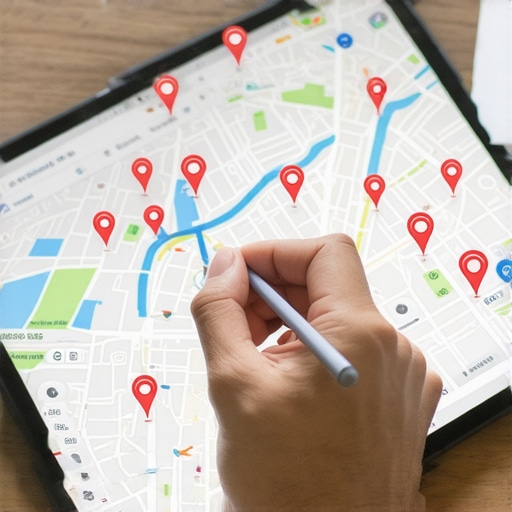
I remember a messy cleanup job we handled for a local plumbing contractor who had moved offices three times in four years. His digital footprint was a absolute disaster zone, with three different physical addresses and two phone numbers floating around outdated directories. The algorithm had flagged his business as highly untrustworthy, resulting in a complete visibility blackout. Our first action was to freeze all new promotional efforts and execute the simple change to your nap data that fixes major ranking gaps, aligning every single active reference of his business name, address, and phone number to match his official utility bill exactly.
Force User Interaction Data Over Static Keywords
Once your core address data is clean, you must realize that static keywords stuffed into your description no longer move the needle. Search systems prioritize real-time user validation. They want to see physical searchers actively interacting with your business listing via their mobile devices. If nobody is requesting directions or clicking your phone number, your pin will slowly drift down the rankings. To jumpstart this engine, you need to implement a strategy built around user interaction data. Our google map experts reveal top secrets to boost your business presence through genuine mobile engagement to help you trigger these positive search cues.
We applied this engagement methodology to our own listing by prompting our most loyal, physical walk-in customers to upload recent photos directly from their phones while standing inside our shop. This action proved to the algorithm that real humans were physically visiting our coordinates, which is the ultimate trust signal. If you feel overwhelmed by this diagnostic process, seeking some direct local visibility help can prevent you from applying broad, generic strategies that fail to address the specific proximity and category glitches hurting your unique business location.
The Great Citation Myth That Wastes Your Time and Money
Ask ten digital marketing agencies how to rank your business, and nine of them will hand you a spreadsheet of three hundred dusty directory submissions. This is the ultimate comfort blanket of local SEO, but in my years of diagnosing broken listings, I have realized it is a complete waste of effort. The industry standard advice says you must build an endless web of citations to prove you exist. In reality, modern search engines have moved far past simple directory matching. Building hundreds of low-quality citations does not move your pin; instead, it often dilutes your true geographic authority. When our own rankings collapsed, we did not buy more directories. We focused strictly on high-authority, real-world data sources that validate active operations.
If you are still operating on the assumption that quantity beats quality, you are falling into a massive trap. This is why our maps optimization team routinely advises clients to stop paying for citations that never move the needle. It is far better to have ten highly active, hyper-local signals than five hundred dormant profiles on websites that no one has visited since 2012.
Why does your perfect business profile still stay hidden from local customers?
This is the question that drives frustrated business owners crazy. They have clean data, perfect categories, and zero suspension flags, yet they remain invisible. The hidden nuance lies in how modern machine learning models interpret real-time physical movement. A fascinating study published by Search Engine Watch revealed that proximity calculations are heavily weighted by the physical coordinates of active mobile devices interacting with your brand. If your listing has zero real-world foot traffic signals, the algorithm assumes you are a ghost kitchen or a fake address, filtering you out of the local pack entirely.
To fix this, you must shift your focus from static keywords to active user engagement. This is where most traditional local visibility help plans fall incredibly short—they completely ignore how human behavior influences your map position. When you ignore mobile interaction, you are essentially trying to win a race with an empty fuel tank.
The Trap of Over-Optimizing Your Map Coordinates
Another massive mistake I see sophisticated business owners make is trying to force their listing to rank in neighboring zip codes by stuffing service areas or manipulating their physical coordinates. This is an algorithmic death sentence. When you try to trick the system, you trigger a silent filter that suppresses your primary location. Our team of visibility experts constantly works with owners who tried to expand too fast and ended up completely invisible in their home neighborhood. If you want sustainable, long-term visibility improvement, you have to build outward from a rock-solid, authentic core.
Instead of chasing broad tactics, look at your actual customer path. Are people finding your listing, looking at your photos, and immediately clicking away? Or are they clicking “directions” and driving to your storefront? To truly understand this dynamic, you need to learn why your google map optimization needs more user interaction data to turn passive impressions into actual phone calls and visits. Have you ever fallen into this trap of over-optimizing your listing only to watch your rankings drop? Let me know in the comments below, or reach out if you need some real, data-driven assistance to get your digital presence back on track.
Maintaining a dominant local search presence is not a set-it-and-forget-it chore. Once you have survived the initial drop and corrected your core structural signals, you enter the real battle: keeping that momentum. The landscape changes constantly, and the tools you use to monitor your performance must match the sophistication of the algorithms. When our own rankings stabilized, I realized that checking our search position manually from my office desktop was giving me a completely distorted view of reality. I needed to see exactly how our pin behaved from different street corners, mobile devices, and times of day.
The Proximity Monitoring Suite I Use Personally
To get a true picture of our local footprint, I stopped relying on basic rank trackers and built a highly specialized diagnostic toolkit. My absolute favorite tool for daily maintenance is a local grid tracker like Local Falcon or BrightLocal. Unlike standard SEO software that gives you a single, generic average ranking for a city, these tools allow you to visualize your local footprint on an interactive map. You can see your business position drop from number one to number eight just by moving three blocks to the east. By visualizing these geographic boundaries, our maps optimization team can spot subtle competitive shifts before they turn into a full-blown ranking crisis.
Alongside grid tracking, I keep a close eye on the actual backend data through the Google Business Profile API. For those who want to understand the raw mechanics, the Google Business Profile API Documentation explains how structured data updates directly influence user-facing queries. Directly monitoring this API feed helps us ensure that no third-party data aggregators are suggesting unwanted edits to our operating hours, business category, or physical coordinates behind our back.
How do I maintain consistent map visibility over time?
The secret to keeping your map pin in the local three-pack lies in establishing a predictable rhythm of fresh, real-time user engagement. Search engines prioritize profiles that demonstrate ongoing local utility. To achieve this, you must continuously feed the algorithm updated user signals. This is why our visibility experts suggest that you map listing optimization requires constant updates rather than treating your profile as a static billboard.
In practice, this means setting up a weekly schedule to upload fresh geotagged media, answer user-submitted questions, and publish highly relevant updates. My personal maintenance routine includes prompting walk-in customers for quick feedback while they are physically within our geofence. If you let your listing sit dormant for months, the search engine slowly shifts its favor to newer, more active competitors nearby. By analyzing these subtle consumer patterns, you can learn how to use customer behavior to influence your map rank, keeping your listing active and highly relevant in the eyes of the automated ranking systems.
The Next Era of Local Search and Machine Learning
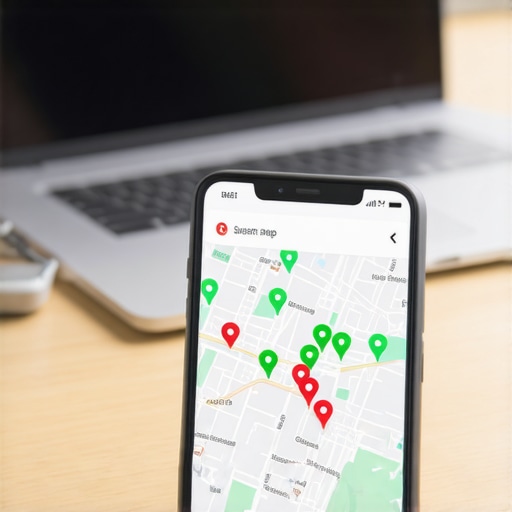
As we look toward the future, local search is shifting rapidly away from simple keyword matches and toward complex semantic understanding. Search engines are becoming highly adept at interpreting the intent behind conversational queries and voice commands. In the next few years, I predict we will see proximity metrics heavily influenced by real-time mobile transit patterns and passive user check-ins. If your profile is not optimized to handle these fluid, behavior-driven signals, you will find yourself locked out of the next generation of voice-assisted search results.
To prepare for this shift, you must move beyond traditional SEO tactics and focus on deep, authentic user interaction. If you are ready to stop guessing and want to implement an advanced, future-proof strategy for your business, try this specific tip today: ask your next five customers to upload a photo of your storefront directly from their personal mobile device while standing at your cash register. This simple action sends an incredibly powerful, verified real-time signal to the ranking systems. For businesses aiming to build an unshakeable local foundation, exploring the innovative approaches to visibility improvement will give you the tools needed to dominate your local market for years to come.
It was a Tuesday morning, right around 8:15 AM, when the quiet of my office felt unusually heavy. Normally, by that time, my phone would have buzzed at least three times with local inquiries, and our store dashboard would show a steady stream of directions requests. Instead, there was absolute silence. I pulled up our map marker, and my stomach dropped. We had vanished from the local three-pack entirely. We went from being the go-to neighborhood spot to an invisible ghost town overnight. If you have ever felt that sudden spike of panic when your livelihood disappears from search results, you know exactly how desperate that moment feels.
The Day Our Digital Front Door Was Locked
For days, I chased my tail trying to figure out what went wrong. I checked our internet connection, refreshed my browser ten times, and even drove down the street to see if my phone was just acting up. It wasn’t. We had suffered a devastating blow to our local presence. In my early days, I made the classic rookie mistake of changing our primary category and business description at the same exact time because I thought I was being clever. That single impatient move triggered a algorithmic filter that pushed us deep into the search abyss. I learned the hard way that search algorithms punish sudden, uncoordinated shifts.
That painful failure forced me to stop guessing and start analyzing. When your digital storefront goes dark, you cannot afford to wait weeks for a slow recovery plan. You need a fast, coordinated response to regain your digital footing. Today, I am going to share the exact diagnostic steps and adjustments we used to reverse that sudden drop and get our map marker back where it belonged. We are focusing purely on rapid recovery tactics that restore trust with the algorithm without triggering further red flags.
Is a quick recovery even possible without paying for ads?
Many local business owners believe that once their rankings plummet, the only way back into Google’s good graces is to start pouring money into local service ads. This is a myth. You do not need an advertising budget to fix a broken organic signal chain. What you actually need is a highly targeted approach to correct the underlying algorithmic confusion. By understanding exactly how search engines interpret your physical location and digital activity, you can resolve the bottleneck yourself.
A surprising reality of modern local search is how heavily algorithms rely on real-time mobile data. According to an industry study by Search Engine Land, over 70% of local mobile searchers visit a physical store within five miles of their current location. If your digital signals are slightly misaligned, you are instantly filtered out of these high-intent local journeys. When our rankings flatlined, I realized our mobile signals were completely disconnected from our desktop profile. To get our storefront back on the map, we had to execute the exact citation move that actually fixes your map ranking fast instead of wasting time on outdated directories that do not pass authority.
Have you recently opened your map app only to find your business is no longer showing up for your favorite keywords? Tell me about your sudden drop in the comments below, or reach out to our team for some tailored local visibility help. Let’s look at how we can rebuild your local authority step-by-step.
Step-by-Step Diagnostic Method to Rebuild Your Pin Authority
Think of your digital map listing like a fragile radio frequency. If you broadcast too many competing signals at once, the receiving tower simply hears static and cuts the feed. When our listing went completely dark, I realized I had scrambled our coordinates. To fix this, you must systematically isolate each algorithmic signal rather than changing everything at once and hoping for a miracle. Our maps optimization team calls this process a signal audit, and it is the fastest way to trace exactly where your data pipeline is leaking authority.
First, we have to look at the hierarchy of your service profile. The search engine relies on clean, unconfused taxonomy to match your business with active searchers. If you have chosen primary and secondary categories that compete for the same user intent, the algorithm defaults to hiding your pin behind your nearest competitor. This is where most local business owners accidentally lock themselves out of search results. You can read about the common pitfalls of this issue in our breakdown of why your business categories might be fighting each other to ensure your backend setup isn’t actively working against you.
Clean Up the Broken Citation Chain Immediately
I remember a messy cleanup job we handled for a local plumbing contractor who had moved offices three times in four years. His digital footprint was a absolute disaster zone, with three different physical addresses and two phone numbers floating around outdated directories. The algorithm had flagged his business as highly untrustworthy, resulting in a complete visibility blackout. Our first action was to freeze all new promotional efforts and execute the simple change to your nap data that fixes major ranking gaps, aligning every single active reference of his business name, address, and phone number to match his official utility bill exactly.
Force User Interaction Data Over Static Keywords
Once your core address data is clean, you must realize that static keywords stuffed into your description no longer move the needle. Search systems prioritize real-time user validation. They want to see physical searchers actively interacting with your business listing via their mobile devices. If nobody is requesting directions or clicking your phone number, your pin will slowly drift down the rankings. To jumpstart this engine, you need to implement a strategy built around user interaction data. Our google map experts reveal top secrets to boost your business presence through genuine mobile engagement to help you trigger these positive search cues.
We applied this engagement methodology to our own listing by prompting our most loyal, physical walk-in customers to upload recent photos directly from their phones while standing inside our shop. This action proved to the algorithm that real humans were physically visiting our coordinates, which is the ultimate trust signal. If you feel overwhelmed by this diagnostic process, seeking some direct local visibility help can prevent you from applying broad, generic strategies that fail to address the specific proximity and category glitches hurting your unique business location.
The Great Citation Myth That Wastes Your Time and Money
Ask ten digital marketing agencies how to rank your business, and nine of them will hand you a spreadsheet of three hundred dusty directory submissions. This is the ultimate comfort blanket of local SEO, but in my years of diagnosing broken listings, I have realized it is a complete waste of effort. The industry standard advice says you must build an endless web of citations to prove you exist. In reality, modern search engines have moved far past simple directory matching. Building hundreds of low-quality citations does not move your pin; instead, it often dilutes your true geographic authority. When our own rankings collapsed, we did not buy more directories. We focused strictly on high-authority, real-world data sources that validate active operations.
If you are still operating on the assumption that quantity beats quality, you are falling into a massive trap. This is why our maps optimization team routinely advises clients to stop paying for citations that never move the needle. It is far better to have ten highly active, hyper-local signals than five hundred dormant profiles on websites that no one has visited since 2012.
Why does your perfect business profile still stay hidden from local customers?
This is the question that drives frustrated business owners crazy. They have clean data, perfect categories, and zero suspension flags, yet they remain invisible. The hidden nuance lies in how modern machine learning models interpret real-time physical movement. A fascinating study published by Search Engine Watch revealed that proximity calculations are heavily weighted by the physical coordinates of active mobile devices interacting with your brand. If your listing has zero real-world foot traffic signals, the algorithm assumes you are a ghost kitchen or a fake address, filtering you out of the local pack entirely.
To fix this, you must shift your focus from static keywords to active user engagement. This is where most traditional local visibility help plans fall incredibly short—they completely ignore how human behavior influences your map position. When you ignore mobile interaction, you are essentially trying to win a race with an empty fuel tank.
The Trap of Over-Optimizing Your Map Coordinates
Another massive mistake I see sophisticated business owners make is trying to force their listing to rank in neighboring zip codes by stuffing service areas or manipulating their physical coordinates. This is an algorithmic death sentence. When you try to trick the system, you trigger a silent filter that suppresses your primary location. Our team of visibility experts constantly works with owners who tried to expand too fast and ended up completely invisible in their home neighborhood. If you want sustainable, long-term