The Exact Reason Homeowners See Your Competitor’s Landscaping Truck but Not Your Map Pin
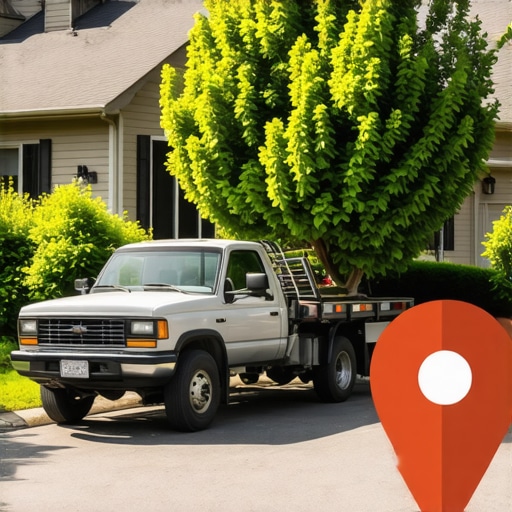
Imagine this: a homeowner in an affluent suburb pulls into their driveway and notices a pristine, branded landscaping truck parked at their neighbor’s house. The lawn is being transformed into a masterwork of hardscaping and lush greenery. Impressed, the homeowner pulls out their smartphone and types “landscaping near me” into Google, fully expecting to find the local business they just saw – or perhaps yours. But as they scroll through the Google Maps “Local Pack,” your business is nowhere to be found. Even though your truck might be parked just three blocks away on another job, your digital “pin” is effectively invisible. This is the “Invisible Map Pin” phenomenon, a frustrating reality for thousands of service-area businesses.
The gap between your physical presence and your digital visibility is often a result of low brand authority or stagnant engagement. Recent research discussions on platforms like Reddit highlight a recurring theme: even verified, long-standing profiles can remain hidden if they lack the specific signals Google requires to “trust” the business outside of its immediate doorstep. Today, I engineer Google Business Profiles for maximum relevance, align service pages with high-intent “near me” searches, and reinforce entity and geographic signals to bridge this gap. If you’ve ever wondered Why Your Business Profile is Losing the Map War to Local Newcomers, the answer lies in the technical architecture of local search.
The “Three Pillars” of the Google Maps Algorithm: Why You’re Being Filtered
To understand why your competitor dominates the map while you languish on page two, we must dissect the google maps ranking system. Google’s local algorithm is built upon three core pillars: Proximity, Relevance, and Prominence. If any one of these pillars is weak, your profile is filtered out of the top three results – the only results that truly matter for lead generation.
Proximity is the most literal factor. It measures how close your business (or your service area) is to the person searching. However, proximity is a double-edged sword. While it helps you rank for the house next door, it can act as a restrictive boundary that prevents you from reaching the next town over. Relevance determines how well your profile matches the user’s intent. If a user searches for “retaining wall installation” but your profile only mentions “landscaping,” Google may pass you over for a competitor who has detailed their specific services. This is where a professional google maps ranking service becomes invaluable, as they ensure every service you offer is indexed correctly.
Prominence is the most complex pillar. It is a measure of your business’s “fame” in the eyes of the internet. This includes your review count, the quality of your backlinks, and your overall digital footprint. Google wants to provide users with the most reputable option, not just the closest one. If your competitor has a more robust presence across local directories and social media, they will win the prominence battle every time. As Google Map Experts Reveal Top Secrets to Boost Your Business Presence, they often emphasize that prominence is the only pillar you can truly scale through aggressive optimization and content strategy.
The “Neighborhood Lock”: Why You Disappear 5 Miles Away
For Service Area Businesses (SABs) like landscapers, the “Neighborhood Lock” is a common technical hurdle. You might rank #1 when you are standing in your own office or home, but as soon as you drive five miles into the neighboring city, your ranking drops to #15. This happens because Google creates a “centroid” based on your verified address. Without strong geographic signals, Google assumes your relevance diminishes as the distance from that centroid increases.
The frustration is real: you have the trucks, the crew, and the equipment to service a 20-mile radius, but Google’s algorithm keeps you locked in a 2-mile bubble. To break this lock, you must implement a strategy that focuses on hyper-local relevance. This involves creating “City Landing Pages” on your website and linking them back to your profile, as well as obtaining citations from businesses and organizations within those specific target neighborhoods. Data shows that landscaping companies typically see significant improvements in their city-level organic rankings within 60 to 90 days of implementing consistent geographic signal optimization.
This challenge isn’t unique to the green industry. In fact, many professionals face the same wall. You can learn more about this by exploring Why Your Dental Practice Disappears in Searches Just Five Miles Away. The underlying mechanics are the same: if you don’t tell Google – and prove to Google – that you are active in a specific area, the algorithm will default to the most conservative proximity settings, leaving your map pin buried under the competition.
Technical Red Flags: Is Your Profile Actually Broken?
Sometimes, the reason you aren’t appearing on the map isn’t just about competition; it’s about technical failure. Google Business Profile (GBP) is a sensitive ecosystem. Even a minor discrepancy in your NAP (Name, Address, Phone number) data can trigger a loss in trust. If your business name is “Green Grass Landscaping” on Google but “Green Grass LLC” on Yelp, the algorithm sees a conflict. These “messy map data” issues are the first things a google business profile audit tool will flag.
Another major red flag is the “suspension loop.” Google has become increasingly aggressive with its verification requirements. If you change your address, phone number, or even your primary category too frequently, your profile may be flagged for “suspicious activity.” Once suspended, getting back online can be a bureaucratic nightmare. Many owners find themselves stuck in a loop of generic support forms and automated rejections. Knowing How to Break the Google Business Profile Suspension Loop Without the Generic Support Forms is a critical skill for any modern business owner.
Furthermore, unverified profiles or those with overlapping service areas with other businesses owned by the same person are often suppressed. Google’s goal is to prevent “spamming” the map. If the algorithm detects that you are trying to game the system by creating multiple pins for the same physical location, it will drop your visibility across the board. Ensuring your profile is technically sound and adheres strictly to Google’s guidelines is the non-negotiable foundation of google business profile seo.
Beyond Reviews: The Role of Signal Velocity and Interaction
While many business owners believe that getting “more five-star reviews” is the silver bullet for ranking, the reality is more nuanced. Reviews are essential, but they are only one part of the interaction puzzle. In 2026, the algorithm has shifted toward “Signal Velocity” – the speed and frequency at which users interact with your profile. This includes how often people click to call, how many users request directions to your location (even if you are an SAB), and how many people click through to your website.
Signal Velocity tells Google that your business is “trending” and currently relevant. If your competitor receives ten direction requests and five phone calls a day while your profile sits idle, Google will prioritize the active business. This is why Why Visibility Experts Use Signal Velocity for 2026 Rankings has become a central topic in the SEO industry. It’s not just about having a profile; it’s about having a profile that people are actively using.
To boost these interaction signals, many agencies now use local seo automation tools to schedule regular updates, post high-quality photos, and respond to Q&A sections. These activities create a “heartbeat” for your profile. When Google sees consistent interaction, it rewards the business with higher prominence. Peripheral signals, such as being mentioned in local news articles or having your brand searched for by name, also play a massive role in modern google business profile seo. It is no longer enough to be a static entry in a digital phonebook; you must be a dynamic entity in a living ecosystem.
The Landscaper’s Checklist for Map Pack Dominance
To move from invisibility to the top of the map pack, you need a structured approach. Here is a definitive checklist tailored for landscaping professionals to optimize their google business profile seo:
- Primary Category Selection: Ensure your primary category is “Landscaper” or “Landscape Designer.” If you focus on maintenance, “Lawn Care Service” might be more appropriate. Choosing the wrong primary category is the fastest way to lose relevance for high-intent searches.
- Service Menu Alignment: Don’t just list “Landscaping.” Use the services section to list specific high-intent keywords like “Sod Installation,” “Hardscape Construction,” “Spring Yard Clean-up,” and “Irrigation Repair.” This helps Google match you with “near me” searches for those specific tasks.
- Geo-targeted Content: Upload photos of your work and geotag them to the specific neighborhoods you serve. When you post a photo of a new patio in “Oak Ridge Estates,” you are sending a geographic signal to Google that you are active in that specific area.
- Review Management: Respond to every single review, both positive and negative. Use your responses to naturally include service keywords and city names. For example: “We were so happy to help with your lawn aeration in Springfield!”
- Professional Optimization: Use a google business listing optimization strategy to ensure your profile is 100% complete, including your business hours, holiday hours, and a detailed “From the Business” description.
By following these steps, you are not just “filling out a profile”; you are engineering a lead-generation machine. For those looking for more advanced tactics, checking out 7 Google Business Profile Tips for 2026 to Keep Your Phone Ringing can provide that extra competitive edge needed to displace long-standing incumbents in your market. Remember, the goal is to make it impossible for Google to ignore your presence when a local homeowner is ready to hire.
Taking Back Your Local Market
Visibility on Google Maps is not a matter of luck or tenure; it is a matter of engineering. The reason homeowners see your competitor’s truck but not your map pin is likely a combination of proximity displacement, weak relevance signals, and a lack of interaction velocity. By understanding the three pillars of the algorithm and addressing the technical red flags that might be holding your profile back, you can reclaim your position in the local market.
The landscaping industry is uniquely positioned to benefit from local SEO because the visual nature of the work translates perfectly into the “Photo” and “Update” sections of a Google Business Profile. When you combine high-quality visual proof of your work with a technically sound google business profile seo strategy, the results are transformative. Most businesses see a significant shift in lead volume within the first three months of focused optimization.
The Verdict: Don’t let your competitor’s digital footprint outshine your physical hard work. Take control of your map presence today. If you are ready to stop being the “invisible” option and start being the “obvious” choice, it is time to improve google maps rankings using data-driven methods. Contact the team at Local Maps Visibility Experts to audit your profile and begin the process of dominating your local map pack. Your next big contract is searching for you right now – make sure they can find you.