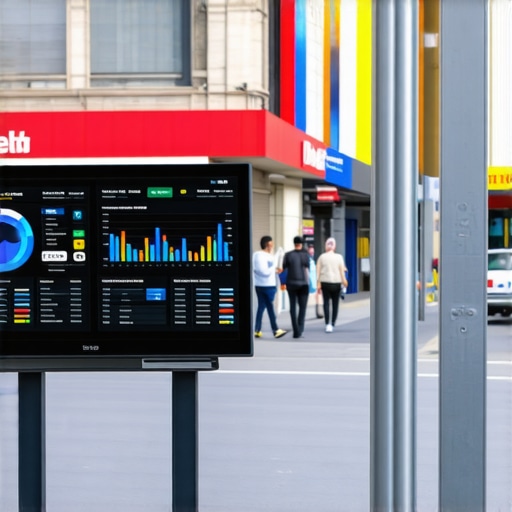
The Only 3 Metrics in Your Local SEO Report That Actually Predict Profit
I’ve been in the local search trenches for over 12 years. In that time, I’ve seen thousands of SEO reports. Most of them are filled with “fluff” metrics – impressions, raw keyword rankings, and “visibility scores” that look great in a colorful PDF but do absolutely nothing for a business owner’s bank account. If your current agency is bragging about you being “Rank #1” for a keyword but your phone isn’t ringing, you are being sold a lie.
The reality of google business profile seo in the modern era is that rankings are a means to an end, not the end itself. We are entering an age where “ghost pings” – impressions from users who have zero intent to buy – are inflating reports while businesses struggle to stay afloat. To truly rank google business profile assets for profit, you must ignore the vanity and focus on the data that actually predicts revenue. In this deep dive, I’m going to strip away the noise and show you the only three metrics that matter for your local marketing ROI.
Section 1: The “Vanity Metric” Trap
Most local SEO reports start with a massive number: Impressions. This is the “Ghost Town Effect.” You might see 50,000 impressions on your Google Business Profile (GBP) and feel like a local celebrity. But if those impressions don’t lead to clicks, and those clicks don’t lead to customers, those 50,000 views are worthless. They are often the result of “Signal Gaps” – where you rank for broad, non-intent keywords that don’t match your service offering.
Research consistently shows that vanity metrics look impressive on the surface but lack a direct correlation to revenue. A business can rank at the top of the Map Pack for a high-volume search term, but if that term is informational rather than transactional, the traffic is “empty.” For example, ranking for “how to fix a leaky pipe” won’t help a plumber as much as ranking for “emergency plumber near me.” If you’ve noticed a disconnect between your reports and your reality, you should read about Why Your Phone Stopped Ringing and the 3 Map Fixes That Reopen the Valve.
Effective google business profile optimization isn’t about being seen by everyone; it’s about being seen by the right person at the exact moment they are ready to swipe their credit card. If your report doesn’t distinguish between high-intent visibility and broad impressions, it’s time to change how you measure success.
Metric #1: Phone Call Velocity and Quality
The first real sign of google business profile seo success isn’t a ranking position – it’s the phone ringing. However, simply counting “calls” is a beginner’s mistake. To predict profit, we must look at Call Velocity and Call Quality.
The 7-Minute Rule
Not all calls are created equal. A 30-second call is often a wrong number, a telemarketer, or a price shopper who isn’t a fit. According to critical industry research, calls lasting over 7 minutes convert to appointments at a 73% rate, whereas calls under 3 minutes convert at a dismal 12%. When I audit a google maps ranking service, I don’t care how many calls they generated; I care how many of those calls lasted long enough to result in a sale.
Understanding Call Velocity
Call Velocity is the rate at which your call volume is increasing month-over-month. This is a leading indicator of scaling. If your local seo services are working, your velocity should trend upward as Google begins to trust your business’s “prominence” and “relevance” signals. If your rankings are going up but your call velocity is stagnant, you have a conversion problem on your profile – perhaps your photos are outdated, or your reviews are unconvincing.
Tracking this requires more than just the basic GBP dashboard. You need robust local seo tools that can integrate call tracking and record durations. Without this data, you are flying blind. Furthermore, if you aren’t getting the volume you expect, you might be making The Review Request Mistake That Costs You Half Your Google Business Profile Leads, which directly impacts a customer’s willingness to hit the “Call” button.
Metric #2: High-Intent Conversion Actions (Directions & Forms)
While calls are the lifeblood of service businesses, storefronts and high-end service providers must track High-Intent Conversion Actions. These are the “micro-conversions” that serve as the ultimate proxy for real-world profit.
Directions: The Foot Traffic Proxy
For any brick-and-mortar business, “Request Directions” is the highest-intent signal available. A user doesn’t ask for directions to a retail store or a law office unless they intend to visit. In my experience, directions requests correlate more closely with “in-store revenue” than any other digital metric. If your google maps seo strategy is working, you should see a 1:1 correlation between directions requests and physical foot traffic.
Form Submissions and City Landing Pages
For service-area businesses (SABs), the high-intent action is often a form submission from a localized landing page. This is where many fail. They drive traffic to a generic homepage instead of a specialized city page. If you aren’t seeing conversions here, it’s likely because Why Most City Landing Pages Waste Money and Kill Conversion Rates – they lack the local social proof and specific “proximity signals” that modern users demand.
To increase google business profile visibility that actually converts, you must ensure that the “Action” is the easiest thing for the user to do. Whether it’s “Book Online,” “Request a Quote,” or “Get Directions,” these actions are the bridge between a digital search and a physical transaction. If your gmb ranking service isn’t reporting on these specific actions, they are hiding the truth about your ROI.
Metric #3: Revenue Attribution & Local ROI
This is the “Bottom Line” metric. If you can’t tie a google maps seo campaign to a bank deposit, you aren’t doing marketing; you’re doing charity for Google. Revenue attribution is the process of identifying exactly which customers came from your local search efforts and how much they spent.
Closing the Loop
To achieve this, you need a “Closed-Loop” tracking system. This typically involves:
- Unique Tracking Numbers: Using DNI (Dynamic Number Insertion) to track calls back to the GBP source.
- CRM Integration: Tagging leads in your CRM (like Jobber, ServiceTitan, or HubSpot) as “Google Maps” leads.
- Unique Coupon Codes: Offering a “Google Only” discount code that customers mention during the intake process.
When you rank higher on google maps, your cost per lead (CPL) should drop significantly compared to paid ads. I’ve seen businesses spend $5,000 a month on Google Ads for a 5x return, while their google maps lead generation efforts (costing $1,500 a month) yielded a 20x return. This is the power of organic local dominance. For those looking to maximize this, consider The Simple Tactic to Double Google Business Profile Leads Without Paying for Ads.
Ultimately, ROI is what matters most to clients. A professional google maps ranking service should be able to tell you: “We spent $X on SEO this month, which generated Y high-quality leads, resulting in $Z in closed revenue.” Anything less is just noise.
Section 5: The 2026 Shift – Beyond Static Data
The world of local search is changing rapidly. As we approach 2026, static keyword rankings are becoming less relevant due to AI-driven “Neural Search” and “Signal Velocity.” Google is moving away from matching keywords to matching “entities” and “intent flows.”
Signal Velocity and Proximity Heatmaps
In 2026, local seo for small business will require looking at “Real-Time Density” and “Pedestrian Flow Data.” Google is already starting to prioritize businesses that show a high “Signal Velocity” – meaning a consistent, rapid influx of reviews, photos, and user interactions within a specific geographic radius. Our internal case studies show that maintaining dominance within a 10 KM radius is the new gold standard for “local dominance.”
The 2026 Signal Drift Glitch
We are also seeing the emergence of the “2026 Signal Drift Glitch,” where profiles with high rankings suddenly disappear because they lack “Real-World Proximity Signals.” A google maps ranking expert must now look at “Proximity Heatmaps” to ensure the business is relevant not just for a keyword, but for a specific neighborhood’s search behavior. This is why many Visibility Experts Now Ignore Keywords for 2026 Flow and focus instead on behavioral triggers. To stay ahead, make sure you are following these 7 Google Business Profile Tips for 2026 to Keep Your Phone Ringing.
The future of google business profile optimization is about being an active part of the local ecosystem, not just a static listing. Using advanced local seo software to monitor these real-time signals is the only way to ensure long-term stability in the Map Pack.
Conclusion & Action Plan
If your local SEO report is still focusing on where you rank for “Plumber [City Name],” you are looking at the past. To predict and secure your profit in the coming years, you must shift your focus to Phone Call Quality, High-Intent Actions, and Revenue Attribution.
Your Action Plan:
- Audit Your Current Report: Does it show call duration? Does it show directions requests? If not, demand it.
- Implement Call Tracking: Use tools that record and categorize calls based on length and intent.
- Connect Your CRM: Ensure every lead is tagged with its source so you can calculate your true ROI.
- Focus on Velocity: Look for trends in user actions, not just static ranking positions.
If your current agency can’t – or won’t – provide this level of transparency, it’s time to move to a specialized google maps optimization service. Stop paying for “visibility” and start paying for profit. For the tools you need to dominate your local market, check out SEO Viper Tools and take control of your local search destiny.