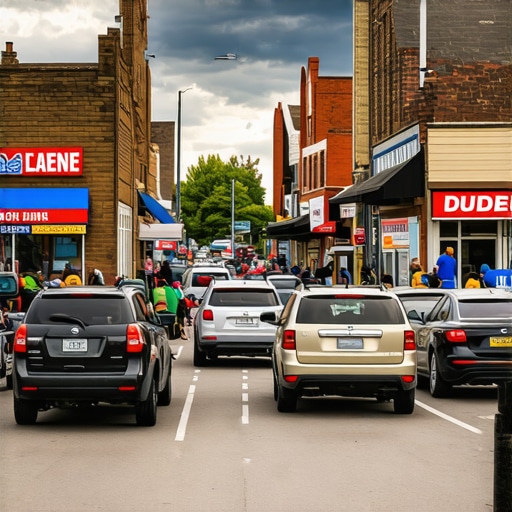
The Proximity Fix for Local Businesses Struggling to Rank Outside Their Own Parking Lot
There is a specific kind of frustration reserved for the small business owner who does everything “by the book.” You’ve claimed your listing, you’ve optimized your description, and you’ve gathered dozens of five-star reviews. When you are sitting at your desk, you search for your primary service, and there you are – #1 in the local Map Pack. You feel like a king.
Then, you leave for lunch. You drive exactly 1.5 miles down the road to a different neighborhood, pull out your phone, and search again. Suddenly, your business is nowhere to be found. You’ve dropped to position #14, buried under competitors who have half your reviews and a website that looks like it was built in 2004. This is what I call the “Neighborhood Lock” or the “Parking Lot Proximity Glitch.”
I’m Shahid Anwar, and I’ve spent years helping businesses break through these invisible digital fences. The reality of google business profile seo today is that Google’s algorithm is heavily weighted toward three core pillars: Proximity, Relevance, and Prominence. While most SEO “gurus” focus on relevance and prominence, they treat proximity as an unchangeable law of nature. I’m here to tell you that proximity is a hurdle, not a wall. You can expand your radius, but you won’t do it using 2015 tactics.
How Google Map Experts Diagnose the Neighborhood Lock Stopping Your Growth is the first step in understanding that your “parking lot” ranking isn’t a sign of success – it’s a sign of a restricted signal.
Why Proximity is the “Silent Killer” of Growth
In the current landscape of local search, proximity has become the “silent killer” of scaling businesses. You can have the best service in the city, but if Google thinks you only serve the three blocks surrounding your physical address, your growth is capped. By 2026, we are seeing the rise of “Signal Drift” and “Neural Search Checks.”
Google is no longer just looking at your address; it is using real-time density and pedestrian flow data to determine if your business is actually relevant to a searcher two miles away. If your profile doesn’t demonstrate “life” beyond your doorstep, the algorithm defaults to the closest possible result to the user. This is why traditional SEO – simply stuffing keywords into your business name or description – fails to break the proximity barrier. To rank google business profile effectively in a wider radius, you must move beyond static data.
The “Neural Search” aspect means Google’s AI is trying to predict user satisfaction. If users in a neighboring zip code never interact with your listing, Google assumes you aren’t relevant to that area. You are essentially being shadow-banned by your own lack of geographical engagement. This is a common reason Why Your Shop Disappears From Maps When Searchers Move Two Blocks Away. You aren’t losing because your SEO is “bad”; you’re losing because your geographical signals are too concentrated.
The 2026 Signal Shift: Beyond Keywords
As we look toward the future of local search, visibility experts are beginning to ignore traditional keyword density in favor of what I call “Signal Velocity.” This is the speed and frequency at which your profile gains meaningful engagement from diverse locations.
In 2026, the algorithm has evolved. “In 2026, a profile with 500 reviews but zero recent ‘request directions’ clicks will lose to a profile with 50 reviews and high interaction velocity,” says Shahid Anwar. If your engagement comes only from people standing within a 500-foot radius of your store, Google views you as a “convenience” result, not a “destination” result. To rank higher, you need to prove you are a destination worth traveling for.
Signal Velocity includes:
- Request Directions: Are people starting navigation to your business from different zip codes?
- Click-to-Call: Are these calls happening from diverse GPS coordinates?
- Photo Views: Is there a steady stream of new, geo-tagged photos being uploaded and viewed?
- Brand Searches: Are people searching for your business name specifically from outside your immediate neighborhood?
When you focus on these metrics, you are performing high-level google business profile optimization. You are telling the algorithm that your relevance extends beyond your physical walls. This is Why Visibility Experts Use Signal Velocity for 2026 Rankings – it is the only way to counteract the natural “proximity pull” of the Map Pack.
Step-by-Step: Breaking Out of the Proximity Bubble
So, how do you actually break the bubble? It requires a shift from “global” local SEO to “hyperlocal” tactical execution. If you want to improve google maps rankings, follow these three tactics.
Tactic 1: Hyperlocal Content Clusters
Most businesses create one “service area” page and list twenty cities. This is useless. Google sees through it. Instead, you need content that is neighborhood-specific. If you are a plumber in Chicago, don’t just write about “Chicago Plumbing.” Write about “Solving Low Water Pressure in Lincoln Park Brownstones” or “Emergency Pipe Repair Near Wrigley Field.” By mentioning specific landmarks, intersections, and neighborhood-specific architecture, you build geographic relevance that the algorithm picks up on.
Tactic 2: Geo-Grid Auditing
Stop using static rank trackers that give you a single number for your ranking. A business might be #1 at its office and #20 three miles away. A static tracker will just tell you that you are “#1” or give you an average that hides the truth. You need to use local seo tools that provide a geo-grid heat map. This allows you to see exactly where your “ranking wall” is. Once you identify where the drop-off happens, you can focus your local marketing and signal-building efforts on that specific “cold” zone.
Tactic 3: Interaction Moves
This is the most critical part of a modern google maps ranking service. You must drive real-world interactions from the areas where you want to rank. This can be achieved through:
- Local Partnerships: Run a promotion with a business in a neighboring district.
- Targeted Local Ads: Use Google LSA or Facebook ads targeted specifically at the “cold zones” identified in your geo-grid audit, encouraging “Request Directions” or “Calls.”
- Check-in Incentives: Encourage customers who travel from further away to check in or post a photo while at your location.
These are The Interaction Moves That Actually Matter for Dominating Local Map Results because they provide the GPS-stamped data Google craves.
Tools for the Modern Map Expert
You cannot win this game with a spreadsheet and a prayer. The modern map expert relies on sophisticated geo-grid ranking tools. If you aren’t visualizing your data, you are flying blind. Tools like SEO Viper or Megalodon SEO tools have become industry standards for a reason. They don’t just tell you that you’re ranking; they show you a visual heat map of your dominance.
When you use a google maps rank tracker, you are looking for “Signal Gaps.” For example, you might see that you rank well to the North and East, but your rankings fall off a cliff to the South. This usually indicates a lack of local citations or “Signal Velocity” coming from that specific direction. By using professional-grade local seo software, you can stop guessing and start targeting the specific nodes on the grid that will bring the highest ROI.
Industry-Specific Proximity Fixes
The proximity hurdle looks different depending on what you do. Not all businesses are treated equally by the algorithm.
Contractors and Plumbers (Service Area Businesses)
For SABs, the struggle is real because you don’t have a “storefront” that attracts natural foot traffic. Google often suppresses SABs in favor of “bricks-and-mortar” locations. To fix this, you must be aggressive with your “Service Area” settings and back them up with neighborhood-specific project galleries. If you don’t show Google you are actually working in those neighborhoods, you will remain a “parking lot” ranker. This is Why Your Service Area Business Stays Invisible to High-Value Neighborhoods.
Med Spas, Dentists, and Lawyers
In high-ticket niches, competition is fierce. You might have 200 reviews, but a new law firm with 10 reviews might outrank you because they are closer to the city center. For these businesses, Prominence must be used to override Proximity. This means heavy local PR, backlinks from local news outlets, and high-velocity interaction signals. It’s a common frustration: Why Law Firms Lose Local Leads to Competitors with Fewer Reviews. The answer is almost always a failure to generate “destination signals” that tell Google the extra drive is worth it for the user.
Conclusion: Breaking the Wall
Proximity is the strongest ranking factor in the local algorithm, but it is not an absolute limit. By understanding Signal Velocity, utilizing geo-grid auditing, and moving toward interaction-based SEO, you can expand your reach far beyond your office walls. The “Neighborhood Lock” only stays in place if you continue to use outdated, static SEO methods.
The era of “set it and forget it” GMB profiles is over. You must actively manage your profile’s “life signs” to maintain and expand your territory. If you are tired of being invisible to customers just a few miles away, it is time to audit your “Signal Gaps” and start building a presence that Google cannot ignore.
Ready to break out of your parking lot? Use this local seo tool to run a geo-grid audit today, or contact our team for a custom google maps seo strategy. Stop letting your competitors win just because they are closer – start winning because you are better.
Shahid Anwar – Local SEO & GMB / Google Business Profile Expert
I’m Shahid Anwar, a Local SEO & Google Business Profile specialist. I help local and multi-location businesses turn Google Maps and local search visibility into actual revenue by solving the complex proximity and signal issues that keep businesses hidden.