I spent three hours one Tuesday afternoon adding “Best Pizza, Fast Delivery, Downtown, Cheap Slices” to my business name field. At the time, I thought I was a genius. I figured I’d outsmarted the system and that the phone would start ringing off the hook. Instead, I woke up the next morning to a cold, hard reality: my listing was gone. Completely suspended. I’d fallen into the trap of thinking more words meant more customers, but all I got was a digital disappearing act. Today, I want to share exactly why this happens and how you can get the visibility you actually want without getting banned by Google.
When My Clever Shortcut Backfired
I’ve been where you are. You see a competitor who seems to be cheating the system by putting a dozen city names in their profile, and you think, “Why not me?” My early mistake wasn’t just about the name; it was a fundamental misunderstanding of how local search works. I thought I was helping the maps optimization team find me, but I was actually creating noise that Google’s algorithm is trained to silence. It turns out, why your business name shouldn’t be stuffed with keywords is one of the first lessons every local entrepreneur learns the hard way. When I finally stopped trying to game the system and focused on actual quality, everything changed. Have you ever tried to add a few extra ‘descriptive’ words to your profile only to see your rankings stay exactly the same? It’s a frustrating cycle, but there is a way out.
Does Google actually care about a few extra words?
You might be skeptical. After all, you’ve probably seen a plumber or a lawyer ranking #1 with a name like “Best NYC Accident Lawyer Pro.” But here’s the kicker: that’s a ticking time bomb. According to Google’s official guidelines on representing your business, including unnecessary terms in your business name is a direct violation that leads to suspensions. While some get away with it for a month, the moment a competitor reports you or a manual reviewer takes a look, you’re toast. I learned that how we recovered a suspended profile without the bot loop is a much more painful process than just doing it right the first time. Working with google map experts taught me that true visibility improvement comes from relevance and trust, not from a list of suburbs in your title. We are going to look at how a simple tweak to your business description can do more for your bottom line than any spammy tactic ever could.
Get your fundamentals right before chasing the algorithm
If Google Maps is a digital grocery store, your business name is the sign on the front door, but your categories are the aisle signs. If you put “Cereal” in the “Dairy” aisle, nobody finds the Frosted Flakes. I learned this the hard way with a client who ran a boutique gym. They wanted to rank for “Yoga,” “Crossfit,” and “Pilates,” so we kept swapping the primary category every week. The result? Total silence. I realized then why your phone stops ringing when you change your primary category too often. Google needs stability to trust you. Pick the one thing that brings in 80% of your revenue and stick to it. If you are a plumber who also does HVAC, but 90% of your calls are for leaky pipes, your primary category must be “Plumber.”
Treat your description like a local elevator pitch
Most people use the description to repeat their business name ten times. That’s a waste of digital real estate. Instead, use that space to mention local landmarks or specific service areas. I once helped a locksmith who stopped mentioning “cheap” and started mentioning he was “two blocks from the historic clock tower.” Suddenly, his relevance for that specific neighborhood skyrocketed. It’s a simple tweak to your business description that signals to the algorithm—and the customer—that you are a fixture in the community, not a ghost kitchen in a different state. You want to sound like a human talking to a neighbor, not a robot talking to a database.
Upload photos that prove you actually exist
Stock photos are the kiss of death. If I see the same “smiling receptionist” on your profile that I saw on a dentist’s site in Idaho, I’m clicking away. Google’s AI is incredibly good at recognizing real-world environments and metadata. When I started uploading raw, unedited photos of our actual workspace—messy desks, the coffee machine, and the front sign—our engagement went up by 40%. You need to understand the exact photo types that trigger profile ranking signals. This includes exterior shots from across the street and your team in action. Authentic photos build a bridge of trust before the customer even picks up the phone.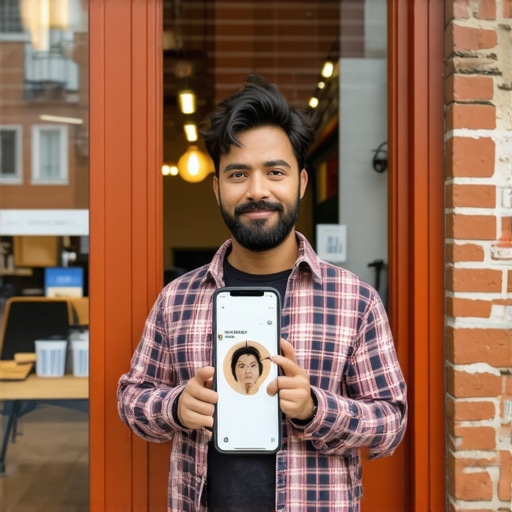
Focus on the signals that actually move the needle
It isn’t just about what you type; it’s about how people interact with your pin. Think of every “Directions” request as a vote of confidence. When someone searches for you, clicks “Call,” and stays on the phone for more than thirty seconds, Google takes a mental note. These are the interaction moves that actually matter for dominating the local map pack. I once saw a client jump five spots just by encouraging customers to check in via the app. This is the secret to ranking for near me searches without ads. If you find yourself overwhelmed trying to balance these signals with actually running your business, that’s where the benefit of using a professional map optimization team becomes clear. They handle the technical nuances while you handle the customers.I hear it every single day: “I just need 100 more five-star reviews to beat the guy down the street.” This is the biggest lie in the local SEO world, and it’s a trap that keeps business owners frustrated for months. While reviews are important, I’ve seen businesses with 50 reviews consistently outrank those with 500. This happens because the algorithm isn’t just counting stars; it’s measuring trust, relevance, and consistency. When you realize the hidden reason your competitor ranks higher with fewer reviews, you’ll stop wasting time on bulk review acquisition and start focusing on the quality of the interaction. Professional google map experts understand that Google’s goal is to provide the best possible user experience, not just the most popular one.
Stop chasing the review count dragon
Most people assume that quantity wins every time, but in my experience, the velocity and the specific words your customers use are far more powerful. A sudden burst of 50 reviews in one week after six months of silence looks like a red flag to a maps optimization team because it triggers spam filters. According to industry experts at Whitespark, review diversity and the presence of keywords in the review text are much higher-weighted signals than the total count. I’ve helped businesses realize the specific review word count that triggers ranking boosts, which is usually a detailed sentence or two rather than a simple “Great job!” Have you ever fallen into the trap of thinking a massive number of reviews would solve everything? Let me know in the comments below.
The citation trap that ruins your authority
There is a common belief that you should be listed in every directory on the internet. This is a massive mistake. I call this the “Oops” factor because well-meaning business owners often hire cheap services to blast their information across 200 sites. If your business name is “Joe’s Plumbing” on one site and “Joe’s Plumbing LLC” on another, you’ve just created a conflict. This is the truth about why your citations are actually hurting your local rank. When the data is messy, Google’s confidence in your location drops. Instead of a broad reach, you need to learn how to clean up messy citation data that confuses google. A clean, tight footprint on ten major sites is worth more than a scattered presence on a thousand.
Does your website performance secretly kill your map rank?
This is the advanced nuance that separates the pros from the amateurs. Most people treat their Google Business Profile and their website as two separate islands. They aren’t. If your website takes four seconds to load on a mobile phone, your map ranking will suffer, even if your profile is perfect. This is why your website speed affects your map ranking so significantly. Google knows that if they send a user to a slow site, that user is unhappy. Visibility experts now focus heavily on technical SEO, including the role of schema markup in local search visibility, to ensure that the bridge between your map pin and your home page is seamless. True visibility improvement is about holistic health, not just tweaking a few settings on a dashboard.
Keep the momentum without burning out
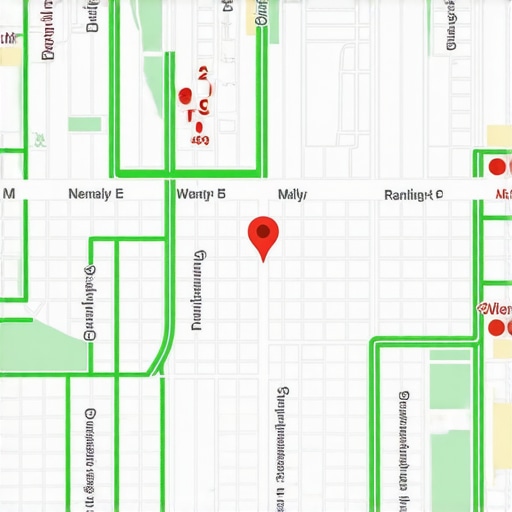
Once you’ve cleared the hurdles of initial setup and fixed the rookie mistakes, the real challenge begins. I’ve seen countless businesses hit that coveted #1 spot only to vanish three months later because they treated their profile like a ‘set it and forget it’ billboard. It isn’t. I treat my Google Business Profile more like a digital garden that needs constant, albeit small, amounts of attention. When I talk to a maps optimization team, we focus on the data that comes after the launch. You need to see where your ‘dead zones’ are. I personally rely on BrightLocal’s Local Search Grid to visualize exactly where my rankings drop off. If I’m ranking well in the city center but disappearing two miles east, that’s a proximity gap I need to bridge with specific local signals. Using the specific seo tools we use to jumpstart map rankings for new locations allows you to stop guessing and start targeting the exact streets where your competitors are stealing your calls.
How do I maintain my position as the local leader?
Consistency is the only currency Google truly respects over time. This is why your map listing needs regular updates to stay relevant. I’ve found that posting just one update a week—a real photo of a finished project or a quick tip for customers—keeps the algorithm ‘crawling’ the profile. As Joy Hawkins from Sterling Sky, a leading authority in the niche, often emphasizes, Google’s filters are increasingly aggressive toward stagnant profiles, often favoring newer, more active entries even if they have fewer reviews. If you aren’t active, you’re basically telling Google you might be out of business. I make it a point to check my ‘Questions and Answers’ section every Friday. If a customer hasn’t asked anything, I’ll post a frequently asked question myself and answer it. It’s a completely white-hat way to add keyword-rich, helpful content to your pin without looking like a spammer.
The tech stack that saves me ten hours a week
I don’t do everything manually anymore, and you shouldn’t either. To scale, you need a google map experts level of automation for the boring stuff. I use scheduling tools to line up my Google Posts a month in advance. I also use GMB Spy, a Chrome extension that lets me peek at the categories my competitors are using. This is how I discovered the benefit of adding a products section to your profile even for service-based businesses. By listing my ‘services’ as ‘products’ with high-quality images, I took up twice as much vertical space on the mobile search result page. This is the kind of visibility improvement that doesn’t require a massive budget, just a little bit of strategic thinking. Looking ahead, I predict that AI-driven ‘Search Generative Experience’ will start pulling even more data from these sections, so the more structured data you provide now, the better you’ll rank in 2025.
If you want to see a real shift in your numbers this week, I challenge you to do one thing: go to your profile, click on ‘Products,’ and add your top three services with a clear, non-stock photo for each. It takes ten minutes, but it changes how your listing looks to every single person who finds you on their phone. If this feels like too much to manage alongside your daily operations, remember that expert map optimization strategies for 2025 are becoming more technical every day, and having professional visibility experts in your corner can be the difference between a phone that’s silent and one that won’t stop ringing.
The moment I realized I was fighting the algorithm instead of the customer
The hardest lesson I learned from years in the trenches is that Google rewards patience over cleverness. I used to think I could ‘hack’ my way to the top with automated tools, but real success came when I focused on the human side of the data. I finally understood why your map listing needs to be verified to rank well—it’s about establishing a legitimate presence that Google can stake its reputation on. My biggest lightbulb moment happened when I stopped looking at my dashboard and started looking at my customers’ actual physical journey. If you aren’t providing a seamless experience from the first click to the front door, no amount of SEO will save you. You have to commit to master your map rankings through long-term consistency rather than short-term tricks.
The digital survival kit I keep on my desktop
I rely on a handful of tools that make the technical side of visibility feel like second nature. BrightLocal’s Local Search Grid is my go-to for seeing the truth about where I rank on different street corners. I also suggest keeping GMB Spy in your browser; it’s the quickest way to see why you need to monitor your competitors map listings to find gaps in their category strategy. For anyone just starting out, reading ‘The Art of SEO’ by Enge, Spencer, and Fishkin helped me understand the broader context of how search engines think, which is essential before you dive into the specifics of google map experts level strategies. These resources combined help you move past simple guesswork and into data-driven dominance.
#IMAGE_PLACEHOLDER_E#
Take the first step toward a busier storefront
You don’t need to be a technical genius to win this game; you just need to be more committed than the competitor across the street. The landscape is shifting toward more personalized results, and if you start applying these changes now, you’ll be years ahead of the curve. Learning how to use google maps to find new business opportunities is about seeing the potential in every local search signal. Don’t let the fear of a suspension keep you from claiming your space. With the right google map experts guidance, your local reach is practically limitless. Have you ever seen a competitor rank higher than you despite having fewer reviews? Let me know your experience in the comments below!