It was a damp Tuesday afternoon, and I was staring at a silent phone. I’d spent months building my reputation, yet my shop felt like a ghost town. When I finally searched for my own business on my phone, I saw the culprit: Google had flagged my hours as potentially inaccurate because I hadn’t touched the dashboard in six months. I was practically invisible to the very people walking past my front door. That moment was a painful wake-up call that changed how I viewed local search forever. I realized that keeping a digital presence isn’t about one-time setups; it’s about staying active in a neighborhood that never sleeps.
Your Map Listing Is Not a Set-It-and-Forget-It Billboard
I’ll be the first to admit it: I used to think that once you verified your business, the job was done. I fell into the trap of believing that great service would naturally keep me at the top of the search results. I was wrong. The reality is that static business data is the quickest way to lose your local three-pack spot. Google thrives on fresh signals. When you ignore your profile, you aren’t just staying still; you are actively falling behind hungrier competitors who are posting updates every single week. Early in my journey, I made a massive blunder. I changed my primary contact number but forgot to update it on my map listing for nearly a full quarter. I didn’t realize that why your phone stopped ringing often comes down to these tiny, neglected details. Our maps optimization team sees this every day; businesses lose trust not because they are bad at what they do, but because their digital presence looks abandoned and dusty.
Does Google really notice a few weeks of silence?
You might think that as long as your address is correct, you’re fine. But search engines view inactivity as a lack of reliability. According to research by BrightLocal, 77% of consumers always or regularly read reviews when searching for local businesses, and they expect to see recent activity to confirm you’re still operational. If you aren’t showing up with new photos or updated info, both users and the algorithm assume you’ve closed up shop. Today, I’m going to show you how to break out of that stagnation. We are going to look at why the impact of holiday hours and regular photo updates can be the difference between a busy storefront and a quiet one. We’ll solve the mystery of the reason your business disappeared from maps overnight and give you a checklist that keeps your ranking alive. Have you ever searched for your own business only to find out-of-date information staring back at you? It’s a sinking feeling, isn’t it? Let’s fix that together right now.The first thing I do every Monday morning isn’t checking my inbox; it’s opening my business profile to give it a ‘pulse check.’ Think of your map listing as a digital houseplant. If you don’t water it with new data, it wilts. The most direct way to signal to Google that you are open for business is through frequent, high-quality updates.
Feed the Algorithm with Fresh Data Every Single Week
When our maps optimization team analyzes stagnant profiles, the first thing we look at is the update frequency. You need to be posting ‘Updates’—essentially mini-blog posts—at least twice a week. I remember when I started doing this; I felt like I was shouting into a void. But within three weeks, my ‘discovery’ searches spiked. These updates should include keywords that your customers actually type in, such as your specific services or local neighborhood names. If you’re struggling with what to say, look at how to use Google’s local search features to your advantage to find trending topics in your niche. If you need local visibility help, starting with consistent posting is the lowest-hanging fruit available.
Stop Relying on Fake Stock Photos
Here is a mistake I made that cost me a month of growth: I used beautiful, polished stock photos of ‘generic’ offices. I thought it looked professional. It didn’t. It looked like a scam. Google’s AI is incredibly good at identifying stock imagery, and it won’t give you the same ranking boost as an original photo. You need to stop using stock photos if you want to dominate the three-pack. Now, I tell everyone to take their smartphone out and snap a photo of their storefront, their team, or a finished project. These ‘real-world’ images contain metadata that confirms your location and authenticity. In fact, the specific photo types that trigger profile ranking signals are usually the ones that look the least ‘produced’ but show the most genuine activity. 
Make Your Reviews Work Harder for Your Rank
Most people think getting a five-star review is the end of the road. It’s actually just the beginning. The ‘meat’ of the review—the words the customer uses—is a massive ranking factor. If a customer just leaves stars with no text, it helps your reputation but does very little for your visibility improvement. I started a habit of asking customers to mention the specific service they received. For instance, instead of ‘Great job!’, I’d nudge them to say, ‘Great job on the emergency pipe repair in downtown.’ This adds local context that helps you rank for those specific terms. Knowing how to get more high-value reviews without being pushy is an art form, but it’s essential for long-term growth. Also, don’t ignore the length; there is a specific review word count that triggers ranking boosts that we often see in the data.
Push Your Visibility Beyond Your Front Door
One of the biggest frustrations I hear from business owners is that they disappear the moment a searcher walks two blocks away. This ‘proximity gap’ is a killer. To fight this, you need to prove you serve a wider area than just your physical lot. This involves using the products and services sections of your profile to their full potential. By detailing every single thing you do, you give Google more ‘hooks’ to catch local searches. If you’re feeling stuck in a small radius, the proximity fix for businesses struggling to rank outside their lot usually involves a combination of service-area adjustments and localized photo tagging. Our visibility experts often find that simply adding a ‘Products’ section—even for service-based businesses—can force the algorithm to re-evaluate your reach.”,”image”:{“imagePrompt”:”A high-quality photo of a real small business interior with a local business owner smiling and working, shot on a smartphone to look authentic, natural lighting.”,”imageTitle”:”Authentic small business owner working in-store”,”imageAlt”:”A business owner updating their profile to increase local map visibility”},”categoryId”:0,”postTime”:””}It’s easy to think that if you just follow the basic checklist, the phone will keep ringing. But I’ve learned that the loudest voices in the SEO world often get one thing fundamentally wrong: the obsession with volume over quality. I’ve seen business owners spend thousands on ‘citation packages’ only to find their rankings flatlined. The truth is that the truth about why your citations are actually hurting your local rank often boils down to messy, conflicting data that confuses the algorithm rather than strengthening it. When our maps optimization team audits these profiles, we often spend more time pruning dead weight than adding new signals.
Stop Chasing Low-Value Citations
One of the biggest ‘oops’ moments I see—and I’ll admit, I tried this once in my early days—is keyword stuffing your business name. It feels like a quick win to call yourself ‘Best Plumber in Chicago’ instead of your actual business name. But this is a massive trap. Google’s suspension bots are smarter than ever, and why your business name shouldn’t be stuffed with keywords isn’t just about avoiding a ban; it’s about brand trust. Users can smell a fake name from a mile away, and once you lose that trust, your conversion rate plummets.
Can your website’s speed actually change where you sit on the map?
You might think your map listing and your website are two different islands. They aren’t. In fact, a study by Moz on Local Search Ranking Factors consistently highlights that ‘on-page signals’ are a top-tier ranking factor for the local pack. If your site takes five seconds to load on a mobile phone, Google is less likely to show your pin to a person standing right outside your door. Understanding why your website speed affects your map ranking is the difference between a pro setup and an amateur one. 
The Proximity Wall is Shorter Than You Think
There’s also a common belief that your ‘proximity’—how far you are from the searcher—is an unbreakable wall. I used to think I was stuck in a two-mile radius forever. But our local visibility help often involves proving that the simple interaction signal that beats proximity limits is what actually matters. When users interact with your listing—clicking for directions or calling you—it signals that you are a ‘destination’ worth traveling for. This allows you to how to break out of map clusters and stand out alone even in competitive zip codes. Have you ever fallen into this trap of thinking you’re limited by your physical address? Let me know in the comments.Once you’ve stopped the bleeding, the focus shifts to a long-term defensive strategy. I call this the ‘Active Guard’ phase. It’s where I see most businesses stumble because they treat their rankings like a completed puzzle rather than a shifting landscape. If you aren’t watching your data, you won’t notice when a competitor starts nibbling at your edges. I rely heavily on the specific SEO tools we use to jumpstart map rankings for new locations to monitor my local grid. This isn’t just about vanity; it’s about survival. You need to know exactly how to track leads coming directly from your map listing so you can prove to yourself that the effort is paying off.
Protect Your Rank from the Silent Search Decay
Search decay is real, and it happens faster than most people realize. You can be number one today and number four by Friday if a rival suddenly drops twenty fresh photos or a dozen keyword-rich reviews. To prevent this, I’ve established a ‘Signal Pulse’ routine. Every month, I perform a mini-audit to how to stop search decay on your business profile. This involves more than just checking your hours; it’s about ensuring your ‘Prominence’—a core pillar in Google’s official local ranking documentation—is constantly being fed with new information. Google explicitly states that prominence is based on what the web knows about a business, which means your off-profile presence matters just as much as your pin. 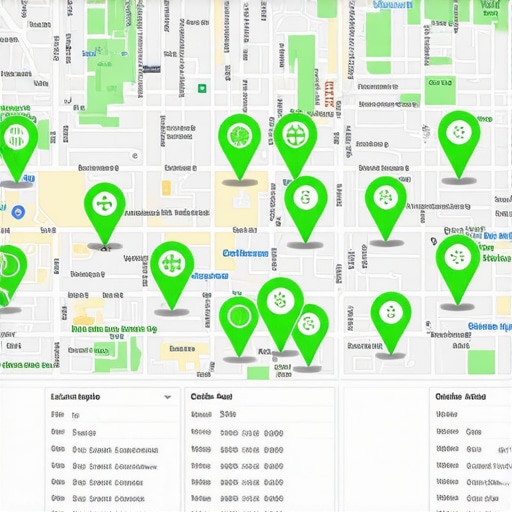
How do I keep my business visible month after month?
The secret isn’t a magic button; it’s a systematic approach to visibility improvement. I personally use a ‘Three-Prong’ maintenance schedule: weekly photo uploads, bi-weekly update posts, and a 24-hour response window for all reviews. If this sounds like a lot of work, it is—which is why many successful shops eventually hire a maps optimization team to handle the heavy lifting. This allows the business owner to focus on their craft while the google map experts ensure the digital lights stay on.
The Future of Local Search Is All About Prediction
Looking ahead, I suspect we are moving toward a ‘predictive search’ era where Google will suggest your business to users before they even finish typing their query, based purely on your past engagement levels. This makes the role of user engagement in boosting your map rank more critical than ever. If you want local visibility help that actually scales, you have to look beyond the current month. If you see your numbers dip, don’t panic. Use the move our optimization team uses to reclaim lost map spots to get back on the board. My advanced tip for you today: Start using UTM parameters on your ‘Website’ button within the Google Business Profile dashboard. This will show you exactly which visitors are coming from your map listing versus standard search results in your Analytics. Try setting this up today—it’s the only way to truly see the ROI of your maps strategy.
The Strategy Shift That Finally Made My Phone Ring
I’ve spent years analyzing why some shops flourish while others fade. The biggest takeaway? It’s rarely about the size of your budget; it’s about the consistency of your signals. I used to think I needed a massive marketing team, but real growth came when I realized that google map experts focus on the small, high-frequency actions. I learned that pruning messy data is often more effective than adding a hundred low-quality citations that confuse the algorithm. I also discovered that when you treat your profile like a living conversation with your customers, the search engine rewards you with a prominence you simply can’t buy with traditional ads. It is about being the most relevant answer to a local problem at the exact moment it arises.
Tools and Resources That Keep Me Ahead of the Pack
To keep your momentum, I recommend a few specific resources that I use daily. First, bookmark the official documentation on how Google determines local ranking to understand the core pillars of distance, relevance, and prominence. For tactical execution in the current market, our local visibility help guide offers a roadmap for the coming year. I personally rely on UTM parameters for every link in my dashboard; it’s the only way to separate the noise from the actual revenue. If you are struggling to stand out in a saturated market, look into the signal move we use to break out of crowded map clusters in competitive cities. These tools aren’t just ‘nice to have’—they are your defense against competitors who are waiting for you to get comfortable.
Take Back Your Local Neighborhood
Your business deserves to be found by the people standing right outside your door. Don’t let a dusty digital profile be the reason they walk past you to a competitor. Every original photo you upload and every detailed review you answer is a brick in the wall of your local authority. This journey of visibility improvement never truly ends because your neighborhood never stops moving. Start today by updating just one piece of information or replying to one old review. #IMAGE_PLACEHOLDER_E# What is the biggest challenge you’ve faced when trying to show up on local maps? Let me know in the comments below!