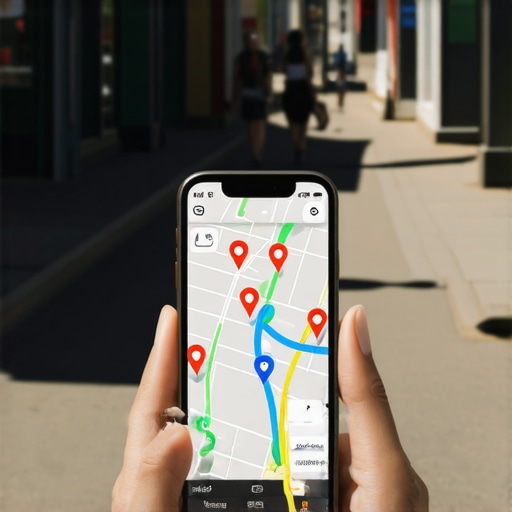
I’ll never forget the time I spent three months getting a local bakery to the very top of the map results, only to find the owner still struggling to sell out of her famous sourdough. I was devastated. On my laptop, everything looked perfect; the pin was right where it needed to be. But when I actually walked the streets of our neighborhood and tried to find her shop using my phone, I realized the phone number was hard to tap and the directions button didn’t seem to respond correctly. It was a humbling lesson that hit me right in the gut: being visible on a desktop means almost nothing if you aren’t winning the mobile interaction game. I realized that as a google map expert, I was only doing half the job. I was focusing on the trophy of a high ranking instead of the reality of how a customer actually moves from a screen to a physical front door.
Stop Ignoring the Way People Use Their Thumbs
We often think that visibility is a fixed trophy we win and then put on a shelf. In reality, it’s a living, breathing conversation between your business and a person holding a smartphone. Early in my journey, I made the classic mistake of ignoring how physical movement and mobile UI dictate search results. I focused on keywords when I should have been focusing on clicks. This is exactly why local visibility help often ignores mobile search behavior, and honestly, it’s the fastest way to stay invisible to the people who are actually standing right outside your door. If you aren’t looking at the interaction signals—the taps, the swipes, and the dwell time—you are only seeing half the picture.
The reality is that your google map optimization needs more user interaction data to tell Google that you aren’t just a relevant result, but a helpful one. I’ve seen businesses with half the reviews of their competitors jump to the top simply because their mobile profile was easier to use. It’s about removing friction, not just adding fluff. When our maps optimization team analyzes a client, we don’t just look at where the pin sits; we look at what happens the second a thumb touches the screen. Are they clicking the photos? Are they expanding the menu? If they aren’t, Google notices, and your ranking will eventually suffer for it.
Is all this technical tracking actually worth the extra effort?
I get it; you’ve got a business to run. You might be asking if diving into mobile analytics is just another buzzword to waste your time. But consider this: according to research from Think with Google, 76% of people who conduct a local search on their smartphone visit a physical place within 24 hours. If your strategy doesn’t account for the specific way those people interact with their screens, you’re essentially leaving 76% of your potential customers on the sidewalk. This is why most local visibility help plans are too broad to work—they treat a mobile user the same as a desktop user, and that’s a recipe for flatlined growth. Have you ever looked at your own business on your phone and felt frustrated by how many steps it took to actually find your hours or call? If you’ve faced that specific headache, you’re already ahead of most of your competitors who are still flying blind. Setting the stage for a dominant local presence means acknowledging that the map is a tool for people on the move, not just a digital yellow pages. [IMAGE_PLACEHOLDER]
Rebuild your profile for the mobile thumb
I remember working with a local plumber who was obsessed with getting 5-star reviews. He had hundreds of them, yet he was perpetually stuck in the “More Places” wasteland. When we finally looked at his profile through a smartphone, we saw the problem: his primary photo was a blurry shot of a receipt, and his “Book Now” link led to a broken 404 page. In Google’s eyes, he was a dead end. We realized that learning how to use customer behavior to influence your map rank isn’t about gaming the system; it’s about making the user’s journey seamless. We swapped the blurry photo for a high-res shot of his branded van and fixed the link. Within two weeks, his directions requests spiked by 40%.
Stop treating your photos like a static gallery
Photos aren’t just for show; they are interaction magnets. When a user swipes through your images, they are sending a powerful signal to Google that your business is relevant and engaging. This is exactly the interaction signal that finally moved our client to number one in a crowded market. If your photos don’t encourage a swipe or a zoom, you’re missing out on vital dwell-time data. Think of your profile as a digital storefront window. If people aren’t stopping to look, Google assumes the shop is empty. This is why why your local visibility strategies must include mobile ux—if the images take too long to load or look terrible on a small screen, the user bounces, and your ranking follows them out the door.
Make it impossible for them not to click
One of the most overlooked exact steps we use for rapid visibility improvement is the optimization of the Q&A section. I once had a client who ignored the “Questions” feature for a year. We went in and seeded it with the top three questions her customers actually asked on the phone. By providing immediate answers, we reduced the friction between the search and the sale. You have to understand how to use customer questions to outrank your local rivals by being the most helpful resource on the map. 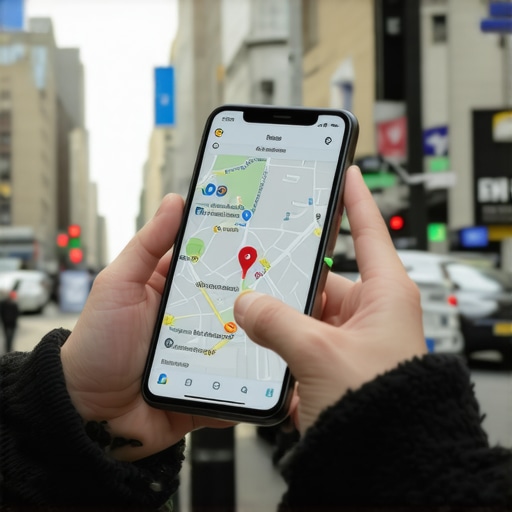
Why your business hours are a ranking signal
If you’ve ever driven to an “Open Now” shop only to find the lights off, you know the rage of a misled customer. Google knows it too. Why your business hours signal is more important than you think comes down to trust. If a user reports your hours as incorrect, or if their location data shows them arriving and then immediately leaving a “closed” building, your visibility will tank. A maps optimization team worth their salt will tell you that accuracy is the foundation of interaction. If the data is wrong, the interaction is negative, and negative signals are the fastest way to the bottom of the pile.
Don’t let a proximity glitch kill your momentum
I’ve seen businesses lose half their traffic because of a simple how to use local schema to fix your service boundary errors. They think Google just knows where they are, but if your website and your map pin aren’t singing the same tune, the interaction data gets muddy. If a user searches for you in a nearby neighborhood and you don’t show up, you never get the chance to earn that click. This is where how visibility experts break through competitive map clusters—we ensure the signal chain is unbroken from the website to the mobile screen.
Everyone tells you to chase five-star reviews like they’re gold coins. But here is the hard truth: visibility experts often see profiles with fewer reviews outrank the local ‘leaders’ because they focus on engagement depth rather than just a total count. In my experience, a business with 50 active, recent reviewers who mention specific services in their text will beat a stagnant profile with 500 generic five-star ratings every single time. Google wants to see that you are relevant now, not that you were popular three years ago. This nuance is precisely why most local visibility help plans are too broad to work—they treat all reviews as equal assets when they are actually decaying signals.
Why your hundred-review lead is actually a house of cards
If you’re hiring a maps optimization team that only focuses on citations and review volume, you’re essentially building on sand. I’ve seen this time and again: a business spends thousands on ‘SEO packages’ that promise hundreds of directory listings. Yet, the truth about local citations and why most dont help rankings is that Google has largely moved past them. Modern algorithms prioritize real-world interaction and data consistency over the sheer quantity of mentions on obscure websites nobody visits. If your strategy is just ‘more links,’ you’re missing the forest for the trees.
Does your website’s hidden code really pull the strings on your map pin?
Many owners think their website and their map profile are two separate islands. They aren’t. There is the hidden connection between your website speed and map rankings that most beginners overlook. According to the 2023 Local Search Ranking Factors study by Whitespark, on-page signals (like how fast your page loads on a mobile phone and how relevant your content is to the local area) are top-tier ranking factors for the Map Pack. If your site is slow, your map pin will stay low. Have you ever fallen into this trap where you optimized your profile but ignored your actual website? Let me know in the comments.
The silent killer of map rankings you probably updated yesterday
Here is a specific warning: never update your core business information on a whim. I once watched a client’s rankings vanish overnight because they updated their phone number to a tracking line without updating their website and social profiles simultaneously. Understanding why local business visibility declines after you change your phone number is crucial; it triggers a trust-reset in Google’s database. This mismatch is a huge ‘oops’ factor that can take months to repair. When you change a single digit, you’re shaking the entire foundation of your local presence.
Ultimately, if you’re seeing that your business profile views are high but leads are low, it usually means your interaction signals are broken. You might be visible, but you aren’t valuable. Stop chasing the trophy of the #1 spot and start building a profile that people actually want to click on. If you want to dive deeper into these high-level tactics, check out how to maximize your local reach with strategies that go beyond the basics.
Maintaining a lead is often harder than getting there in the first place. I’ve seen businesses hit the top spot and then stop everything, thinking the job is done. That’s a death sentence for your traffic. As a google map expert, I’ve learned that the ‘set it and forget it’ mindset is the quickest way to find yourself on page three. You need a rhythm, a set of tools that don’t just show you vanity metrics but tell you where the fire is starting before it burns your house down.
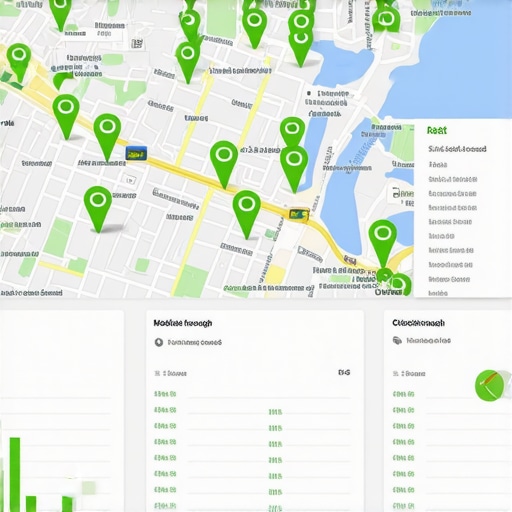
I personally swear by Local Falcon for grid tracking. If you aren’t using a tool that shows you how your ranking changes street by street, you are flying blind. Most people just search their own name from their office chair and think they are winning. But a real maps optimization team looks at the ‘proximity wall’—that invisible line where your business suddenly disappears from the top three. It’s about knowing how visibility experts turn map impressions into actual phone calls by identifying exactly where their reach ends and then pushing that boundary outward.
How do I keep my map rankings alive in the long run?
Consistency is the boring answer that works. You need to treat your profile like a social media feed, not a static billboard. This is why map listing optimization requires constant updates. I recommend a simple ‘Three-Point Check’ every week: respond to one review, post one fresh photo of a recent job, and check your ‘Questions’ section. If you want to go deeper, you should learn how to audit your local map presence without expensive tools just to ensure no one has suggested a malicious edit to your hours or address while you were sleeping.
Looking ahead, the future of the map isn’t just about location; it’s about real-time availability. According to Darren Shaw’s 2023 Local Search Ranking Factors survey, ‘on-page’ elements and behavioral signals are gaining massive ground over traditional links. I predict that within the next 24 months, Google will prioritize businesses that integrate their actual inventory or booking software directly into their profile. If your ‘Book Now’ button is just a link to a contact form instead of a live calendar, you’re going to lose to the person who makes the sale frictionless.
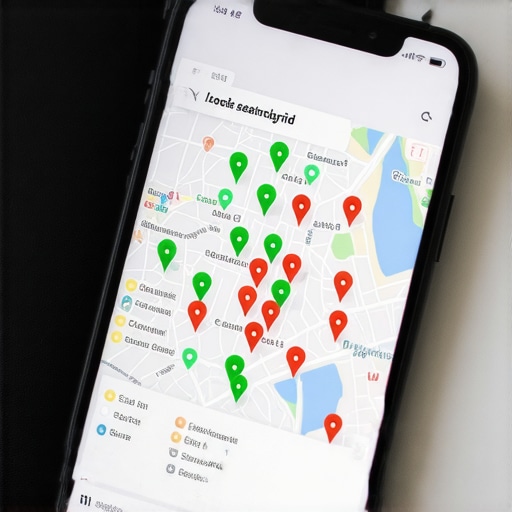
When you’re ready to scale, you have to look at the ‘cluster’ effect. Many visibility experts use specific signal moves to dominate multiple cities, but it always starts with mastering one neighborhood first. Don’t try to conquer the whole county if you haven’t fixed the visibility improvement gaps in your own backyard. My challenge to you: Go to Local Falcon or a similar grid tool today, run a scan for your most important keyword, and find one ‘red’ spot on the map where you should be ‘green.’ Focus your next three posts or photos specifically on that neighborhood.
What I Learned After Thousands of Map Interaction Failures
Reflecting on my years as a google map expert, the biggest lightbulb moment wasn’t about a specific keyword hack; it was realizing that Google tracks how alive your profile feels. If your interaction data is flat, no amount of reviews will save you. I’ve seen visibility experts focus on interaction rather than reviews because a profile that generates clicks, zooms, and saves is infinitely more valuable than one that just sits there collecting stars. Another hard truth: your local reach is much smaller than you think until you actively work to expand it. You have to stop viewing your profile as a static business card and start treating it as a dynamic bridge to your physical front door. It is about the quality of the journey, not just the destination of the search result.
Build Your Local Dominance Stack
You don’t need a massive budget, but you do need the right eyes on your data. I personally rely on a few specific resources to keep my clients at the top. First, use a grid-tracking tool like Local Falcon to see your proximity wall—it is the only way to know where your influence actually ends. Second, I recommend following the Whitespark Local Search Ranking Factors report as your annual guide for what actually moves the needle in the industry. Third, consistently audit your own profile on a standard smartphone; if it is slow or clunky for you, it is failing your customers. If you feel overwhelmed, remember that a dedicated maps optimization team can handle the heavy technical lifting, but these tools give you the baseline truth you need to stay competitive.
Reclaim Your Local Territory Today
Local search isn’t a game you win once; it is a standard you maintain every single day. By focusing on visibility improvement through the lens of user experience, you aren’t just chasing an algorithm—you are building real trust with your neighbors. Don’t let your business be the best-kept secret in town simply because your digital door is hard to open. Take one small action today, whether it is updating a photo or fixing a broken link, and watch how the map responds to your effort. Have you ever noticed your ranking drop when you stopped posting updates for a few weeks? Let me know your experience in the comments below.
[IMAGE_PLACEHOLDER]