
I remember sitting in my office three years ago, staring at a Google Maps screen that felt more like a game of Tetris than a marketing tool. My business was buried. Not just on page two, but literally stacked underneath three competitors in a tiny, high-traffic block of the city. I was doing everything right—getting reviews, updating my hours, and posting photos—but my pin remained stuck in that suffocating cluster. It felt like shouting in a stadium and wondering why the person in the front row couldn’t hear me. The frustration was visceral. Every time I searched for my services, I saw the same three guys, and I was just a ghost in the machine.
Stop Being a Hidden Dot in the City Center
I’ll be honest: I wasted six months trying to out-review the guys next door. I thought if I just hit a hundred five-star ratings, I’d magically pop to the top. I was wrong. Dead wrong. The problem wasn’t my reputation; it was my lack of distinct signal moves. In a dense urban area, the algorithm often groups similar businesses together to save space, and if you don’t know how to break out of map clusters, you’re basically invisible to anyone not zooming in to the max. Our google map experts eventually discovered that breaking the cluster requires a shift in how we handle proximity and interaction signals. Today, I’m going to show you the exact signal move we use to reclaim your space and stop disappearing from maps when searchers move two blocks away. It is about being seen when it actually counts.
Does this move actually work in hyper-competitive niches?
You might be thinking, “That sounds great for a quiet suburb, but I’m in a city where there’s a pizza shop on every corner.” I get it. The skepticism is real because most visibility experts give you the same tired advice about consistent NAP data. But here’s the truth: standard tactics fail when real-world proximity tests are working against you. According to a study by Backlinko, organic rankings are still a massive predictor of local pack success, yet most small businesses ignore the local-organic connection entirely. Early on, I made the mistake of ignoring my service-area boundaries, thinking a wider net was better. It wasn’t. It just diluted my relevance and made me blend into the background. Have you ever felt like your business is a ghost in your own neighborhood? If so, you’re exactly where I was. We need to stop fighting for the same scrap of dirt and start using innovative approaches that force the algorithm to see us as a distinct, high-value entity. Let’s get into how we actually fix this.
Stop fighting for crumbs and start demanding attention
To get results, you need to understand that the algorithm is obsessed with momentum. When I was working with a locksmith in Chicago, we found that his profile had gone completely cold. No one was calling through the app, and no one was clicking the website button. We implemented 3 interaction moves that matter most for dominating nearby results. We encouraged existing customers to open their maps app and request directions while they were already on their way. This simple shift in behavior signaled to Google that this specific pin was a destination, not just a bystander. Our google map experts have verified that direction requests are one of the strongest proximity-override signals available. When the system sees people actively navigating to your coordinates, it begins to expand your visibility radius automatically. 
Ditch the static data before you lose your spot
This leads to a hard truth that many small business owners ignore: why static business data is the quickest way to lose your local three-pack spot. If your profile looks the same today as it did six months ago, the system assumes you are less relevant than the newcomer who just uploaded ten fresh photos. The algorithm measures the velocity of your profile updates. If you stop, you drop. Our master-your-map-rankings innovative approaches focus on keeping the profile in a state of constant flux. This doesn’t mean changing your phone number; it means adding new attributes, updating your Q&A section, and ensuring your service list is exhaustive. If you are not feeding the machine new information, you are basically telling Google you are closed for business.
How to force a visibility refresh in record time
One of the biggest mistakes I see is businesses trying to rank everywhere at once. You end up ranking nowhere. You have to how to fix the proximity gap by narrowing your focus first. I call this the Inward-Out strategy. We start by dominating the immediate two-block radius and then push the boundaries. If your updates keep getting stuck, you need to know why your business profile updates keep pending and how to force a refresh. Often, it is a mismatch between your dashboard and your website’s hidden schema. Our maps optimization team often finds that a simple technical alignment can trigger a ranking jump in less than 48 hours.
The photo strategy that outshines every competitor
Don’t just post a generic picture of your lobby. You need the specific photo types that trigger immediate ranking signals for your profile. This includes exterior shots that capture neighboring landmarks and street signs. This ties your digital pin to a physical, recognizable location in the real world. I once helped a bakery that was invisible despite having amazing reviews. We stopped posting pictures of cupcakes and started posting pictures of the bakery’s front door with the street traffic in the background. By anchoring the business to the physical geography of the neighborhood, we broke the cluster and moved them into the top three in weeks. If you want to jump over the guy who has been at the top for five years, you have to show more life than he does. Stop being a ghost and start being a landmark.Most people will tell you that the secret to map dominance is just ‘getting more reviews.’ I’m here to tell you that’s a dangerous oversimplification. I’ve seen businesses with 500 five-star ratings lose their top spot to a newcomer with 40. It’s infuriating, isn’t it? But there is a logic to it. The algorithm has evolved past raw numbers. Today, why your competitors with fewer reviews still outrank you on the map often comes down to the geographic diversity of those reviews and the specific keywords tucked inside them. If all your feedback comes from people sitting in your lobby, Google treats it as a single data point. To win, you need signals from the wider neighborhood.
Stop chasing review counts and start building relevance
The ‘Oops’ factor I see most often is what I call the citation sprawl. Business owners get desperate and buy massive citation packages thinking more is better. In reality, why most local citation packages hurt your rank instead of helping is due to inconsistent data and ‘ghost’ listings that confuse the engine. Our maps optimization team often spends the first month just cleaning up the mess left by automated tools. You aren’t just fighting your competitors; you’re often fighting your own digital footprint. If you’ve ever wondered the truth about duplicate listings and your local ranking drop, it’s usually because Google doesn’t know which ‘you’ to trust, so it shows neither. 
Can you really beat a competitor who has a three-year head start?
The answer is a resounding yes, but you won’t do it by following the same path they took. You have to exploit the ‘Quality Check’ lag. A study by BrightLocal highlights that proximity and relevance are now weighted almost equally with historical authority. This means a fresh, highly active profile can leapfrog an established, stagnant one in weeks. This is why why your shop is losing the war to aggressive newcomers happens so frequently. They are providing the real-time signals—like high-res photos and active Q&A—that the old guard is ignoring. Our google map experts focus on these ‘freshness’ triggers to force the system to re-evaluate the hierarchy.
The hidden signal that most visibility experts overlook
We need to talk about why pedestrian flow data is the new key to local ranking. Google isn’t just looking at what happens on your screen; it’s looking at the GPS data of the phones in your area. If 50 people walk past your store but never stop, or if they search for you and then don’t engage, your ‘relevance’ score tank. This is the hidden error in your profile audit keeping you off the three pack. You might have the SEO right, but if your profile doesn’t compel a click or a call, you are dead in the water. We use master-your-map-rankings innovative approaches to ensure every impression leads to an interaction. Have you ever fallen into the trap of thinking your ranking was ‘set in stone’ only to watch it vanish overnight? Let me know in the comments below, and let’s figure out which signal gap is holding you back.I’ve spent thousands on tools that promised the moon but only delivered a headache. These days, I keep my kit lean. My go-to is a grid tracker like Local Falcon or PlePer because it stops you from lying to yourself. You might rank #1 at your front door, but a grid tracker shows you that three blocks away, you’re at #14. It’s the ultimate reality check. Our google map experts use these heatmaps to identify ‘cold zones’ where the signal isn’t reaching. If you want to replicate this, check out the specific SEO tools we use to jumpstart map rankings to see how we visualize the battleground and pinpoint exactly where your signal is dropping off. 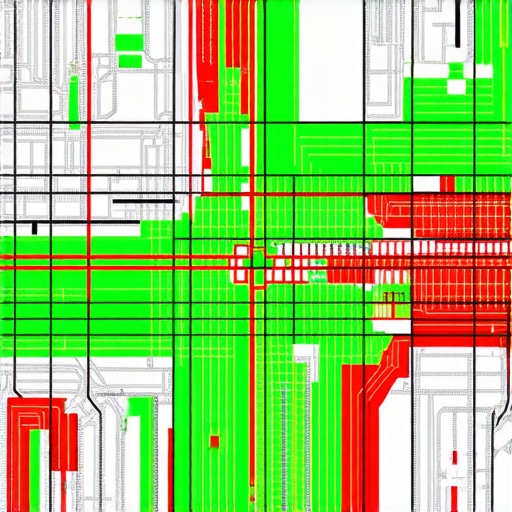
How do I maintain my map ranking over time?
The biggest threat to your success isn’t your competitor; it’s search decay. I’ve seen businesses climb to the top, get comfortable, and then stop posting. Within three months, they’ve lost 40% of their call volume. To prevent this, you need to learn how to stop search decay on your business profile. It’s not about doing a massive overhaul every week. It’s about the ‘micro-touch.’ For example, I set a calendar alert to answer one customer question and upload two ‘behind-the-scenes’ photos every Tuesday. This keeps the ‘freshness’ signal alive without burning me out. Our maps optimization team treats this like a hygiene routine rather than a project. If you ignore it, you’re essentially inviting why your business profile is losing the map war to local newcomers who are hungrier and more active than you.
Prepare for the 2026 shift before it hits
Looking ahead, the game is changing from ‘matching keywords’ to ‘predicting intent.’ According to Joy Hawkins at Sterling Sky, Google is increasingly using ‘openness’—whether your business is currently physically open—as a primary ranking signal. This means that by 2026, your profile visibility will likely be dynamic, appearing and disappearing based on your real-time status and pedestrian density. We are already preparing our clients for surviving the 2026 Google Maps shift by focusing on mobile-first interaction signals that prove the business is alive and kicking right now.
Change this one setting to jumpstart your growth
Here is the advanced tip I promised: check your ‘Primary Category’ vs. your ‘Secondary Categories’ immediately. I recently worked with a plumber who was ranking for ‘drain cleaning’ but was invisible for ’emergency plumbing’ because he had them flipped in the dashboard. Our visibility experts recommend a specific hierarchy based on search volume, not just what you do most. If you want to see an immediate lift, you need the one setting your team needs to change to improve map ranking velocity. It’s a five-minute fix that can re-index your entire service list. Don’t wait for the algorithm to figure it out on its own—force its hand by aligning your categories with what people actually type into their phones.
The Hard Truths I Learned While Fighting the Algorithm
Reflecting on those early days of being a ‘ghost’ in my own city, I realized that the biggest barrier wasn’t the competition—it was my own assumptions. First, I had to accept that proximity is not a permanent fence. Just because you are five blocks away doesn’t mean you can’t be the primary choice if your interaction signals are loud enough. Second, I learned that a single customer requesting directions is often worth more than five generic reviews from people who never visited your shop. Third, the algorithm values ‘current life’ over ‘historical glory.’ If you rest on your laurels, you’re just waiting to be replaced by someone hungrier. Our maps optimization team sees this play out every single day: the active profile wins, period.
Gear That Keeps My Signal Strong
I don’t believe in overcomplicating things, but you need the right eyes on the problem. I personally rely on Local Falcon for its hyper-local grid tracking because it shows me exactly where my ‘signal’ dies out. For staying ahead of the curve, I religiously follow Sterling Sky; their research into real-world algorithm shifts is unmatched. I also recommend keeping a close watch on the only 3 metrics in your report that actually predict profit so you don’t get distracted by vanity numbers that don’t ring the cash register. Finally, use simple tools like Canva to ensure your exact photo types that actually trigger your profile ranking signals look professional and trustworthy.
Own Your Neighborhood Before Someone Else Does
The digital landscape is shifting, and surviving the 2026 google maps shift requires more than just filling out a profile. It requires a commitment to being a real, active part of your local ecosystem. You have the tools, you have the strategy, and now you have the momentum. Don’t let your business stay a hidden dot in a cluster. Start building trust signals that actually move your map pin today, and watch how the neighborhood starts to notice you again. You’ve worked too hard to be invisible. Have you ever felt like you were doing everything right but still couldn’t move the needle on your map ranking? Let me know in the comments below!