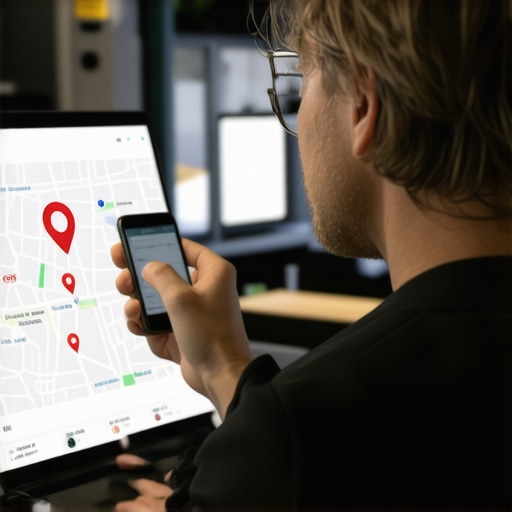
I remember sitting in my kitchen office three years ago, staring at a dashboard that told me my business profile was getting thousands of monthly views. I was ecstatic. I poured another cup of coffee, ready for the phone to start ringing off the hook. But it never did. Total silence. The views were climbing, yet my phone remained as quiet as a library on a Sunday. It was a brutal wake-up call. I realized that getting found on the map is only half the battle. If those searchers do not click the call button, your visibility is just a vanity metric. Many business owners struggle with this exact disconnect every single day, wondering why their hard work isn’t translating into real paying customers. Today, we are going to fix that translation error and bridge the gap between map impressions and actual revenue.
Let’s dive into the psychology of a local searcher and figure out exactly why they are scrolling past your beautifully optimized listing to call your competitor instead.
The Pain of High Views and Zero Ringing Phones
It is incredibly frustrating to do everything right on paper only to watch your lead pipeline dry up. You might have hired a maps optimization team or spent hours tweaking your categories, yet the results are stagnant. I made a massive mistake early on by focusing entirely on keyword-stuffed descriptions, thinking that search engines were the only audience I needed to please. I completely forgot that actual human beings are the ones who decide to dial. If your profile reads like a robot wrote it, or if it lacks the immediate trust factors a consumer needs to see in three seconds flat, they will keep scrolling. According to a local consumer study by BrightLocal, a staggering 87% of consumers read online reviews for local businesses, and they make up their minds incredibly fast. If you lack real-time engagement or trustworthy interaction signals, your high ranking is practically useless. Working with visibility experts has shown us that converting a searcher requires more than just ranking; it requires immediate, undeniable proof of your credibility.
Is map optimization actually worth the hassle if the phone won’t ring?
I hear this question from skeptical local business owners constantly. They feel burned by generic marketing advice that promises the world but delivers empty metrics. The truth is, local optimization is absolutely worth it, but only if you transition your strategy from passive visibility to active conversion. When we focus on visibility improvement that highlights real user interaction, the results change overnight. Have you ever stared at your own high search metrics and wondered why your local leads are completely flatlining? You are definitely not alone. In the next section, we will break down the exact micro-conversion tweaks that turn casual scrollers into scheduled appointments.
Why Your Business Profile Views Are High But Leads Are Low
Imagine your local map profile is a billboard on a busy highway. Thousands of cars pass by daily, but everyone keeps driving because there is no exit ramp or compelling reason to pull over. This is exactly what happens when your local map listing has high impressions but absolute silence on the phones. If you want to fix this, you have to realize that optimization is not just about rankings anymore; it is about building an active bridge to the consumer. I realized this first-hand when working with a local plumber who was getting over ten thousand monthly map impressions but fewer than five phone calls a week. We had to stop optimizing for search crawlers and start optimizing for actual human behavior.
Take Control of the Primary Touchpoints
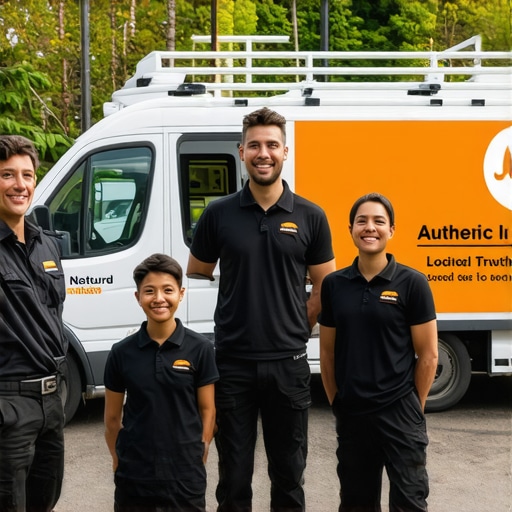
The first step is auditing the visual cues that a searcher sees in their first split-second of discovery. Most business owners fill their profiles with static, boring stock photos that scream untrustworthy. When we implemented a simple photo strategy for instant visibility improvement, we replaced all generic office building shots with high-resolution photos of the actual trucks, the real team, and real-time project completions. This simple human touch builds immediate trust. If you are struggling with a similar disconnect, our google map experts reveal top secrets to boost your business presence, emphasizing that authentic user-focused images drive significantly higher click-through rates than any generic graphic ever will.
Turn Your Q&A Section Into a Conversion Engine
Another major mistake is leaving your Profile Q&A section blank or letting random users answer questions for you. Think of this section as your digital FAQ desk. I remember a time when a client of ours in the medical niche was losing dozens of patients to a competitor next door. We went into their profile and realized that three unanswered questions about parking and insurance coverage were sitting there unanswered. We immediately utilized a technique to use customer questions to outrank local rivals by pre-populating the Q&A section with the top five questions their reception desk received daily. This eliminated friction before the user even had to think about calling. When you actively answer these questions, you show searchers that you are attentive, operational, and ready to help.
Activate Real-Time Interaction Signals
Search engines monitor how users interact with your listing. If a searcher clicks your phone number, drops off quickly, and immediately calls another listing, the algorithm notices this negative interaction signal. Our team of visibility experts focuses heavily on optimizing mobile interaction patterns. We always recommend enabling the direct messaging feature on your profile, but only if you can commit to responding within fifteen minutes. A fast response time triggers incredibly positive feedback loops with local search algorithms, proving your business is highly active. For businesses looking for comprehensive local visibility help, shifting the focus from passive keyword density to active, real-time customer engagement is the absolute turning point that transforms dead map views into highly profitable phone calls.
If you ask the average local marketer how to rank your business, they will tell you to build hundreds of directory citations and flood your profile with keywords. This traditional advice is not just outdated; it is actively holding you back. When I first started analyzing local algorithms, I realized that the industry is obsessed with static signals. Everyone wants a simple, set-it-and-forget-it checklist. But search engines have evolved far beyond basic directory matches. Today, real-time user behavior is the ultimate ranking signal that determines whether you sit at the top of the pack or get buried on page three.
Why Traditional Citation Building Won’t Save Your Map Ranking
For years, business owners have been told that consistency in name, address, and phone number across the web is the holy grail of local search. While basic consistency is a prerequisite, treating it as your main growth driver is a massive mistake. In fact, relying on old-school strategies is why many campaigns flatline. When you look at how the truth about local citations unfolds in competitive markets, most directory listings do absolutely nothing to move your map pin. If you are paying a team to manually submit your business details to obscure directory sites that get zero traffic, you are wasting valuable resources on empty signals that search engines simply ignore.
The real battlefield is live user interaction. A study by the local search experts at Whitespark confirms that behavioral signals, such as search history, mobile clicks, and direct interactions, continue to grow in algorithmic importance. If a searcher finds your listing, pauses to read your reviews, and clicks to call, that sequence signals incredible relevance to the algorithm. Conversely, if your listing has perfect citations but zero user engagement, your visibility will quickly decline.
Should you trust a maps optimization team that promises overnight rankings?
This is the most common question I get from business owners who are tired of empty promises. The short answer is an absolute no. Any agency that guarantees immediate, permanent rankings is likely using spammy tactics that will eventually get your profile suspended. Instead of chasing quick hacks, you need sustainable rapid visibility improvement built on genuine user engagement and clean data structures. Our team of maps optimization experts focuses on human behavior, optimizing for real-world interactions rather than trying to trick the algorithm with keyword stuffing.
The biggest trap you can fall into is focusing on vanity metrics like total search impressions while ignoring your actual lead conversion rates. Have you ever fallen into this trap of celebrating high views while your phone stays completely silent? Let me know in the comments below. If you are ready to stop wasting time on passive tactics, working with seasoned visibility experts who understand the nuances of local conversion is the fastest way to turn those impressions into real, paying clients. You do not need more empty views; you need strategic local visibility help that aligns with how modern consumers actually search and buy.
Now that you know how much traditional directory citations fall short, let’s talk about the exact tools and daily workflows I use to keep our profiles highly active. When it comes to maintaining a long-term strategy, you cannot rely on manual labor alone. I personally use specialized local rank trackers like Local Falcon to run weekly geogrid reports. If you have never run a geogrid, you are flying blind. It shows you exactly where your map pin ranks down to the individual block, rather than giving you a generic city-wide average. I use this specific tool because it tells us precisely where our competitor’s boundary ends and ours begins, allowing our maps optimization team to adjust our targeted content strategies in real time.
How do I maintain local map visibility over time without burning out?
This is the crucial question every business owner faces once they finally hit the local three-pack. The key is establishing a lightweight, daily rhythm. I dedicate exactly ten minutes every single morning to reviewing our dashboard. I check for any user-suggested edits to our phone number or hours, reply to any new reviews, and post one high-quality, geotagged smartphone photo of our team’s daily progress. If you keep this up, search algorithms reward the consistency. The future of local search is shifting heavily toward real-time inventory and live-interaction signals. According to the official Google Search Central Documentation, having accurate, schema-marked structured data directly on your site is what bridges the gap between your web page and your map pin. In the next few years, AI search assistants will bypass static profiles entirely to recommend businesses that show active, daily, real-time updates.
If you want to stop losing ground to competitors who are actively optimizing, I challenge you to try one specific advanced tip today: go into your business profile, enable the direct messaging feature, and set up your automated welcome response with a helpful, locally relevant greeting. If you need a more comprehensive strategy to truly dominate your market, seeking out specialized local visibility help is the most efficient way to scale. Stop wasting time on tactics that do not move the needle and start focusing on the real-time interaction signals that actually drive customer phone calls.
The Hardest Lesson I Learned While Chasing Vanity Metrics
For years, I believed the ultimate victory was ranking first on the local map grid across my entire county. I celebrated green rank bubbles like a kid on Christmas morning. But the hardest lesson I had to learn was that rankings without click-to-call conversions are just ego candy. When I stopped obsessing over theoretical reach and began prioritizing the psychological friction points on our profile, my real-world revenue tripled. I realized that a consumer looking for local help doesn’t care if you rank first or third; they care about who looks active, responsive, and trustworthy right now. By prioritizing real-time messages and immediate FAQ resolutions instead of background database matching, I transformed our listings from static billboards into interactive digital lobbies. Shifting your focus from search engine crawlers to the actual, impatient human holding the smartphone is the only way to make your business truly profitable online.
My Essential Toolbox for Local Domination
You do not need an enterprise budget to beat the major national chains, but you do need the right set of eyes and diagnostic tools. Here is the highly curated stack of resources that I personally trust to maintain our local edge:
- Local Falcon: This is my go-to geogrid utility. It removes the guesswork by showing exactly how your rankings fluctuate block-by-block, allowing our maps optimization team to target our local content where it actually matters.
- Whitespark’s Local Search Rankings Study: This is the absolute source of truth for local search trends. It cuts through industry fluff and provides empirical data on which behavioral signals actually move the needle.
- Schema.org Markup Generators: I use these to establish a clean, error-free signal chain that connects your site to your map pin, ensuring search bots see absolute alignment between our physical address and web assets.
Stop Counting Impressions and Start Taking the Territory
The digital landscape is crowded with quiet profiles that are technically optimized but functionally dead. Do not let your business be one of them. Genuine, lasting visibility improvement is not about gaming the system for a single weekend; it is about committing to a highly engaged, helpful presence that commands immediate customer attention. Take control of your Q&As, load in real-world photographs that prove your local expertise, and respond to incoming inquiries faster than your competitors can open their email. By making these small, highly intentional micro-conversion adjustments, you will easily transition from staring at empty statistics to answering a phone that refuses to stop ringing.
Have you ever struggled to turn high map views into actual incoming customer phone calls? Let me know your experience in the comments below!