Why Your Service Area Business Stays Invisible to High-Value Neighborhoods
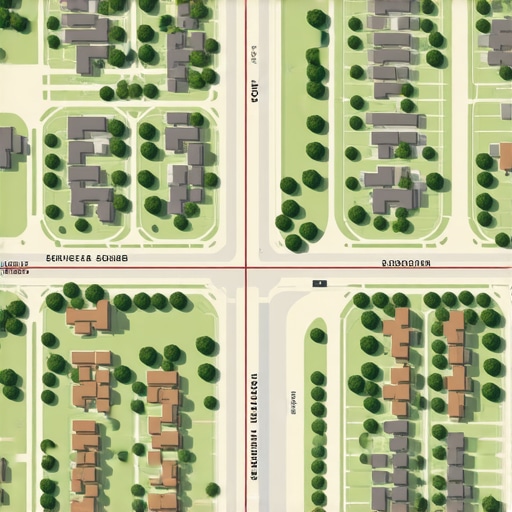
You’re a plumber, a roofer, or an HVAC technician. You’ve got the best reviews in the county, your trucks are spotless, and your team is elite. You live in a comfortable mid-market suburb, but the “Millionaire’s Row” neighborhood – the one with the $5,000 emergency calls and the zero-friction credit card swipes – is only five miles away. Yet, when a homeowner in that high-value zip code searches for your services, you are nowhere to be found. You’re invisible. In your own driveway, you’re King of the Hill. Five miles East? You don’t exist.
This is the “Invisibility Crisis” facing Service Area Businesses (SABs) today. Most business owners are told that if they just get more reviews and “optimize” their profiles, the leads will follow. But as a Google Business Profile (GBP) Product Expert, I’m here to tell you that the old playbook is dead. We are entering an era defined by the “Neighborhood Lock” and the “Proximity Glitch.” If you aren’t accounting for 2026-ready signals, you are essentially fighting a ghost. Recent Whitehat SEO research has confirmed that “Business is open at time of search” is now a top-five ranking factor, yet most SABs are still trying to win with 2018 tactics. It’s time to look under the hood at why service area business seo is failing you and how to fix it.
Why Proximity is the SAB’s Greatest Enemy
Google’s official documentation has long cited the “Proximity, Relevance, and Prominence” triad as the foundation of local search. For a brick-and-mortar shop, this is straightforward. For an SAB, it’s a death sentence. Google draws a “centroid” around your business’s verified address – even if you have hidden that address from the public. This hidden anchor point acts as a tether. As a searcher moves further from that centroid, your visibility decays at an exponential rate.
This is what I call the “Proximity Lock.” Google’s algorithm is inherently biased toward the shortest physical distance between the searcher and the service provider’s “home base.” If a competitor – even a mediocre one – is physically located in that high-value neighborhood, Google’s “Neural Search Checks” will almost always favor them over you, regardless of your 5-star rating. This is Why Your Shop Disappears From Maps When Searchers Move Two Blocks Away. To overcome this, you need a professional google maps ranking service that understands how to expand that radius through signal manipulation rather than just keyword stuffing.
The decay is not just about distance; it’s about the “Relevance Gap.” When Google’s AI looks at your profile, it asks: “Is this business the most relevant solution for *this specific coordinate*?” If all your signals (reviews, photos, posts) are coming from your home base, the answer for the wealthy neighborhood five miles away is a resounding “No.” You are relevant to your driveway, not to the high-value leads you actually want to close.
The 2026 Signal Shift: Beyond Static Keywords
The days of “NAP consistency” (Name, Address, Phone number) being the holy grail of SEO are over. In the lead-up to 2026, we are seeing a massive shift toward “Signal Velocity” and “Motion Density.” Google is no longer satisfied with static data points. It wants to see real-time interaction. It wants to see that your business is *active* in the areas you claim to serve.
This is where Why Visibility Experts Use Signal Velocity for 2026 Rankings becomes the core of your strategy. Signal Velocity refers to the speed and frequency at which new, geographically-tagged data points are associated with your profile. If you only get one review a month and it’s from someone in your own zip code, your velocity is zero. To rank in high-value neighborhoods, you need a “Signal Drift” strategy. You need to pull signals from those target areas into your profile’s orbit.
As I often say, “In 2026, Google doesn’t care where your office is; it cares where your influence is felt through real-time interaction signals.” This means your google business profile seo must focus on “Motion Density” – the concentration of user interactions (clicks, directions, searches) occurring within a specific geographic cluster. If you can’t generate organic motion in a wealthy neighborhood, you will remain locked behind the proximity filter. This is why Why Your Map Listing Optimization Fails 2026 Neural Search Checks; the AI sees a lack of movement in your target zones and assumes you aren’t the local authority there.
Breaking the “Neighborhood Lock” with Hyperlocal Content
So, how do you actually break the lock? It starts with moving away from generic “Service Area” settings and toward hyper-targeted content clusters. Most SABs simply select a 20-mile radius in their GBP dashboard and hope for the best. That is a mistake. Google views a broad radius as a “weak signal.” To the algorithm, if you serve everyone, you serve no one specifically.
Instead, you need to build Service Area Pages on your website that are optimized for the specific high-value neighborhoods you want to penetrate. But don’t just write “Plumber in [Neighborhood Name].” That’s 2015 SEO. You need to use what we call “Drone Pins” or “LiDAR Signal Scans” – the 2026 tech approach to local relevance. This involves embedding maps that show actual project locations (with privacy protections) within those neighborhoods. When Google’s crawlers see a map on your site with pins dropped in “Millionaire’s Row,” it begins to associate your GBP with those coordinates.
Furthermore, “Strategic Category Selection” is a top-ranking factor according to MapRanks data. If you are a general contractor but want high-end kitchen remodels in a specific zip code, your primary category needs to reflect that high-value intent, not just a broad service. You can use local seo tools to analyze which categories the top-ranking businesses in those specific neighborhoods are using. Often, the “Neighborhood Lock” is actually a “Category Mismatch.” This is How Google Map Experts Diagnose the Neighborhood Lock Stopping Your Growth and provide a roadmap to bypass it.
To truly beat the system, you must understand Google Map Experts: How to Beat the 2026 Neighborhood Signal Cap. This involves creating “Geo-fenced” content that only triggers when users are in your target neighborhood, ensuring that the signals Google receives are pure and highly localized.
The Interaction Signal: The Secret to High-Value Leads
Reviews are the baseline, but they are no longer the differentiator. To rank higher on Google Maps, you need “Interaction Moves.” Google is tracking every time someone clicks “Call,” every time they request driving directions (even for an SAB!), and every time they linger on a photo. These are the signals that prove “Prominence.”
MapRanks research highlights that “Quality Visual Content” and “Google Posts for Engagement” are now critical for conversion and ranking. But here is the secret: those photos and posts need to be geotagged to the high-value neighborhoods. When you finish a job in a wealthy zip code, take a high-resolution photo and upload it to your GBP *while you are still at the location*. This creates a “Real-Time Verified Signal.” Google sees the metadata, sees your GPS coordinates, and confirms that you are actually providing service in that area.
This is The Interaction Moves That Actually Matter for Dominating Local Map Results. If your profile is a graveyard of stock photos and three-year-old reviews, you are failing the “Prominence” test. You need a consistent stream of interaction. Using a google business profile optimization strategy that prioritizes user engagement over just keyword density is the only way to stay competitive as we head into 2026. You can even use Unlock Local Visibility: Expert Map Optimization Strategies for 2025 to get a head start on these interaction-based algorithms.
If you find that your interactions are high but your rankings aren’t moving, you may be hitting a “Signal Cap.” This happens when Google’s AI decides that your business has reached its maximum “logical” reach. Breaking this cap requires advanced rank google business profile techniques that involve third-party entity reinforcement – getting your business mentioned on local neighborhood blogs, HOA newsletters, and high-authority local directories that serve that specific affluent area.
Troubleshooting & The “Bot Loop”
Sometimes, the reason you are invisible isn’t about proximity or signals – it’s about a technical failure. SABs are notoriously prone to “soft suspensions” and “shadow bans” because Google’s automated systems are highly suspicious of businesses without a physical storefront. If you find your visibility has suddenly vanished, you might be caught in the “Bot Loop.”
The Bot Loop is where you submit an appeal for a suspension, and an AI rejected it in seconds, sending you back to the start. As a GBP Product Expert, I see this daily. Standard support is often useless. To recover, you need to provide “Irrefutable Evidence of Locality” – utility bills, branded vehicle photos in the target area, and business licenses that match your service area claims. This is How We Recovered a Suspended Google Business Profile Without the Bot Loop. Don’t let a technicality keep you out of the most profitable neighborhoods in your city.
Moreover, ensure your “Service Area” settings aren’t overlapping in a way that triggers “Redundancy Filters.” If you have multiple profiles or overlapping service areas with a partner, Google may filter both of you out to avoid “Map Spam.” A clean, high-authority profile is always better than three weak ones trying to game the system.
Conclusion: Your 5-Step Neighborhood Dominance Checklist
The “Millionaire’s Row” isn’t out of reach; you just haven’t been speaking the algorithm’s language. To break the proximity lock and start appearing in front of high-value leads, follow this 2026-ready checklist:
- Verify & Cleanse: Ensure your hidden address is accurate and your service areas are tightly defined clusters, not broad circles.
- Strategic Categorization: Use data to pick the primary category that matches the intent of high-value searches in your target zip code.
- Signal Velocity: Generate real-time updates, photos, and reviews specifically from the neighborhoods you want to win.
- Hyperlocal Content: Build dedicated landing pages for target neighborhoods with embedded maps and localized project proof.
- Monitor Interaction: Use a google maps rank tracker to see how your visibility changes based on user engagement, not just distance.
Stop letting the “Proximity Glitch” dictate your revenue. Whether you do it yourself or hire a local seo agency, the time to start building your 2026 signal profile is now. Your competitors are already looking for ways to jump the fence into those wealthy zip codes – don’t let them get there first.
Comments are closed.