I remember sitting at my kitchen table at 2 AM, the blue light of my laptop burning my eyes as I stared at two identical pins for my business on Google Maps. One had my hard-earned reviews; the other was a blank, lonely shell that seemed to exist just to spite me. In my early days as a business owner, I thought, ‘Hey, twice the pins, twice the visibility, right?’ I was dead wrong. That one little mistake led to a terrifying email from Google saying my profile was suspended for ‘quality issues.’ It felt like my storefront had been wiped off the face of the earth overnight. If you are currently panicking because you have a ‘ghost’ profile cannibalizing your traffic, take a deep breath. I’ve been in those trenches, and today, I’m going to show you exactly how to clean up the mess without losing your sanity or your ranking.
We aren’t just going to talk about clicking a ‘delete’ button—because that’s often the quickest way to lose everything. We are going to dive into the truth about duplicate listings and your local ranking drop and how to merge them the right way. My goal is to get your phone ringing again and ensure your invisible storefront problem becomes a thing of the past.
Stop Letting Your Ghost Listings Kill Your Business
I’ll be honest with you: Google’s algorithm is a bit of a perfectionist. When it sees two listings for the same business, it gets confused. And a confused algorithm is a defensive one. It doesn’t know which address to trust or which phone number is current, so it often just stops showing either of them in the local three-pack. A study by Moz once noted that inconsistent data—like duplicate listings—can cause a significant drop in local search trust signals, often leading to a 20% or more decrease in overall visibility. I learned this the hard way when I tried to ‘fix’ my duplicate by simply deleting the one I didn’t recognize. Big mistake. I accidentally deleted the one that was verified, and I spent three weeks in a support-loop nightmare. That is why having a visibility improvement plan is so vital; you need to know which signal to keep and which to kill.
Is a second profile actually worth the headache?
Some folks think that having a ‘back-up’ listing is a clever way to capture more keywords. I used to think so too, until I realized that Google sees this as ‘keyword stuffing’ or a violation of their ‘one business, one profile’ rule. You aren’t tricking the system; you’re just diluting your authority. Instead of focusing on two mediocre pins, you should be working with google map experts to make your primary listing an absolute powerhouse. When your data is clean, Google feels confident putting you in front of customers. Have you ever checked your map and realized your business is competing against itself? It’s more common than you think. If you’re stuck in that loop right now, you might want to reach out to our team before you click any ‘remove’ buttons. We’ve seen how messy this can get when the wrong listing is touched. Let’s make sure we preserve those 5-star reviews while we clear the clutter.
Find Every Ghost Profile Before They Haunt Your Rankings
The first thing you need to do is audit your digital footprint with the intensity of a private investigator. Open an incognito window and search for your business name, your old addresses, and even any former phone numbers. You’d be surprised how often a random ‘ghost’ profile pops up from an old office move or a marketing agency’s failed experiment from 2018. If you find multiple pins, don’t panic. The key is to how to clean up messy citation data that confuses google so the algorithm stops second-guessing your location. I remember working with a local plumber who had four different pins because he moved his home office every year. He was getting zero calls. We spent three hours just documenting every rogue listing before we even touched the ‘edit’ button. It was tedious, but it was the only way to see the full scope of the ‘signal noise’ we were fighting against.
Pick the Winner and Guard Your Reviews
Once you have your list, you have to decide which listing is the ‘Alpha.’ This isn’t always the oldest one; it’s the one with the strongest history, the most verified reviews, and the cleanest data. Think of your primary listing as a lighthouse. If you have three lighthouses for one harbor, ships—or in this case, customers—won’t know which one to follow. This is where how to fix the invisible storefront problem without buying more ads becomes real. You want to preserve the listing that has the most ‘interaction juice.’ If one has fifty 5-star reviews and the other has three, the choice is obvious. But if both have reviews, you’ll need to prepare for a merge request rather than a simple deletion. 
Force Google to Acknowledge the Truth
Now comes the surgical part. You shouldn’t just hit ‘Remove this listing’ in your dashboard; that often just hides it from you while leaving it live on the public map. Instead, use the ‘Suggest an edit’ feature from a separate, third-party Google account to mark the duplicate as ‘Duplicate of another place.’ This signals to the community-driven side of Maps that a correction is needed. If the profiles are both verified in your dashboard, you’ll need to how to bypass the standard support loop when your map listing gets flagged to reach a human who can manually merge the review counts. I once had a client lose 40 reviews because they just ‘deleted’ the extra profile instead of merging it. We had to fight for two months to get those back. Avoid that trap by ensuring your primary CID (Customer ID) is the one you are merging into.
Sync Your Data Across the Entire Web
After the merge is initiated, your job isn’t done. Google checks third-party sites like Yelp, Yellow Pages, and local directories to ‘verify’ what it sees on the map. If your old address is still lingering on five other sites, Google might actually regenerate the duplicate listing you just killed. You need to how to use local citations to build map authority by ensuring every single mention of your business online matches your primary Google pin exactly. This consistency is the ‘secret sauce’ that google map experts use to lock in a ranking and prevent ghost listings from rising from the grave.
I’ve talked to countless business owners who were told that more citations equal higher rankings. That’s the first big lie I see in this industry. In my experience, quality beats quantity every single time, and it is not even close. A recent study by Whitespark on Local Search Ranking Factors highlighted that while citations still matter, their weight is shifting toward local authority and user engagement rather than sheer volume. If you’re just blasting your info to 200 random directories, the truth about why your citations are actually hurting your local rank is that you are creating a mess of inconsistent data that confuses the algorithm. You aren’t building a foundation; you’re building a house of cards.
Most google map experts won’t tell you that 50 high-quality, niche-relevant mentions are worth more than 5,000 automated ones. I once saw a local contractor drop completely out of the local pack because they hired a ‘cheap’ team that used bot-generated listings. They thought they were getting a bargain, but they were actually buying a manual suspension. The hidden error in your profile audit keeping you off the three-pack is usually this exact lack of discernment. Have you ever fallen into this trap of buying bulk ‘SEO packages’ that promised the world? Let me know in the comments—I’m curious to see how many of you were burned by that tactic.
Stop trusting metrics that don’t put money in the bank
We need to talk about why why static business data no longer earns a three-pack spot because the map is a living, breathing entity now. It’s not just about what you said your address was in 2019; it’s about how people interact with your profile today. This leads to the ‘Oops’ factor I see most often: ignoring the ‘Interaction Signal.’ If your profile has 10,000 views but zero clicks for directions, website visits, or calls, Google assumes you are irrelevant to the searcher’s intent. It’s the brutal truth about why your high map impressions aren’t turning into calls. You need a maps optimization team that looks at the conversion and user behavior, not just the position of the pin.

What happens when your service area radius overlaps with a competitor?
This is the advanced level of the ‘invisible storefront’ problem that keeps most owners awake at night. Many think that setting a massive 50-mile service area radius is the key to ‘more leads.’ In reality, it’s often the opposite. Google frequently suppresses listings that claim a territory they can’t realistically dominate or support with local signals. I always suggest starting small and using the proximity fix for businesses struggling to rank outside their lot to gradually expand your influence circle. If you try to claim the whole state, you end up ranking for nothing because you have no signal density in those outlying areas. Instead, focus on how to fix the proximity gap stopping your business from ranking five miles away by building local-specific content that proves you are the best local choice, not just a distant option. This is how visibility experts actually win: by playing the long game of signal density rather than the short game of keyword stuffing.
Stop Flying Blind and Start Tracking Your Turf
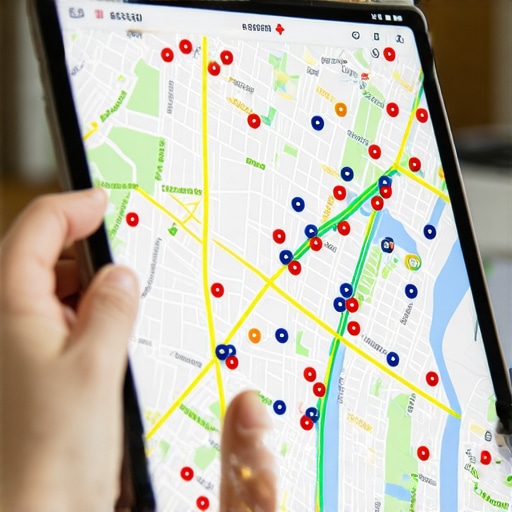
Once you’ve cleared the ghosts out of your profile, you have to accept a hard truth: local visibility isn’t a trophy you win and keep on a shelf; it’s a muscle you have to train every single day. I’ve seen too many business owners do the hard work of a cleanup only to let it rot three months later because they stopped feeding the beast. To stay ahead, I personally rely on grid-tracking tools like LocalFalcon or BrightLocal. If you aren’t looking at a 13×13 grid of your city, you’re basically flying blind. These tools allow a maps optimization team to see exactly where your signal drops off—literally from one street corner to the next. It’s the difference between knowing you’re ‘number one’ and knowing you’re ‘number one in the three blocks surrounding your office.’ According to Joy Hawkins, a leading voice in local search at Sterling Sky, the ‘Vicinity’ update significantly tightened the proximity filter, which means your maintenance routine has to be sharper than ever.
How do I maintain my ranking dominance over the long haul?
Maintenance is all about consistency over intensity. I tell my clients that five minutes of engagement a day is worth more than a five-hour ‘SEO session’ once a quarter. This starts with how you handle your data. If you’re wondering about the tech side, the specific seo tools we use to jumpstart map rankings are often the same ones we use to protect them. You need to constantly monitor the only 3 metrics in your report that actually predict profit: direction requests, phone calls, and website clicks. Impressions are just vanity if no one is actually interacting with you. I also recommend that you how to automate feedback without triggering the review filter so that you have a steady stream of fresh, keyword-rich content coming from your customers.
Looking ahead, I predict that Google’s Search Generative Experience (SGE) will soon prioritize businesses based on the specific ‘solutions’ mentioned in their reviews rather than just their category. This means your ‘maintenance’ should include encouraging customers to mention the specific problem you fixed for them. If you want to keep winning, you have to stop thinking like a marketer and start thinking like a community leader. My advanced tip for you today: go run a free ‘grid search’ on your main keyword right now. If you see ‘red’ nodes more than two miles away, that is your signal to stop generic posting and start building hyper-local authority. If you’re feeling overwhelmed by the data, you can always contact us to have a pro look at your heat maps.
Why Clean Data Always Beats a Big Marketing Budget
Over the years, I’ve realized that true visibility improvement isn’t about one big fix; it’s about the discipline of data hygiene. One of my biggest lightbulb moments was realizing that the ‘Community’ is often more trusted by the algorithm than the ‘Owner.’ If you are fighting a ghost listing, use a regular Google account to suggest the edit rather than your business account; it often bypasses the standard automated filters that stall owner-requested changes. Also, remember that a ‘permanently closed’ tag is a wound that never quite heals, while a ‘merged’ tag is a consolidation of power. Consolidating your listings is the only way to ensure your google map experts can actually do their job effectively. Finally, don’t ignore your old citations; even a single lingering mention on an obscure directory can trigger a duplicate listing to reappear months after you thought it was gone.
The Gear That Keeps My Storefront From Disappearing
I don’t recommend tools lightly, but I trust LocalFalcon because it’s the only way to see the actual ‘grid’ of your proximity influence across a city. For the deep cleaning, I rely on the BrightLocal citation tracker to find those lingering mentions that confuses google and dilutes your authority. I also suggest reading the annual Local Search Ranking Factors study from Whitespark; it’s the closest thing we have to an actual rulebook for local rankings. For those looking for the specific seo tools we use to jumpstart map rankings, I always prioritize manual audits over automated ‘sync’ services that often create more data inconsistencies than they solve.
#IMAGE_PLACEHOLDER_E#
Reclaim Your Spot in the Local Three-Pack
You’ve done the hard work of identifying the problem; now it’s time to execute the cleanup. Don’t let the fear of a temporary suspension keep you from cleaning up your digital presence for the long haul. With a bit of patience and the right visibility experts in your corner, you can turn that confusing ghost town of a profile into a lead-generating machine. Your local community is looking for you—make sure there’s only one clear path for them to find your door. When you simplify your signals, you make it easy for Google to trust you and even easier for customers to call you. Have you ever noticed a duplicate listing for your business that you didn’t create yourself? Let me know in the comments below and we can discuss how to handle it.