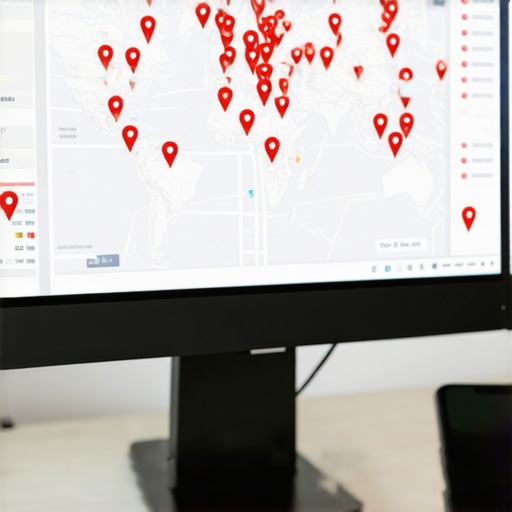
I spent three hours refreshing my dashboard last summer, convinced my internet connection was broken because the ‘Impressions’ bar was climbing through the roof, yet my phone sat there like a heavy, silent paperweight. It is a gut-punch that many small business owners feel. You think you are winning the local search game because your graph looks like a mountain range, but your bank account tells a completely different story. I used to be obsessed with just ‘showing up,’ believing that any form of visibility improvement was a win. I was wrong. I spent months chasing vanity metrics, only to realize that being seen is utterly worthless if nobody trusts you enough to actually tap that ‘Call’ button. Today, I am going to peel back the curtain on why those eyeballs are ignoring you and how to bridge the gap between appearing on a screen and getting a customer through your door.
Why 50,000 Views Left Me With Zero Sales
It turns out, high impressions often hide a failing local strategy that prioritizes sheer volume over actual relevance. Early in my career, I made the classic mistake of thinking that as long as the google map experts I followed got my pin to show up, the rest would take care of itself. I focused on the algorithm and completely ignored the human being on the other side of the glass. According to a long-standing consumer study by BrightLocal, about 98% of people read online reviews for local businesses before making a move. If your profile has thousands of views but lacks recent, authentic feedback or high-quality photos, you are not a business to them—you are just a digital ghost. I had to learn the hard way that the only 3 metrics that actually predict your profit are the ones that measure engagement, not just ‘glances.’
Are these numbers actually lying to you?
You might be feeling a bit skeptical right now, wondering if the Google dashboard is just a collection of made-up numbers. The data is real, but it is frequently misinterpreted. I have seen countless pros celebrate ‘Search’ impressions that were really just people scrolling past them to find a competitor who looked more professional. We have to stop treating a map placement like a static billboard and start treating it like a conversation. Have you ever looked at your ranking reports and wondered why the phone is not ringing despite the ‘green’ markers everywhere? You are not alone, and it usually comes down to a few specific ‘trust signals’ that you are likely missing. We are going to fix that by looking at how trust signals actually move the needle for your business.To stop the bleeding of potential leads, you need to look at your profile like a physical storefront. If you had 5,000 people walk past your shop but nobody came in, you wouldn’t blame the sidewalk—you’d look at the window display. The first thing I do when a client complains about ‘dead air’ is run a deep check to how to perform a business profile audit that actually uncovers revenue gaps. It is about identifying the friction points where a user decides to keep scrolling.
Find the Holes in Your Digital Bucket
I remember working with a local plumber who was furious because his ‘visibility improvement’ metrics were soaring, yet his dispatchers were playing solitaire. When we looked at his profile, his primary image was a blurry, dimly lit shot of a clogged drain. It was technically relevant, but it was disgusting to look at. We swapped that for a crisp photo of his lead technician shaking hands with a smiling homeowner. Suddenly, those impressions started turning into emergency calls. You have to understand the exact photo types that actually trigger your profile ranking signals because Google’s AI is now smart enough to recognize a ‘trustworthy’ scene from a generic one. 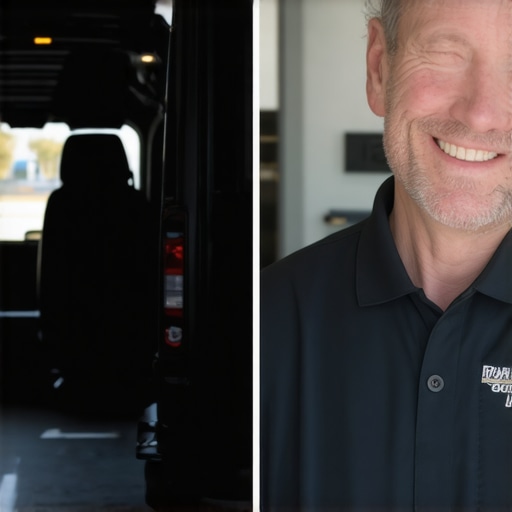
Ditch the Grainy Photos for Signals That Sell
Think of your images as your first handshake. If they are stock photos or low-resolution snapshots from 2018, you are signaling to the world that your business might not even be open. Our visibility experts always prioritize ‘action’ shots—team members working, the interior of the shop during a busy hour, and clear signage. These act as psychological green lights for the searcher.
Why Stagnant Profiles Die in the New Algorithm
Google hates a ghost town. I have seen hundreds of businesses set up their profile, walk away, and then wonder why static business data is the quickest way to lose your local three pack spot. In 2024 and beyond, the algorithm rewards freshness. If you aren’t posting weekly updates or responding to every single review, you are telling the system that your business is inactive. This isn’t just about ‘SEO’; it’s about showing a live human presence.
Force Your Map Pin to Travel Further
Most business owners think they are stuck in a tiny three-mile radius around their office. That is a myth that keeps you small. I once spent a weekend tweaking a client’s interaction signals because they couldn’t get seen just two zip codes over. By leveraging the simple interaction signal that beats proximity limits, we convinced the map that they were the most relevant choice for the entire county, not just the block. You can actually learn how to fix the proximity gap stopping your business from ranking five miles away by focusing on hyper-local content that connects your service to specific neighborhoods. When your google map experts stop obsessing over keywords and start focusing on these ‘human’ interactions, the map pin begins to move in ways you didn’t think were possible.Let’s dig deeper into a lie that many low-level agencies keep telling you: the idea that more is always better. Most business owners are taught to hoard citations like they are digital gold. You pay for a cheap package of 200 directories, thinking you’ve bought a ticket to the top. In reality, why most local citation packages hurt your rank instead of helping is a masterclass in data fragmentation. If your business name has a comma in one place and not the other, or if your phone number format varies slightly across twenty sites, Google’s trust in your location wavers. It is significantly more effective to have ten perfect, authoritative citations than 200 messy, low-quality ones.
Does your schema markup actually match your service area?
This is the level where professional google map experts separate themselves from the amateurs. If you are not auditing your website’s backend code, you are leaving your local authority to chance. A comprehensive study by Moz on local search ranking factors confirms that ‘on-page’ signals, specifically NAP (Name, Address, Phone) consistency and the technical deployment of structured data, are becoming the primary weigh-ins as Google moves toward an entity-based search model. I often find that the schema technicality most agencies skip is the exact reason a business fails to show up for high-value keywords in the wealthy zip codes just five miles away. 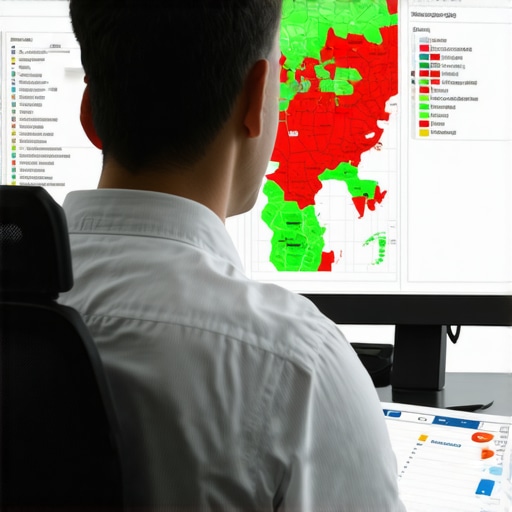
Avoid the backlink trap that kills local trust
Another massive ‘oops’ factor I see involves businesses hiring an ‘optimization team’ that builds generic, global backlinks. If you are a roofing contractor in Dallas, a backlink from a tech blog in Europe does zero for your local relevance. In fact, why blindly building local backlinks could be tanking your map position is a very real danger; it signals to the modern algorithm that you are attempting to manipulate results with irrelevant signals. You need geographic relevance—links from the neighborhood chamber of commerce, local news outlets, or city-specific community blogs. Have you ever fallen into this trap where you paid for ‘SEO’ only to see your map pin stay exactly where it was while your competitors soared? Let me know in the comments. I am curious to see how many of you were sold on the ‘volume over quality’ myth. If your ranking feels stuck despite high effort, it is time to perform a business profile audit that looks at these hidden signal gaps. Our maps optimization team focuses on fixing these technical glitches that keep your business from being the dominant local choice.I used to think that reaching the ‘Local Three-Pack’ was the finish line. I’d celebrate with a expensive coffee, close my laptop, and assume the phone would ring forever. I was wrong. Ranking on Google Maps is more like holding a plank exercise; the moment you stop putting in the effort, you start to sag. If you aren’t actively monitoring your profile, you are essentially inviting a newcomer to shove you aside. Our maps optimization team spends as much time on maintenance as we do on the initial setup because ‘search decay’ is a silent killer for small businesses. To stay ahead, you need a specific set of tools that show you what is actually happening on the ground, not just a generic graph that goes up or down without context.
The Specific Tools That Keep Us Ahead of the Pack
I don’t rely on the basic Google Business Profile dashboard because it’s too vague. It tells you people ‘found’ you, but it doesn’t show you the geographic ‘war zone’ of your local market. For that, I personally use Local Falcon to run a grid-based scan of the city. This tool allows me to see exactly where our ranking drops off, block by block. If I see a ‘red’ spot three miles east, I know we need to bolster our local signals in that specific neighborhood. This is one of the specific SEO tools we use to jumpstart map rankings and keep them there. Another secret weapon is the GMB Everywhere Chrome extension. It lets me peek into the ‘Categories’ my competitors are using—data that Google usually hides—so I can see if a rival has found a niche service category I missed. It is the easiest way to how to snoop on competitor map data to find their best traffic sources without spending thousands on enterprise software. 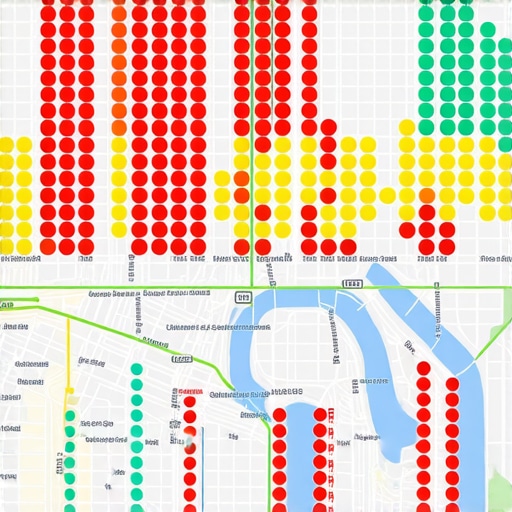
How do I keep my map pin from sinking over time?
Maintaining your position requires a ‘rhythm’ rather than a ‘sprint.’ Every Tuesday, I respond to new reviews, and every Thursday, I upload two new photos. This consistency is what prevents the algorithm from flagging your profile as stagnant. As Joy Hawkins, a renowned expert at Sterling Sky, often highlights in her technical deep-dives, the interplay between ‘user engagement’ and ‘real-world proximity’ is becoming the dominant force in local search. If users stop clicking your profile or if your data remains static for too long, Google’s trust in your relevance begins to erode. You have to learn how to stop search decay on your business profile by treating it like a living social media feed.
The Future of Maps in 2026 and Beyond
Looking toward the future, I predict that ‘foot traffic data’ will become the ultimate ranking signal. We are already seeing Google prioritize ‘busy-ness’ trends and real-time location pings over traditional citations. By surviving the 2026 google maps shift, you’ll need to focus less on keywords and more on creating real-world interactions that Google’s sensors can pick up. This means encouraging customers to open your map profile while they are physically at your shop. If you feel like your momentum has flatlined, I strongly suggest you contact us to run a signal-gap analysis. For an immediate win today, I want you to try one thing: Find your top competitor, use a free extension to see their primary category, and if it differs from yours, test a change for 48 hours. You might find that your visibility improvement was just one category-click away.
Lessons I Learned the Hard Way While Chasing the Three-Pack
One thing I have realized after years of working alongside seasoned google map experts is that the algorithm rewards empathy more than code. If you cannot put yourself in the shoes of a frantic customer looking for a plumber at 2 AM, your technical setup simply won’t save you. I spent far too long worrying about keyword density when I should have been worrying about relevance density. You can see the brutal truth about why your competitors outrank you on the map—it is often because they solved a human problem, not a bot problem.
Another lightbulb moment came when I realized that a service area is not a suggestion; it is a boundary you have to prove you deserve to cross. If you are struggling to show up where you actually work, check out how to fix missing service area listings in minutes. It turns out that Google values consistency over expansion every single time, and trying to cheat your way into the next zip code without the right signals is the fastest way to get ghosted by the algorithm.
What I Keep on My Second Monitor to Stay Number One
To keep our clients winning, our maps optimization team does not just guess; we use a very specific stack of tools to maintain an edge. I personally swear by BrightLocal for tracking how reputation impacts local rank, and I never start a Monday without checking the hyper-local heatmaps in Local Falcon. These tools are the only way to maximize your local reach with map optimization tactics that actually work in the real world. If you are not looking at your business through a geographic grid, you are essentially flying blind in a market that is becoming increasingly crowded. #IMAGE_PLACE_HOLDER_E#
It is Time to Own Your Neighborhood
The digital landscape is shifting faster than ever, but the core principle of visibility improvement remains the same: be the most trusted answer in the room. Don’t let your profile become a digital fossil that searchers pass by. Whether you choose to do the heavy lifting yourself or hire local visibility help to bridge the gap, the key is to start moving today. We specialize in how our team finds hidden signal gaps, and often, the fix is much simpler than you think. What is the one metric on your Google dashboard that keeps you up at night? Let me know in the comments below, and let us figure out how to move that map pin together.