
I still remember the sinking feeling in my gut when I opened my laptop on a Tuesday morning and saw my business had vanished from the map. Literally overnight. Two weeks prior, I had been seduced by a smooth-talking salesperson promising 50 five-star reviews for the price of a decent steak dinner. It felt like a genius shortcut at the time. I was tired of playing the long game while my competitors seemed to be soaring, but that shortcut led me straight into a digital ghost town. My phone stopped ringing, my impressions flatlined, and I learned the hard way that Google’s spam filters aren’t just smart—they’re vengeful.
The Quick Fix That Usually Ends in a Map Suspension
We have all been there, staring at a competitor who has hundreds of reviews while we are sitting on a lonely handful. It is incredibly tempting to think that a few bucks can level the playing field. But today, I want to peel back the curtain on why this tactic is actually the fastest way to kill your visibility. We are going to look at how a professional maps optimization team actually spots these red flags and how you can build a profile that stands the test of time without cheating.
Will Google really catch me if I only buy a few?
The biggest mistake I made early on was thinking I could outsmart an algorithm that processes billions of data points. According to official reports from the Federal Trade Commission, regulatory bodies and search engines are increasingly aggressive about cracking down on fake endorsements and deceptive marketing. When those fifty reviews all came from accounts that had never set foot in my city and were posted within a tiny four-hour window, the alarm bells did not just ring—they screamed. This is exactly why your ranking fails modern quality checks almost instantly.
Why the Algorithm Sees Right Through the Fake Hype
Google is not just looking at the glowing words in the review text anymore. It is monitoring the IP address, the GPS history of the reviewer, and the specific velocity of your feedback. If your shop usually gets one review a month and suddenly receives ten in a single afternoon, you have just painted a giant bullseye on your profile. I have seen businesses lose their three-pack spot in hours because of this unnatural surge. The truth is, even if those fake reviews manage to stay up for a week, they do not provide the real signals the algorithm craves. It wants to see interaction moves that actually matter, like real humans clicking your call button or requesting driving directions. A bot in a different time zone does none of that. It is a hollow metric that provides zero boost to your actual foot traffic. When I finally stopped trying to cheat the system and reached out for local visibility help, I realized that real growth comes from authenticity. It is about learning how to get more high-value reviews without being pushy and building a profile that the search engine actually trusts. Have you ever been tempted by one of those get reviews fast emails, or maybe you have already seen your rankings dip after a suspicious surge? I would love to hear if you have faced this same pressure to cut corners.
The Heavy Lifting That Actually Moves the Needle
Building a presence on the map is less like flipping a light switch and more like tending a garden. If you stop watering it, or worse, try to use artificial fertilizer like fake reviews, the whole thing withers. When I first started consulting with a maps optimization team, I realized I was focusing on all the wrong metrics. I was obsessed with the total count of reviews, while the google map experts were looking at something much more vital: signal velocity. Think of your business profile as a digital lighthouse. If the light stays static and never rotates, sailors—or in this case, searchers—eventually stop trusting it as a reliable guide. This is exactly why static business data no longer earns a three-pack spot in competitive markets.
Stop Feeding the Algorithm Stale Data
Your first actionable step is to treat your profile like a live news feed. I once worked with a local bakery that was frustrated because their rankings had flatlined despite having a perfect five-star record. We discovered that they hadn’t updated their photos or posted a single ‘update’ in six months. To the algorithm, that business looked closed or at least neglected. We implemented a strategy focused on visibility improvement by adding three ‘behind-the-scenes’ photos every week. Within twenty days, their impressions spiked. Why? Because we provided the exact photo types that trigger profile ranking signals, showing Google that the business was active and relevant in real-time. 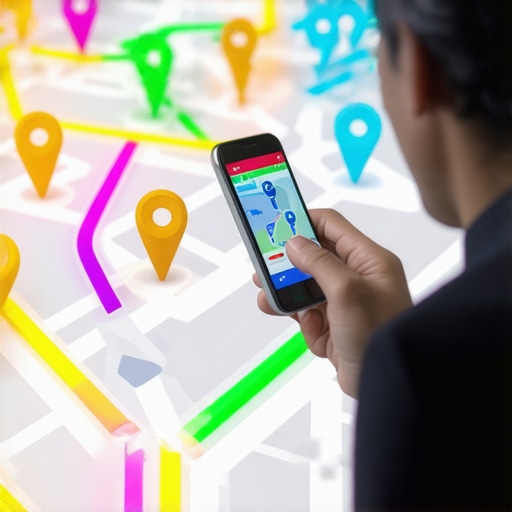
What Really Happens When Someone Clicks Your Pin
Google monitors how many people actually interact with your listing compared to your neighbors. If a hundred people see your name but nobody clicks ‘Call’ or ‘Directions,’ you are effectively invisible to the algorithm’s favor. This is where local visibility help becomes crucial. You need to give people a reason to engage. I started asking my clients to click the ‘request directions’ button on their own phones when they arrived at my office. It sounds small, but these are the interaction moves that actually matter for dominating the local map pack. It’s about creating a trail of digital breadcrumbs that prove real humans find your location useful.
Small Shops Can Still Beat Big Chains
You don’t need a massive marketing budget to win this war. In fact, how small businesses use local ranking services to push big national chains off the map often comes down to being more ‘local’ than the big guys. A national chain has a corporate team that updates a thousand listings at once with the same generic content. You have the advantage of being specific. By tagging your photos with local landmarks or mentioning specific neighborhoods in your service descriptions, you can learn how to fix the proximity gap stopping your business from ranking five miles away. One simple trick our team uses involves the one setting your team needs to change to improve map ranking velocity, which often involves adjusting your primary category to match the specific search intent of your local area rather than a broad industry term.Most business owners are told the same three things: get reviews, fix your NAP (Name, Address, Phone), and pray. But let’s dig deeper. If visibility improvement was that simple, every local shop would be in the three-pack. The contrarian truth I have discovered after years of working as part of a maps optimization team is that more data is often worse than no data at all. I have seen businesses spend thousands on ‘citation packages’ only to find their rankings drop. This happens because Google values the consistency and authority of a few high-value sources over five hundred junk directories. In fact, visibility experts now recognize that most local citation packages hurt your rank instead of helping because they create a messy digital footprint that confuses the algorithm’s trust signals.
Stop Chasing Every Directory Under the Sun
The biggest ‘oops’ factor I see with new clients is the ‘set it and forget it’ mentality with business data. They think that because they are listed on a hundred sites, they are safe. However, stop wasting money on citations that never move the pin and start focusing on where your actual customers live online. If your data is static, it is dying. I’ve watched profiles plummet simply because the owner didn’t realize that static business data is the quickest way to lose your local three-pack spot. You need to feed the beast with fresh, localized signals that prove you are still the best answer for a searcher’s query. 
Why You Disappear When Searchers Cross the Bridge
It is incredibly frustrating to see your business ranking #1 when you are standing in your lobby, only to have it vanish when you drive two blocks away. This is often due to the ‘proximity filter,’ but it’s also about the lack of geo-specific engagement. Many google map experts overlook how physical barriers like bridges or highways affect searcher behavior. If you don’t have signals coming from the other side of those landmarks, you become a ghost. This is precisely why your shop disappears from maps when searchers cross the bridge. You have to actively bridge that gap with hyper-local content and reviews from those specific neighborhoods.
Why do competitors with fewer reviews still outrank you on the map?
This is the question that keeps most entrepreneurs up at night. You have 200 five-star reviews, and the guy down the street has 40, yet he’s sitting at the top. According to the Whitespark Local Search Ranking Factors study, ‘Review Velocity’ and ‘Review Diversity’ often outweigh raw numbers. If those 40 reviews are recent, detailed, and include keywords about specific services, they carry more weight than 200 generic ‘Great job!’ comments from three years ago. This is why your competitors with fewer reviews still outrank you on the map. They are winning the ‘relevancy’ battle even if they are losing the ‘popularity’ contest. If you are struggling with this, local visibility help is about shifting your focus from quantity to the interaction moves that actually matter. Are people actually staying on your profile, or are they bouncing? Remember, why thousands of profile views aren’t bringing foot traffic often comes down to a lack of a clear call to action or outdated photos. Have you ever fallen into this trap of focusing on the wrong metrics? Let me know in the comments. If you’re ready to stop guessing, you can always contact us for a real deep dive into your profile’s health. For more advanced tactics, check out how google map experts reveal top secrets to boost your business presence.I have spent thousands of hours staring at heat-map grids, and if there is one thing I have learned from the visibility experts I trust, it is that you cannot manage what you do not measure. I personally use local grid-tracking software to see exactly where my ranking drops off. It is not enough to know you are ranking in your own lobby; you need to know if you are still the top choice three miles east near the highway. This is why we rely on the specific SEO tools we use to jumpstart map rankings for our clients. We also utilize the Google Cloud Vision API—a technical tool often ignored by amateurs—to ensure the AI identifies the objects in our photos correctly. If the algorithm thinks your professional service van is just a ‘white box,’ your relevancy takes a hit. Understanding the specific photo types that trigger immediate ranking signals is a non-negotiable part of visibility improvement in a crowded market. 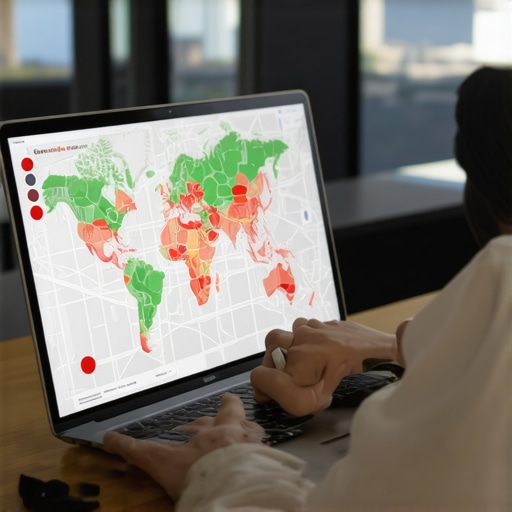
How do I maintain my map presence over the long haul?
Long-term success is about rhythm, not intensity. Every Sunday evening, I spend exactly fifteen minutes scheduling a single, high-quality update. I have seen countless businesses fall into ‘search decay’ because they treat their profile like a one-time project. To prevent this, you must learn how to stop search decay on your business profile by constantly cycling through fresh, seasonal content. For instance, failing to adjust your schedule for a minor holiday can signal to the algorithm that your data is stale and unreliable. I always urge business owners to investigate the impact of holiday hours on your local three-pack spot well before the season hits.
Stop Treating Your Profile Like a Static Billboard
The biggest shift I see coming is the rise of real-time visual signals. I predict that by 2025, local visibility help will move almost entirely toward video and live interaction. We are already seeing short-form video clips appearing directly in map results. If you are not preparing for expert map optimization strategies for 2025, you will be left behind by a maps optimization team that is already filming ‘day-in-the-life’ content at their storefronts. This is the future: blending traditional technical SEO with social-style engagement to prove you are actually there and actually open. Try this today: Open your Google Business Profile dashboard and navigate to the ‘Services’ section. Look for ‘suggested services’ that Google has added based on your review text. If you do not manually approve or refine these, they can dilute your ranking for your core keywords. This is the one setting your team needs to change to improve map ranking velocity immediately. If you’re feeling overwhelmed, don’t hesitate to contact us for a professional audit.
Three Maps Secrets That Actually Moved the Needle
Looking back at my years of trial and error, I realized that chasing review counts was a fool’s errand. The real winners focus on frequency and engagement density. One of the most important things a maps optimization team taught me was that a single review with a photo is worth ten plain text reviews. Why? Because it anchors your business to a physical reality that the AI can verify.
Another lightbulb moment was realizing that ‘dead’ profiles are a signal in themselves. If you are not posting weekly updates, you are signaling to Google that you might not be open. This is why you need to fix flatlined impressions fast with specific signal moves rather than waiting for a miracle. Lastly, your primary category is your identity; changing it without a plan is like changing your name in the middle of a crowded room—nobody will know who you are.
The Arsenal for Dominating Local Search
I do not leave my rankings to chance, and neither should you. My go-to strategy involves using tools that allow me to snoop on competitor map data to find their best traffic sources. Understanding where their customers are coming from allows you to adjust your service radius strategically. I also suggest keeping an eye on the only 3 metrics in your report that actually predict profit so you do not get distracted by vanity numbers. Finally, always keep the expert map optimization strategies for 2025 in your back pocket to stay ahead of the curve.
Take the Reins and Claim Your Spot
The digital landscape is constantly shifting, but the fundamentals of honesty and activity remain the same. You have the tools and the knowledge to move beyond the “quick fix” mentality and build something that lasts. By leaning on the expertise of google map experts and staying consistent with your updates, you can ensure your business remains the go-to choice for your local community. Your map presence is not just a listing; it is the heartbeat of your local reputation. Have you ever noticed your rankings drop after a long period of inactivity on your profile? Let me know in the comments below, or contact us if you need a hand getting back on top.