
I’ll never forget the Tuesday morning I sat staring at my laptop screen, feeling like a total fraud. My Google Business Profile dashboard was screaming ‘Success!’ with a bright green arrow pointing to 8,000 monthly views. I felt like the king of the neighborhood. I remember the smell of stale coffee and the hum of the air conditioner as I refreshed that dashboard for the tenth time. 8,102. 8,105. The views kept going up. My heart should have been racing with excitement, but instead, it felt like lead. When I looked at my call log? Silence. Not a single lead had come through that week. It was a gut-punch realization that impressions don’t pay the mortgage. I had plenty of eyes on me, but I was basically a digital ghost to anyone actually looking to spend money.
Why Being Visible Isn’t the Same as Being Hired
The problem is rarely that people can’t find you; it’s that they don’t like what they see when they do. Today, I’m going to pull back the curtain on why those numbers are lying to you and how we can flip the switch from ‘just looking’ to ‘where do I sign?’. We’re moving beyond vanity metrics and into the world of actual conversion. A report by Search Engine Journal suggests that nearly 97% of consumers search online to find a local business, yet most profiles fail to offer a clear reason to choose them over a competitor. You might be winning the proximity war, but you’re losing the trust war. If your competitors always rank first in the buyer’s mind, it doesn’t matter if you’re first on the map. You need to show up as the expert, not just another search result in a crowded list.
Is chasing map rankings actually worth the effort?
I used to think it was just a numbers game. I wasted months chasing local visibility help that focused entirely on the wrong signals. I made the classic mistake of thinking that just appearing on the map was enough. I didn’t realize that a hidden error in my profile audit was making my business look unprofessional to the very people I wanted to attract. It felt like I was shouting into a megaphone in an empty room. Have you ever felt that sinking feeling of seeing thousands of views but a silent phone? You aren’t alone. It’s a frustrating cycle where you do the ‘right’ things but get the wrong results. Our maps optimization team often sees business owners get obsessed with the graph. [image placeholder] But here is the reality: a view from someone ten miles away counts the same as a view from someone on your doorstep. If you aren’t targeting the right intent, you’re just screaming into the void. This is where visibility improvement turns into actual business growth. It’s about moving the needle on revenue, not just pixels. Working with google map experts should be about more than just a pin; it’s about making that pin the most attractive option on the screen. We’re going to dive into the specific moves that turn a passive viewer into a loyal customer, starting with the biggest conversion killers I’ve found.
The Visual Proof That Wins the Click
Think of your profile as a shop window. If you walk past a storefront and see stock photos of people shaking hands in generic suits, you keep walking. It feels fake. I learned this the hard way with a plumbing client who had amazing reviews but zero calls. We realized he was using a generic photo of a wrench he found online. The second we helped him stop using stock photos and replaced them with shots of his actual truck and the muddy boots he left at the door, the phone started ringing. You have to use specific photo types that prove you are a real human being doing real work in that specific neighborhood.
Why Your Map Pin Drowns When Customers Cross the Bridge
It is incredibly frustrating to see your business rank #1 when you are sitting in your office, only to watch it vanish the moment you drive two blocks away. I call this the ‘invisible bridge’ problem. It happens because your local signal is too weak to penetrate nearby zip codes. You might be wondering why your shop disappears when someone is just a mile away. Often, it is because your schema markup is flat or your citations are messy. We recently fixed the invisible radius problem for a local cafe by cleaning up their data and proving to Google that their service area was wider than just the street they were on. It is not about buying ads; it is about strengthening the digital tether between your shop and the surrounding streets.

Stop Fighting Proximity and Start Winning Interaction
Google’s algorithm is essentially a popularity contest mixed with a lie detector. If people click your profile but never call, Google thinks you are not relevant. I have seen businesses with fewer reviews outrank giants because they mastered the simple interaction signal that beats proximity limits. This means responding to every question, posting weekly updates, and even using review response tactics that actually talk to the customer, not just the search engine. When our maps optimization team audits a profile, we do not just look at keywords. We look for the ‘revenue gaps’—the places where customers get confused and leave. If your profile audit is missing these gaps, you are just pouring water into a leaky bucket. You need to make it incredibly easy for a person to go from ‘I need help’ to ‘I am calling this person’ in under five seconds.
The Interaction Moves That Change the Game
Most people treat their Google profile like a static yellow pages ad. That is a death sentence for your rankings in a world where google map experts are constantly optimizing for engagement. I remember a small boutique that was getting crushed by national chains until they started using specific interaction moves like booking links and real-time messaging. They even found that adding a products section acted like a magnet for customers who were tired of scrolling through corporate websites. They did not need a bigger budget; they just needed to be more ‘active’ than the big guys. If you feel like your impressions have flatlined, it is usually because you have stopped talking to the platform. By utilizing specific SEO tools to track where you are actually showing up, you can stop guessing and start dominating. Google rewards the talkers, the doers, and the businesses that actually show up for their customers every single day. If you do not keep the data fresh, you are essentially allowing search decay to eat your rankings while you sleep.
The Great Citation Myth That Wastes Your Time
Many self-proclaimed visibility experts will tell you that the secret to map dominance is to buy hundreds of directory listings. In my years of troubleshooting, I’ve found that this is often the fastest way to confuse Google. If your business name, address, or phone number varies even slightly across these sites, you are creating a digital fog. This is exactly why most local citation packages hurt your rank rather than helping it. Quality and consistency beat quantity every single time. A study by BrightLocal found that 68% of consumers would stop using a local business if they found incorrect information online, and Google’s algorithm mimics this sentiment by de-prioritizing inconsistent profiles. You aren’t just building links; you are building a reputation of reliability. 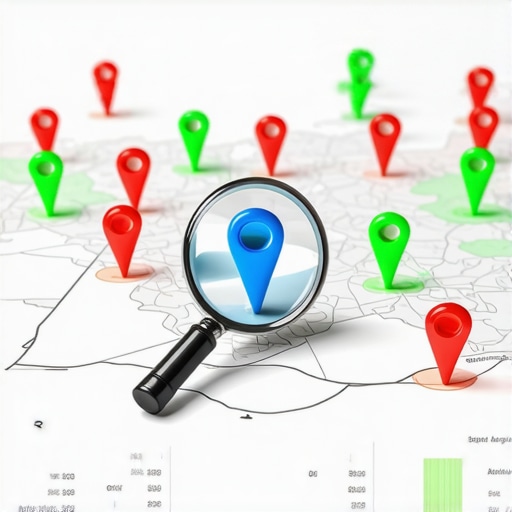
Don’t Touch That Category Button Without a Plan
One of the most dangerous ‘traps’ I see business owners fall into is the constant tweaking of their primary category. I’ve seen businesses lose 40% of their call volume overnight because they thought a more ‘general’ category would bring more traffic. There is a specific reason why your phone stops ringing when you change your primary category—it resets the trust signal you’ve spent months building. Our maps optimization team always advises that if you must change categories, you need a transition plan that includes updated service descriptions and new photo signals to prove the shift.
Why does your map ranking crash the second a new competitor opens up?
It feels personal when a new shop across the street steals your #1 spot in a week. Usually, it isn’t because they are ‘better’ than you; it is because their profile is fresh and highly active while yours has gone static. You need to understand why your map ranking plummeted when the competitor moved in. Often, it’s a lack of recent interaction signals. Google favors the ‘new and relevant’ over the ‘old and reliable’ unless the older business is consistently updating its data. This is where visibility improvement becomes a daily habit rather than a one-time setup. Most why most local visibility plans fail the real world proximity test is that they ignore the physical reality of how people move and interact with their phones in real-time. To stay on top, you have to out-engage the newcomers. Have you ever fallen into this trap? Let me know in the comments.Maintaining that top spot isn’t a one-and-done deal; it’s a constant battle against search decay. I personally rely on a few specific SEO tools to see the truth behind the curtain. One tool I can’t live without is a local grid tracker. If you are only looking at your ranking from your own office, you are flying blind. I use these tools because they show me exactly where my invisible bridge is—the street where my ranking drops from #1 to #15. This allows our maps optimization team to focus on using local map data to expand that radius brick by brick. According to Google’s own official documentation on local ranking factors, relevance, distance, and prominence are the pillars, but prominence is the only one you can truly scale through consistent activity and high-quality data.
Stop Letting Your Business Profile Rot
The quickest way to lose your spot is to let your data go stale. I’ve seen it happen dozens of times: a business dominates for three months, gets comfortable, and stops posting updates. Suddenly, static business data becomes a anchor that pulls them out of the three-pack. You have to realize that static business data no longer earns a three-pack spot in a world where your competitors are active. I recommend setting a weekly map hygiene alarm. Use that time to update your hours for any upcoming holidays and remove old business photos that might be dragging down your professional image.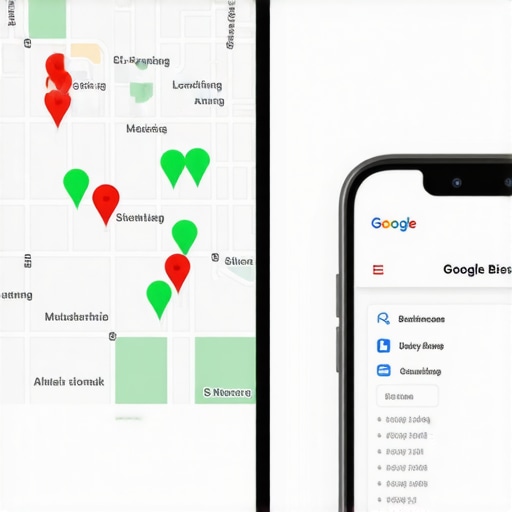
How do I keep my business at the top month after month?
Consistency is the secret sauce that google map experts use to stay ahead. It’s about more than just reviews; it’s about signaling to Google that you are open and active. This means mastering interaction moves like responding to reviews within 24 hours. If you’re struggling to keep up, automate your feedback process, but never use a generic bot for responses. People—and algorithms—can smell a canned response a mile away. Looking ahead, I predict that Google will rely even more heavily on AI-driven visual recognition. This means your specific photo types won’t just be for customers; they’ll be data points that tell AI exactly what your business offers. My advanced tip for you today: go into your profile right now and add a products section for your top three services. It’s an underutilized move that creates a massive signal gap between you and your competitors. If you want to stay relevant through 2025, you need to unlock these expert strategies before the search landscape shifts again.
The Hardest Lesson I Learned About Local Search Dominance
Looking back at years of trial and error, I’ve realized that the biggest mistake isn’t a technical one; it’s a mental one. I used to think I could outsmart the algorithm with volume. But here is the truth: Google doesn’t care how many citations you have if none of them feel real. I learned that the move our optimization team uses to reclaim lost map spots usually involves stripping away the noise and focusing on actual human interaction.
- Consistency isn’t just about NAP; it’s about the rhythm of your updates. If you post every Monday, don’t stop.
- Your photos tell a story that your text can’t. If they look like stock, you look like a bot.
- The proximity gap is real, but it’s not a wall. You can fix the proximity gap by proving you’re active in those neighboring areas through real project photos and geo-tagged reviews.
The Toolkit I Use to Stay Ahead of the Algorithm
If you want to stop guessing, you need the right set of eyes on your data. I personally rely on a local grid tracker to see the truth. Don’t just check your rank from your desk; check it from the coffee shop three blocks over. I also highly recommend focusing on the only 3 metrics in your report that actually predict profit: calls, direction requests, and website clicks. Everything else is just noise. If you’re expanding, use specific SEO tools to jumpstart map rankings for new locations so you don’t start from zero every time. [image placeholder] Finally, keep a close eye on your competition’s activity levels—if they start posting daily, you need to match that energy to stay relevant.
The Future of Your Local Presence Starts Today
Dominating the local map isn’t about one giant leap; it’s about a hundred small, consistent steps. You have the tools, the strategy, and the insight to stop being a digital ghost. It’s time to master your map rankings and turn those views into voices on the other end of the phone. Your business deserves to be the first thing people see when they’re ready to buy. Don’t let your profile rot while a competitor takes your leads. Take one action today—whether it’s updating a photo or responding to an old review—and watch how the map responds to your effort. What’s the biggest hurdle you’ve faced when trying to break into the local three-pack? Let me know in the comments below!