
I sat there for three weeks, staring at my dashboard, wondering why my phone had suddenly gone cold. I had hired a team of google map experts to polish my profile, and my photos looked great. Yet, the silence was deafening. It wasn’t until a regular customer caught me at the grocery store and mentioned they almost didn’t call because my 888-number looked like a “scammy call center” that the lightbulb finally shattered over my head. I was trying so hard to look big that I forgot to look local. This was the simple change that stopped my shop from ghosting potential customers, and today, I want to show you why that three-digit code at the start of your phone number carries more weight than your entire marketing budget.
Your Neighborhood Code Is the Handshake You’re Missing
We live in an era where everyone is on high alert for spam. When a local homeowner sees a toll-free number, they don’t see a successful corporation; they see a distant entity that might not be around if something goes wrong. Using a local area code is better for SEO than a toll-free one because it signals immediate proximity. It tells the brain that these guys are just down the street. I made the mistake of thinking professional meant national. I was wrong. In fact, a study by BrightLocal found that nearly 60% of consumers prefer to call a local business over a national one when searching for nearby services. That local prefix is a trust signal you can’t buy with ads. Have you ever skipped over a business because their number looked like it belonged in a different state?
Will switching numbers really move the needle on my ranking?
It is a fair question. You might worry about the logistics of changing your contact info everywhere. But here is the reality: why your phone stopped ringing often traces back to these small, human trust gaps. When our maps optimization team audits profiles, we look for these signal gaps. A local number isn’t just for the humans; it is a corroborating data point for search engines that confirms you belong in that specific zip code. If you are struggling with the invisible radius problem, checking your phone prefix is the first place to start.
Fix the messy paper trail first
Before you touch that ‘Edit Profile’ button, you need to see what the internet already thinks about you. Every time you leave an old number on a random directory site, you are telling Google that you are unreliable. I once spent an entire weekend hunting down 42 different versions of a client business name because their rankings had flatlined. We had to clean up messy citation data that confuses google to restore their authority. If your data is static and old, you are effectively invisible to the algorithms that prioritize fresh activity. In fact, why static business data is the quickest way to lose your local three-pack spot is a lesson many learn the hard way. Think of your citations like a digital trail of breadcrumbs; if the crumbs lead to different houses, the search engine gets lost and stops trying to find you.
Swap your primary number without getting flagged
The fear of a suspension is real when you start editing core business information. When you decide to ditch the toll-free line, do not just delete the old one. Instead, add your new local number as the primary contact and move the old 888-number to the ‘secondary’ slot within your Google Business Profile settings. This acts like a bridge, letting the bots realize it is still the same entity, just with a more relevant local face. Many google map experts see profiles get stuck in a ‘pending’ loop because they change too much at once. If your update feels stuck, you might need to force a refresh on a pending business update to get the gears moving again. 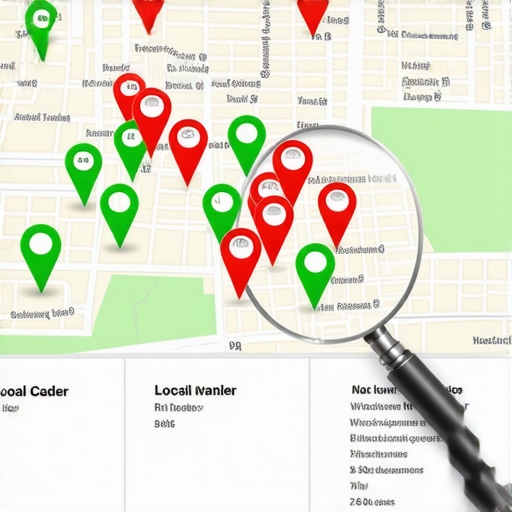
Bridge the proximity gap with real evidence
A local number tells Google you are ‘there,’ but your media proves it. If you want to rank five miles away from your office, you need more than just a matching area code. You need to show that your team is actually active in those surrounding neighborhoods. I remember a plumbing shop that could not rank two blocks over despite having great reviews. We realized their photos were all generic stock images that could have been taken anywhere. Once we swapped them for the exact photo types that trigger profile ranking signals, like shots of their branded van parked near local landmarks, their visibility spiked. This is a core part of how visibility experts solve the proximity gap stopping your business from ranking five-miles away.
Watch for signs of search decay
Optimization is not a one-and-done chore; it is more like keeping a garden. If you stop posting or updating your profile, you will inevitably see search decay on your business profile. This is where local visibility help becomes vital. Our maps optimization team often finds that a sudden drop in calls is not due to a penalty, but because a competitor started providing more ‘interaction signals’ than you. We use the specific seo tools we use to jumpstart map rankings to monitor these shifts in real-time. If you do not stay on top of your visibility improvement, you are leaving the door open for aggressive newcomers to slide into your spot.Most business owners are obsessed with the quantity of their five-star ratings, but here is the hard truth: your massive review count might actually be working against you if it isn’t consistent. I’ve seen companies with 500 reviews get buried by a competitor with 40 because the latter is getting three new reviews a week while the former hasn’t had one in months. Google’s algorithms prioritize active relevance over historical greatness. This is why most local visibility plans fail the real-world proximity test; they focus on the past instead of the present.
Let’s dig deeper into a nuance that even some seasoned visibility experts miss. There is a specific ‘interaction velocity’ that your profile needs to maintain. If you suddenly stop receiving clicks for directions or phone calls, your ‘authority’ begins to bleed out. This is often the hidden error in your profile audit keeping you off the three-pack. It isn’t just about what you fill in; it’s about how the world reacts to what you’ve filled in. Have you ever fallen into this trap where you optimized everything but forgot to keep the engine running? Let me know in the comments.
The hidden risk of a sudden category swap
I once watched a locksmith lose 80% of his lead volume in 48 hours. Why? He decided to change his primary category from ‘Locksmith’ to ‘Security System Installer’ because the jobs were higher ticket. He thought he could just pivot, but he didn’t realize that why your phone stops ringing when you change your primary category is because you are effectively telling the map you are a new business in a new niche. You lose the ‘relevance equity’ you built over years. If you must change categories, it has to be a slow, surgical transition. Our maps optimization team typically recommends testing secondary categories for months before making a primary move.
Why do competitors with fewer reviews still outrank me?
This is the number one question I get from frustrated shop owners. It feels like a glitch in the matrix, but it is actually intentional. According to the 2023 Local Search Ranking Factors study by Whitespark, ‘Review Velocity’ and ‘Review Diversity’ (keywords within the reviews) carry more weight than the total number. If your competitor’s customers are mentioning specific services like ‘fast emergency repair’ while your reviews are just generic ‘great job’ stars, Google views them as a more specific solution to a user’s query. This is a primary reason why your competitors with fewer reviews still outrank you on the map. 
Break out of the crowded clusters
In densely populated cities, you often deal with ‘map clustering,’ where Google hides similar businesses that are physically close to each other to provide ‘variety’ to the user. To fight this, google map experts use what we call ‘signal moves.’ Instead of trying to out-keyword the guy next door, you need to break out of crowded map clusters by leveraging hyper-local data that your neighbors are ignoring. This includes things like the role of schema markup in local search visibility which helps the bots understand your exact service radius better than a simple pin on a map. If you feel like your business profile audit is missing the most critical revenue gaps, it is likely because you are looking at your profile in a vacuum instead of comparing it to the ‘cluster’ you are stuck in. Achieving visibility improvement requires moving beyond the basics and manipulating these high-level interaction signals.I stopped guessing about my rankings the moment I started using grid-tracking software. Most business owners check their rank while sitting at their desk, but that is a rookie mistake because you are essentially standing on top of your own router and seeing a skewed result. To get the real story, I rely on tools like Local Falcon to generate a multi-point heat map across the entire city. It shows exactly where my visibility ‘bleeds out’ and where the neighbors are starting to win. This is how our maps optimization team finds hidden signal gaps that a standard search from a single location would never reveal. If you are serious about expansion, you have to treat the map as a shifting landscape rather than a static directory. #IMAGE_PLACE_HOLDER_D#
How do I maintain my map position without it becoming a full-time job?
The secret is to stop thinking about SEO as a one-time project and start seeing it as a metabolic rate. You need ‘Interaction Velocity.’ I tell my clients that it is far better to receive one genuine review every four days than to get twenty reviews in a single afternoon. Steady activity signals to the algorithm that your business is healthy and actively serving the community. To keep this running on autopilot, I recommend implementing systems to automate feedback without triggering the review filter. According to Google’s official ‘How to improve your local ranking’ documentation, ‘Prominence’ is a core pillar of ranking, and it is built through a consistent trail of data that Google scrapes from the entire web. Our visibility experts focus on building this prominence by ensuring your data is fresh and your customer interactions are frequent.
Prepare for the shift toward AI-driven local search
Looking ahead, I predict that Google’s Search Generative Experience (SGE) will make generic keywords less important than ‘contextual proof.’ In the next year, the map interface will likely start pulling specific sentences from your reviews to answer hyper-specific user questions. If a user asks for ‘the best place for a quick oil change,’ the AI will highlight reviews that mention speed and efficiency. This makes it vital to master your map rankings through innovative approaches like encouraging customers to mention the specific problem you solved. If you want to stop search decay on your business profile, you must feed the algorithm the qualitative data it craves.
Run your own grid audit to find the truth
The most immediate thing you can do to change your business trajectory is to stop looking at your profile in a vacuum. Go use one of the specific seo tools we use to jumpstart map rankings and run a scan for your most important keyword. If you aren’t in the top three in the zip code just two miles away, you have a proximity gap that needs fixing. Identifying these blind spots is the first step toward getting real local visibility help. Don’t let your competitors own the territory you’ve already earned—grab a grid tool and start reclaiming your space today.
What I Learned After Watching 100 Profiles Sink
The biggest lightbulb moment I ever had wasn’t about keywords; it was about momentum. I used to think that once my google map experts finished the initial setup, I could just sit back and watch the leads roll in. I was wrong. I learned that Google doesn’t care how perfect your profile was six months ago; it cares how relevant you are today. Another hard-earned lesson? Your interaction velocity—the speed and frequency at which you engage with customers—is the ultimate tie-breaker. If two businesses have the same optimization level, the one that responds to a review in two hours instead of two days will eventually win. This is a core reason how our team finds hidden signal gaps that others miss. Finally, I realized that chasing the ‘whole city’ is a fool’s errand. You win the map block by block, neighborhood by neighborhood.
The Gear That Keeps My Team Competitive
I don’t make a single move without checking my data first. If you want to see what is actually happening behind the scenes, you need to look at the specific seo tools we use to jumpstart map rankings like Local Falcon or BrightLocal. These heatmaps are my ‘source of truth.’ I also highly recommend staying tuned to the expert map optimization strategies for 2025 because the landscape is shifting toward AI much faster than most realize. Lastly, never underestimate the power of a clean spreadsheet to track messy citation data; it is the least glamorous part of the job, but it is the foundation of all your visibility improvement efforts.
Your Map Position Is a Living Asset
Think of your business profile as a garden rather than a trophy. It needs constant watering through fresh photos, updated posts, and real human interactions. Whether you decide to do this yourself or seek out maximize your local reach through professional help, the key is to never let the profile go cold. The future of search is going to reward businesses that feel ‘alive’ and deeply rooted in their community. Take that first step today—run a grid audit, find your gaps, and start reclaiming the space your business deserves. Have you ever noticed your rankings drop after a long period of silence on your profile? Let me know below.