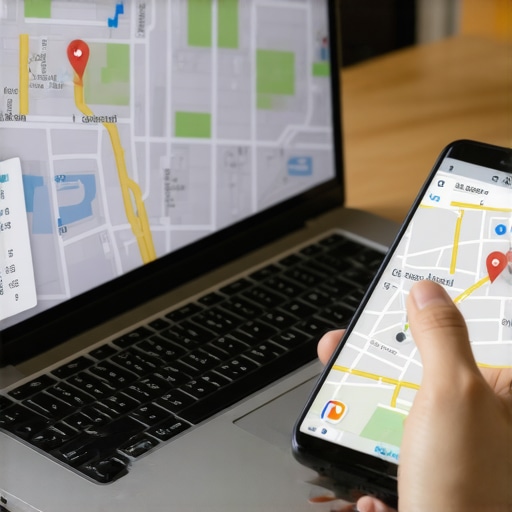
I remember sitting in my home office back in 2019, staring at a heatmap of my ‘perfect’ local landing page. It was a masterpiece—or so I thought. High-res photos, glowing testimonials, and every keyword under the sun. But when I checked the Google Business Profile dashboard, the ‘Get Directions’ and ‘Call’ clicks were dead silent. It was a gut-punch. I had spent thousands on what I thought was visibility improvement, only to realize I was shouting into a void. If you’ve ever felt that sinking feeling of doing everything ‘by the book’ and still watching your competitors hog the Map Pack, I’ve been there. Today, we’re going to stop the bleeding. I’m going to show you exactly how to bridge the gap between a webpage and a physical store visit.
Your Beautiful City Pages Might Be Ghost Towns
Is local SEO actually worth the hype if nobody clicks?
It’s a fair question. You pour money into a visibility improvement strategy, and you expect results. Early in my career, I made the classic mistake of thinking that ‘more content’ equaled ‘more customers.’ I wrote 2,000-word essays for every suburb in the tri-state area. The result? Total silence. I didn’t realize that Google’s algorithm needs more than just text; it needs a handshake between your website and your map pin. This is exactly why your city pages feel like ghost towns to local searchers even when they look great on paper.
The problem is often the ‘signal gap.’ You might be telling your readers you’re local, but you aren’t telling the search engines in a way they actually believe. I’ve seen so many business owners hire a maps optimization team only to have them focus on the wrong metrics. Sometimes, the local visibility help you receive is actually pulling you in the wrong direction by focusing on national trends instead of neighborhood nuances. According to research by BrightLocal, nearly 87% of consumers use Google to evaluate local businesses, which means if your landing page doesn’t immediately trigger a ‘click to map’ action, you are losing almost nine out of ten potential customers. We need to talk about the signal gap stopping your profile from ranking in nearby zip codes.
I once worked with a plumber who had 40 ‘location pages’ that were all carbon copies of each other, just with different city names swapped in. He was terrified that changing them would ruin his rankings. But here is the hard truth: if your pages don’t provide unique value, they aren’t just useless; they’re actually a red flag to visibility experts. If you’re tired of being second-guessed by google map experts who haven’t actually run a local business, you’re in the right place. Have you ever noticed your traffic numbers going up while your phone stays eerily quiet? Drop a comment below—have you ever felt like your ‘optimized’ pages were just invisible to the people who actually live in your neighborhood? Let’s get into the nitty-gritty of how a professional map optimization team actually fixes these conversion leaks.
Stop Treating Your Map Pin Like a Lonely Island
It’s like trying to get a friend to find your house using only a vague description of the weather. You need to give them the street address, the landmarks, and maybe wave from the porch. In the world of visibility improvement, that porch wave is your technical schema. I remember working with a local bakery that was ranking #1 for ‘bread’ but #50 for ‘best bakery near me.’ We realized their site was talking about flour, while their map pin was talking about location, and the two never met. By fixing the schema technicality most agencies skip for local dominance, we finally synced the signals. This is the heart of the local signal moves that actually drive in-store sales; you have to prove to Google that your website and your physical office are the same living, breathing entity.
The One Tweak That Actually Makes Phones Ring
Most people think photos are just for aesthetics. They aren’t. They are data points. I once took over an account for a mechanic who had zero calls from his map listing despite a 4.9-star rating. He had professional shots of shiny wrenches, but nothing of the actual garage storefront or the team in action. We swapped those for messy, real-time shots of his team working on cars under a recognizable sign. Within two weeks, his ‘Request Quote’ buttons lit up. Why? Because the exact photo types that trigger your profile ranking signals are the ones that provide social proof and spatial context. If you want to see a real change in your metrics, you need to understand the impact of store photos on your local conversion rate. 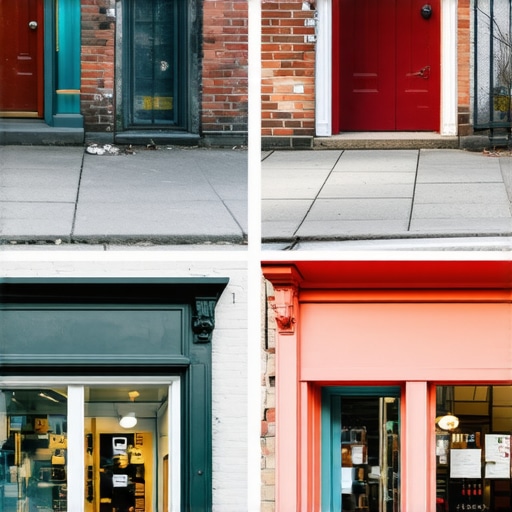
Stop Being a Jack of All Trades in the Algorithm’s Eyes
Another massive trap is the category selection. If you pick ‘Consultant’ when you are actually a ‘Tax Attorney,’ you’re invisible to 90% of your market. I’ve seen google map experts spend months on expensive backlinks while the client was simply stuck in the wrong category bucket. You have to be surgical. This is why you should avoid generic business categories at all costs. It’s also vital to ensure Google knows where you actually work, especially if you travel to clients. You can actually learn how to force google to update your service area radius to capture those outlying neighborhoods that currently think you’re too far away. If your maps optimization team isn’t looking at these granular details, they’re just playing a guessing game with your livelihood. You need local visibility help that understands the difference between a broad search and a hyper-local intent.
Why Five Stars Won’t Save You Without the Right Words
Let’s talk about the ‘Review Ghosting’ phenomenon. I had a client who was getting five-star reviews every day, but his ranking never moved. We dug into the data and found his customers were just leaving stars with no text. In the eyes of a visibility experts, a star is a whisper, but a keyword-rich review is a shout. We started teaching his team how to nudge customers to mention specific services or product names. This is the specific review word-count that triggers ranking boost. When you get people to actually describe their experience, you’re giving your maps optimization team the ammunition they need to push you past the ‘big box’ competitors who only have volume, not depth. It’s about building a layer of trust that the algorithm can actually read and index.
Most agencies will tell you to go out and build 100 citations on directories no one has ever heard of. It is the classic ‘more is better’ fallacy. But if you look at the Whitespark Local Search Ranking Factors, citations have plummeted in importance over the last few years. Today, it is all about the ‘interaction economy.’ If people are not clicking your ‘Directions’ button or lingering on your photos, Google assumes you are a ghost. This is where a visibility improvement strategy often falls apart—by focusing on dead data instead of live human behavior. You need to understand the interaction moves that actually matter for dominating map results. It is not just about having a profile; it is about how much ‘friction’ you remove from the user journey.
Forget Everything You Heard About Directory Quantity
Here is the trap I see most often: the category carousel. Business owners get desperate and start changing their primary category every week, thinking it will ‘reset’ their ranking. It does the opposite—it resets your authority. In fact, there is a specific reason why your phone stops ringing when you change your primary category. It is a massive red flag to the algorithm that you do not actually know your own business identity. If you are working with a maps optimization team that suggests ‘testing’ your primary category every month, run the other way. This is a classic ‘oops’ factor that can lead to a long-term suppression of your listing. Finding real google map experts means looking for someone who analyzes behavioral data, not just keyword density.
#IMAGE_PLACE_HOLDER_C#
Why does the guy with ten reviews outrank my hundred?
This drives business owners crazy. You have worked hard for your reputation, yet the guy down the street with a messy profile is sitting at the top of the three-pack. This happens because of ‘proximity bias’ and hidden signals. Often, it is the hidden reason your competitor ranks higher with fewer reviews: they are anchored better to local landmarks or their site speed is crushing yours on mobile. You might even be suffering from why proximity is the biggest hurdle for your local rankings—Google might think you are just too far from the ‘centroid’ of the search intent. Real local visibility help is not about gaming the system for a week; it is about building a fortress around your map pin. If your visibility experts are just sending you a monthly report of ‘rankings’ without explaining these nuances, you are flying blind. You need to know how to spot a fake map ranking report from your agency. Have you ever fallen into this trap of chasing the wrong metrics? Let me know in the comments.
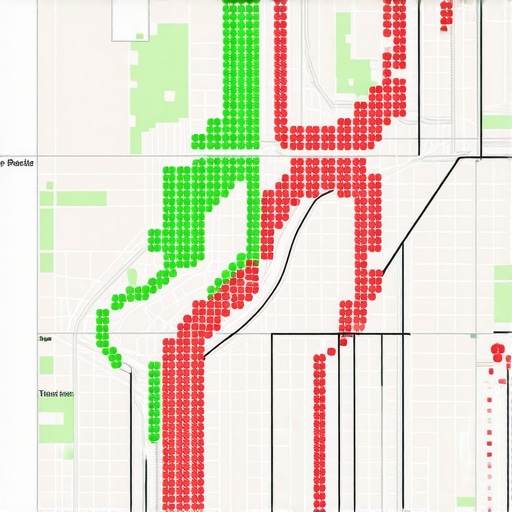
I’ve spent too many late nights staring at spreadsheets trying to figure out why a lead suddenly vanished from a high-value zip code. If you’re not using a grid tracker, you’re flying a plane without a dashboard. This is where google map experts prove their worth—not by guessing, but by using specialized tools like Local Falcon or BrightLocal to see exactly where your visibility improvement efforts are winning or losing. It’s about seeing the ‘rank grid’ across the city, not just at your front door. If you want to scale, you have to learn how to track leads coming directly from your map listing so you know which neighborhood is actually paying your bills.
Stop Guessing Where Your Customers Are Hiding
I personally swear by heatmap tracking because it reveals the ‘shadow zones’ where your competitors are eating your lunch. When I’m providing local visibility help, the first thing I do is snoop on competitor map data to steal their best traffic. You can literally see the moment their ranking drops and yours rises. This isn’t just about ego; it’s about tactical placement. According to local search veteran Mike Blumenthal, Google’s ‘Near Me’ results are increasingly influenced by real-time behavioral signals rather than just historical data. If you aren’t watching these shifts weekly, you are already behind.
How do I keep my map ranking high year after year?
Maintenance is the part everyone hates because it isn’t flashy, but it is the difference between a one-hit wonder and a local staple. Google rewards consistency and freshness above almost everything else. This is why your map listing needs regular updates to stay relevant in an ever-changing neighborhood. I tell my clients that a maps optimization team should be treating a Business Profile like a social media feed—post updates, respond to every review, and swap out old photos. If your profile looks the same as it did in 2022, the algorithm assumes your business is stagnant. You need to master the secret to staying on the map when the algorithm shifts, which usually involves doubling down on user engagement metrics during updates.
The Gear That Separates Pros from Amateurs
I don’t just use software; I use a specific workflow. Every Monday, I check the ‘Map Impressions’ report. If I see a dip, I don’t panic—I look for the ‘why.’ Often, it’s a new competitor or a change in local search intent. If you’ve noticed a slide, you need to know how to handle a sudden drop in map impressions before it turns into a total blackout. Real visibility experts don’t just ‘fix’ things; they build systems that prevent drops from happening. They provide the visibility improvement that lasts through seasonal slumps and algorithm tweaks. If you’re serious about this, try one advanced tip today: go into your ‘Services’ section and add a 100-word description for your primary service that includes three local landmarks. It’s a tiny move that anchors your pin to the local geography in a way Google loves.
Prepare for the Visual Search Shift
Looking ahead, I predict that within the next two years, Google will prioritize ‘Visual Presence’—your ability to show real-time availability through video—over standard text descriptions. We are already seeing the early stages of this with ‘Live View’ and augmented reality. To stay ahead, start uploading 15-second vertical videos of your storefront and staff today. Don’t wait for the ‘experts’ to tell you it’s a trend; be the one who already owns the space when it becomes the standard. If you’re feeling overwhelmed, don’t be afraid to reach out for local visibility help to get these systems automated.
I remember sitting in my home office back in 2019, staring at a heatmap of my ‘perfect’ local landing page. It was a masterpiece—or so I thought. High-res photos, glowing testimonials, and every keyword under the sun. But when I checked the Google Business Profile dashboard, the ‘Get Directions’ and ‘Call’ clicks were dead silent. It was a gut-punch. I had spent thousands on what I thought was visibility improvement, only to realize I was shouting into a void. If you’ve ever felt that sinking feeling of doing everything ‘by the book’ and still watching your competitors hog the Map Pack, I’ve been there. Today, we’re going to stop the bleeding. I’m going to show you exactly how to bridge the gap between a webpage and a physical store visit.
Your Beautiful City Pages Might Be Ghost Towns
Is local SEO actually worth the hype if nobody clicks?
It’s a fair question. You pour money into a visibility improvement strategy, and you expect results. Early in my career, I made the classic mistake of thinking that ‘more content’ equaled ‘more customers.’ I wrote 2,000-word essays for every suburb in the tri-state area. The result? Total silence. I didn’t realize that Google’s algorithm needs more than just text; it needs a handshake between your website and your map pin. This is exactly why your city pages feel like ghost towns to local searchers even when they look great on paper.
The problem is often the ‘signal gap.’ You might be telling your readers you’re local, but you aren’t telling the search engines in a way they actually believe. I’ve seen so many business owners hire a maps optimization team only to have them focus on the wrong metrics. Sometimes, the local visibility help you receive is actually pulling you in the wrong direction by focusing on national trends instead of neighborhood nuances. According to research by BrightLocal, nearly 87% of consumers use Google to evaluate local businesses, which means if your landing page doesn’t immediately trigger a ‘click to map’ action, you are losing almost nine out of ten potential customers. We need to talk about the signal gap stopping your profile from ranking in nearby zip codes.
I once worked with a plumber who had 40 ‘location pages’ that were all carbon copies of each other, just with different city names swapped in. He was terrified that changing them would ruin his rankings. But here is the hard truth: if your pages don’t provide unique value, they aren’t just useless; they’re actually a red flag to visibility experts. If you’re tired of being second-guessed by google map experts who haven’t actually run a local business, you’re in the right place. Have you ever noticed your traffic numbers going up while your phone stays eerily quiet? Drop a comment below—have you ever felt like your ‘optimized’ pages were just invisible to the people who actually live in your neighborhood? Let’s get into the nitty-gritty of how a professional map optimization team actually fixes these conversion leaks.
Stop Treating Your Map Pin Like a Lonely Island
It’s like trying to get a friend to find your house using only a vague description of the weather. You need to give them the street address, the landmarks, and maybe wave from the porch. In the world of visibility improvement, that porch wave is your technical schema. I remember working with a local bakery that was ranking #1 for ‘bread’ but #50 for ‘best bakery near me.’ We realized their site was talking about flour, while their map pin was talking about location, and the two never met. By fixing the schema technicality most agencies skip for local dominance, we finally synced the signals. This is the heart of the local signal moves that actually drive in-store sales; you have to prove to Google that your website and your physical office are the same living, breathing entity.
The One Tweak That Actually Makes Phones Ring
Most people think photos are just for aesthetics. They aren’t. They are data points. I once took over an account for a mechanic who had zero calls from his map listing despite a 4.9-star rating. He had professional shots of shiny wrenches, but nothing of the actual garage storefront or the team in action. We swapped those for messy, real-time shots of his team working on cars under a recognizable sign. Within two weeks, his ‘Request Quote’ buttons lit up. Why? Because the exact photo types that trigger your profile ranking signals are the ones that provide social proof and spatial context. If you want to see a real change in your metrics, you need to understand the impact of store photos on your local conversion rate.
Stop Being a Jack of All Trades in the Algorithm’s Eyes
Another massive trap is the category selection. If you pick ‘Consultant’ when you are actually a ‘Tax Attorney,’ you’re invisible to 90% of your market. I’ve seen google map experts spend months on expensive backlinks while the client was simply stuck in the wrong category bucket. You have to be surgical. This is why you should avoid generic business categories at all costs. It’s also vital to ensure Google knows where you actually work, especially if you travel to clients. You can actually learn how to force google to update your service area radius to capture those outlying neighborhoods that currently think you’re too far away. If your maps optimization team isn’t looking at these granular details, they’re just playing a guessing game with your livelihood. You need local visibility help that understands the difference between a broad search and a hyper-local intent.
Why Five Stars Won’t Save You Without the Right Words
Let’s talk about the ‘Review Ghosting’ phenomenon. I had a client who was getting five-star reviews every day, but his ranking never moved. We dug into the data and found his customers were just leaving stars with no text. In the eyes of a visibility experts, a star is a whisper, but a keyword-rich review is a shout. We started teaching his team how to nudge customers to mention specific services or product names. This is the specific review word-count that triggers ranking boost. When you get people to actually describe their experience, you’re giving your maps optimization team the ammunition they need to push you past the ‘big box’ competitors who only have volume, not depth. It’s about building a layer of trust that the algorithm can actually read and index.
Most agencies will tell you to go out and build 100 citations on directories no one has ever heard of. It is the classic ‘more is better’ fallacy. But if you look at the Whitespark Local Search Ranking Factors, citations have plummeted in importance over the last few years. Today, it is all about the ‘interaction economy.’ If people are not clicking your ‘Directions’ button or lingering on your photos, Google assumes you are a ghost. This is where a visibility improvement strategy often falls apart—by focusing on dead data instead of live human behavior. You need to understand the interaction moves that actually matter for dominating map results. It is not just about having a profile; it is about how much ‘friction’ you remove from the user journey.
Forget Everything You Heard About Directory Quantity
Here is the trap I see most often: the category carousel. Business owners get desperate and start changing their primary category every week, thinking it will ‘reset’ their ranking. It does the opposite—it resets your authority. In fact, there is a specific reason why your phone stops ringing when you change your primary category. It is a massive red flag to the algorithm that you do not actually know your own business identity. If you are working with a maps optimization team that suggests ‘testing’ your primary category every month, run the other way. This is a classic ‘oops’ factor that can lead to a long-term suppression of your listing. Finding real google map experts means looking for someone who analyzes behavioral data, not just keyword density.
#IMAGE_PLACE_HOLDER_C#
Why does the guy with ten reviews outrank my hundred?
This drives business owners crazy. You have worked hard for your reputation, yet the guy down the street with a messy profile is sitting at the top of the three-pack. This happens because of ‘proximity bias’ and hidden signals. Often, it is the hidden reason your competitor ranks higher with fewer reviews: they are anchored better to local landmarks or their site speed is crushing yours on mobile. You might even be suffering from why proximity is the biggest hurdle for your local rankings—Google might think you are just too far from the ‘centroid’ of the search intent. Real local visibility help is not about gaming the system for a week; it is about building a fortress around your map pin. If your visibility experts are just sending you a monthly report of ‘rankings’ without explaining these nuances, you are flying blind. You need to know how to spot a fake map ranking report from your agency. Have you ever fallen into this trap of chasing the wrong metrics? Let me know in the comments.
I’ve spent too many late nights staring at spreadsheets trying to figure out why a lead suddenly vanished from a high-value zip code. If you’re not using a grid tracker, you’re flying a plane without a dashboard. This is where google map experts prove their worth—not by guessing, but by using specialized tools like Local Falcon or BrightLocal to see exactly where your visibility improvement efforts are winning or losing. It’s about seeing the ‘rank grid’ across the city, not just at your front door. If you want to scale, you have to learn how to track leads coming directly from your map listing so you know which neighborhood is actually paying your bills.
Stop Guessing Where Your Customers Are Hiding
I personally swear by heatmap tracking because it reveals the ‘shadow zones’ where your competitors are eating your lunch. When I’m providing local visibility help, the first thing I do is snoop on competitor map data to steal their best traffic. You can literally see the moment their ranking drops and yours rises. This isn’t just about ego; it’s about tactical placement. According to local search veteran Mike Blumenthal, Google’s ‘Near Me’ results are increasingly influenced by real-time behavioral signals rather than just historical data. If you aren’t watching these shifts weekly, you are already behind.
How do I keep my map ranking high year after year?
Maintenance is the part everyone hates because it isn’t flashy, but it is the difference between a one-hit wonder and a local staple. Google rewards consistency and freshness above almost everything else. This is why your map listing needs regular updates to stay relevant in an ever-changing neighborhood. I tell my clients that a maps optimization team should be treating a Business Profile like a social media feed—post updates, respond to every review, and swap out old photos. If your profile looks the same as it did in 2022, the algorithm assumes your business is stagnant. You need to master the secret to staying on the map when the algorithm shifts, which usually involves doubling down on user engagement metrics during updates.
The Gear That Separates Pros from Amateurs
I don’t just use software; I use a specific workflow. Every Monday, I check the ‘Map Impressions’ report. If I see a dip, I don’t panic—I look for the ‘why.’ Often, it’s a new competitor or a change in local search intent. If you’ve noticed a slide, you need to know how to handle a sudden drop in map impressions before it turns into a total blackout. Real visibility experts don’t just ‘fix’ things; they build systems that prevent drops from happening. They provide the visibility improvement that lasts through seasonal slumps and algorithm tweaks. If you’re serious about this, try one advanced tip today: go into your ‘Services’ section and add a 100-word description for your primary service that includes three local landmarks. It’s a tiny move that anchors your pin to the local geography in a way Google loves.
Prepare for the Visual Search Shift
Looking ahead, I predict that within the next two years, Google will prioritize ‘Visual Presence’—your ability to show real-time availability through video—over standard text descriptions. We are already seeing the early stages of this with ‘Live View’ and augmented reality. To stay ahead, start uploading 15-second vertical videos of your storefront and staff today. Don’t wait for the ‘experts’ to tell you it’s a trend; be the one who already owns the space when it becomes the standard. If you’re feeling overwhelmed, don’t be afraid to reach out for local visibility help to get these systems automated.
The Hardest Lessons I Learned After Failing My First Five Clients
The biggest shift in my thinking happened when I realized that visibility improvement isn’t about technical volume—it’s about neighborhood relevance. First, stop obsessing over ranking in the whole county; rank where your customers actually live. Second, if your site lacks the local landmarks mentioned in your GBP, you are making the job harder for any maps optimization team. Third, reviews aren’t just for stars; they are the richest source of keywords your visibility experts will ever use. Trusting the data over your ego is how you win this game.
My Essential Toolkit for Dominating Local Search
I never make a strategic move without cross-referencing real-time tracking data. For those looking to master the technical side, I always turn to expert map optimization strategies for 2025 to ensure my foundations are solid. I also highly recommend keeping maps optimization tactics from visibility pros as a constant reference point when the local algorithm starts acting up. Relying on google map experts isn’t about outsourcing your brain; it’s about leveraging tools that see the signals humans miss.
Claim Your Spot in the Neighborhood Narrative
You don’t need a massive corporate budget to claim your territory in the local three-pack. You just need to be more authentic and present than the chains that ignore your community. Every geo-tagged photo you upload and every thoughtful review you answer builds a bridge to a real neighbor. When you invest in professional local visibility help, the goal isn’t just a prettier dashboard—it’s a ringing phone and a busy lobby. Start your journey with the top secrets to boost your business presence and watch your shop become a local landmark. What is the one thing your local competitors are doing on Google Maps that drives you the most crazy? Let me know in the comments below!