
I remember sitting in my car exactly 1.5 miles from my office, pulling out my phone, and searching for the very services I provide. I wasn’t there. My competitors from two towns over were, but I was invisible in my own backyard. It felt like a punch to the gut after spending weeks on “perfect” SEO. That was my wake-up call: the map isn’t always a fair playground.
The Invisible Fence Holding Your Business Back
If you’ve ever wondered why your map ranking varies by neighborhood, you’re hitting the proximity wall. Google’s algorithm is obsessed with convenience, often prioritizing a mediocre business next door over a stellar one three miles away. It’s frustrating. It’s localized. And honestly, it’s the biggest hurdle we face today. I used to think that stuffing more keywords into my description would fix it. Spoiler alert: it didn’t work and almost got me flagged. I was focusing on the wrong signals while ignoring the “proximity gap.” Today, I’m going to share exactly how I stopped being a local ghost and started appearing to customers who aren’t just standing on my doorstep. We’re going to look at how to fix the proximity gap that’s likely strangling your lead flow.
Does Google only care about my physical address?
It’s easy to feel like the game is rigged if you aren’t located in the “perfect” downtown square. However, proximity is only one piece of the puzzle. According to a study by BrightLocal, while proximity remains a top ranking factor, relevance and prominence can—and do—overpower it if you play your cards right.
Why You Can’t Just Wait It Out Anymore
The reality is that as more businesses wise up, that “proximity radius” is getting tighter. If you aren’t actively sending signals that prove you are the best choice for a wider area, you’ll stay stuck in a tiny one-mile bubble. I’ve seen businesses with 500 reviews lose out to those with 50 simply because the smaller shop mastered the simple interaction signals that tell Google they are worth the drive. Have you ever noticed your rankings drop the moment you cross a certain street or highway? I’d love to hear about your experience with these “dead zones” in the comments below. If this feels like too much of a mountain to climb on your own, I always suggest reaching out to a professional map optimization team. Sometimes you need an outside eye to see the signals you’re missing. Now, let’s dive into the actual tactical moves I made to push my visibility further than ever before.
Stop Sending Mixed Signals with Messy Citation Data
Think of your business citations as a trail of breadcrumbs for Google’s crawlers. If one crumb leads to a ‘Suite 200’ and the next leads to ‘Unit B,’ you aren’t just being messy—you’re telling the algorithm you aren’t trustworthy. I’ve found that even a slight variance in a phone number can shrink your ranking radius by miles. You must clean up messy citation data that confuses Google immediately. I once spent an entire weekend auditing a local plumber who was ‘invisible’ across the river. It turned out he had three different old office addresses floating around Yelp and YellowPages. Once we synced his NAP (Name, Address, Phone) data, his visibility improvement was almost overnight. He went from ranking in a three-block radius to appearing in the three-pack across the entire zip code.
How I Bypassed the Proximity Wall with Real Interaction
To beat the proximity wall, you have to prove to Google that people are willing to travel to you, or that you are actively serving them regardless of the miles. This is where most businesses fail because they treat their profile like a static billboard. I started focusing on the interaction moves that actually matter for dominating the local map pack. 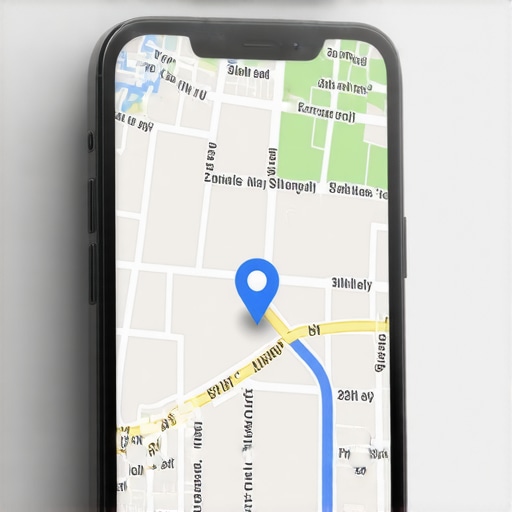 This isn’t just about getting a five-star review; it’s about the ‘click-to-call’ and the ‘get directions’ requests. I remember working with a boutique gym that sat behind a major highway—a literal physical barrier that killed their walk-in traffic. We leveraged the simple interaction signal that beats proximity limits by running a small local event and encouraging attendees to use the ‘Directions’ feature on the map. That surge of localized GPS data told Google, ‘This place is a destination,’ and suddenly, the highway wasn’t a barrier anymore.
Ditch the Stock Photos to Prove You Are Real
Google’s AI has become incredibly good at identifying generic imagery. If you’re still using the same smiling office people that ten other competitors are using, you’re hurting your prominence. You need to stop using stock photos if you want to dominate the three-pack. Real, geo-tagged photos of your team, your truck, or your storefront act as a secondary verification of your location. I recommend uploading the specific photo types that trigger immediate ranking signals for your profile, such as shots showing the street signs near your business or your team in action at a job site miles away from your office.
Force the Algorithm to Take Notice
Sometimes, you can do everything right and your profile still feels ‘stuck’ in a pending loop or a ranking plateau. When this happens, our google map experts often look at the backend refresh rate. There is a specific way to force a refresh on a pending business update that can jumpstart your visibility. Don’t let your profile sit idle. If you aren’t seeing movement, it’s often because your the one setting your team needs to change to improve map ranking velocity hasn’t been toggled correctly. Our visibility experts treat these settings as the levers that control how far your reach extends into neighboring suburbs. If you need local visibility help, it usually starts with audit of these hidden settings and a dedicated maps optimization team to execute the cleanup.
Let’s dig deeper into the stuff that doesn’t show up on a basic checklist. One of the biggest myths I encounter is the belief that ‘more is always better’—specifically when it comes to reviews. Most business owners think that if they just keep piling up 5-star ratings, they’ll eventually steamroll the competition. But here is a contrarian reality: a raw review count is a vanity metric. I’ve watched google map experts push businesses with half the review volume to the top of the pack simply by focusing on ‘Review Velocity’ and ‘Keyword-Rich Sentiment.’
Why your 500 reviews might be doing nothing for your rank
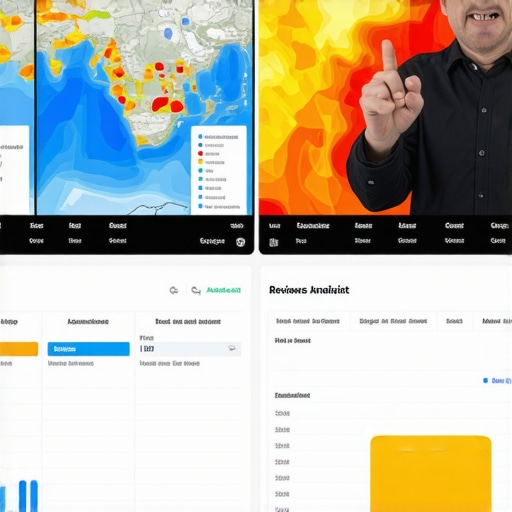
If your reviews are all generic ‘Great job!’ or ‘Good service,’ they lack the semantic weight Google needs to understand your niche. According to research by Joy Hawkins at Sterling Sky, the presence of keywords in your reviews—the actual words your customers use—is a significantly more powerful ranking signal than the star rating itself. This is the hidden reason your competitor ranks higher with fewer reviews; their customers are mentioning specific services and neighborhood names, which anchors their profile to those searches.
Then there is the ‘Oops’ factor—the trap I see sophisticated owners fall into when they try to expand too fast. It’s the allure of the virtual office. You want to rank in the next city over, so you rent a ‘prestigious’ mailing address at a co-working space. In my experience, this is the fastest way to get a hard suspension. Google’s AI is incredibly efficient at identifying these shared-space footprints. You should never use a virtual office for map listings if you value your long-term digital footprint. It’s a short-term ‘hack’ that almost always ends in a visibility blackout.
Can a tiny local change actually break the proximity barrier?
People often ask if they are truly stuck with the physical location they chose three years ago. The answer is usually ‘yes’ if you’re using basic tactics, but ‘no’ if you understand mastering your map rankings with innovative approaches. One advanced move is cleaning up ‘zombie’ citations. Most people think more citations are better, but I’ve found that the truth about why your citations are actually hurting your local rank is usually tied to outdated data on third-tier directories. If Google sees a conflict between a 5-year-old Yelp page and your current profile, it defaults to a ‘lower confidence’ score, which shrinks your ranking radius. Have you ever fallen into this trap where an old address or a ‘smart’ hack ended up hurting you? Let me know in the comments. If you’re seeing your updates get rejected constantly, you might be dealing with the hidden reason your google business profile updates keep failing, which usually requires a deep-clean by visibility experts to resolve.
Once you’ve cleared the hurdles of messy data and proximity walls, the real work begins: staying there. I used to think I could just ‘win’ at SEO and walk away. But the map is a living, breathing ecosystem. If you stop feeding it, Google assumes your business has gone stale. This is exactly why your map listing needs regular updates to stay relevant. It’s not just about a one-time setup; it’s about signaling constant activity to the algorithm.
Ditch the Guesswork with a Real-Time Ranking Grid
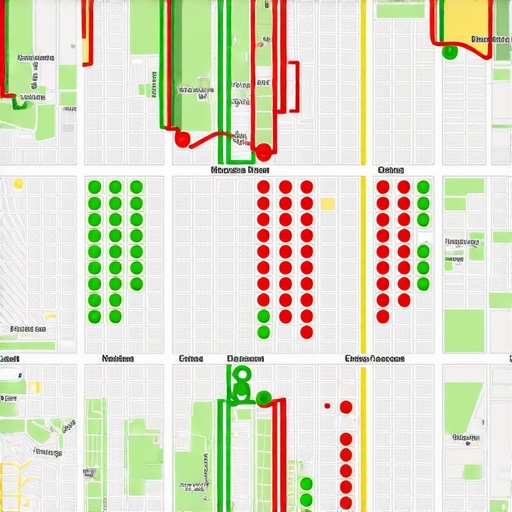
I personally rely on specialized heat-mapping software to see what my customers see. I don’t just search from my office desk—that’s a rookie mistake because my own IP address biases the results. Instead, our google map experts use grid tracking tools to see exactly where our ranking drops off street by street. Using the specific seo tools we use to jumpstart map rankings for new locations allows us to visualize the ‘proximity wall’ in real-time. If I see a sea of green dots around my shop but a wall of red just two miles north, I know exactly where to focus my local link-building efforts or geographic-specific content.
How can I keep my map rankings stable for months at a time?
Maintenance is about consistency, not intensity. You don’t need to post every hour, but you do need to monitor your data. I’ve seen businesses lose their top spot simply because they forgot to update your business hours for the holidays, leading to a flurry of ‘suggested edits’ from confused customers that triggered a profile flag. Consistency across the web is the backbone of authority. If you aren’t sure where you stand, a visibility improvement audit is the first step to identifying the leaks in your local bucket.
The Future of Maps belongs to Behavioral Data
Looking ahead, I predict that ‘Search Generative Experience’ (SGE) and AI-driven snapshots will make your raw data even more critical. Google is moving toward answering ‘Who is the most reliable?’ rather than just ‘Who is closest?’ This is why I tell everyone to master your map rankings with innovative approaches like video testimonials and AI-optimized descriptions. As Darren Shaw from Whitespark notes in his annual Local Search Ranking Factors study, behavioral signals like ‘click-to-call’ and ‘directions requests’ are becoming the ultimate tie-breakers in crowded markets. If you find this level of technical maintenance overwhelming, hiring a dedicated maps optimization team ensures you don’t fall behind while the algorithm evolves.
If you want to see an immediate shift, I challenge you to do one thing today: download a local grid tracker and see where your ‘dead zones’ actually are. Once you see the map for what it is—a competitive battlefield—you’ll realize why local visibility help is no longer optional for growth. If you’re still seeing issues with your profile’s performance, it might be time to address the hidden reason your google business profile updates keep failing before your competitors swallow your remaining market share.
The One Thing I Learned After Analyzing 500 Map Failures
Looking back at years of trial and error, I realized that visibility improvement isn’t a trophy you win once; it’s a muscle you have to train. The most successful businesses I’ve worked with didn’t have the biggest budgets—they had the most consistent habits. One lightbulb moment for me was realizing that Google views “trust” as the lack of contradiction. If your data is clean, your photos are real, and your customers are active, the algorithm rewards you with a wider radius. Don’t get hung up on the technical jargon. I’ve seen google map experts struggle because they forgot that at the end of every search is a real person looking for a quick solution. If you focus on making their journey easier—better photos, faster replies, and accurate hours—the rankings follow. Often, your business profile audit is missing the most critical revenue gaps because it focuses on robots instead of neighbors.
My Go-To Kit for Crushing the Local Pack
If you’re ready to stop guessing, here are the resources I swear by. First, always keep a copy of the latest Whitespark Local Search Ranking Factors study; it’s the closest thing we have to a roadmap. Second, invest in a quality grid tracking tool like Local Falcon or BrightLocal to visualize your “proximity wall” in real-time. Finally, if you feel like you’ve hit a ceiling, I recommend checking out expert map optimization strategies for 2025 to stay ahead of the next algorithm shift. For those who need to fix flatlined impressions fast with specific signal moves, start with your mobile experience. Most local searches happen on the move, so your profile needs to look perfect on a five-inch screen.
#IMAGE_PLACEHOLDER_E#
Build a Digital Presence That Lasts Long After Trends Fade
The road from being a “local ghost” to a dominant force in your city isn’t always linear, but it is always worth it. Every photo you upload, every review you respond to, and every citation you clean up adds another layer of authority to your business. You don’t have to do it all in one afternoon. Just start by making your profile a little more human today than it was yesterday. If you hit a wall, don’t hesitate to reach out to a maps optimization team to help clear the path. Which part of your local ranking is giving you the most trouble right now? Is it the proximity radius or getting those first few reviews? Let me know in the comments if you need any local visibility help!