
I was sitting in my shop at 8:00 PM, surrounded by the smell of expensive candles and the quiet hum of the refrigerator, when I decided to check my own ranking. I pulled out my phone, typed in ‘gift shop,’ and my heart sank. I wasn’t in the top three. I wasn’t even on the first page. I was physically inside the building, yet according to Google, I didn’t exist. It felt like a punch to the gut after a twelve-hour shift. I realized then that I was a ghost in my own neighborhood once the sun went down. This wasn’t just a glitch; it was a systemic failure in how I managed my digital presence. Many of you are likely experiencing this right now without even knowing it. You spend all day serving customers, but the moment you flip that sign to ‘Closed,’ your digital footprint vanishes, leaving the floor open for your competitors to swoop in. Today, I am going to show you how to stop being a part-time business in an all-hours digital world.
The Nighttime Ghosting Problem is Smothering Your Leads
When I first started out, I made the classic mistake of thinking that as long as my address was correct, I was fine. I quickly learned that the algorithm is far more fickle than that. If you’ve noticed your rankings dipping after dinner, you might be a victim of the ‘Open Now’ filter or a lack of persistent local signals. My maps optimization team later explained that Google prioritizes businesses that are currently operational for certain ‘near me’ searches, but that doesn’t mean you have to disappear entirely. I’ve seen this happen specifically in service niches, which is why your med spa disappears from search results during peak hours or late evenings when people are actually booking their next appointments. You need a strategy that keeps your authority high even when your doors are locked. According to data from BrightLocal, nearly 98% of consumers use the internet to find information about local businesses, and a significant portion of that research happens when they are at home on the couch, long after you’ve gone home to yours. If you aren’t visible then, you aren’t in the running.
Is this visibility drop actually worth the effort to fix?
You might be thinking that if you aren’t open to take a call, it doesn’t matter if you show up. That is a dangerous trap I fell into early on. I ignored my dropping evening impressions because I thought, ‘Well, I’m closed anyway.’ But here is the reality: customers are researchers. They find you at 9:00 PM, read your reviews, and then decide who they are going to visit at 9:00 AM the next morning. If google map experts have taught us anything, it’s that local search is a 24/7 competition. I once lost a major contract because a competitor who lived three miles further away had better evening visibility than I did. It was a wake-up call. I realized I needed real visibility improvement moves that established my business as a permanent landmark, not just a temporary pop-up that only exists during business hours. Have you ever stood in your own storefront, searched for your service, and felt like you were wearing an invisibility cloak? It’s a frustrating experience, but it’s one we can solve by focusing on signals that transcend your operating hours.To fix the ghosting problem, we have to look at your Google Business Profile as a living organism, not a static yellow-pages ad. The algorithm doesn’t just want to know where you are; it wants to know if you are still relevant right now.
Reclaiming your spot in the local three-pack
The first thing I did after my own invisibility realization was to treat my digital presence like my shop window. If I left the same mannequin in the window for three years, people would assume I went out of business. The same applies to your map listing. You need to provide proof of life to the google map experts and the bots they monitor.
Feed the algorithm with daily proof of life
One of the most underused weapons in your arsenal is the Google Post. I used to think these were just like Facebook updates that nobody saw, but I was wrong. When you learn how to use Google Posts to drive more storefront traffic, you are essentially signaling to the map that your business is active and engaged. I remember working with a local plumber who was losing out to a competitor ten miles away. His profile was technically perfect but completely static. We started posting one simple photo of a finished job every Tuesday. By the third week, he was back in the top results. It wasn’t about the aesthetic of the photo; it was about the timestamp of the activity.
Pick the right label before the map picks it for you
Your primary category is the strongest signal you can send. If you get this wrong, you are essentially shouting into a void. I have seen businesses struggle for months only to realize why your business category might be killing your visibility—they were being too broad. A Specialty Gift Shop is not just a Store. Be specific. Use your description to weave in local landmarks and specific services without sounding like a robot. I call this visibility improvement through precision.#IMAGE_PLACE_HOLDER_B#
Turn every review into a ranking opportunity
Most owners just say thanks to a five-star review and ignore the one-star ones. That is a massive wasted opportunity. When you apply the review response trick that boosts your search authority, you are actually using your customers feedback to feed the search engine more keywords. If someone says the candles smelled great, your response should mention the hand-poured soy candles in downtown Austin. You are not just being polite; you are building a semantic bridge between what people search for and what you offer.
Visual signals that stop the scroll
Finally, you cannot ignore the power of imagery. It is not just about pretty pictures; it is about data. You need to implement the exact photo strategy that triggers local search signals, which involves uploading photos that have high engagement and clear relevance to your services. For many, the benefit of using a professional map optimization team is that they understand how to optimize these files before they even hit the web, ensuring the map pins you as the most relevant answer to a near me query.
It is easy to assume that local SEO is a ‘set it and forget it’ game, but that mindset is exactly what keeps you invisible when it matters most. Most business owners are told that if they just get enough citations, they will magically stay at the top. I am here to tell you that this is a dated myth. In my experience, high citation volume has become a baseline requirement, not a competitive advantage. If you are relying on a massive list of directory links to save your ranking, you are likely noticing 5 signs your local visibility help is actually hurting your rankings. The algorithm has evolved to prioritize behavioral signals—like how many people click for directions or call you directly from the map—over how many times your name appears on a random web directory. This is where the nuanced work of true google map experts comes into play.
Why your citation count is likely a vanity metric
Everyone shouts about consistency, but few talk about relevance. I’ve seen shops with 200 citations get absolutely crushed by a competitor with 20 high-quality, local links. Why? Because why local citations no longer move the needle like they used to comes down to Google’s ability to detect ‘noise.’ If your business is listed on a site that hasn’t been updated since the Obama administration, Google doesn’t care. You need signals that prove you are an active part of your specific neighborhood. According to the 2023 Local Search Ranking Factors study by Whitespark, ‘on-page signals’ and ‘behavioral factors’ have seen a significant increase in importance, while traditional citations continue to decline. This means your website needs to talk to the map listing in a way most people ignore. Specifically, the schema technicality most agencies skip for local dominance is often the missing link that connects your physical location to the digital ‘near me’ query.
Why does my ranking fluctuate between my front door and the street corner?
This is the question that keeps most service providers up at night. You check your phone at your desk and you are #1, but walk to the coffee shop next door and you drop to #5. This is the proximity filter in action, and it is the most common trap for stagnant businesses. If you aren’t seeing a steady flow of leads despite high traffic, you need to understand why your business profile views are high but leads are low. Often, it is because your profile is optimized for the wrong search intent or your ‘service area’ is set so wide that Google views you as a generalist rather than a local authority. 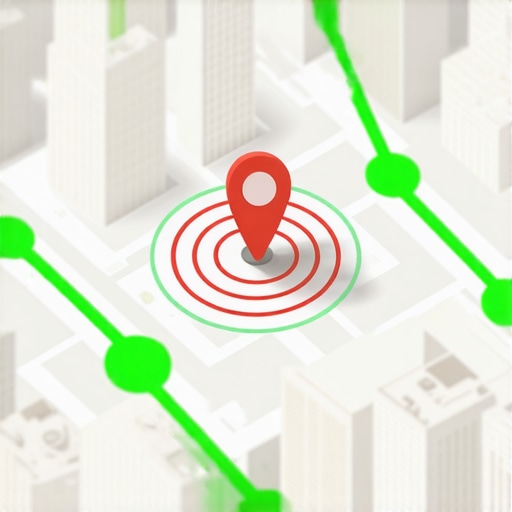
The deadly trap of the virtual office address
Here is a warning for those trying to ‘hack’ the system: never use a virtual office to try and claim a new neighborhood. I’ve seen countless businesses get their entire profile permanently blacklisted because they thought a coworking space address would help them rank in a wealthier zip code. It is an ‘oops’ factor that can cost you your entire digital history. Google is incredibly good at identifying these non-physical locations. Instead of trying to fake a location, you should be asking why your business address is scaring away local searchers and how to fix your actual proximity signals. Real visibility improvement comes from deep-diving into the local data, not trying to trick a multi-billion dollar AI. Have you ever fallen into this trap of trying to ‘expand’ your reach only to find your main listing suspended? Let me know in the comments.
Once you have stopped the bleeding from common mistakes, you have to transition into the maintenance phase. Most people treat local SEO like a light switch they can just flick on, but google map experts will tell you it is more like a garden that needs constant weeding. If you ignore your profile for a month, the algorithm starts to wonder if you have closed your doors or lost interest in your customers.
How do I maintain my map dominance over time?
Consistency is the short answer, but the practical answer involves a strict schedule of ‘profile hygiene.’ I make it a point to check my insights every Monday morning to see how many people requested directions compared to the previous week. If I see a dip, I don’t panic; I look for a reason. Often, why your map listing needs regular updates to stay relevant becomes obvious when a new competitor pops up nearby or when your own engagement signals start to plateau. You should be refreshing your photos at least once a month and responding to every single review within 48 hours to signal to Google that you are an active, reliable entity.
The one tool that changed how I see my neighborhood
I used to just search for my business on my own phone and think I was doing great because I was #1 at my desk. Then I discovered grid-tracking tools like Local Falcon. These tools show you a map with pins across your city, telling you exactly where you rank at every street corner. It was a massive reality check. I realized I was invisible just two miles to the west. This is where how to snoop on competitor map data to steal their best traffic becomes vital. When you see exactly where your ‘visibility bubble’ bursts, you can target your local content and schema to push those boundaries further out. 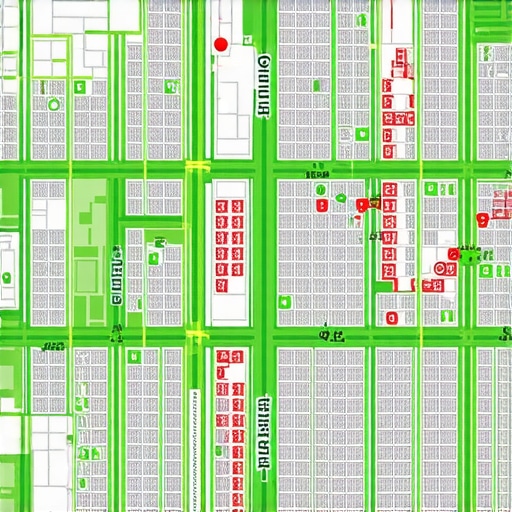
Stop guessing and start using professional signals
If you are scaling to multiple locations or just don’t have the time to spend four hours a week on map audits, the benefit of using a professional map optimization team cannot be overstated. They have access to enterprise-level data that tells them exactly which ‘behavioral signals’—like the time spent on your profile or the click-through rate on your posts—are moving the needle in your specific zip code. For my shop, the biggest visibility improvement came when I stopped trying to do everything manually and started using how to use local schema to fix your service boundary errors. As Mike Blumenthal, a leading authority in the local search space, often emphasizes, Google is increasingly moving toward ‘entity-based’ search. This means the search engine isn’t just looking for your name; it is looking for a web of connections that prove you are a legitimate, trusted part of the community.
Prepare for the AI-driven local search shift
Looking ahead, the way we interact with maps is changing. With the rise of AI-driven search summaries, users might not even click through to your website anymore; they will get their answers directly from the map interface. This is why you need to unlock local visibility expert map optimization strategies for 2025 now. We are heading toward a world where how to optimize your map listing for voice search and visual recognition will be just as important as your star rating. If a customer asks their car, ‘Where is the best place for hand-poured candles near me?’ your profile needs to be robust enough for the AI to pick you with absolute confidence. Try this today: Open a private browser tab, walk three blocks away from your storefront, and search for your primary service. If you aren’t in the top three, your ‘visibility bubble’ is too small, and it is time to start pushing those boundaries with better local signals.
Hard Truths I Discovered While Chasing the Top Three Spot
I used to think that a perfect profile was a ‘set it and forget it’ task. I was wrong. The real game is played in the nuances of active engagement. One of the biggest lightbulb moments for me was realizing that reviews aren’t just polite feedback; they are data goldmines. When I started using the review tactic that increases your local map authority, my profile started showing up for keywords I hadn’t even targeted. I also learned that proximity is a moving target. If you don’t address the ‘invisible wall’ around your shop, you’ll never reach the next neighborhood over. Learning how to fix the invisible radius problem for your local store was the key to expanding my reach without moving my physical front door.
Tools and Resources That Actually Move the Needle
If you want to stop guessing and start dominating, you need a toolkit that provides real-time data. I rely heavily on grid-tracking software to see my ‘visibility bubble’ in action. It’s also vital to look under the hood of your website. Many business owners ignore the technical side, but the schema technicality most agencies skip for local dominance is often what bridges the gap between your site and the map. If you feel like you’re shouting into a void, there is no shame in seeking a benefit of using a professional map optimization team. They can often spot the ‘quiet’ errors—like duplicate data or category conflicts—that are holding your ranking hostage while you focus on running the actual business.
#IMAGE_PLACEHOLDER_FINAL#
Take Back Your Neighborhood Today
Your map pin is more than just a coordinate; it is a digital handshake with every potential customer in your city. Don’t let your business remain a ghost after the sun goes down or when you’re a few miles away from your desk. You have the tools and the knowledge now to maximize your local reach and ensure that when someone needs what you offer, your name is the first one they see. The algorithm may change, but the value of a trusted, active local presence never does. Have you ever checked your ranking from a few blocks away and been surprised to find you were invisible? Let me know your experience in the comments below!