
I stared at my phone for twenty minutes, refreshing the map until my thumb hurt. Nothing. I was standing right in my own lobby, but according to Google, I didn’t exist unless you were literally parked in my driveway. Being on the edge of town felt like being in a witness protection program for businesses. I’d picked this spot because the rent was low and the parking was easy, but I quickly learned that the ‘Map Pack’ didn’t care about my lower overhead. I was a ghost. I remember calling a friend in a panic, asking why my listing wasn’t showing up for people just three miles away. That was my first wake-up call about how brutal the location filter really is for those of us on the outskirts.
Stop Being Invisible Just Because You are Outside the City Center
If you have ever felt like your business is stuck behind an invisible wall, you aren’t alone. It’s a common frustration for anyone not located right in the heart of the action. Most business profiles lose the proximity battle before they even start because they don’t account for the algorithm’s heavy bias toward the city center. I made the massive mistake early on of thinking that having a great website and plenty of five-star reviews would automatically overcome a ‘bad’ address. It didn’t. I had to learn the hard way that you need a specific set of moves to expand your reach beyond your physical front door. Have you ever checked your rankings from a different neighborhood and felt that sinking feeling when you realized you had vanished? It is a gut-punch, but it is fixable.
Today, I am going to show you exactly how to break through that barrier. We are going to tackle how to fix the invisible radius problem for your local store so you can start appearing in searches where your customers actually live. We won’t just talk about theory; I will share the specific technical adjustments I used to drag my own business out of the edge-of-town graveyard and into the top three spots. It takes more than just a pin on a map; it takes a concentrated effort to signal to search engines that you are relevant even if you are a few miles further away than the competition.
Is it actually worth the effort to fight the proximity filter?
You might be wondering if you should just give up and move your office closer to the city center. Before you sign a new lease, listen to this: proximity is the single most important factor in local search, but it is not the only one. According to the Whitespark Local Search Ranking Factors report, while proximity remains a primary signal, your relevance and prominence can actually stretch your visibility radius significantly if you play your cards right. I found that by implementing a specific proximity hack that stops you from ghosting local leads, I could reach customers who were previously only seeing my downtown rivals.
I wasted months trying to rank for broad, city-wide terms that I had no business chasing at first. It was a classic ‘ego-optimization’ mistake. I thought being number one for the entire city was the only goal. In reality, I needed to dominate the specific corridors leading to my shop. When I shifted my focus to capturing the ‘edge’ traffic and building localized authority, everything changed. I stopped shouting into the void and started talking to the people who were actually willing to drive the extra five minutes to see me. It turns out, people do not mind the drive; they just need to know you exist first. Let’s look at the actual steps to make that happen.
To stop being a ghost, you have to treat your digital footprint like a breadcrumb trail. If you’re on the outskirts, Google’s algorithm thinks you’re less relevant to someone in the center than a mediocre shop that is right next door. You have to prove otherwise. Think of your business like a lighthouse on a foggy night; if you want to be seen from the harbor, your light has to be ten times stronger than the ones on the pier.
Stop Chasing the Whole City and Start Winning Your Corridors
I learned this the hard way when I was trying to rank for my entire metro area. I was spread too thin and ranking for nothing. The breakthrough happened when I identified the ‘corridors’—the specific streets and neighborhoods that feed into my location. I stopped trying to be everything to everyone and focused on the signal gap stopping your profile from ranking in nearby zip codes. By narrowing my focus to the two zip codes adjacent to me, my visibility in those areas doubled in three weeks. This isn’t about being small; it’s about being undeniable in a specific radius.
The Secondary Category Switch That Actually Works
Most business owners pick one category and never look back. That is a massive mistake. Your primary category is the ‘what,’ but your secondary categories are the ‘how’ and ‘who.’ I remember helping a local repair shop that was stuck on page four. They only had ‘Auto Repair’ as their category. We sat down and implemented the simple change to your secondary categories for faster growth, adding niche-specific services they actually performed. Within ten days, they started popping up for high-intent searches they hadn’t even considered. It is like adding extra lanes to a highway—suddenly, there are more ways for people to reach you.
Force Google to See Your Real Service Boundaries
If you have a physical shop but also deliver or visit clients, you are likely confusing the algorithm. You need to explicitly define where you operate. This is the one setting your maps optimization team needs to change fast. I once saw a business that had their service area set to the entire state. Google saw that as ‘spammy’ and suppressed their local map pin. We tightened that radius to a realistic 15-mile circle and watched their local rankings stabilize. You have to be honest with the map, or it will punish you by hiding your marker entirely. You can learn how to force Google to update your service area radius to reflect where you actually do business, which clears up that ‘ghosting’ issue immediately.
Post Photos That Prove Your Location Context
Metadata in photos is great, but visual context is better. I used to just post stock-looking photos of my desk. Boring. Then I started taking photos of my storefront with the neighborhood welcome sign visible in the background. Suddenly, I wasn’t just a business in a void; I was a business here. This is part of the exact photo types that trigger your profile ranking signals.  When you show Google’s AI that your shop is physically nestled between two other local landmarks, you are building geographical trust that no keyword can replicate.
Interact with the Map Like a Local Resident
Google watches how users interact with your listing. If people are clicking ‘Directions’ but then canceling, it signals that you’re too far away or hard to find. To counter this, you need to trigger the interaction moves that actually matter for dominating map results. I started asking my regulars to search for my shop by name while they were already in my neighborhood, rather than using a direct link. This ‘search and click’ behavior tells Google that people in the area are actively looking for you, which is the ultimate vote of confidence for a business on the outskirts.
Everyone tells you that the secret to local dominance is just getting more reviews, but that is a dangerous oversimplification. In my experience, chasing a high review count without context is like revving your engine in neutral—you make a lot of noise, but you aren’t going anywhere. This is where most business owners get frustrated with their maps optimization team. They see the numbers go up, but the phone stays silent. The visibility experts who actually move the needle know that Google has moved past simple quantity. We have to talk about the quality of the ‘entity’ you are building, not just the tally on your profile.
Stop Obsessing Over Review Count Alone
The common belief is that a 500-review profile will always beat a 50-review profile. It sounds logical, but it is often wrong. If those 500 reviews are generic ‘Great service!’ blurbs, they carry very little weight for specific keyword ranking. I have seen small shops outrank massive competitors by leveraging the truth about local keyword stuffing and focusing on ‘keyword-rich’ organic reviews instead. If your customers aren’t mentioning your specific services and your neighborhood name in their feedback, you are missing out on the primary fuel for your map pin. Have you ever fallen into this trap? Let me know in the comments.
Can you actually outrank a competitor who is miles closer to the center?
This is the question that keeps business owners on the outskirts awake at night. The short answer is yes, but not by using 2015 tactics. According to the Sterling Sky Local Search Ranking Factors report, while proximity is a massive filter, ‘relevance’ and ‘prominence’ are the only variables we can actually control to override it. To do this, you need to stop relying on generic directory listings. I’ve found that why local citations no longer move the needle like they used to is because Google now prioritizes real-world behavioral signals over static data on a random directory website.
The Trap of Setting the Perfect Service Radius
The ‘Oops’ factor that kills most suburban profiles is an improperly configured Service Area Business (SAB) setting. Many visibility improvement plans fail because they try to claim a radius that is too large, which triggers a proximity filter that actually hides you from people next door. If your local visibility help tells you to just ‘check every box’ in your county, fire them. You need to use specific technical markers to define your boundaries. I started seeing real results once I learned how to use local schema to fix your service boundary errors. This tells the algorithm exactly where your boots are on the ground, preventing the ‘ghosting’ effect that happens when Google thinks you are spread too thin.
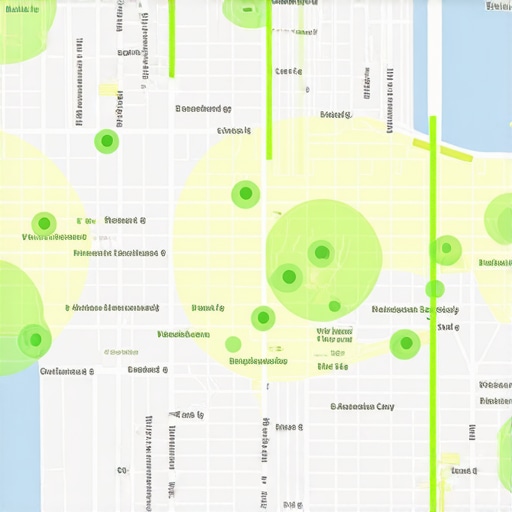
Beyond the technical settings, the real secret weapon is user engagement. This is the one signal visibility experts use to beat multi-location firms. Large chains have the budget, but they lack the local pulse. When you trigger the interaction signal that finally moved our client to number one—which involves real-time updates and localized Q&A—you prove to the algorithm that you are the most relevant answer for that specific zip code. If you are stuck, look at the simple move to fix your flatlined map impressions by focusing on these high-intent user actions. It’s about being a living, breathing part of the map, not just a static dot on the screen.
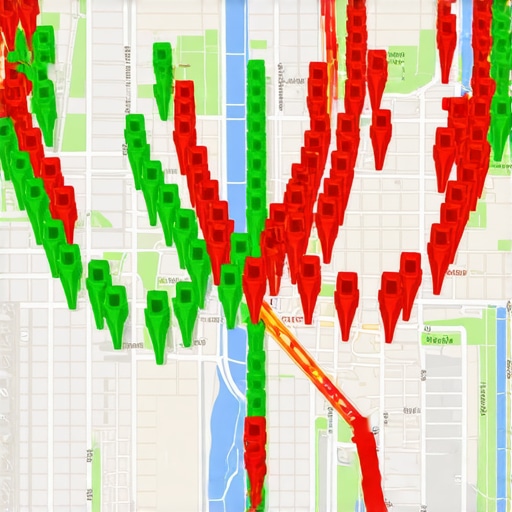
I personally don’t trust a standard ranking report that shows me as #1 anymore. Why? Because being #1 in your own office is easy—it is the three miles in every direction that actually pays the bills. To get a real sense of where I stand, I use geo-grid tracking tools like Local Viking. These tools provide a visual heat map of your rankings across a custom grid, showing exactly where your visibility drops off. This is exactly what the most effective visibility experts do to identify ‘weak spots’ in a city. If you see a cluster of red pins near a major intersection, you know your local authority is failing in that specific pocket. I’ve found that using these maps optimization tactics from visibility pros allows me to target my content updates to the specific neighborhoods that are lagging rather than guessing with a broad brush.
How do I keep my map pin from fading over time?
The biggest mistake you can make is thinking you are ‘done’ once you hit the three-pack. The map is a living organism, and the algorithm is designed to favor businesses that demonstrate consistent, real-world activity. If you stop posting updates or stop getting fresh reviews, Google assumes your business is less active or less relevant to the community. I set a strict schedule for my maps optimization team to upload original, high-resolution photos every single week. It is one of the top secrets to boost your business presence that most people ignore because it feels like ‘busy work.’ You also need a reliable system for review generation. You can learn how to automate customer feedback without triggering the review filter so you maintain a steady drip of social proof without having to manually beg for it every day. Consistent engagement is the only way to avoid the slow decay of your local search position.
According to official Google Business documentation, ‘prominence’ is heavily weighted by information Google has about a business from across the web, including links, articles, and directory listings. This means your map ranking is inextricably tied to your overall digital footprint. If you are not building local backlinks or getting mentioned in local news outlets, your pin will eventually sink under the weight of competitors who are more active. This is the secret to staying on the map when the algorithm shifts. You have to be more than just a listing; you have to be a local landmark in the eyes of the search engine.
Looking ahead, I predict that within the next year, Google’s AI will start prioritizing ‘visual inventory’ over text-based keywords. If your uploaded photos clearly show a specific product on your shelf or a specialized tool in your hand, you will likely rank for those service terms even if you do not explicitly type them in your description. This is why you need local visibility help that understands the shift toward computer vision and visual search. Don’t just read this and move on; go into your profile right now and check your primary category. If it is too broad, change it to a more specific niche that reflects your most profitable service and watch how your impressions shift over the next 48 hours.
The Reality Check Most Visibility Experts Won’t Give You
When I first started, I thought I could outsmart the algorithm with just more backlinks. I was wrong. The hardest lesson I learned is that Google cares more about how people move through the real world than how many directories you are listed in. Another lightbulb moment came when I realized that a maps optimization team isn’t just there to fill out forms; they are there to tell a story of relevance. If your profile feels like a static museum piece, you will stay stuck. I also had to accept that ‘good enough’ is a death sentence in a competitive radius. You have to be the loudest local signal in the room if you want any chance of a visibility improvement that actually lasts.
My Must-Have Toolkit for Local Dominance
I don’t believe in guessing when it comes to your livelihood. To stay ahead, I rely on a few specific resources. First, I always keep a copy of the expert map optimization strategies for 2025 nearby to ensure I am not using outdated tactics. For technical precision, I follow the exact steps we use for rapid visibility improvement to keep my service boundaries sharp. I also trust tools like Local Viking for tracking and Whitespark for citation audits. These are the same tools the top google map experts use to find the gaps your competitors are missing.
Stop Being a Ghost and Start Taking Up Space
The distance between you and the city center doesn’t have to define your success. It takes work, persistence, and a bit of local visibility help to bridge that gap, but the rewards of a ringing phone are worth every minute of optimization. You’ve seen the map, you’ve seen the data, and now it is time to act. Don’t let another month go by where your potential customers are being routed to your competitors simply because they have a ‘better’ address. You can master your map rankings with these innovative approaches and finally get the recognition your business deserves. If you ever feel stuck, you can always reach out to our team for a deeper dive. Have you ever noticed your rankings drop off sharply as soon as you cross a specific neighborhood line? Let me know your experience in the comments below!