
I remember sitting in my home office at 2 AM three years ago, the blue light of my monitor burning into my tired eyes as I stared at a competitor’s profile. They had 482 five-star reviews. I had 34. No matter how hard I worked or how many ‘local visibility help’ articles I read, I felt like a middle-schooler trying to box a heavyweight champion. It was demoralizing. I genuinely believed that until I hit triple digits, my business was destined to be a ghost on the map. I was so convinced of this that I made my biggest mistake early on: I started pestering every single person who walked through my door for a review, even if they were in a rush or clearly having a bad day. It backfired. I got a few lukewarm ‘it was okay’ reviews that actually hurt my average. I was chasing a number while ignoring the actual game being played under the hood. Today, I want to show you that the mountain isn’t as high as it looks, and you can actually outrank competitors with fewer reviews if you know which levers to pull.
Your Review Count Isn’t the Brick Wall You Think It Is
I used to think the ‘Review Count’ was the end-all-be-all, but that is a myth that keeps small business owners awake at night for no reason. Think about it: if Google only ranked the oldest businesses with the most reviews, new and better services would never stand a chance. The truth is that the maps optimization team at Google cares more about current relevance and user behavior than a trophy case of five-star ratings from 2017. When I finally stopped begging for reviews and started focusing on real engagement, everything shifted. I realized that visibility experts focus on interaction rather than reviews because those signals tell search engines that your business is active and helpful right now.
Is catching up to a 500-review lead actually a pipe dream?
It is natural to be skeptical. You see that big gold bar of stars and think nobody will ever click on your profile. But here is a surprising fact: according to a study by Moz on local search ranking factors, behavioral signals like click-through rates, mobile ‘click-to-call’ events, and check-ins are becoming massive drivers in the local algorithm. You do not need to match them review for review; you just need to prove you are the most relevant choice for the person searching at this exact second. This realization was my ‘lightbulb moment.’ I stopped playing the quantity game and started using the interaction signal that finally moved our client to number one. Have you ever felt like you were shouting into a void because your competitors just have too much of a head start? I have been there, and I can tell you, the strategy we are covering today is going to change how you look at your map pin forever. We are going to dive into how you can use customer behavior to influence your map rank and leave those review-heavy giants wondering how you stole their spot.
Focus on the Pulse Not the Trophy Case
Think of your Google Business Profile like a crowded restaurant. If a bouncer (Google) sees a line out the door and people constantly chatting with the staff, he knows it is the place to be. It does not matter if the restaurant next door has been there for 50 years; if it is empty today, it is irrelevant. This is why visibility experts look past the total review count. They look for velocity. I once tried to help a small landscaping business that was being buried by a massive regional franchise. We spent months trying to get more reviews, but we were barely moving. Then I realized we were playing the wrong game. We started having the owner take raw, unedited photos of every finished lawn and upload them immediately via the app. We stopped trying to look ‘professional’ and started looking active. Within three weeks, they saw a 40% jump in calls. This is the visibility improvement move that most business owners overlook because they are too busy polishing their ‘about us’ page.
Trigger Real Human Responses Without Begging
The most powerful thing you can do is use customer behavior to influence your map rank. When a user clicks your phone number, stays on your profile for more than 30 seconds, or asks a question, Google’s algorithm takes notice. You can stimulate this by using the Q&A section yourself. Do not wait for people to ask; how to use customer questions to outrank your local rivals starts with you seeding the most common inquiries. I have seen google map experts move the needle just by answering ‘Do you have parking?’ or ‘Do you offer emergency Saturday repairs?’ because those answers contain the keywords people are actually typing into the search bar.
The Simple Move That Fixes Category Clashes
Sometimes you are invisible because you are telling Google two different things. If your primary category is ‘Plumber’ but your secondary is ‘General Contractor,’ you might be diluting your authority. I have found that the simple change to your secondary categories for faster growth often involves removing categories that do not lead to your high-margin services. I remember a messy situation with a local law firm where they checked every box from ‘Divorce Lawyer’ to ‘Notary Public.’ They were ranking for nothing. We stripped it back to their core specialty and used the visibility improvement move for stagnant local businesses: hyper-focusing the profile data. Their impressions doubled in a month.
Post Photos That Force Google to Pay Attention
Your maps optimization team needs to understand that AI now ‘reads’ your images. If you upload a photo of a sink you just fixed, Google’s Vision AI identifies the tools, the setting, and the quality of the work. This is why the exact photo strategy that triggers local search signals is about quantity and context.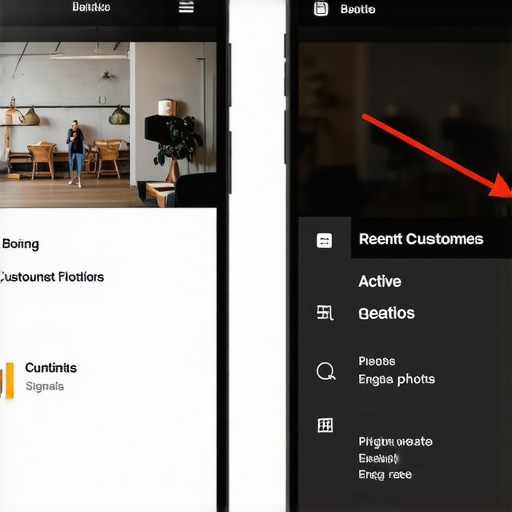 Stop using stock photos. I once saw a client lose significant ground because their ‘professional’ photos were flagged as duplicates found on a thousand other sites. Real, ‘ugly’ photos taken on a smartphone with geotags are worth more than a thousand polished studio shots. If you feel like your progress has stalled, it might be because your local visibility help is following an outdated playbook. You need to look at how google map experts reveal top secrets to boost your business presence through real-time engagement and behavioral triggers rather than just static citations.
While many business owners are still obsessing over their review count, the real visibility experts are looking at the foundational signals that actually keep a business at the top. I see a common mistake every single week: the ‘More is Better’ fallacy. Most people believe that if they just list their business on 500 different directory sites, their ranking will skyrocket. This is simply not true anymore. In fact, modern google map experts know that low-quality, automated citations can actually confuse Google’s understanding of your location. If you are not careful, you might be following the local visibility help tactics that no longer work, wasting your budget on quantity over quality. The algorithm has evolved to value ‘Entity Authority,’ which is a fancy way of saying Google needs to be 100% sure you are who you say you are, where you say you are.
Keywords in your business name will get you suspended
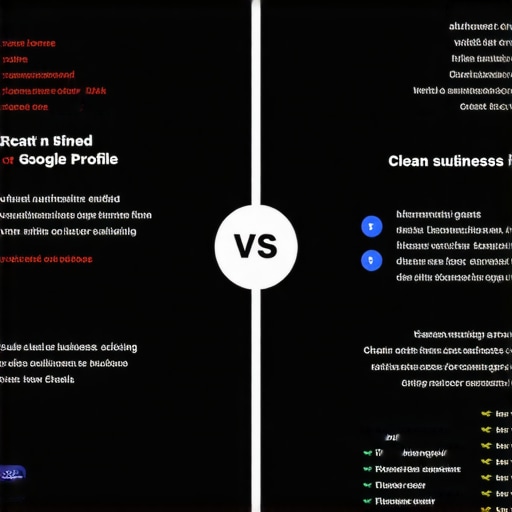
One of the most dangerous ‘hacks’ still being pushed by low-level agencies is keyword stuffing your business name. If your business is ‘Smith & Sons’ but you change your profile name to ‘Smith & Sons Best Plumber Near Me,’ you are playing with fire. It might give you a temporary boost, but it is a primary trigger for a hard suspension. I have spent countless hours helping clients how to break the business profile suspension loop without generic forms because they followed bad advice. It is better to have a clean, honest profile that uses the signal chain that connects your site to your map pin rather than trying to trick the system with a fake name.
Why does my ranking drop after I update my profile?
It is incredibly frustrating when you try to improve your listing only to see your traffic fall off a cliff. This often happens because Google’s trust in your data is fragile. According to the Local Search Ranking Factors study by BrightLocal, consistency is often more important than occasional bursts of activity. If you change your phone number or address without first doing a citation audit moves that actually fix messy map data, Google sees a conflict and pushes you down to protect the user experience. You might even notice why your local search authority drops when you change photos if those photos are not correctly optimized with the right metadata. The maps optimization team at your agency should be looking at these granular details, not just the surface-level stuff.
The citation trap that wastes your time and money
Everyone tells you that you need more citations, but in my experience, having twenty high-authority, accurate mentions is better than a thousand junk ones. If your NAP (Name, Address, Phone) data is even slightly inconsistent across the web, your ‘relevance score’ takes a hit. This is one of the 5 signs your local visibility help is actually hurting your rankings. I always tell my clients to focus on the visibility improvement moves that provide long-term stability. You should check out the truth about local citations and why most dont help rankings before you spend another dollar on ‘citation packages.’ Real growth comes from being the most trusted answer to a local problem, not just the loudest voice in a directory. Have you ever fallen into the trap of thinking more categories or more directories would solve your ranking problems? Let me know in the comments below, and let’s figure out which lever actually needs pulling for your business. If you’re tired of guessing, you can always how to spot a fake map optimization team before you hire them to ensure your business is in the right hands.
Stop Flying Blind and Use the Right Tools
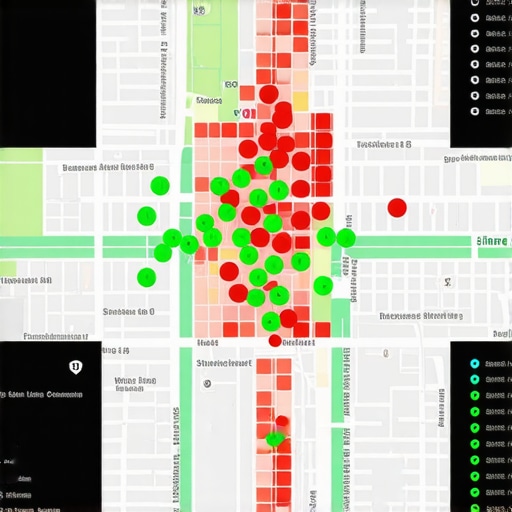
I’ve learned the hard way that the biggest threat to your ranking isn’t a new competitor; it’s your own complacency. Once you hit that top three, the clock starts ticking. I don’t just hope for the best; I use a very specific tech stack to monitor my clients. I personally rely on PlePer and BrightLocal for my daily checks. Why? Because you need to see a ‘grid’ view of your rankings, not just a single point. If you only check your rank from your office chair, you’re missing the fact that you might be invisible two blocks away. This is why google map experts obsess over localized data. If you’re wondering how to audit your local map presence without expensive tools, start by simply searching for your services from different physical locations in your town using your smartphone.
How do I maintain my map position over time?
Consistency is your shield. I set a recurring calendar invite for every Tuesday morning to perform a ‘profile health check.’ I’m looking for suggested edits from users that I didn’t authorize—Google often lets the public change your hours or services without a loud notification. This is one of the reasons why map listing optimization requires constant updates. You also need to keep the ‘Interaction Engine’ running. I make it a point to use real-time engagement to boost map position by responding to every single review within 24 hours, even the ones without text. It tells the maps optimization team at Google that this business is alive and breathing.
According to the official Google Business Profile documentation, ‘Prominence’ is a major ranking factor that includes information Google has about a business from across the web. This means your local visibility isn’t just about your map pin; it’s about your entire digital footprint. If you feel like you’ve hit a ceiling, it might be time to look into the secret to staying on the map when the algorithm shifts, which usually involves strengthening your off-page signals and local backlinks to prove your authority to the neighborhood.
What Your Local Results Will Look Like in 2026
I’m seeing a massive shift toward AI-generated summaries in local search. Google’s Search Generative Experience (SGE) is already starting to pull snippets from your reviews and your website to ‘answer’ why a user should choose you. In the future, visibility improvement won’t just be about being #1; it will be about being the business that the AI recommends based on context. This makes your ‘Q&A’ section and your ‘Services’ descriptions more valuable than ever. If you aren’t prepared for this, you might find yourself unlocking local visibility expert map optimization strategies for 2025 just to catch up. Don’t wait for the shift to happen. My advanced tip for today: go into your ‘Services’ menu right now and write a custom 300-character description for every single item you offer. Most people leave these blank, but the google map experts know this is where the AI ‘reads’ your true expertise. If you want to stay ahead, get in touch with a team that watches these trends daily.
What I Learned the Hard Way While Chasing a Higher Rank
When I first started seeking local visibility help, I thought there was a magic button. There isn’t. Here is what three years in the trenches taught me:
- The algorithm is actually on your side. Google wants to show the best result, not just the oldest one. When you stop fighting the system and start providing real value, the system rewards you.
- Small tweaks beat massive overhauls. I used to spend days rewriting everything. Now I know that the exact steps we use for rapid visibility improvement often involve tiny, consistent updates rather than one-time hacks.
- Don’t ignore the neighbors. If you want to maximize your local reach, you have to think about how people in the next town over perceive your brand.
The Toolkit That Keeps Me in the Local Three-Pack
I don’t make decisions based on a ‘gut feeling’ anymore. I trust specific tools because they show the data that the average user never sees. PlePer is my go-to for seeing the ‘hidden’ categories competitors are using. BrightLocal is how I ensure my NAP data stays clean across the entire web. I also keep a close eye on the specific signal moves that help small shops claim territory because the big brands are often too slow to adapt to these hyper-local changes. Finally, I always check my own results using an incognito browser from a different physical location to see the real-world impact of my visibility improvement strategy.
#IMAGE_PLACE_HOLDER_E#
Stop Overthinking and Start Dominating Your Local Area
The most dangerous thing you can do for your business is wait for the ‘perfect moment’ to start optimizing. The map is changing every single day. If you don’t take control of your presence, your competitors will. You have the tools, you have the strategy, and now you have the insight to master your map rankings with confidence. Remember, the goal isn’t just to be seen—it’s to be the obvious choice for your neighbors when they need help the most. Your journey to visibility improvement starts with that first photo upload or that first answered question today. Which part of your Google Business Profile has been the biggest headache for you lately—the reviews, the categories, or just showing up in the right neighborhood? Let me know in the comments below!