
I remember staring at my screen last Tuesday morning, coffee getting cold, feeling that heavy pit in my stomach. The dashboard did not lie. Our local visibility had not just dipped; it had fallen off a cliff. One day we were the talk of the town, and the next, we were effectively a ghost ship in the digital harbor. It was a 40% drop in impressions literally overnight. If you have ever refreshed your stats only to see a red line plunging toward zero, you know exactly how it feels. It is isolating. You start wondering if you have been ‘shadowbanned’ or if a competitor finally figured out how to bury you. I spent three hours frantically checking our connection signals before I found the culprit. Today, I am going to pull back the curtain on why this happens and give you the exact framework our maps optimization team uses to diagnose and reverse these sudden disappearances.
The Morning I Realized Our Business Became Invisible
The silence was the loudest part. No new direction requests. No ‘click-to-call’ pings. My biggest mistake early on was assuming that because I had not changed anything major, the problem must be Google’s fault. I felt like a victim of an algorithm I could not control. But the truth is, the simple move to fix your flatlined map impressions often starts with looking at the small, boring details we usually ignore. According to research from Search Engine Land, nearly 46% of all Google searches have local intent, which means if you are not showing up, you are missing half of your potential market. I have been there—I once accidentally changed a primary category thinking it would help me rank for ‘more’ things, only to have my visibility vanish for my core service. It took me a week to realize my own ‘optimization’ was the poison.
Does Google actually penalize you for no reason?
It is the question that keeps every business owner up at night. The short answer is: almost never. Google wants to provide the best result, so if you disappeared, it is because a signal changed or a competitor’s visibility improvement outpaced yours. It is not personal; it is math. We had to stop acting like victims and start acting like visibility experts to find the leak. Have you ever logged in to see your traffic has plummeted without any warning? If so, you are not alone, and it is rarely a permanent death sentence.
Why a Sudden Traffic Cliff is Usually Self-Inflicted
Most of the time, we are our own worst enemies. We tinker. We adjust. We listen to ‘hacks’ that promise the world but ignore the fundamentals of local search. When I looked deeper into our sudden drop, I realized we had a conflict in our data that I had been ignoring for months. If you are struggling with a similar ghosting, you might need local visibility help that focuses on cleaning up the basics rather than chasing the latest fad. I am going to show you how to audit your profile the way the pros do it, so you can restore your map ranking before the week is out. Let us get into the mechanics of what actually broke and how we glued it back together.
Fix the Data Leak Before You Buy More Citations
Think of your Google Business Profile as a high-precision GPS. If the coordinates are even slightly off, the system directs people to the wrong side of the river. When my traffic fell off that cliff, I realized my Name, Address, and Phone number (NAP) had a tiny discrepancy on a random local directory. It seems small, but it’s a signal of distrust for Google. Google map experts know that consistency is the foundation of everything. I had to manually hunt down every old address variation. The simple change to your NAP data can be the difference between sitting in the ‘Three-Pack’ or being buried on page four. We used a spreadsheet to track every mention, ensuring not even a ‘Suite’ vs. ‘#’ abbreviation was different. It is tedious, but you cannot build a skyscraper on a swamp.
Stop Your Categories From Fighting Each Other
I once worked with a local plumber who was desperate for more leads, so he added ‘HVAC’ and ‘Handyman’ as secondary categories. He thought he was being smart. Instead, his primary ranking for ‘Plumber’ vanished because Google no longer saw him as an authority in one specific field. This is where your business categories might be fighting each other. We stripped away the fluff and focused purely on his core service. Within three days, his visibility spiked. When your maps optimization team audits a profile, the first thing they look for is category dilution. You want to be a laser, not a flashlight. If you provide five services, choose the one that pays the bills and make it the primary anchor.
Strengthen the Signal Chain to Your Website
Your map pin does not live in a vacuum; it is tethered to your website. If your landing page is slow or lacks local relevance, the pin will drift. I call this the ‘anchor effect.’ We had a client whose map ranking dropped because they changed their homepage header and removed the city name. They broke the signal chain that connects your site to your map pin.  By putting that local schema back in and ensuring the footer matched the GBP exactly, the proximity filter stopped blocking them. You need to treat your website like the battery that powers the map listing. Without that juice, the listing goes dark.
Force a Fresh Interaction Signal
Google loves movement. If your profile is static, it’s dying. We found that the fastest way to wake up a ‘ghosted’ profile is to trigger a real-world interaction. I don’t mean fake reviews—I mean genuine engagement like a new photo upload or a Q&A response. Many visibility experts focus on reviews, but interaction signals are often more powerful for immediate recovery. I remember uploading ten high-resolution photos of a project we just finished, and by the next morning, the ‘Impressions’ graph finally started pointing up again. Use the exact steps to fix a ghosted map marker by feeding the algorithm fresh, geo-tagged data regularly. It proves to the engine that you are still open, active, and relevant to the neighborhood.I see it every single day: business owners obsessed with their review count while their actual leads are circling the drain. It is the biggest myth in the industry. People assume that the business with the most stars wins, but if that were true, the 20-year-old pizza shop on the corner would never lose to the new bistro. The reality is that a maps optimization team knows something you do not—Google cares more about ‘entity authority’ than just a high rating. I have seen profiles with 1,000 reviews get outranked by a profile with 50 simply because the latter had better behavioral signals. If no one is clicking your ‘Message’ button or checking your ‘Products’ tab, Google assumes you are a stale result.
Why does your proximity filter kick in even when you are the closest business?
This is a sophisticated frustration I hear from seasoned pros. You are literally two blocks away, yet the map shows a competitor from three miles out. This happens because of a ‘centroid shift’ or a ‘relevance gap.’ If your website does not scream your hyper-local neighborhood, Google’s proximity filter decides you are not the best answer for that specific micro-moment. To fix this, you need local visibility help that understands how to align your site’s metadata with the map’s coordinate system. According to the 2023 Whitespark Local Search Ranking Factors study, on-page signals are now the most critical factor for moving the map pin after the primary category is set. 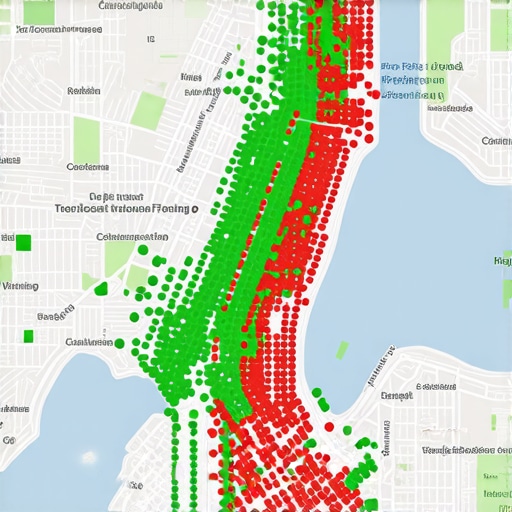
The Citation Trap That Wastes Your Marketing Budget
Most people will tell you to ‘buy more citations’ when your ranking drops. I used to believe this too. I spent thousands on directory listings that no one ever visits. But here is the truth: most local citations do not move the needle anymore. In fact, if you hire a low-quality map optimization team that uses automated bots to create hundreds of low-tier profiles, you are likely triggering a spam filter. You do not need 300 citations; you need 30 high-authority ones that actually confirm your existence to the algorithm.
Stop Playing Guessing Games with Your Category Strategy
I’ve seen businesses lose 50% of their traffic because they chose ‘Consultant’ instead of ‘Business Management Consultant.’ It seems like a minor detail, but optimizing your primary category is a high-wire act. If you change it too often, you look like a scammer. If you never change it, you might be missing out on a trending search term that visibility experts are already targeting. The nuance here is in the secondary categories—this is where you can expand your reach without diluting your core authority. Have you ever fallen into this trap where you changed something small and saw a massive drop? Let me know in the comments. We need to stop looking at these profiles as static digital business cards and start viewing them as living, breathing interaction hubs. If you are struggling to see a visibility improvement, it’s probably because you are following the 2018 playbook in a 2025 world. Let us get your signal back on the map.Maintaining that top spot isn’t a one-and-done trophy; it’s more like keeping a high-maintenance garden. If you stop weeding, the competitors will overgrow you in a heartbeat. I personally rely on grid-tracking tools because a single ranking number for a whole city is usually a lie. When our maps optimization team looks at a client, we use a hyper-local grid to see exactly where the signal drops off street by street. This is where you see the truth about proximity. Most people fail because they don’t realize why map listing optimization requires constant updates. You have to monitor ‘suggested edits’ from the public—I’ve seen competitors try to change a client’s phone number to a disconnected line on a Friday night. It’s brutal out there. 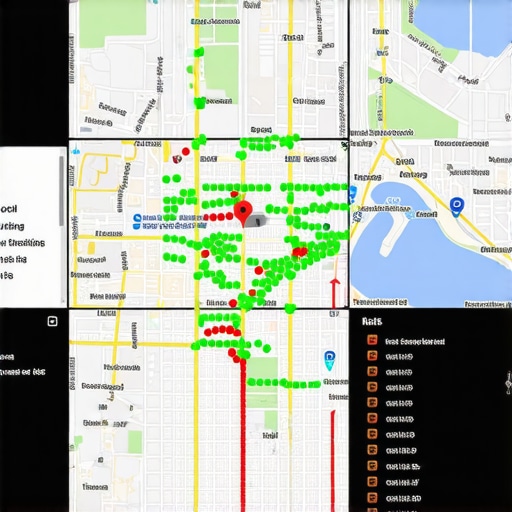
The Tools I Use to Keep the Phone Ringing
I don’t believe in flying blind. To keep a handle on things, I use specialized trackers that simulate a search from specific GPS coordinates. If you aren’t doing this, you’re only seeing your own ‘bubble’ results. You can learn how to audit your local map presence without expensive tools by using a simple incognito window and a location-spoofing extension, but for scaling, you need the heavy hitters. I track the hidden data points that actually control your map pin, such as the ‘last updated’ timestamp on your photos. As Joy Hawkins from Sterling Sky often points out in her research on the ‘Vicinity Update,’ Google has significantly dialed up the importance of physical distance, making it harder for businesses to rank far from their actual office without massive engagement signals.
How can I keep my map rankings stable for the long haul?
Stability comes from a mix of defensive monitoring and aggressive engagement. You need to treat your profile like a social media feed. I schedule a ‘Google Post’ at least once a week that includes a call-to-action button. This isn’t just for the customers; it tells the algorithm the business is vibrant and operational. If you go dark for a month, your ‘interaction score’ dips, and a hungrier competitor will slide right into your slot. It’s also vital to understand how to use real-time engagement to boost map position, especially by responding to every single review within 24 hours.
What the Future of Local Search Looks Like
In the next 18 months, I expect Google’s ‘Search Generative Experience’ to prioritize businesses that have high-quality, AI-readable photos over those with just text reviews. Visual data is the next frontier. If your photos are five years old, you’re already behind. To stay ahead, you need to unlock local visibility expert map optimization strategies for 2025 that focus on video and high-resolution imagery. The system is moving toward a ‘see it to believe it’ model where the most visually documented business wins the click. Try this today: Open your profile on your phone, take a photo of your front door or your latest project, and upload it with a caption that includes your specific neighborhood name. Check your ‘views’ count in 48 hours; you’ll see exactly why active maintenance is the only way to survive.
Hard Truths I Learned While Chasing the Three-Pack
The biggest realization I had after years of working with a maps optimization team is that Google values recency over legacy. You could have been the top shop for a decade, but if you stop engaging today, you are irrelevant tomorrow. I also learned that you cannot out-review a bad category choice. If your business categories might be fighting each other, you are essentially invisible to the very people trying to find you. Proximity isn’t a fixed wall; it’s a filter that you can bypass if your interaction signals are strong enough to prove you’re the most helpful result for the user. Finally, the simple move to fix your flatlined map impressions often boils down to cleaning up data that you thought was ‘good enough’ months ago.
#IMAGE_PLACEHOLDER_E#
The Tools I Use to Stay Ahead of the Algorithm
I don’t recommend products unless they’ve personally saved my skin during a traffic drop. First, I always keep the latest Whitespark Local Search Ranking Factors report bookmarked. It is the bible for visibility experts who want to know what actually moves the needle each year based on real data. Second, for auditing the health of my citations, I use BrightLocal to see exactly where our listings are breaking down across the web. Lastly, never underestimate a simple GPS Location Spoofer extension; it’s the only way to see what your customers see from different street corners without leaving your desk. Using these alongside expert map optimization strategies for 2025 will put you miles ahead of any stagnant competitor.
Take the First Step Toward Dominating Your Local Area
It is easy to feel defeated when the phone stops ringing, but every ranking drop is just a puzzle waiting to be solved. Whether you need a full overhaul or just some visibility improvement for a listing that hasn’t moved in months, the key is to start creating fresh signals today. Don’t wait for the algorithm to change in your favor—take proactive steps to make it impossible for Google to ignore your business. If you’re feeling stuck, looking at the exact steps we use for rapid visibility improvement can give you the clear roadmap you need. You have the tools and the framework; now it’s time to put your business back where it belongs: at the top of the map. Which of these visibility signals are you going to audit first this week? Let me know in the comments below!