I remember the exact moment I realized I was doing it all wrong. I was sitting in my small office, staring at my competitor’s listing. They had half my reviews, a messy website, and yet there they were—sitting pretty at the top of the Map Pack while I was buried on page three. I had spent weeks following every generic guide I could find, but I was invisible. It felt like I was screaming into a void while my rivals were whispering and getting all the calls. That frustration led me to stop guessing and start testing what actually moves the needle. Today, I’m going to show you exactly how to claim that top spot without burning a single dollar on Google Ads. I learned the hard way that more isn’t always better. In my early days, I thought I could trick the system by stuffing my business description with every city name in a fifty-mile radius. I thought I was being a genius, but all I did was make my profile look like spam and tank my rankings. That was a classic rookie mistake, and it’s one reason why most local visibility help plans are too broad to work for real business owners. We don’t need more noise; we need the right signals.
Why Organic Visibility Beats Paid Placement Every Single Time
Let’s be honest: paying for ads is a temporary fix. It’s like renting a house instead of owning it. The moment you stop paying, your visibility vanishes. But when you master the organic side, you build a foundation that lasts. I’ve seen our maps optimization team beat a 20-year-old competitor simply by focusing on what users actually do when they find a listing. It isn’t just about being there; it’s about being chosen. According to a study by BrightLocal, 87% of consumers used Google to evaluate local businesses in the last year, and most of them skip the ‘Sponsored’ labels entirely to find the real local favorites.
Is ranking without ads actually worth the effort?
I get it. You’re busy. You might be wondering if it’s easier to just throw money at the problem and hope for the best. I used to think that too, until I saw the data. The leads you get from organic results are almost always higher quality because people trust the map more than they trust a paid banner. If you’ve been frustrated by your progress, you might be falling for the same traps I did—like when I was told to stop paying for citations that never move the needle and instead focus on real engagement. Have you ever felt like you’re doing everything the ‘experts’ say, but your map pin just won’t budge? You aren’t alone, and it usually comes down to one specific interaction signal that finally moved our client to number one. Once you see how it works, you can’t unsee it. We’re going to dive into the exact steps to flip that switch.The first thing we need to fix is your digital identity. Think of your primary category as the main sign above your store. If you are a pizza shop but your sign says ‘Italian Restaurant,’ you might get some people looking for pasta, but you will miss the hungry crowd specifically hunting for a slice. I once worked with a local locksmith who was struggling because he had set his primary category to ‘Security System Supplier.’ He had the best tools in the city, but the map did not know he did emergency lockouts. The moment we figured out how to optimize your primary category without getting suspended and swapped it to ‘Locksmith,’ his phone rang four times that same afternoon. It was the simple move to fix your flatlined map impressions that he had been missing for two years. But categories are a double-edged sword. If you start adding every related service under the sun, you dilute your authority. You have to be extremely careful about how to use secondary categories to boost map visibility without confusing the algorithm.
Turn Your Photos Into Local Search Magnets
Most business owners treat their photo gallery like a graveyard—they upload three grainy shots from five years ago and never look back. That is a massive mistake. Think of photos as real-time proof of life. Google loves fresh data because it proves you are still open and still serving your community. I remember a client who insisted on using high-end professional stock photos for his visibility improvement. They looked beautiful, but his rankings were stagnant. We ditched the fake models and started uploading raw, smartphone shots of his team actually doing the work in the field. Within weeks, we saw the simple photo strategy for instant visibility improvement in action. It is not just about what people see; it is about the metadata attached to the file. There is the specific image data that triggers faster local discovery that most people ignore. 
Why Boring Office Shots Kill Your Ranking
If every photo on your profile is just the outside of your building or an empty lobby, you are missing a chance to build trust and authority. Show the ‘messy’ reality—the team huddles, the specialized equipment, and the finished results of your hard work. This creates an emotional connection before the customer even dials your number.
The Secret Power of Interaction Signals
This is where the real magic happens. Google does not just look at what you say about yourself; it looks at how the world interacts with you. Think of your map listing like a popular local restaurant. If people are constantly walking in, checking the menu, and asking questions, Google assumes that place is the ‘hot spot’ and pushes it to the front of the pack. This is the one-signal visibility experts use to beat multi-location firms that have millions in their budget. You can actually learn how to use customer behavior to influence your map rank by encouraging specific types of engagement, like getting customers to ask specific questions in the Q&A section or having them upload their own geotagged photos of your work. It creates a feedback loop that screams ‘relevance’ to the search engine every single day.Most people think they just need more of everything—more reviews, more citations, and more keywords. But the reality is that Google’s algorithm has evolved past simple volume, and the generic advice found on most forums is actually holding you back. One of the biggest myths that still haunts small business owners is the idea that paying for dozens of low-quality directory listings will boost your rank. In fact, you should probably stop paying for citations that never move the needle. According to the 2023 Local Search Ranking Factors study by Whitespark, citation signals have plummeted in importance, now accounting for a tiny fraction of ranking weight compared to on-page signals and behavioral data. If your maps optimization team is still obsessing over obscure directory listings from 2012, they are wasting your budget on ghost traffic. The real power lies in the hidden data points that actually control your map pin, such as how long a user stays on your profile or if they specifically search for your brand name after seeing your listing. 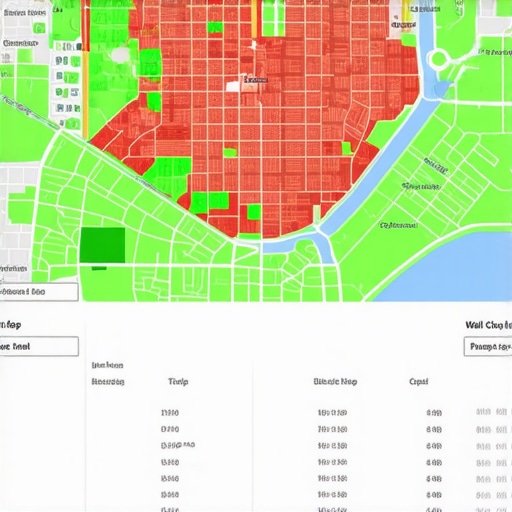
The Proximity Trap and Why Your Address Might Be Your Biggest Enemy
I’ve seen so many business owners get frustrated because they can’t rank in the next town over. They assume they just need more SEO, but they are often victims of the proximity filter. This is why most local SEO services fail to understand proximity glitches that effectively ‘hide’ your business from searchers just three miles away. A common ‘oops’ factor is failing to realize why your business address is scaring away local searchers or Google’s own verification bots. If you are using a shared office space or a location too close to a dominant competitor, you might be filtered out of the top results entirely. Real google map experts don’t just add keywords; they look at the geographic ‘centroid’ of your industry in your city and find the gaps where your rivals aren’t looking.
Why are your profile views high while your phone stays silent?
It’s a soul-crushing scenario: you check your dashboard and see the numbers climbing, but the shop remains empty. This usually happens because your business profile views are high but leads are low due to a lack of ‘conversion triggers.’ Your local visibility help might have ignored the fact that your business hours signal is more important than you think. If Google detects users looking for your services at 7 PM but your profile says you’re closed, you lose that vital interaction signal instantly. Another advanced mistake is category dilution. You must understand why your business categories might be fighting each other. Instead of a scattershot approach, making the simple change to your secondary categories for faster growth can help you dominate a specific niche before trying to conquer the whole map. Have you ever fallen into this trap? Let me know in the comments. We need to move away from the local visibility help tactics that no longer work and focus on how to use real-time engagement to boost map position. It’s about being the most relevant answer in a five-block radius, not just the loudest voice in the room.Once you start seeing those phone calls roll in, the biggest mistake you can make is taking your foot off the gas. I’ve seen businesses climb to the number one spot, celebrate for a week, and then watch their traffic evaporate because they thought the work was finished. The truth is, the map is a living, breathing ecosystem, and if you aren’t active, your competitors will be. This is exactly why map listing optimization requires constant updates. Think of it like a garden; if you don’t pull the weeds and water the plants, the wilderness eventually takes over. I personally spend about thirty minutes every week just looking at my dashboard to see if any users have suggested ‘edits’ to my business info that I didn’t authorize.
Keep Your Rankings from Sliding Backwards
The key to staying on top is consistent, fresh data. Google’s algorithm rewards businesses that prove they are still relevant and active in their community. If you let your profile go dormant, you’ll quickly realize why static store data is costing you the local three-pack. Every time you finish a big project or hire a new team member, that’s an opportunity for a new photo or a quick post. I also use specific grid tracking software to see how my ranking changes block-by-block. It’s eye-opening to see that you might be number one in front of your shop, but number seven just three blocks away. Learning how to audit your local map presence without expensive tools is a skill every owner needs. You can do this simply by using a mobile browser in incognito mode while physically moving through different neighborhoods in your service area. 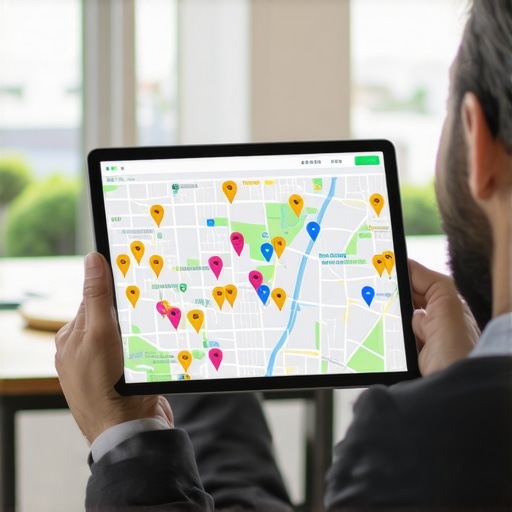
How do I keep my map pin at the top for years?
Longevity comes down to protecting your authority. I’ve seen businesses lose everything overnight because of a core update. If that happens, you need to know how to restore a map ranking after a search algorithm update by auditing your signals and looking for ‘noise’ that might be confusing the AI. According to research by Mike Blumenthal at Near Media, Google is increasingly utilizing ‘attribute fatigue’ to filter out businesses that haven’t updated their specific service features in over six months. This means if you haven’t checked those little ‘Amenities’ or ‘Service’ boxes lately, you’re technically losing ground. It’s also vital to maximize your local reach maps optimization tactics from visibility pros by staying ahead of the tech. Looking forward, I predict we’re going to see a massive shift toward AI-generated ‘summaries’ of your reviews being the primary way people choose a business. If your reviews are generic, you’ll be ignored. You need specific, keyword-rich feedback from real customers to feed that machine. My best advice? Go into your profile right now and update your ‘from the business’ description with something that happened this month. It’s a tiny move that signals you are very much alive and open for business.
Hard-Won Truths from My Years in the Local Map Trenches
For a long time, I thought that simply having more reviews than everyone else was a guaranteed ticket to the number one spot. I was wrong. I eventually realized that Google values the quality of interaction and the specificity of feedback far more than a raw count of five-star ratings. Another big lightbulb moment happened when I discovered how to use local schema to fix your service boundary errors and realized my website and map were essentially speaking two different languages. I also learned that you shouldn’t let a sudden profile suspension scare you into giving up; it is often just a trigger-happy algorithm bot. You can learn how map experts find and fix hidden profile verification errors to get your business back online much faster than you think. Finally, I realized that rankings are never permanent—if you aren’t providing fresh signals, you are moving backward.
My Personal Toolkit for Winning Local Search
To really scale your presence, you need data that goes beyond the basic Google dashboard. I always recommend using grid-based tracking software to see how your ranking changes street-by-street; it is the only way to know if you’re actually winning the neighborhood battle. For those who want to see quick wins, I suggest checking out the map ranking boosters you can implement in one afternoon. If you ever decide to hire a map optimization team, make sure you know how to spot a fake map optimization team before you hire them. Real visibility experts will talk to you about behavioral signals and data consistency, not just generic ‘SEO magic’ that doesn’t actually exist.
Start Claiming Your Spot in the Local Three-Pack Today
Visibility is not just a digital luxury; it is the absolute lifeblood of any local business in the modern age. When you commit to a serious visibility improvement strategy, you are doing more than just moving a pin on a screen—you are ensuring that the people in your community find the help they need from a business that actually cares about them. Don’t let national chains with multi-million dollar budgets push you out of your own backyard. You have the local advantage, and now you have the blueprint to use it effectively. Success on the map is about being the most relevant, active, and trusted answer in your town. Have you ever noticed your ranking drop when you search for your business just a few blocks away from your actual office? Let me know your experience in the comments!