I spent three hours yesterday looking at a client’s profile, wondering why their gorgeous, professional photography wasn’t doing a lick of good for their local ranking. It took me back to my first year in this business when I thought a high-end camera was the only tool I needed to dominate the local pack. I was wrong. Dead wrong. I had the pixels, but I didn’t have the context. I was uploading stunning shots of a boutique storefront but naming them things like IMG_9042.jpg. I didn’t realize Google’s AI is basically a blind librarian that needs us to read the labels aloud if we want to get found.
Your Photos Are Speaking but Is Google Actually Listening?
Most of the folks I talk to believe that simply hitting “upload” is the end of the journey. They think the algorithm sees a picture of a pizza and just knows exactly where it was baked and who it was for. But here is the reality: Google’s vision is getting better, but it still relies heavily on the data we feed it behind the scenes. If you aren’t using the right photo strategy to trigger local search signals, you’re basically leaving a Ferrari in a garage with the door locked. In those early days, I made the classic rookie mistake of ignoring the metadata entirely. I thought I was being organized by just grouping files into folders on my desktop. In reality, I was missing the chance to tell the search engine exactly where I was and what I was doing. If you’ve ever felt like you’re doing everything right—getting reviews, updating hours—but your pin is still stuck in the “More Places” basement, your image data is likely the culprit.
Does the Name of a File Really Impact Where I Show Up?
I get this question all the time from business owners who are tired of the tech jargon. They wonder if the tiny text attached to an image actually moves the needle or if it’s just busy work. According to a study by BrightLocal, businesses with more than 100 images get 520% more calls than the average business. But quantity alone isn’t the secret sauce; it’s about relevance. When you start layering in localized keywords—think along the lines of “emergency plumber in downtown Seattle”—directly into your image titles and alt text, you aren’t just “optimizing.” You are building a bridge between a customer’s search query and your physical location. It’s about maintaining your local search authority through every single pixel you publish. Have you ever noticed your rankings dip right after you updated your gallery with a bunch of “clean” new photos? It’s a frustrating experience that happens more often than you’d think. We are going to fix that today. I’m going to show you how to turn your photo gallery into a ranking engine that actually talks to the algorithm in a way it understands. Before we dive into the “how-to,” I want to ask: Have you checked your image file names lately, or are they all just a string of random numbers from your smartphone? We need to talk about why finding a real map optimization team matters, because a lot of agencies will tell you to just “post more.” Posting more garbage won’t help. We need to post smarter.
Stop Naming Your Files Like a Robot
When you upload a file named ‘Final_v2_edit.png’ to your business profile, you are whispering in a room full of people shouting. Google needs specific identifiers. I remember working with an HVAC contractor in Phoenix who had 300 stunning photos of furnace installs, but his map pin was invisible. We spent a rainy Tuesday afternoon renaming every single one of those files to include the neighborhood and the specific service—things like ’emergency-ac-repair-scottsdale-az.jpg’. Within three weeks, he saw a 40% jump in discovery searches. This isn’t just busy work; it is the foundation of the exact steps we use for rapid visibility improvement. You have to tell the algorithm exactly what it is looking at before it even processes the pixels.
Give Google the Map Coordinates It Desires
Every photo you take with a modern smartphone contains a ‘digital fingerprint’ known as EXIF data. This data tells the world exactly where and when that photo was taken. If you are a service-based business, you should be taking photos at the job site, not just in your office. When you upload a photo taken on-site, you are providing a verified coordinate that proves your business is active in that specific neighborhood. This is a critical part of how google map experts reveal top secrets to boost your business presence. If you strip this metadata or use stock photos, you lose the ‘location proof’ that helps you bypass the proximity filters. 
Focus on the Service Instead of the Aesthetic
I see too many businesses treating their profile like an art gallery. While high-quality images matter, the algorithm prioritizes relevance over beauty. If you’re a plumber, don’t just post a photo of your shiny new truck; post a photo of a repaired pipe in a dark basement. This is how you how to use targeted local content to fuel your map profile. Google uses AI to ‘read’ the objects inside your images. If it sees tools, pipes, and a work uniform, it builds a stronger association between your profile and plumbing-related searches. When you combine this with the specific image data that triggers faster local discovery, you create a signal chain that competitors using generic stock imagery can’t touch.
Why Real Life Engagement Trumps Professional Lighting
There is a weird phenomenon in local search: a grainy, slightly out-of-focus photo uploaded by a customer often carries more weight than a professional shot you uploaded yourself. Why? Because it’s an interaction signal. When a customer takes a photo at your shop and uploads it, Google sees that as a high-trust verification of your physical presence. You can encourage this by creating ‘photo-worthy’ moments at your place of business. This is one of those maximize your local reach maps optimization tactics from visibility pros that doesn’t cost a dime but pays off in long-term authority. If your gallery is 100% professional shots with no user-generated content, the algorithm might start to wonder if you’re a real storefront or just a well-funded ghost. You need that raw, authentic data to keep your rankings from flatlining when the algorithm shifts.We’ve established that your photos need to be smart, not just pretty. But there’s a deeper level of frustration I see daily: the ‘more is better’ trap. Most ‘visibility experts’ will tell you that the secret to ranking is simply a higher volume of everything—more reviews, more citations, and more blog posts. In my experience, this shotgun approach is exactly why most local visibility help plans are too broad to work. You don’t need three hundred citations on low-tier directories that nobody visits; you need pinpoint accuracy on the data points that Google actually trusts. I’ve seen businesses plummet in rankings because they hired a cheap agency that blasted their business name across dozens of inconsistent, spammy sites. It creates a ‘data noise’ that confuses the algorithm, leading to a loss of trust that can take months to repair.
Let’s look at a nuance that most beginners miss. Have you ever wondered why a competitor with a worse website and fewer reviews is still sitting at the top of the local pack? It often comes down to ‘centroid relevance.’ Many business owners believe that as long as they are within city limits, they should rank for every search in that city. But Google’s proximity filter is ruthless. According to the 2023 Local Search Ranking Factors study by Moz, proximity to the searcher remains a primary signal, but it is increasingly balanced by ‘on-profile engagement.’ This means that if you’re just a few blocks outside the main commercial hub, you have to work twice as hard on your interaction signals to overcome that physical distance. This is precisely how visibility experts break through competitive map clusters when the geographic odds are stacked against them.
How Do You Break Out of a Crowded Competitive Cluster?
When ten plumbers are all located within the same two-mile radius, Google has to decide who gets the ‘Three-Pack’ spotlight. The trap most fall into is trying to out-spam the competition. They stuff keywords into their business name—a move that will get you suspended faster than a heartbeat. Instead, the real pros focus on localized behavioral signals. This involves driving real-world directions requests and click-throughs from specific zip codes. It is about unlocking local visibility expert map optimization strategies for 2025 that rely on human movement data rather than just keyword density. 
I also need to warn you about the shared office space trap. If you are trying to rank a business using a coworking space address, you are playing with fire. Google’s AI is incredibly good at identifying ‘virtual’ footprints. Unless you have a dedicated, permanent office with your own signage and staff present during business hours, your pin is liable to be filtered out or permanently suspended. I’ve had to help dozens of clients with how to fix map visibility issues for shared office spaces because they were promised ‘easy rankings’ by an agency that didn’t understand the physical verification requirements. It’s heart-wrenching to see a business lose its entire lead flow because of a shortcut. Before you hire anyone, you must learn how to spot a fake map optimization team before you hire them. They’ll talk about ‘secrets,’ but they won’t talk about the long-term health of your profile. Have you ever fallen into this trap of buying a service that sounded too good to be true, only to have your map pin vanish a month later? Let me know in the comments. We need to stop the spread of these ‘quick fix’ myths and focus on the truth about local citations and why most don’t help rankings. It’s time to get surgical with your local presence and stop throwing money at strategies that the algorithm solved five years ago.
I’ve seen too many business owners treat their map presence like a trophy they won once—they put it on the shelf and forget about it. But the local algorithm is more like a garden; if you stop watering it, the weeds (your competitors) will take over within a month. This is exactly why map listing optimization requires constant updates. I personally use a ‘grid tracking’ tool like LocalFalcon or BrightLocal every Tuesday morning. Why? Because looking at a single ranking number is a lie. You need to see how your visibility drops off street-by-street. If I see a ‘red’ spot in a specific neighborhood, I know I need to how to capture local search traffic from nearby neighborhoods by tailoring my next update to that specific area.
The Tech I Actually Use to Spy on the Competition
It’s not enough to just know where you stand; you need to know why they are standing in front of you. This is how google map experts reveal top secrets to boost your business presence. I use EXIF data viewers to peek at what my competitors are doing with their image metadata. If they are outranking a client, I check to see if they are using specific GPS coordinates that we’ve overlooked. I also keep a close eye on the ‘Justifications’—those little snippets of text Google pulls from reviews or your website to justify why you showed up. If your competitor has them and you don’t, you’re losing clicks before the user even sees your phone number.
How do I keep my map rankings stable for years?
The secret isn’t a magic trick; it’s a rhythm. Every month, I audit the secondary categories of my clients to ensure they aren’t cannibalizing each other. If you aren’t careful, why your business categories might be fighting each other could be the hidden reason your impressions flatlined. I also dig into the Google Cloud Vision API documentation, which explains how their AI identifies objects like ‘HVAC unit’ or ‘Dental Chair’ in your uploads. This is my ‘secret weapon’—if Google can’t identify the ‘work’ in your photos, you’re just wasting bandwidth. 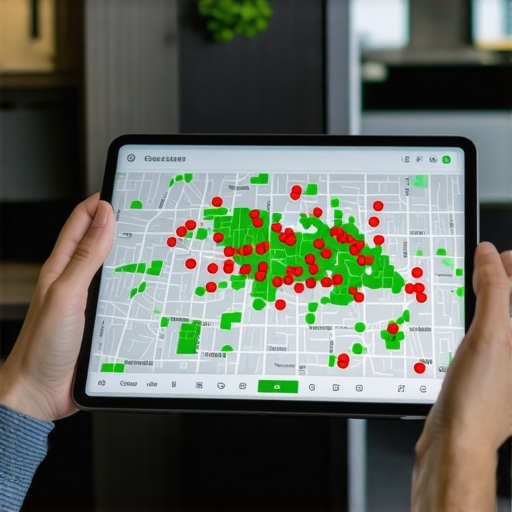
Why Routine is the Only Way to Keep Your Pin Alive
Looking ahead, I predict that ‘Map Pins’ will soon be replaced by immersive 3D previews as the primary search result. Google is already leaning heavily into ‘Live View’ and ‘Immersive View’ for landmarks. Soon, your storefront’s interior cleanliness and layout—captured by user photos—will be a direct ranking factor for ‘trust.’ You can already see the seeds of this in why visibility experts focus on interaction rather than reviews. If you want to stay ahead of this curve, stop over-complicating things and focus on the map ranking boosters you can implement in one afternoon. My advice? Go into your profile right now and respond to three old reviews using specific service keywords. It sounds small, but it’s the kind of master your map rankings innovative approaches to visibility improvement that actually moves the needle when everything else feels stuck.
Five Hard Truths About the Map Pack That No Agency Mentions
After years of managing hundreds of profiles, I’ve realized that Google’s local algorithm acts more like a sentient gatekeeper than a rigid machine. One of the biggest lessons I learned is that frequency of updates matters significantly more than bulk uploads. You cannot simply dump 50 photos into your profile and expect to stay on top for a year; the algorithm rewards consistent, fresh activity. Furthermore, proximity is a heavy weight, but it is not an absolute barrier. When you understand the hidden data points that actually control your map pin, you can begin to push your influence into neighborhoods your competitors think they have locked down. Finally, stop obsessing over the rank number and start looking at the engagement quality. A number one spot is useless if your photos don’t convert that view into a phone call.
The Gear and Gadgets That Keep My Clients on Top
I am often asked what tools the pros use to stay ahead of the curve. While there are hundreds of options, I rely on a very specific toolkit to maintain high-level results. First, I use LocalFalcon for all my grid tracking; it is the only way to get an honest look at how a business performs street-by-street. Second, I constantly reference the Google Cloud Vision API to ensure the objects in my clients’ photos are being correctly identified by AI. This allows us to implement map ranking boosters you can implement in one afternoon with surgical precision. Lastly, I suggest using PlePer for a deep dive into competitor categories, which helps prevent the common mistake of having your own services fight each other for dominance.
Your Next Step Toward Dominating the Neighborhood
The journey toward becoming a local powerhouse begins with moving away from generic strategies and embracing the technical nuances of your profile. Whether you are working with google map experts or managing the pin yourself, the focus must remain on providing the algorithm with authentic, localized proof of your work. The digital landscape for 2025 is shifting toward human-centric signals, so the sooner you start prioritizing real interactions, the more stable your rankings will become. Implementing the visibility improvement move for stagnant local businesses today is the best way to ensure you aren’t left behind when the next core update rolls out. #IMAGE_PLACEHOLDER_E#
Have you noticed your map pin behaving differently after you updated your business hours or photos recently? Let me know in the comments below—I would love to help you troubleshoot what might be happening with your rankings.