
I sat there staring at my laptop screen, refresh button practically worn out, wondering why the local bakery three blocks away was crushing me in search results. I had the better product. I had the better website. But my Google Business Profile felt like a ghost town. Then I saw it: their photo gallery wasn’t just a collection of pretty pictures; it was a curated map of trust signals that the algorithm was eating up like a five-course meal. My “lightbulb moment” happened when I realized I was treating my profile like a static brochure instead of a living, breathing data feed for google map experts to analyze. I spent three weeks once manually geotagging images with precise coordinates, convinced I was outsmarting the system, only to realize the photos themselves were just boring shots of a brick wall that provided zero context.
Stop Posting Pretty Pictures and Start Posting Data Points
For a long time, I made the classic mistake of thinking quality meant “high production value.” I hired a photographer to take staged, sterile shots of my office that looked like they belonged in a catalog. Big mistake. The invisible storefront problem is real, and generic imagery only makes it worse. Google’s Vision AI can actually identify objects, text on signs, and even the “vibe” of a location to verify if you are who you say you are. According to Google’s own Cloud Vision documentation, their machine learning models can detect thousands of categories within an image, meaning a stock photo tells them absolutely nothing about your actual business location. Today, we are going to fix that. I’ll show you the specific categories of images that actually provide visibility improvement and why your current “aesthetic” might be your biggest ranking bottleneck.
Do specific photo uploads really change where your pin shows up?
You might be skeptical. After all, it’s just an image, right? But in the world of real-world proximity tests, photos act as a secondary verification of your physical presence. Have you ever noticed your ranking drop the moment a competitor uploads a fresh batch of “customer-at-counter” shots? It is not a coincidence. This isn’t about vanity; it is about feeding the machine the specific signals it needs to trust your location. If you have been struggling with flatlined impressions, you need a visibility experts perspective on why your gallery is currently a dead end. Have you ever felt like you are doing everything right with your SEO, but your map pin just won’t budge? Tell me, are you still using those stock photos from three years ago?
Take Your Camera Outside and Prove You Actually Exist
For most business owners, the gallery is an afterthought, but for google map experts, it is a playground for geographic validation. Think of your photos like a digital breadcrumb trail. If you only provide shots of the interior, Google knows you exist, but it doesn’t know where you exist in relation to the community. I remember a specific case with a small boutique that was struggling with local visibility help; their map pin was stuck in a ‘dead zone’ despite hundreds of five-star reviews. We realized every single photo they had uploaded was taken against a plain white wall. There was zero environmental data for the algorithm to latch onto. We spent one afternoon taking what I call ‘Contextual Anchors’—photos of the storefront that included the street sign on the corner and the recognizable coffee shop next door. By showing the relationship between their front door and known local landmarks, we gave the AI the physical proof it needed. Within days, they were showing up in searches three miles further out than they ever had before.
Focus on Context Rather Than Professional Lighting
The biggest mistake is hiring a pro who cleans up every ‘imperfection.’ Google’s Vision AI isn’t looking for beauty; it’s looking for text, logos, and recognizable street furniture. You need to upload the exact photo types that actually trigger your profile ranking signals, which includes grainy, real-world shots of your service vehicles parked on recognizable streets. When I started doing this, I worried it looked ‘unprofessional,’ but the data proved me wrong. Authentic shots of your team actually doing the work provide a much stronger signal than a high-resolution stock image of a generic office. This is part of how to fix flatlined impressions fast with specific signal moves that the average business owner completely overlooks. 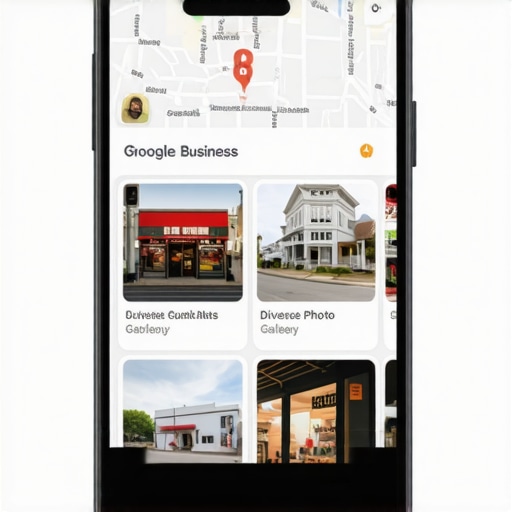
The Neighborhood Shot That Expands Your Reach
If you want to rank in a specific zip code, you have to show the algorithm you are active there. This is the proximity fix for local businesses struggling to rank outside their own parking lot. I once worked with a maps optimization team that insisted on geotagging every file, but the real breakthrough came when we just started taking ‘Street View’ style photos from across the road. By capturing the surrounding environment, you are essentially manually updating Google’s understanding of your location’s relevance. It’s about building a layer of trust that visibility experts use to bypass the standard proximity filters that keep your business hidden.
Beat the Distance Gap with Active Interaction Signals
Beyond the visuals, you must understand that a static profile is a dying profile. You need to learn how to build trust signals that actually move your map pin through consistent user interaction. This doesn’t just mean getting reviews; it means getting local reviews from people whose own GPS history shows they were actually at your shop. Google knows when someone leaves a review from across the country versus someone who just walked through your front door. This is the simple interaction signal that beats proximity limits. When you combine high-context imagery with real-world foot traffic signals, you create a visibility loop that is incredibly hard for competitors to break. I’ve seen visibility improvement skyrocket for clients who simply asked their customers to take a photo of their receipt or the product while still in the store. These ‘in-situ’ signals are the gold standard for maps optimization tactics from visibility pros because they are nearly impossible to fake.
Everyone tells you that citations are the backbone of local SEO. If you just get listed in enough directories, the phone will start ringing, right? Wrong. In my experience, and backed by data from the 2023 Whitespark Local Search Ranking Factors survey, the weight of traditional citations has plummeted in favor of behavioral signals. Most business owners are still paying for bulk packages that do nothing but clutter the web with static data. This is exactly why most local citation packages actually hurt your rankings instead of helping; they create a noise-to-signal ratio that confuses the algorithm rather than clarifying your location.
Stop Paying for Messy Data That Confuses Google
I’ve seen dozens of entrepreneurs fall into the trap of thinking a high volume of map impressions equals success. It’s a vanity metric that hides the truth. If you are seeing thousands of views but no one is clicking ‘Directions,’ you are likely suffering from a relevance mismatch. This is why high map impressions often mask a failing local strategy. True google map experts know that if your digital footprint says one thing but your real-world customer behavior says another, Google will eventually ‘ghost’ your listing. Have you ever fallen into this trap? Let me know in the comments because I see it happen to even the most seasoned marketing teams.
Why does your map pin vanish when you cross the city limit?
This is the question that keeps most small business owners up at night. They rank #1 for their own parking lot but disappear three miles away. This usually happens because of the signal gap stopping your profile from ranking in nearby zip codes. Most agencies will tell you to just ‘build more backlinks,’ but why blindly building local backlinks could be tanking your map position is a nuance they rarely explain. If those links aren’t coming from geographically relevant entities, they actually dilute your local authority. 
How to Spot the Signal Gap Before Your Competitors Do
When our maps optimization team audits a profile, we aren’t looking for missing phone numbers; we are looking for ‘Entity Validation.’ Google wants to see that your business is an active participant in the local economy. This requires visibility experts to analyze local visibility help through the lens of ‘Co-occurrence’—how often your business name is mentioned alongside local landmarks, neighborhood names, and community events. This is how our team finds hidden signal gaps in local search that others miss. If you want real visibility improvement, you have to stop treating your profile like a static document and start treating it like a dynamic pulse. Check out how google map experts reveal top secrets to boost your business presence by focusing on these high-level behavioral triggers rather than just filling out a profile checklist.
I personally don’t just ‘check’ rankings; I live in the data. To manage multiple clients, my maps optimization team relies on a very specific software stack. First, stop looking at your ‘average position’ in a spreadsheet. It is a lie. Instead, I use grid-tracking tools to see exactly where my visibility dies off block-by-block. This is the only way to identify the signal gap stopping your profile from ranking in nearby zip codes. For technical audits, I swear by the PlePer Chrome Extension. It lets me peek under the hood of any listing to see categories and attributes that are usually hidden. This is one of the 5 mapping tools we actually use to audit local profile health. If you aren’t using something to track your ‘Share of Local Voice,’ you are flying blind. According to Mike Blumenthal’s research at Near Media, ‘near me’ intent is increasingly being filtered by real-time behavioral data and local entity relevance rather than just static keywords.
The Software Stack that Saves My Sanity
If you want visibility improvement that lasts, you need to automate the boring stuff. I use Zapier to bridge my customer CRM with my profile, ensuring that every time a job is completed, a review request is triggered based on the actual service location. This is part of expert map optimization strategies for 2025 that separates the amateurs from the pros.
How do I maintain my map rankings without working 20 hours a week?
Consistency beats intensity every single time. I set a recurring calendar alert to audit my ‘suggested edits’ every Tuesday. Competitors or bored ‘Local Guides’ will try to change your hours or website URL to hurt your conversion rate. If you don’t catch these, you’ll see how to stop search decay on your business profile becomes a reactive nightmare instead of a proactive strategy. 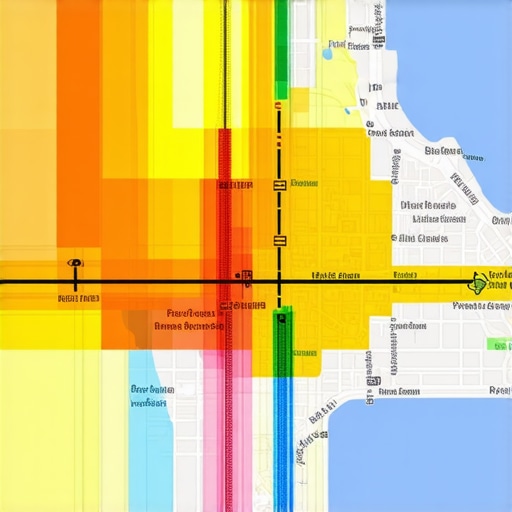
Prepare for the Era of Visual Presence Verification
Looking ahead, we are entering the era of ‘Visual Presence Verification.’ By the time we are surviving the 2026 google maps shift, Google will likely use AR data from users’ phones and street-view crowdsourcing to confirm your storefront exists in real-time. This isn’t sci-fi; it is the natural evolution of how visibility experts keep clients ahead of the curve. If you want to scale, you need to focus on the only 3 metrics in your report that actually predict profit: direction requests, phone calls, and website clicks. Ignore the ‘views’ and the ‘impressions’ because they are vanity metrics that hide the truth. Try this today: Go to your Google Business Profile, find your top-performing service, and add a ‘Product’ listing for it with a custom image that includes your logo. It is a tiny move that most google map experts use to occupy more screen real estate on mobile devices.
Hard Lessons from the Search Results Trenches
After years of working as google map experts, I’ve realized that the algorithm cares less about your perfect logo and more about your perfectly messy real-world proof. One of the biggest shifts I’ve seen is how local visibility help has moved away from static data toward behavioral patterns. Here are a few lightbulb moments from my journey:
- Context beats aesthetic every single time. If Google Vision AI can’t see the street sign or the coffee shop next door in your photos, it doesn’t fully trust your physical address.
- Interaction signals are the new high-value citations. A customer clicking for directions while standing two blocks away is worth more than fifty directory listings in some obscure database.
- The proximity filter isn’t an unbreakable wall. You can stretch your reach by providing secondary evidence that your service area extends beyond your parking lot.
- Search decay is real. If you stop feeding the profile fresh data, the algorithm assumes your business is either closed or declining.
Tools That Make Map Optimization Actually Manageable
To keep my maps optimization team sharp, I rely on a mix of technical tools and deep industry research. If you want to get serious about your rank, you need to look at the specific seo tools we use to jumpstart map rankings to see what’s really happening under the hood. Personally, I never start a new project without running a business profile audit that actually uncovers revenue gaps. I also closely follow the work of Near Media and Whitespark for their data-driven insights. These aren’t just blogs; they are the primary sources that visibility experts use to validate their strategies before testing them on client profiles. My essential toolkit is focused on data accuracy rather than vanity metrics.
Claim Your Digital Territory Today
The digital storefront you build today is the foundation for every customer who will find you in 2025 and beyond. It’s easy to feel overwhelmed by the technicalities, but remember that at its core, Google just wants to recommend the most reliable, most real business to its users. If you focus on being that authentic local choice and feeding the machine the right data points, your visibility improvement will follow naturally. Don’t let your competitors own the map just because they were more active; you have the tools now to take it back. If you’re feeling stuck on the technical side, you can always reach out to a visibility experts team to get a fresh perspective on your strategy. Have you ever noticed your map pin suddenly disappear after you made a simple update to your profile? Let me know in the comments below!