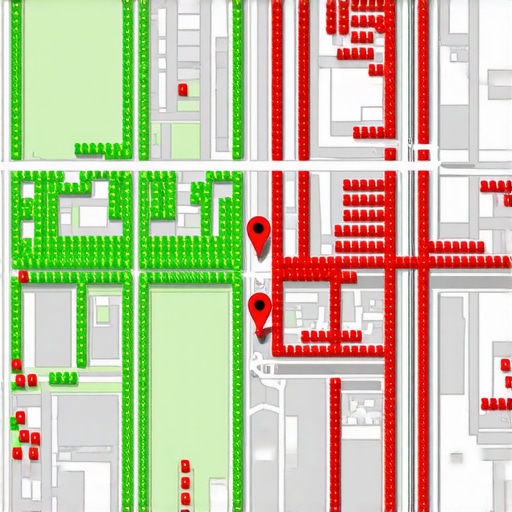
I remember sitting in a corner booth at ‘The Daily Grind,’ a local bakery exactly three blocks from my own storefront, and feeling my stomach absolutely drop. I pulled out my phone, typed in my primary service, and waited for my business to pop up at the top. It didn’t. In fact, I wasn’t even in the top ten. A competitor from two miles away was sitting pretty in the second spot, while I was effectively a ghost on my own street. It was a visceral, frustrating realization: I had hundreds of five-star reviews, yet I was invisible to the person standing right next to me. This wasn’t a glitch in the system; it was a brutal lesson in how local search actually works. If you’ve ever felt that sting of being outranked by a smaller shop just because you’re on the ‘wrong’ side of a boulevard, you aren’t alone. Today, we are going to stop guessing and start fixing the signals that keep you pinned to a tiny radius. [image-placeholder]
The Brutal Reality of the Neighborhood Proximity Bubble
The truth is that Google’s algorithm is obsessed with the physical coordinates of the searcher. Early on, I made the mistake of thinking my authority was ‘global’ across the whole city. I ignored the micro-signals that prove relevance to specific street corners, focusing only on broad keywords. This is exactly why your shop disappears when searchers move two blocks away. Our google map experts have seen this ‘proximity bubble’ shrink and grow based on how well a profile is optimized for hyper-local intent. You don’t have to just accept being the king of your own parking lot while losing the rest of the neighborhood. By understanding how to fix the proximity gap, you can push your visibility further than the standard half-mile radius.
Can you really beat the proximity is king rule?
It is the most common fear I hear from business owners: ‘Is it actually possible to rank where I’m not physically located?’ People worry that Google has a hard-coded wall around their shop. While proximity is undeniably powerful—research from Sterling Sky confirms it remains a dominant factor in the local pack—it is not an unbeatable force. I have watched businesses with significantly less ‘clout’ jump ahead of incumbents because they mastered the interaction signals that Google craves. Have you ever checked your rankings from a nearby coffee shop and realized you were nowhere to be found? If that’s you, reach out to our visibility experts because it is the exact problem we solve every day. We are going to move past the frustration of ‘now you see me, now you don’t’ and explore why your competitors with fewer reviews still outrank you and how to flip that script in your favor.
Force Google to See Your Business as a Regional Authority
To break out of that suffocating half-mile radius, you have to treat your Google Business Profile less like a digital business card and more like a high-powered radio tower. Most people set it and forget it, which is the equivalent of a radio station going silent; eventually, the signal fades, and people (and algorithms) stop listening. You need to broadcast constant, high-quality signals that prove your business is active and relevant across a wider area. This starts with moving away from static data. Our visibility pros often see profiles that haven’t been updated in months, which is the quickest way to lose your local three-pack spot.
Ditch the Stock Photos to Prove Your Real-World Presence
I remember working with a local florist who was terrified of a new grocery chain opening up three blocks away. She had better flowers, better service, and better prices, but the chain was dominating the map because they had a ‘verified’ corporate profile. The fix was messy but effective: we spent an afternoon taking raw, unedited photos of her delivery van parked in front of landmark buildings five miles away. We didn’t use fancy filters. We just captured her team actually doing the work in the neighborhoods she wanted to rank in. When you stop using stock photos, you stop looking like a generic entity and start looking like a local fixture. These specific photo types trigger profile ranking signals because they provide Google with metadata and visual proof that your business exists and operates beyond your front door. 
The Signal Move That Beats Physical Distance
Proximity is a heavyweight champion, but interaction is the underdog that can actually land a knockout punch. Google monitors ‘interaction velocity’—how fast and how often people click your number, ask for directions, or message you. If someone five miles away interacts with your listing, Google takes note that you are relevant to that specific location. We call this the simple interaction signal that beats proximity limits. To trigger this, you need to give people a reason to engage. This is where the interaction moves that actually matter come into play. It isn’t just about getting a review; it’s about the ‘click-to-call’ or the ‘request a quote’ button. Every time a user interacts with your profile from a ‘distant’ zip code, you are effectively stretching your map pin.
Why Your Profile Needs Regular Updates to Stay Relevant
Think of your profile like a campfire in the woods. If you don’t keep feeding it wood, it dims. In the world of local search, ‘wood’ is fresh content. This is why your map listing needs regular updates. I’ve seen businesses jump three spots in the rankings just by posting a simple weekly update about a local project they completed. It shows the algorithm that the lights are on and somebody is home. If you are struggling with flatlined growth, you need to look for the hidden signal gaps that are currently telling Google you aren’t worth the detour. By focusing on these high-impact interaction signals, you can force the map to acknowledge your presence far beyond your physical street address.It is easy to assume that if you just do more of what the beginners do, you will win. More reviews, more citations, more photos. But the biggest myth in the world of local visibility help is that volume equals authority. I have seen businesses with 500 reviews get buried by a competitor with 50 simply because the latter had better sentiment relevance and cleaner data. Most people treat citations like a set it and forget it task, but why most local citation packages hurt your rank instead of helping is a conversation we need to have. If your data is pushed to 200 low-quality directories with slightly different phone numbers, you aren’t building authority; you are building confusion for the algorithm.
Stop Obsessing Over Review Count Alone
Don’t get distracted by vanity metrics. We often see clients obsessed with getting a massive influx of reviews at once. This is a massive mistake. The truth about buying reviews and why it kills your visibility is that Google’s AI is incredibly good at spotting unnatural review velocity. If you go from one review a month to fifty in a week, you aren’t improving your visibility; you are signaling a high-risk profile. Instead, you should focus on mastering your map rankings with innovative approaches that favor steady, organic growth. 
The Keyword Stuffing Trap That Kills Long-Term Growth
There is a dangerous growth hack that nearly every novice optimization team suggests: stuffing your business name with keywords. It feels like a cheat code because, technically, it works in the short term. However, why your business name shouldnt be stuffed with keywords becomes clear the moment your listing is suspended. Expert research from Joy Hawkins at Sterling Sky highlights that while names are a heavy ranking factor, they are also the primary trigger for manual red-flags. I have seen years of hard-earned visibility vanish in a single afternoon because an expert tried to be too clever with a business name.
Why do your rankings fluctuate when the weekend hits?
This is a question I get from sophisticated business owners who actually track their data. You might notice your three-pack spot is solid on Tuesday but gone by Saturday. This isn’t a glitch; it is often tied to business hours and searcher intent. Google knows if you are closed, and it also knows why your profile gets less traffic on weekends based on your industry trends. If you aren’t active when the searcher is looking, Google might give that proximity weight to a competitor who is actually open and responding. Have you ever fallen into this trap of chasing quick wins? Let me know in the comments. If you are tired of the oops moments and want a strategy that actually sticks, reach out to our visibility experts for a deep-dive audit.It took me a year of trial and error to realize that local visibility isn’t a trophy you win once and keep on a shelf; it’s more like a professional-grade lawn that requires constant mowing. If you stop, the weeds—your competitors—will take over within weeks. To keep my sanity and my ranking, I moved away from manual checking and started relying on grid-tracking software. Seeing a heatmap of where your business ranks on every street corner is a total game-changer. It is the difference between guessing you’re doing well and knowing exactly where the signal drops off. Our google map experts use these heatmaps to identify the signal gap stopping you from ranking in nearby zip codes. This isn’t just about vanity; it’s about seeing the ‘cold spots’ where your local visibility help is failing to reach potential customers.
Why Your Data Needs a Heatmap to Survive
When I first started, I used to search for my business from my desk and feel great. But a desk-level view is a lie. You need to know how you rank three miles north versus three miles south. I personally use specialized local SEO tools that pull data from specific latitude and longitude coordinates. This granular data allows us to see why you need to monitor your competitors map listings constantly. If a rival suddenly spikes in a specific neighborhood, you can bet they are running a hyper-local ad campaign or have just updated their service area. By using the specific seo tools we use to jumpstart map rankings for new locations, we can spot these trends before they cost you a single lead. 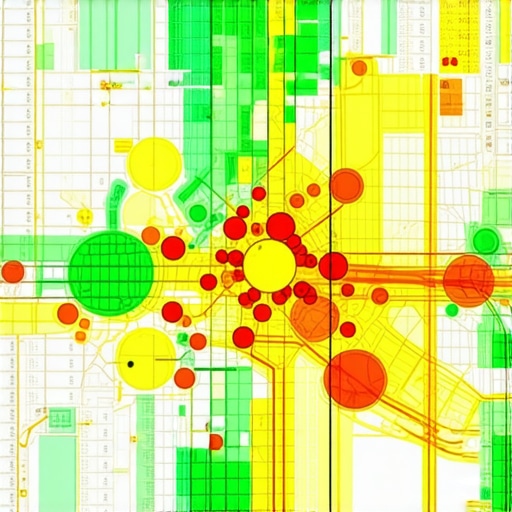
How do I maintain my ranking dominance over the long haul?
The secret to staying on top is consistent, boring maintenance. You have to treat your profile like a living document. This means responding to every review within 24 hours and auditing your attributes monthly. According to the 2023 Local Search Ranking Factors survey by Whitespark, ‘sustained activity’ is now a critical differentiator that prevents search decay on your business profile. If you let your profile sit for a month without a fresh photo or a post, Google’s algorithm starts to favor ‘fresher’ entities. This is the move our optimization team uses to reclaim lost map spots: we re-verify all data and flood the profile with high-quality, geo-tagged content to prove the business is still the local authority.
The Future is Visual and AI-Driven
Looking ahead, I predict that ‘Search by Image’ will soon dominate local discovery. Google is already getting better at recognizing what is inside your storefront photos without reading the captions. If you want to future-proof your business, you need expert map optimization strategies for 2025 that prioritize high-resolution, unique imagery over anything else. We are moving toward a world where your real-time inventory might even be visible directly on the map. To stay ahead, try this one advanced tip: Check your ‘Suggested Edits’ every 48 hours. Competitors or ‘helpful’ users can change your phone number or hours without you getting a notification. Staying paranoid is how you stay profitable. If you are ready to stop the fluctuations, reach out to our visibility experts and let’s build a moat around your map ranking.
Hard Truths the Maps Optimization Team Learned the Hard Way
After years of helping businesses break through the proximity barrier, I have realized that the algorithm respects consistency more than it respects bursts of effort. First, local visibility help isn’t a one-time service; it is a lifestyle for your business profile. I have seen storefronts plummet because they thought a single optimization month was enough. Second, you must understand the simple tweak to your business description that boosts visibility—it is often the small, semantic details that tell Google exactly who you serve. Finally, never ignore the suggested edits from the public. If you are not checking your listing, your competitors are likely doing it for you, and they are not always being helpful.
The Toolkit I Use to Stay on the Map
[image-placeholder]
To keep a competitive edge, you need tools that show you the invisible data. I personally rely on grid-tracking software to visualize my rank across different zip codes. If you want to see how the pros do it, our google map experts reveal secrets that involve using heatmaps to find cold zones in your service area. I also recommend following the Whitespark blog and Sterling Sky for real-world testing results. These resources provide the visibility improvement insights that generic SEO blogs simply miss. For those who want a shortcut to results without the learning curve, our maps optimization team uses proprietary data to bridge the gap between where you are and where you want to be.
Take Back Your Neighborhood Today
You do not have to be a tech genius to dominate the local three-pack, but you do have to be the most active and relevant choice in your area. The proximity bubble is a challenge, but it is not a wall. By focusing on interaction signals and maintaining a fresh profile, you can push your reach further than you ever thought possible. If you are ready to future-proof your presence, check out these expert map optimization strategies for 2025. The map is waiting for you to claim your spot—go get it. Have you noticed your business ranking differently when you drive just a mile away? Let me know your experience in the comments below.