
I remember sitting in my home office back in 2019, staring at a beautiful, high-resolution photo of a smiling woman in a headset. It was crisp. It was professional. It was also a total lie. I was trying to help a local plumber gain some traction, and I thought polishing his profile with these stock images would make him look like a big-shot corporation. Instead, he vanished. While I was busy choosing the right lighting for a fake office, the guy down the street was posting grainy, poorly-lit shots of a busted pipe he fixed at 2 AM. Guess who Google put at the top of the three-pack? It wasn’t my guy. That was my wake-up call. I realized then that if you want to win, you have to stop pretending.
Why I Stopped Trusting the Perfect Stock Photo
I made a classic rookie mistake. I thought looking professional meant looking like a Fortune 500 company. In the world of local search, that’s a death sentence. People don’t want a generic corporate vibe when they’re looking for someone to fix their furnace or cut their hair; they want to see you. My maps optimization team and I have since analyzed hundreds of profiles, and the data is brutal: stock photos act like a giant ignore me sign for both Google’s AI and actual human beings. If you’re wondering why your business profile audit is missing the most critical revenue gaps, start by looking at your gallery. If it looks like a brochure for a dental clinic in Sweden and you’re a mechanic in Ohio, you’ve already lost.
Is stock photography actually hurting my ranking?
You might be skeptical. After all, a photo is just a photo, right? Wrong. Google’s Vision AI is incredibly sophisticated. It can identify that a photo has been used on five thousand other websites. When you upload that same picture of Two Businessmen Shaking Hands, you aren’t providing new information to the local index. You’re just adding noise. In fact, the specific photo types that trigger profile ranking signals are almost always raw, geotagged images taken on-site. According to a study by BrightLocal, businesses with more than 100 images on their profile get 520% more calls than the average business. But here’s the kicker: those images need to be authentic. [IMAGE_PLACEHOLDER]
Real Photos Are the Ultimate Signal Move
I’ve spent years working as one of those visibility experts who obsess over the tiniest details. What I found was that authenticity beats resolution every day of the week. When we sought visibility improvement for a local contractor recently, we didn’t buy a new camera. We just told him to take a photo of his muddy boots next to his truck. That one image did more for his ranking than any high-end stock gallery ever could. It proved he was a real person, at a real location, doing real work. If you need local visibility help, the first thing I’ll do is delete your stock library. My google map experts always prioritize the raw truth over artificial perfection. Have you ever felt like your profile is perfect but the phone still won’t ring? It might be because you’re too polished for your own good. We need to bridge the signal gap stopping you from ranking by showing the world the grit and reality of your daily operations.
Capture Proof Instead of Perfection
If you want your business to show up when someone is five miles away, you have to stop thinking like a photographer and start thinking like a private investigator. You need to provide evidence. When my maps optimization team takes over a struggling profile, the first thing we do is check the “heartbeat” of the account. Google wants to see that you are active and physically present in the areas you claim to serve. This is how you bridge the signal gap stopping you from ranking in nearby zip codes. I remember a specific case with a HVAC contractor in a crowded city. He was desperate for visibility improvement but didn’t have a huge budget. We had him take photos of his van parked in front of different street signs in various neighborhoods. It felt silly to him, but those raw, location-stamped images signaled to Google that he was actually mobile and active in those specific spots. Within three weeks, his pin started showing up in search results where he had previously been invisible.
Take the Photos That Most People Think Are Boring
Most business owners wait for a special occasion to snap a photo, but that is a major tactical error. The best images for local visibility help are the ones that show the process. Think of your profile like a live feed, not a static billboard. Why static business data is the quickest way to lose your local three-pack spot becomes obvious once you realize the algorithm rewards recent activity. Take a photo of the new shipment of parts that just arrived or a quick snap of the team meeting in the morning. These don’t need to be artistic; they just need to be real. Our google map experts suggest a simple “one-a-day” rule. If you can spend sixty seconds uploading a single shot from your phone once a day, you are already doing more than 95% of your competition and signaling fresh relevance to the local index.
Use Geotags to Claim Your Territory
When you take a photo with a modern smartphone, it usually attaches GPS coordinates to the file. This metadata is pure gold. When you upload that photo directly to your profile, you are handing Google a verified receipt of your physical location. If you’ve ever wondered about the hidden error in your profile audit keeping you off the three-pack, it is often a lack of these location-rich signals. This isn’t just about showing your storefront; it’s about showing your reach. For service-area businesses, this is the only way to prove you actually travel to those high-value suburbs. The visibility experts I work with always look for these “proof of life” signals first because they are much harder to fake than a generic text update or a bought review.
Stop Overthinking the Lighting and Focus on the Work
I once had a client, a local jeweler, who refused to post anything that wasn’t shot in a light box with a expensive lens. She looked professional, but her map ranking was flatlined. I convinced her to post a shaky, 10-second video of her hands actually setting a stone at her workbench with a simple hammer. No filters, no fancy music, just the sound of the shop. That single piece of raw content got more engagement in forty-eight hours than her professional gallery had in six months. This is exactly how to build trust signals that actually move your map pin. People want to buy from real humans, not from polished corporate shells. If your phone isn’t ringing, it might be because you’re hiding behind a curtain of perfection. Break that curtain down by showing the grit and the reality of your day-to-day operations using expert map optimization strategies for 2025 that prioritize authenticity.Photos are the visual heartbeat of your profile, but if your underlying data structure is a mess, the algorithm won’t even show those photos to your local audience. Let’s dig deeper into the mechanics. Most people believe that local visibility help is a numbers game—more citations, more keywords, more volume. But in my years of experience, I’ve seen that more isn’t better; better is better. One of the biggest traps I see involves the heavy-handed use of automated citation tools. Everyone says you need hundreds of directory listings to look legitimate, but the reality is that why most local citation packages hurt your rank instead of helping is due to the ‘data pollution’ they create. When you flood the web with low-quality, inconsistent listings, you aren’t building authority; you’re confusing Google’s trust graph.
Stop Buying Those Junk Citation Packages
The industry has a massive ‘oops’ factor that no one talks about: the citation anchor. When you buy a bulk package of 200 listings from a generic provider, you often end up with a dozen different variations of your phone number or suite address. My maps optimization team spends more time cleaning up messy data than creating new entries. If you don’t audit your existing footprint, the truth about why your citations are actually hurting your local rank will eventually catch up with you. According to the 2023 Local Search Ranking Factors study by Whitespark, citation volume has significantly dropped in importance, replaced by behavioral signals and data accuracy. If Google sees a mismatch between your profile and a random directory from 2012, it loses confidence in your location data.
Does your map pin actually move when a user crosses the street?
This is where the nuance of visibility improvement really matters. Have you noticed that you rank at #1 when you’re standing in your office, but you drop to #10 the moment you walk two blocks away? That is the proximity gap. Most google map experts will tell you to just get more reviews, but we focus on how to fix the proximity gap stopping your business from ranking five miles away by targeting geo-specific signals. [IMAGE_PLACEHOLDER_C#] Our visibility experts have found that if you don’t specifically signal your reach through hyper-local content, your ‘radius of influence’ will continue to shrink as competitors move in. We focus on how our team finds hidden signal gaps in local search that the average business owner misses, such as unlinked mentions and entity inconsistencies.
Break the Support Loop Before it Breaks You
Another advanced nuance involves the dreaded ‘Pending’ status. When a business update gets stuck, most people just wait. That is a mistake. You need to know how to bypass the standard support loop during a suspension or a freeze. Automated bots handle 90% of local support tickets, and if you don’t know the specific triggers to get a human eyes on your case, you can stay invisible for months. By utilizing unlock local visibility expert map optimization strategies for 2025, we prioritize active management over passive waiting. Have you ever fallen into this trap of buying a ‘local SEO package’ only to see your rankings tank or your profile get flagged? Let me know in the comments.
The Toolkit That Keeps the Phone Ringing
I’m not a fan of fluff tools that just give you pretty charts but zero actionable data. When my maps optimization team gets to work, we use Local Falcon as our primary source of truth. Why? Because looking at a single ranking number from your office chair is a total lie. You might be #1 at your desk but #15 three blocks away. Local Falcon gives us a grid-view of the actual proximity, showing exactly where your ‘visibility bubble’ bursts. If you’re looking to expand into a new territory, you need to see the specific seo tools we use to jumpstart map rankings for new spots before you spend a dime on ads. I also swear by PlePer’s Chrome extension for category analysis. It lets me see exactly which sub-categories my competitors are using to steal my traffic. This is often the one setting your team needs to change to improve map ranking velocity when you feel like you’ve hit a glass ceiling.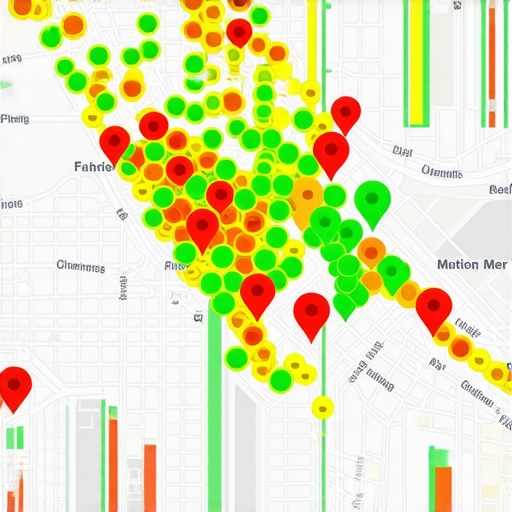
How do I maintain my map rank without losing my mind?
The biggest mistake you can make is thinking you’re ‘done’ once you hit the top three. Local SEO is a battle of attrition. If you stop providing fresh signals, you will experience search decay. I recommend a simple 15-minute weekly audit. Check your Q&A section, respond to the newest review, and upload two ‘work-in-progress’ photos. This keeps the algorithm’s heartbeat steady. According to Joy Hawkins at Sterling Sky, the proximity of the searcher remains the heaviest weight, but ‘prominence’—which is built through these consistent interactions—is what keeps you there when aggressive newcomers try to nudge you out. Our visibility experts have seen that a profile left dormant for more than 30 days starts to lose its grip on the ‘Map Pack’ almost immediately. You need to know how to stop search decay on your business profile by treating it like a social media feed rather than a static phonebook listing.
The 2026 Forecast: What Comes After the Three-Pack?
If you look at the trajectory of Google’s Search Generative Experience (SGE), the future of visibility improvement isn’t just about keywords; it’s about ‘entity trust.’ By 2026, I predict that AI will prioritize businesses that have the most video-verified proof of service. We are already moving toward a ‘show me’ economy. The google map experts who win will be the ones who integrated video early. Start preparing now by surviving the 2026 google maps shift with a strategy that values video testimonials over text-only reviews. If you’re tired of playing catch-up, I want you to try this one advanced tip: go to your profile right now and add a high-quality video of your team actually performing a service. It is the strongest trust signal we have left. If you need local visibility help or a deep-dive audit to see where you’re leaking leads, you can always contact us to get a professional look at your data. My google map experts reveal top secrets regularly to help businesses like yours stay ahead of the curve.
The Raw Truth I Learned After Years in the Map Pack Trenches
Reflecting on my journey with the maps optimization team, I’ve realized that the most common reason businesses fail isn’t a lack of effort; it’s a lack of focus on the right signals. Here is the unvarnished reality I wish someone had told me years ago:
- Google rewards the ‘Real’ over the ‘Ideal’: A grainy photo of your team working on a Tuesday afternoon carries more weight than a thousand-dollar stock image. Authenticity is the only currency that doesn’t devalue in the eyes of local algorithms.
- Software is a guide, not a savior: You can use every expensive tool in the book, but if you don’t clean up messy citation data that confuses Google, you’re building your digital presence on quicksand.
- Reviews are conversations, not trophies: If you stop engaging once the star rating goes up, you lose. It’s the interaction moves that actually matter for staying on top long-term rather than just visiting the top for a week.
The Toolkit That Actually Moves the Needle for Us
I don’t believe in hoarding secrets. If you want to achieve real visibility improvement, these are the three pillars my team and I rely on every single day to keep our clients ahead of the curve:
- Local Falcon: This is the only way to visualize your “visibility bubble.” If you’re struggling to fix the proximity gap stopping your business from ranking five miles away, this grid-based tool will show you exactly where you’re losing ground and where you are winning.
- PlePer Chrome Extension: Essential for identifying competitor categories. It reveals the technical gaps in your profile that keep you from reaching peak google map experts status.
- Whitespark’s Research: I trust their annual ranking factor reports implicitly. They cut through the noise of SEO gurus and provide the data-backed reality of how maps actually work in a changing landscape.
Take Back Your Local Territory Starting Today
The local search landscape changes every week, but the core principle remains the same: provide the best, most verified answer to a user’s local problem. Don’t let the perceived complexity of local visibility help paralyze you into doing nothing. Start small—update one photo, fix one incorrect suite number, or respond to one neglected review. If you need a more aggressive path forward to reclaim your spot, you can always unlock local visibility expert map optimization strategies for 2025 that we’ve refined through hundreds of successful campaigns. You’ve done the hard work of building a business; now it’s time to make sure your neighbors can actually find you when they need you most. Have you noticed your map ranking drop when you step just a few blocks away from your office? Let me know your experience in the comments below!