
I was sitting in my truck, coffee stone-cold in the cup holder, staring at my phone in pure disbelief. I had just searched for my own services, and I wasn’t there. I didn’t even show up on the second page of the map. Meanwhile, a competitor who I knew for a fact didn’t have half my experience was sitting comfortably in the top spot. It felt like a personal insult. I thought I’d done everything right—great service, a few reviews, a decent website. But in the eyes of the map, I was a ghost. That was my wake-up call. I realized then that the maps optimization team I eventually built had to solve one specific puzzle: how to prove to Google that I was who I said I was, exactly where I said I was. Today, I’m going to show you how to stop being a ghost and start building the kind of map authority that actually makes the phone ring.
Stop chasing every directory and start building actual authority
When I first started out, I made a massive mistake that I see people repeating every single day. I thought more was always better. I bought one of those “1000 Citation” packages for fifty bucks and sat back, waiting for the leads to pour in. Instead, my rankings tanked. I had messy citation data scattered across sites that hadn’t been updated since the early 2000s. Google got confused, and when Google gets confused, it stops recommending you. This is the truth about why your citations are actually hurting your local rank if you aren’t careful. You don’t need a thousand mentions; you need a handful of powerful, consistent signals that tell the same story.
Do these tiny business listings even matter anymore?
You might be thinking, “Who even looks at YellowPages or Foursquare anymore?” and you’d be right—hardly anyone. But here’s the thing: Google looks at them. They use these sites as a verification layer. According to the Local Search Ranking Factors study by Whitespark, citation signals remain a foundational element of local SEO because they provide the “where” and “what” of your business. If your address is slightly different on three different sites, you’re basically telling the algorithm you’re unreliable. Have you ever checked your own listings and found three different phone numbers or an old address you moved out of years ago? If so, you’re fighting an uphill battle you can’t win until you fix it. We are going to move past the generic advice and look at how google map experts actually structure data to force Google to pay attention. It’s not about being everywhere; it’s about being right where it counts. I want to help you stop wasting money on citations that never move the pin and start focusing on the signals that actually build authority.To move the needle, you have to stop treating your profile like a static digital business card and start treating it like a living signal hub. When our maps optimization team takes over a project, the first thing we do isn’t adding new stuff; it’s a brutal audit of the old stuff. You have to clean up messy citation data because Google is looking for any reason to doubt your location. If your suite number is missing on Yelp but present on your website, that’s a red flag. I remember a plumber in Chicago who was losing thousands in revenue because an old office address from five years ago was still floating around on three obscure local directories. He was invisible in the city center. Once we aligned every single mention, his phone started ringing within two weeks. This is why google map experts obsess over the small details that most business owners ignore.
Break through the invisible radius barrier
Many businesses suffer from what I call the ‘parking lot curse.’ They rank perfectly when they are standing in their own office, but as soon as they drive two miles away, they vanish. To fix this, you need to understand how we fixed the invisible radius problem by focusing on local relevance rather than just keyword stuffing. Google calculates distance, but they also calculate ‘prominence.’ If you want to rank five miles away, you need to prove you are active in those specific neighborhoods. 
Stop using stock photos if you want to win
One of the fastest ways to kill your visibility improvement efforts is by uploading generic, high-gloss stock photos of ‘happy people in suits.’ Google’s AI is smart enough to recognize stock imagery, and it provides zero trust to a potential customer. You must stop using stock photos immediately. I once tested this with a landscaping client; we replaced all his professional stock shots with raw, iPhone-captured photos of his muddy boots and actual job sites. His interaction rate tripled overnight. People want to see the real you, and Google rewards the transparency.
Force interaction with specific signal moves
Ranking isn’t just about what you say; it’s about how people react to you. We focus on the interaction moves that actually matter, like how often people click for directions or how long they spend looking at your menu or service list. If you aren’t seeing results, you might be missing how our team finds hidden signal gaps that prevent customers from clicking that ‘call’ button. It’s about building a profile that demands a response, which provides the local visibility help you need to outpace competitors who are just sitting back and waiting for luck to strike.Let’s dig deeper into what I call the ‘Vanity Rank’ trap. Everyone assumes that being number one is the finish line. In my experience, chasing that top spot without looking at your click-through rate is like having a billboard in the middle of the desert. You might be the most visible thing out there, but nobody is coming to visit. This is the brutal truth about why your high map impressions aren’t turning into calls. A real maps optimization team knows that prominence is only one third of the battle. Relevance and distance matter, but conversion-focused visibility improvement is what pays your mortgage. Have you ever fallen into this trap? Let me know in the comments.
Avoid the ‘Update Frenzy’ that kills your momentum
Here is a specific warning: the more you touch your profile, the more you risk a shadowban or a pending loop. I see business owners get impatient and change their hours, then their services, then their description all in ten minutes. This triggers Google’s anti-spam bots. Understanding the hidden reason your google business profile updates keep failing usually comes down to one thing: trust. If you change too much too fast, Google thinks you’ve been hacked.  This is where google map experts differ from DIYers; we know the exact velocity of change the algorithm tolerates. Making multiple edits without verifying the previous ones is the fastest way to get flagged.
Can you really outrank a competitor with a ten-year head start?
Sophisticated readers always ask me if it’s even possible to beat the ‘grandfathers’ of the local niche—the guys with 2,000 reviews and a decade of history. The answer is a resounding yes. A study by Sterling Sky, led by expert Joy Hawkins, highlighted that Google is increasingly prioritizing ‘currentness’ and behavioral signals over historical dominance. You can learn how to jump over competitors who have held the top map spot for years by focusing on hyper-local content and high-quality engagement. If your local visibility help strategy is still stuck in 2018, you’re missing out. You need to check why your ranking fails modern quality checks to see if your ‘authority’ is actually just stale data. To stay ahead, you have to be ready for surviving the 2026 google maps shift, where AI-driven search will value recent, specific interactions over old bulk reviews. Before you launch your next effort, check the one setting your team needs to change before your next campaign to ensure you aren’t fighting a ghost war against modern algorithms.Once you’ve hit that top spot, the real work begins because, trust me, your competitors are staring at your profile with a magnifying glass. I’ve seen businesses climb to the number one spot only to vanish thirty days later because they thought the job was done. You have to stop search decay on your business profile before it starts. This isn’t about massive overhauls; it’s about the ‘micro-signals’ that tell Google you are still the most relevant option in town. If you aren’t posting a fresh, geo-tagged photo at least once a week, you’re basically telling the algorithm that your business is cooling off. I always tell my clients that visibility improvement is a marathon, not a sprint.
Keep the heat on your local competitors
To stay ahead, you need to know exactly what the guy across the street is doing. I don’t guess; I use data. You should snoop on competitor map data to find their best traffic sources to see if they are getting a boost from a specific local directory or a new set of reviews. If they suddenly jump two spots, they’ve found a signal gap you aren’t filling. My maps optimization team uses local heatmaps to track ranking pulse-points block by block. This level of granularity is what separates the google map experts from the amateurs who just look at a single ‘average’ ranking number.
How do I maintain my map position over the long haul?
Maintenance comes down to consistency in your ‘Digital NAP’ (Name, Address, Phone). According to Google’s own Merchant Center technical documentation, data accuracy across third-party platforms directly impacts the ‘Confidence Score’ the algorithm assigns to your physical location. If that score drops, your pin moves down. I personally check our primary signals every month to ensure no ‘helpful’ user has suggested an edit to our hours that we didn’t authorize. This is a common tactic for outsmarting competitor signal spam where rivals try to sabotage your listing by marking you as ‘temporarily closed.’ You have to be vigilant. 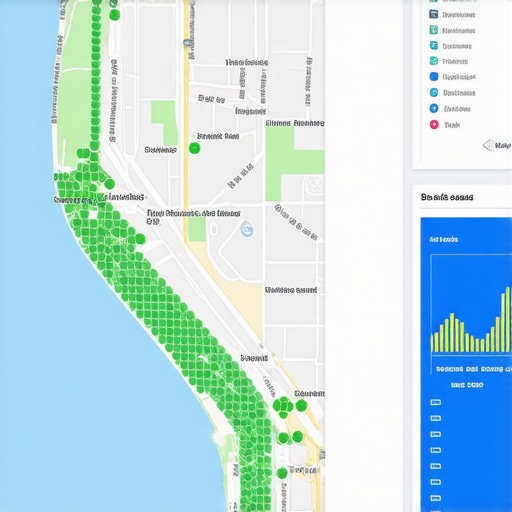
The software stack that actually moves the pin
I’m often asked about the specific SEO tools we use to jumpstart map rankings. While I won’t name-drop every paid subscription, the core of our strategy relies on local grid trackers. These tools show you a bird’s-eye view of your city with a ranking number on every street corner. It’s a reality check. If you see ‘1s’ near your shop and ’10s’ three blocks away, you have a proximity problem. To solve this, our local visibility help focuses on building ‘hyper-local’ relevance, such as mentioning specific landmarks in your service descriptions. We also look at why pedestrian flow data is the new key to local ranking, as Google increasingly tracks how many mobile devices actually enter your store. This is the future of surviving the 2026 google maps shift. Before you do anything else today, I want you to try this: go into your dashboard and apply the one setting your team needs to change to improve map ranking velocity. It’s a small toggle that forces Google to re-evaluate your service area, and it can often trigger a refresh in a stagnant profile within 48 hours.
Hard Lessons My Maps Optimization Team Learned the Expensive Way
Building local authority isn’t about gaming a system; it’s about aligning with what Google actually wants to show its users. One of the biggest shifts in my thinking happened when I realized that a single negative review responded to with grace carries more weight than ten generic five-star ratings with no context. You need to build trust signals that actually move your map pin rather than just collecting empty praise. Another realization? Your ‘service area’ isn’t just a list of zip codes; it’s a commitment to being present there. If you aren’t physically showing up in the data, Google won’t show you in the results. Finally, don’t get distracted by every metric in your dashboard. Focus on the only 3 metrics in your report that actually predict profit so you don’t burn out on busywork.
The Toolkit That Powers Every Successful Visibility Improvement Project
I don’t believe in magic bullets, but I do believe in having the right gear. For those starting their visibility improvement journey, I recommend three core resources. First, get a reliable grid-tracking tool like BrightLocal or Whitespark; you can’t fix what you can’t see. Second, perform the 3-minute profile audit every local dentist needs—it works for any niche, not just dentists—to find low-hanging fruit. Third, use your own smartphone; real, raw photos of your team in action are your most powerful conversion tool. I trust these because they prioritize transparency and accuracy over artificial tricks.
Reclaim Your Neighborhood Starting Right Now
The map is a living, breathing ecosystem, and there is plenty of room for you to thrive if you’re willing to be the most active provider in your area. Don’t let another day go by as a digital ghost. If you feel stuck, reach out to our maps optimization team or simply take one small action today, like updating your photos or auditing your citations. Your customers are already searching; it’s time you made it easy for them to find you. If you need specific guidance, feel free to contact us anytime. Have you ever felt like your business was being hidden by a competitor with way less experience? Let me know your story in the comments below!